.avif)
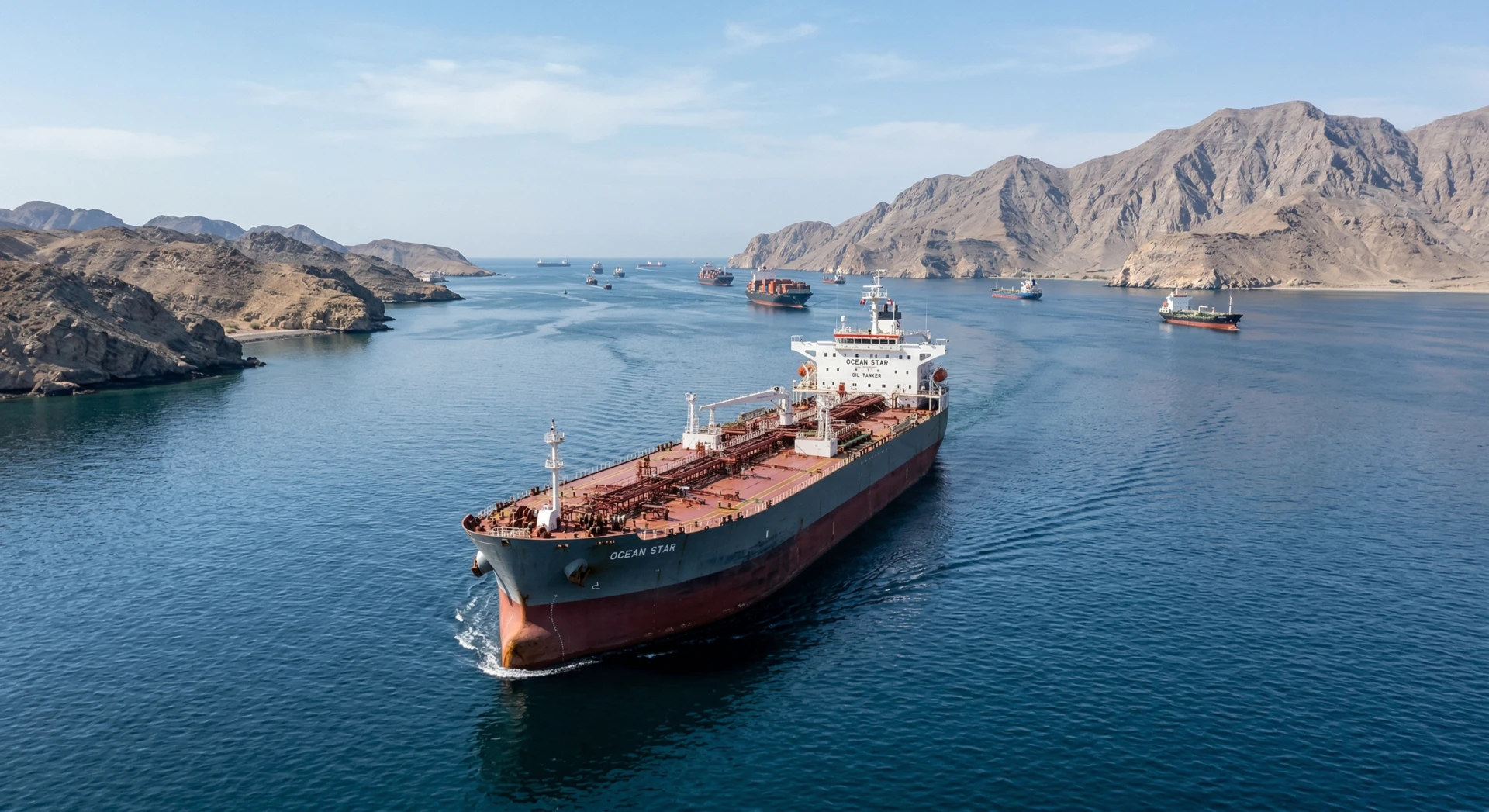
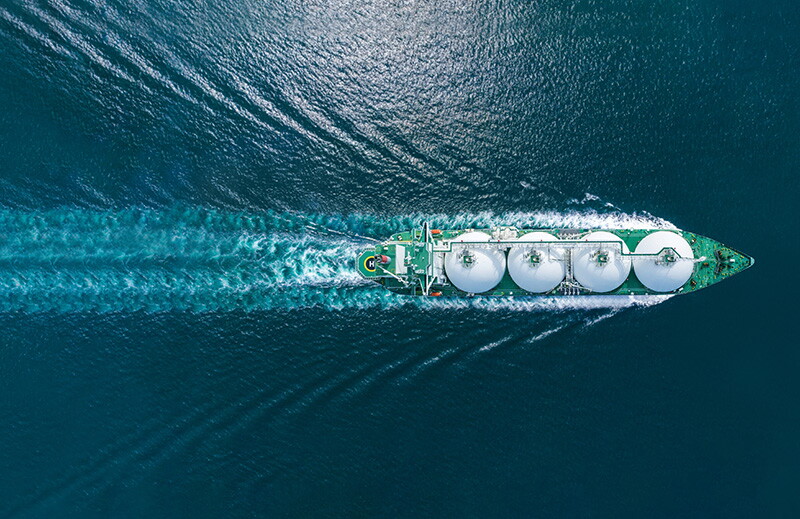
Chinese National Oil Companies face their most acute supply security test in a decade as LNG spot prices have surged from high-USD 10s/MMBtu in late February to low-USD 20s/MMBtu by March 6, effectively doubling import costs overnight. China is the world's largest LNG importer, with Qatar and the UAE supplying approximately 30% of its total LNG imports — volumes now stranded by the Strait of Hormuz closure following US-Israeli strikes on Iran. For a mid-sized Chinese importer taking a 180,000 cubic metre LNG cargo at current spot prices, the price increase represents an additional $7-10 million per shipment compared to February levels — not a rounding error for companies already facing margin compression in downstream gas sales.
The supply shock tests the procurement strategy of China's three national oil companies (CNPC, Sinopec, CNOOC) differently. Trade sources at Chinese state-owned energy companies told Platts that, for now, supply remains manageable, and there is little immediate interest in spot cargoes given the high price environment. The statement masks a more complex reality: companies with long-term contracts indexed to oil prices face contractual obligations that current spot economics cannot justify replacing. A 20-year LNG contract signed at $8-12/MMBtu indexed pricing suddenly looks attractive when spot alternatives cost $18-20/MMBtu. But cargoes already en route represent sunk commitments — with an average shipping time of 19 days, LNG cargoes already en route are expected to arrive into China through the first half of March — meaning the full impact hits April deliveries.
On the buy side: Chinese chemical companies face immediate margin destruction. A mid-sized methanol producer consuming 50,000 tonnes per month of LNG feedstock now pays an additional $15-20 million monthly at current spot prices — enough to eliminate operating margins entirely for products sold on tight global spreads. If the disruption persists, companies are considering measures such as raising prices to control sales, increasing domestic gas output, boosting pipeline imports, and using more coal and renewables to bridge supply gaps. On the sell side: Gulf LNG suppliers holding stranded cargoes in Qatar face force majeure declarations across their contract books. The Ras Laffan facility in Qatar, which is the largest liquefaction facility in the world, has been offline since it was first attacked on 2 March, eliminating 77 million tonnes annually — roughly 17% of global LNG trade — from the market.
For large integrated Chinese NOCs with derivatives access and existing long-term portfolios: the crisis reinforces the value of contract diversification over spot optimization. Companies holding Russian pipeline contracts via Power of Siberia (currently 38 billion cubic metres annually) plus Central Asian pipeline imports can weather spot price volatility that destroys pure LNG importers. A Chinese NOC paying $6-8/MMBtu for pipeline gas holds a $10-12/MMBtu advantage over companies forced into LNG spot markets. The financing structure — pipelines require take-or-pay commitments but offer price predictability — proves its worth when LNG markets seize. For smaller regional gas distributors without long-term contract access or pipeline connections: the crisis represents an existential threat requiring immediate demand rationing and fuel switching to coal-fired alternatives.
China's structural gas infrastructure provides insulation that competitors lack entirely. Natural gas accounts for a relatively small share of China's primary energy consumption, the country enjoys substantial domestic production, and it can tap pipeline imports from Russia, Central Asia, and Myanmar. This contrasts sharply with Northeast Asian neighbors: Japan is the world's second-largest LNG importer. Although Qatar supplies only around 4% of Japan's LNG imports, higher energy prices may significantly burden Japan's economy, while South Korea's import dependence is equally severe. Seoul relies largely on LNG for electricity generation. Qatar and the UAE account for more than 14% of Seoul's LNG imports. The asymmetry is strategic: China can substitute between gas sources while regional competitors face binary supply/no supply decisions.
Freight costs compound the supply crisis in ways that benefit pipeline infrastructure. Daily freight rates for LNG tankers jumped more than 40% on Monday after Qatar halted operations, adding $2-4/MMBtu to delivered costs depending on route and charter duration. Pipeline gas avoids freight risk entirely — the infrastructure cost is amortized over decades, making marginal transport costs near zero. For Chinese buyers, this represents a competitive advantage worth $3-5/MMBtu against any LNG alternative, even before considering the current crisis premium. The crisis has forced reroutes around Africa's Cape of Good Hope, adding weeks to transit times and increasing costs significantly. War risk insurance premiums have surged to multi-year highs, creating additional cost layers that pipeline infrastructure avoids.
The financing dimension reveals deeper strategic implications for Chinese energy security. China's annual imports to decline again in 2026 to 59 million tonnes — an 11% drop. Already, China's state-owned oil and gas company Sinopec has canceled a planned expansion of an LNG import terminal, reallocating funds to domestic natural gas production. This represents more than crisis response — it reflects structural reassessment of LNG dependence versus pipeline alternatives. Long-term LNG contracts require 15-20 year commitments with take-or-pay obligations, but offer no supply security guarantee during geopolitical disruptions. Pipeline contracts offer equivalent take-or-pay terms but with guaranteed physical delivery regardless of maritime chokepoints.
Demand destruction provides the clearest signal of gas market stress translating to real economic impact. State-owned and private LNG plants raised ex-plant prices by Yuan 100-260/mt across key regions, while CNOOC and other importers increased posted prices by Yuan 100-200/mt in major coastal markets — roughly $15-40/tonne increases that force immediate demand rationing. Industrial gas users face binary economics: pay crisis pricing or shut operations. Refiners are now reportedly cutting runs, chemical companies and other gas-dependent industrial actors will also likely reduce their operating rates. This demand destruction cascades through China's export-oriented chemical sector, where companies lose international competitiveness against producers with stable energy costs.
US LNG exporters capture extraordinary arbitrage margins while Chinese importers suffer margin destruction — the crisis redistributes global LNG profits from Asian buyers to Atlantic Basin sellers. The U.S. gas price HH for last week fell to USD 3.1/MBtu on 13 March from USD 3.2/MBtu the previous weekend. HH traded within a narrow range throughout the week, as increased LNG supply to Europe due to heightened tensions in the Middle East was offset by reduced domestic demand due to mild weather. With Henry Hub stable around $3/MMBtu and JKM at $18-20/MMBtu, US LNG exporters earn $15-17/MMBtu gross margins — unprecedented windfalls that accelerate new project economics while devastating Asian industrial competitiveness.
For observers tracking resolution signals: the Strait is effectively closed. Zero ships have gone through it in the past 24 hours as of mid-March, making restoration binary rather than gradual. Monitor Power of Siberia 2 pipeline negotiations between China and Russia — expedited talks indicate China prioritizing pipeline security over LNG flexibility. Watch China's monthly LNG import data for May-June deliveries to confirm whether demand destruction or alternative supply sources dominate the response.



'%3e%3cg id='Final-Copy-2_2_' transform='translate(1275.000000, 200.000000)'%3e%3cpath class='st0' d='M7.4,12.8h6.8l3.1-11.6H7.4C4.2,1.2,1.6,3.8,1.6,7S4.2,12.8,7.4,12.8z'/%3e%3c/g%3e%3c/g%3e%3c/g%3e%3cg id='final---dec.11-2020'%3e%3cg id='_x30_208-our-toggle' transform='translate(-1275.000000, -200.000000)'%3e%3cg id='Final-Copy-2' transform='translate(1275.000000, 200.000000)'%3e%3cpath class='st1' d='M22.6,0H7.4c-3.9,0-7,3.1-7,7s3.1,7,7,7h15.2c3.9,0,7-3.1,7-7S26.4,0,22.6,0z M1.6,7c0-3.2,2.6-5.8,5.8-5.8 h9.9l-3.1,11.6H7.4C4.2,12.8,1.6,10.2,1.6,7z'/%3e%3cpath id='x' class='st2' d='M24.6,4c0.2,0.2,0.2,0.6,0,0.8l0,0L22.5,7l2.2,2.2c0.2,0.2,0.2,0.6,0,0.8c-0.2,0.2-0.6,0.2-0.8,0 l0,0l-2.2-2.2L19.5,10c-0.2,0.2-0.6,0.2-0.8,0c-0.2-0.2-0.2-0.6,0-0.8l0,0L20.8,7l-2.2-2.2c-0.2-0.2-0.2-0.6,0-0.8 c0.2-0.2,0.6-0.2,0.8,0l0,0l2.2,2.2L23.8,4C24,3.8,24.4,3.8,24.6,4z'/%3e%3cpath id='y' class='st3' d='M12.7,4.1c0.2,0.2,0.3,0.6,0.1,0.8l0,0L8.6,9.8C8.5,9.9,8.4,10,8.3,10c-0.2,0.1-0.5,0.1-0.7-0.1l0,0 L5.4,7.7c-0.2-0.2-0.2-0.6,0-0.8c0.2-0.2,0.6-0.2,0.8,0l0,0L8,8.6l3.8-4.5C12,3.9,12.4,3.9,12.7,4.1z'/%3e%3c/g%3e%3c/g%3e%3c/g%3e%3c/g%3e%3c/svg%3e) Privacy Choices
Privacy Choices