.avif)
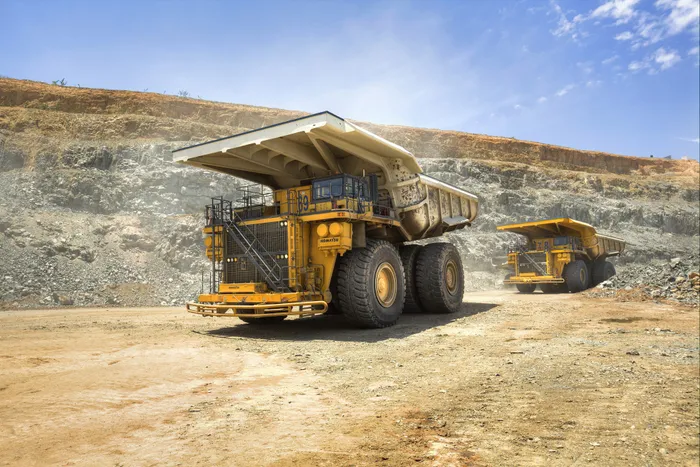
Freeport-McMoRan warned it expects only 65% of production at Grasberg to be restored by the second half of 2026, down from its previous forecast of 85%, cutting annual copper guidance by 300 million pounds at a time when copper trades at $6.02 per pound — up 24% year-on-year. The revised forecast of 800 million pounds of copper and 700,000 ounces of gold compares to an earlier estimate of 1.1 billion pounds of copper and 800,000 ounces of gold. The gap represents roughly 13% of Indonesia's annual copper concentrate output, immediately tightening global availability at a time when Chinese smelters are already operating below capacity due to concentrate shortages.
The production delay stems from unexpected underground water complications requiring installation of specialized equipment called "spillminators" — South African-engineered chutes designed to prevent mud rushes. The Grasberg delay is tied to changes the company is making to equipment that helps in the loading of ore onto trains. CEO Kathleen Quirk explained the underground ore became "unexpectedly wetter due to groundwater" after the mine idled following last year's fatal mudslide. Block cave mining — a technique where ore is blasted from above and gravity-fed through chutes to collection points below — requires precise water management. When groundwater patterns shift, as at Grasberg, the entire extraction sequence must be recalibrated.
Consider a mid-sized Asian smelter processing 200,000 tonnes of concentrate annually, with contracts assuming 30% of supply from Indonesian sources. Before the Grasberg disruption, concentrate treatment charges (TC) — fees smelters charge miners for processing ore into refined copper — averaged $95-100/tonne. The Indonesian shortfall has compressed TCs to $70-80/tonne, reducing smelter margins by $20-25/tonne. For our example facility, this represents a $4-5 million annual margin hit. Simultaneously, the refined copper they produce commands higher prices, but not enough to offset the concentrate supply premium they now pay.
Freeport also delayed by about 18 months a plan to convert Grasberg's power source from coal to natural gas due to the accident, now expecting the mine to produce 800 million pounds of copper. This power transition delay exposes Freeport to mounting carbon pricing pressure in Indonesian markets and potential ESG financing constraints. European copper buyers increasingly require carbon footprint disclosure, making coal-powered production less attractive. The 18-month delay also defers approximately $200 million in annual operating cost savings, as natural gas costs roughly half of coal per unit of power generated.
On the buy side: Asian fabricators and wire manufacturers face immediate cost pressure. Copper remains underpinned by longer-term structural support from global electrification trends and artificial intelligence expansion, though output remains constrained by mining disruptions and persistent underinvestment. A large Japanese wire manufacturer requiring 50,000 tonnes of refined copper annually now pays $1.34/pound more than a year ago — roughly $147 million additional cost. Smaller regional fabricators without long-term contracts face spot market exposure and must pass costs to downstream customers or absorb margin compression.
On the sell side: Non-Indonesian producers benefit from reduced competition and stronger pricing environment. JP Morgan expects a 2026 refined copper deficit of 330,000 tonnes. Chilean and Peruvian concentrate producers can command higher premiums, with treatment charges declining as smelters compete for limited feed. Annual demand growth requires 600,000-700,000 tons of new supply, but project approvals have averaged under 300,000 tons for three years, while existing mines struggle to maintain output despite massive capital investment. BHP's Escondida and Codelco's operations in Chile particularly benefit from the Indonesian supply gap.
For large integrated traders (Trafigura, Vitol, Glencore) with smelter ownership and concentrate sourcing capabilities: The disruption creates arbitrage opportunities between concentrate-deficit regions and copper-surplus regions. These operators can secure concentrate volumes at fixed terms and benefit from rising refined copper premiums. They're also positioned to offer financing to smaller miners in exchange for concentrate supply agreements, potentially locking in advantageous terms through the disruption period.
For smaller regional concentrate traders without smelter access: The market squeeze forces reliance on spot purchases at premium rates. Mid-sized traders must either accept compressed margins on fixed-price supply contracts or pass costs to customers, risking market share loss. Some are exploring direct relationships with secondary sources — recyclers and scrap dealers — to supplement primary concentrate volumes. Alternative sourcing requires quality verification and may involve higher transportation costs from non-traditional origins.
The disruption amplifies broader supply chain vulnerabilities in copper markets. Copper demand for the energy transition could triple by 2045 and the metal may enter structural deficit as early as 2026, with disruptions in Chile, Indonesia and Peru along with slow permitting compounding the gap. Chinese smelters, which process roughly 50% of global copper, have faced operational challenges in 2025, with delivery of concentrate to Chinese facilities slowed, forcing smelters to reduce operational rates and creating a physical squeeze on refined metal supply. The concentration of processing capacity in China creates systemic risk when primary supply sources like Grasberg experience extended disruptions.
For observers: Monitor LME copper warehouse stocks, particularly in Asian delivery points. When warehouse stocks fall, it signals tight physical supply and often pushes prices higher through backwardation, where near-term prices exceed forward prices. Current LME inventories of approximately 120,000 tonnes represent less than three days of global consumption. Watch for further declines below 100,000 tonnes by June 2026 — a level that historically triggers supply emergency protocols among major consumers. Additionally, track Indonesian concentrate export data monthly; any further declines below current reduced levels would indicate Grasberg recovery is falling behind even the revised timeline.





'%3e%3cg id='Final-Copy-2_2_' transform='translate(1275.000000, 200.000000)'%3e%3cpath class='st0' d='M7.4,12.8h6.8l3.1-11.6H7.4C4.2,1.2,1.6,3.8,1.6,7S4.2,12.8,7.4,12.8z'/%3e%3c/g%3e%3c/g%3e%3c/g%3e%3cg id='final---dec.11-2020'%3e%3cg id='_x30_208-our-toggle' transform='translate(-1275.000000, -200.000000)'%3e%3cg id='Final-Copy-2' transform='translate(1275.000000, 200.000000)'%3e%3cpath class='st1' d='M22.6,0H7.4c-3.9,0-7,3.1-7,7s3.1,7,7,7h15.2c3.9,0,7-3.1,7-7S26.4,0,22.6,0z M1.6,7c0-3.2,2.6-5.8,5.8-5.8 h9.9l-3.1,11.6H7.4C4.2,12.8,1.6,10.2,1.6,7z'/%3e%3cpath id='x' class='st2' d='M24.6,4c0.2,0.2,0.2,0.6,0,0.8l0,0L22.5,7l2.2,2.2c0.2,0.2,0.2,0.6,0,0.8c-0.2,0.2-0.6,0.2-0.8,0 l0,0l-2.2-2.2L19.5,10c-0.2,0.2-0.6,0.2-0.8,0c-0.2-0.2-0.2-0.6,0-0.8l0,0L20.8,7l-2.2-2.2c-0.2-0.2-0.2-0.6,0-0.8 c0.2-0.2,0.6-0.2,0.8,0l0,0l2.2,2.2L23.8,4C24,3.8,24.4,3.8,24.6,4z'/%3e%3cpath id='y' class='st3' d='M12.7,4.1c0.2,0.2,0.3,0.6,0.1,0.8l0,0L8.6,9.8C8.5,9.9,8.4,10,8.3,10c-0.2,0.1-0.5,0.1-0.7-0.1l0,0 L5.4,7.7c-0.2-0.2-0.2-0.6,0-0.8c0.2-0.2,0.6-0.2,0.8,0l0,0L8,8.6l3.8-4.5C12,3.9,12.4,3.9,12.7,4.1z'/%3e%3c/g%3e%3c/g%3e%3c/g%3e%3c/g%3e%3c/svg%3e) Privacy Choices
Privacy Choices