.avif)
Asian crude oil importers face margin compression of $25-35 per barrel as HSBC executives warn that Iran-Middle East conflict erodes global business confidence beyond the region. Approximately 11 million barrels per day of crude production has been taken offline, export volumes from the Middle East Gulf have fallen from 15 million to an effective 7 million barrels per day. HSBC CEO Georges Elhedery highlighted uncertainty weighing on sentiment, but the bank's high-level confidence framing understates the specific commercial pressure: a mid-sized Japanese refiner securing 200,000-barrel Basra crude cargoes now pays $110-115/bbl versus $75/bbl pre-conflict — an additional $8 million per cargo. That margin hit lands directly on import-dependent refiners with no derivatives hedging capacity.
The margin anatomy reveals where financial stress concentrates. Physical crude oil prices surged to record levels near $150/bbl, far above the prices in futures markets, with the physical-futures disconnect becoming increasingly acute. For large integrated traders — Trafigura, Vitol, national oil companies' trading arms — with derivatives access, this spread creates arbitrage opportunities through paper-physical convergence trades. But for smaller regional operators — independent distributors, mid-sized fuel importers, regional cooperatives — without derivatives capacity, the $40-50/bbl physical premium becomes pure margin destruction. These operators cannot hedge the physical-futures gap and absorb the full cost differential on every barrel imported.
Iran announced that passage of commercial vessels through the Hormuz Strait is completely open during the truce in Lebanon. President Trump later clarified that the U.S. blockade against vessels departing from or docking at Iranian ports would still remain in effect. On 18 April, Iran said that it closed the Strait of Hormuz again in response to the US refusing to lift its naval blockade. This diplomatic volatility compounds procurement uncertainty. A letter of credit (LC) — a bank guarantee that payment will be made once shipping documents are presented — becomes insufficient protection when transit routes shift daily. Importers now require multiple LC facilities covering alternative supply sources, increasing working capital requirements by 40-60% compared to pre-crisis levels.
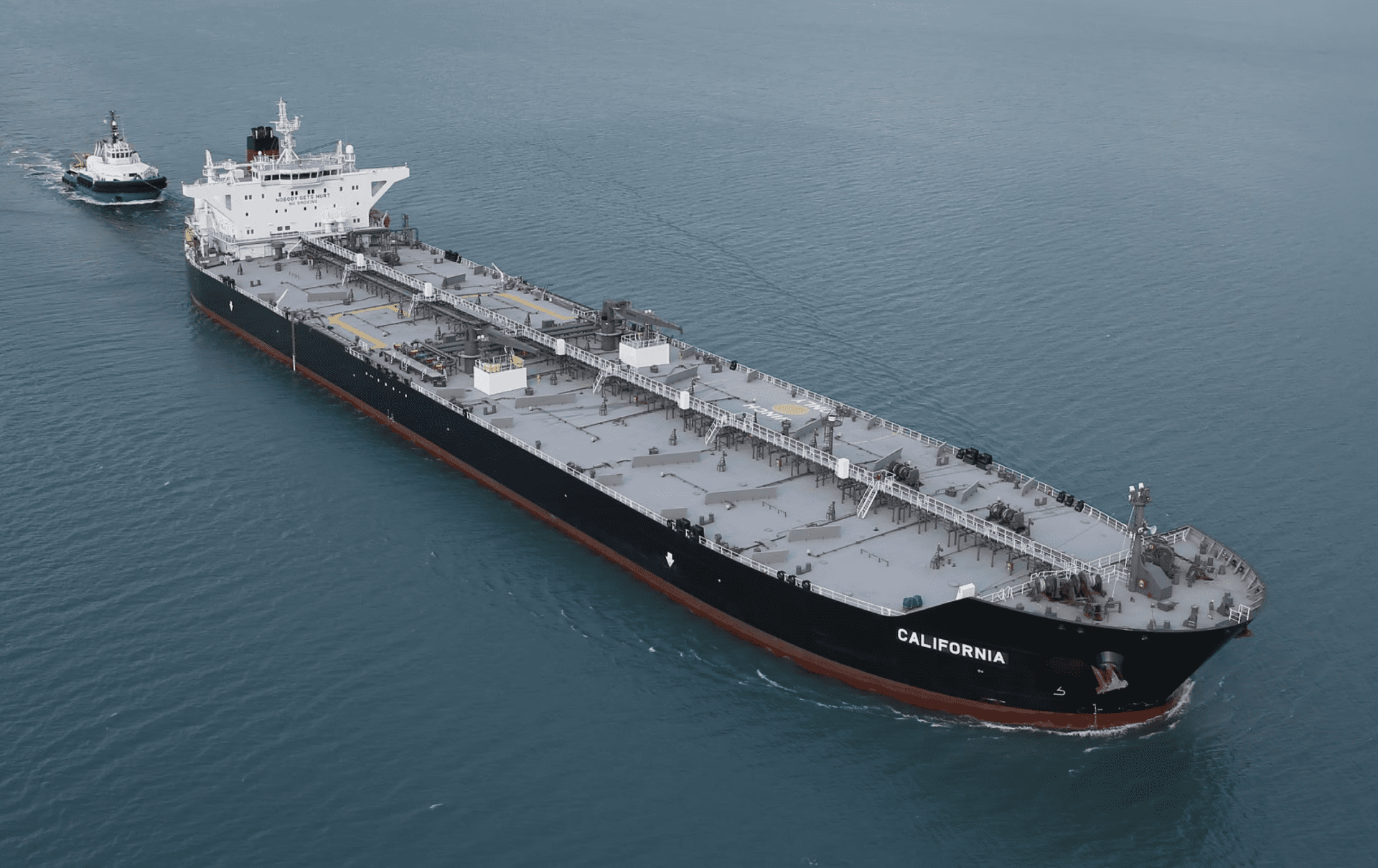
Freight has become the decisive margin variable, not a rounding error. Shipments through the Strait remained severely restricted, with loadings of crude, natural gas liquids and refined products averaging around 3.8 mb/d, compared with more than 20 mb/d in February ahead of the crisis. A VLCC (Very Large Crude Carrier — a supertanker capable of carrying 2 million barrels) from Abu Dhabi to Japan now earns $45-50/MT at current rates versus $15/MT pre-conflict. The additional $70 million per voyage accrues to vessel operators, not cargo owners. Asian importers absorbing this freight differential face a $17-18/bbl penalty that crude price charts do not capture. Ship availability has collapsed as tanker traffic dropping first by about 70% and over 150 ships anchoring outside the strait to avoid risks. Soon afterwards traffic dropped to about zero.
On the buy side: Japanese refiners securing alternative crude supply pay Brent-dated premiums of $8-12/bbl for West African grades versus historical discounts of $1-3/bbl to Brent. Reliance Industries and other Indian private refiners have secured Russian Urals at $6-8/bbl discounts, but face 25-day longer transit times via Cape of Good Hope routing, increasing inventory financing costs by $15-20 million per cargo. Chinese state refiners activated storage draws of 1.2 to 1.4 billion barrels to maintain throughput, but those buffers provide 90-120 days coverage maximum under current demand patterns.
On the sell side: Saudi Aramco diverts 1.2 million bpd through its East-West pipeline to Yanbu, earning $5-8/bbl premiums over Brent versus historical parity. Norwegian and North Sea producers capture windfall margins as Brent-Dubai spread — the price difference between North Sea crude and Middle East crude — widened to $15-18/bbl from typical $2-4/bbl, determining that Atlantic Basin crude can economically reach Asian refineries. US shale producers benefit from WTI-Brent convergence as American crude becomes competitive in European markets for the first time since 2022.
For large integrated operators with derivatives access: Time spreads provide hedging instruments as front-month Brent trades $35-40/bbl above 12-month forward prices. Goldman Sachs and JPMorgan structured products offer physical-financial convergence exposure, but require $50-100 million minimum notional amounts. Smaller regional operators without derivatives access rely on supplier credit extensions and bilateral pricing agreements. A mid-sized Korean fuel distributor negotiates 60-day payment terms versus standard 30-day, effectively borrowing against supplier balance sheets to manage cash flow volatility.
Full restoration of flows will take months. Our modeling indicates that fuel prices will continue to rise until these variables resolve, according to EIA Administrator Tristan Abbey. The physical constraint extends beyond diplomatic announcements. War-risk insurance remains at 0.3-0.4% of vessel value per transit versus pre-conflict 0.05-0.1%, adding $750,000-1.5 million per VLCC voyage. Mine-clearing operations require 45-60 days minimum once hostilities cease. At the onset of the conflict, a total of 390 oil tankers (210 laden) were effectively trapped behind the Strait; over recent weeks, a net 49 vessels have exited. Few vessels are currently willing to re-enter without a clear cessation of hostilities.
For observers: Monitor the Platts Dubai-Brent spread daily through May 15. A narrowing below $10/bbl signals supply route normalization as Middle East crude regains competitiveness against Atlantic Basin alternatives. Track VLCC fixtures on the Middle East Gulf-Asia route reported by Baltic Exchange — vessel availability above 150 VLCCs indicates freight market recovery. The Strait of Hormuz throughput data from Kpler or Vortexa, updated weekly, provides the definitive signal: sustained flows above 15 million bpd for 14 consecutive days marks operational normalization, regardless of political headlines.

.jpg)

'%3e%3cg id='Final-Copy-2_2_' transform='translate(1275.000000, 200.000000)'%3e%3cpath class='st0' d='M7.4,12.8h6.8l3.1-11.6H7.4C4.2,1.2,1.6,3.8,1.6,7S4.2,12.8,7.4,12.8z'/%3e%3c/g%3e%3c/g%3e%3c/g%3e%3cg id='final---dec.11-2020'%3e%3cg id='_x30_208-our-toggle' transform='translate(-1275.000000, -200.000000)'%3e%3cg id='Final-Copy-2' transform='translate(1275.000000, 200.000000)'%3e%3cpath class='st1' d='M22.6,0H7.4c-3.9,0-7,3.1-7,7s3.1,7,7,7h15.2c3.9,0,7-3.1,7-7S26.4,0,22.6,0z M1.6,7c0-3.2,2.6-5.8,5.8-5.8 h9.9l-3.1,11.6H7.4C4.2,12.8,1.6,10.2,1.6,7z'/%3e%3cpath id='x' class='st2' d='M24.6,4c0.2,0.2,0.2,0.6,0,0.8l0,0L22.5,7l2.2,2.2c0.2,0.2,0.2,0.6,0,0.8c-0.2,0.2-0.6,0.2-0.8,0 l0,0l-2.2-2.2L19.5,10c-0.2,0.2-0.6,0.2-0.8,0c-0.2-0.2-0.2-0.6,0-0.8l0,0L20.8,7l-2.2-2.2c-0.2-0.2-0.2-0.6,0-0.8 c0.2-0.2,0.6-0.2,0.8,0l0,0l2.2,2.2L23.8,4C24,3.8,24.4,3.8,24.6,4z'/%3e%3cpath id='y' class='st3' d='M12.7,4.1c0.2,0.2,0.3,0.6,0.1,0.8l0,0L8.6,9.8C8.5,9.9,8.4,10,8.3,10c-0.2,0.1-0.5,0.1-0.7-0.1l0,0 L5.4,7.7c-0.2-0.2-0.2-0.6,0-0.8c0.2-0.2,0.6-0.2,0.8,0l0,0L8,8.6l3.8-4.5C12,3.9,12.4,3.9,12.7,4.1z'/%3e%3c/g%3e%3c/g%3e%3c/g%3e%3c/g%3e%3c/svg%3e) Privacy Choices
Privacy Choices