.avif)

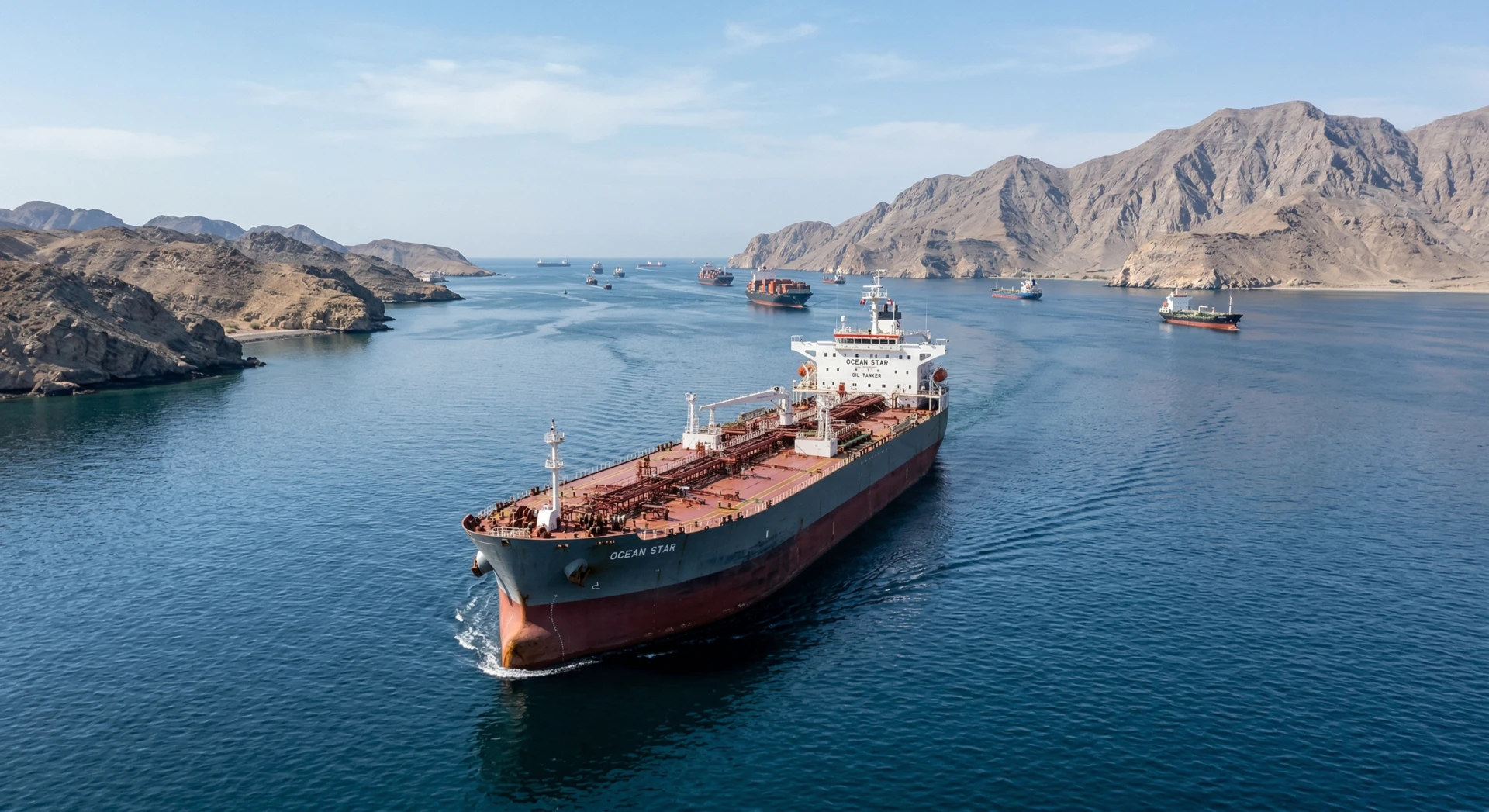
Chevron CEO Mike Wirth signals that even when the Strait of Hormuz — the chokepoint through which roughly 20% of world oil transits — reopens, early commercial transits will require U.S. Navy escorts due to mine risks and land-based threats. The Pentagon privately warns Congressional armed services committees that mine-clearing operations could take six months before normal shipping resumes, making escort requirements a prolonged infrastructure reality, not a temporary bridge back to normalcy. For VLCC owners (Very Large Crude Carriers — supertankers carrying 2 million barrels), this represents a fundamental shift in the economic structure of the world's most critical energy trade route.
The practical escort mechanics reveal the bottleneck: naval planners estimate two tankers with one destroyer transiting at a time under satellite surveillance, compared to the normal 15-20 VLCCs transiting daily through Hormuz before the crisis. Consider a standard VLCC voyage: At current charter rates of approximately $75,000/day (versus $25,000/day pre-crisis), a delayed 25-day voyage from Ras Tanura to Rotterdam now costs $1.875 million in freight alone — versus $625,000 previously. That additional $1.25 million per voyage accrues entirely to VLCC operators, not cargo owners. The escort requirement institutionalizes this scarcity premium by creating artificial throughput limits that persist months beyond political resolution.
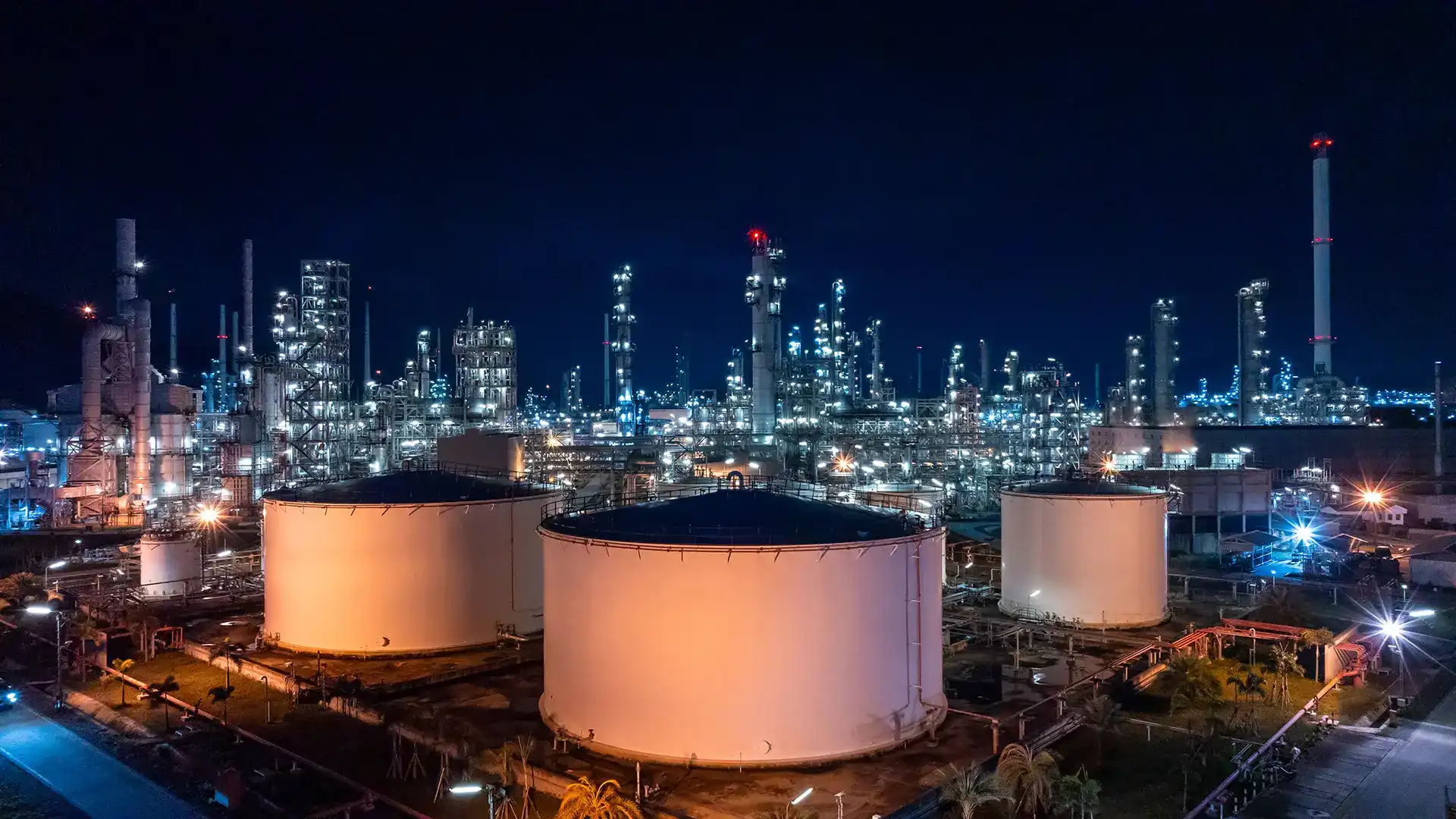
On the buy side: European refiners dependent on Middle East crude face extended margin compression as the $15-20/barrel freight premium embeds in their feedstock costs for at least the remainder of 2026. Gulf oil production has already dropped by 10 million barrels per day as of mid-March, forcing refiners to bid aggressively for alternative supplies. A mid-sized European refiner processing 200,000 barrels daily now pays an additional $3-4 million daily in combined crude and freight premiums — roughly $1.2 billion annually if sustained through year-end.
On the sell side: Iran loses an estimated $435 million daily from halted trade, while Gulf producers with operational terminals outside Hormuz — particularly Saudi Arabia's Red Sea facilities — capture windfall margins by avoiding the strait entirely. Saudi Aramco's Yanbu terminal, which can export 5 million barrels daily without Hormuz transit, now commands $8-12/barrel premiums over equivalent Ras Tanura crude that must traverse the contested waterway. This geographic arbitrage restructures decades of Gulf export economics.
For large integrated traders (Vitol, Trafigura, Gunvor) with derivatives access: The escort bottleneck creates a new hedging instrument — time spreads between prompt and forward crude prices reflect escort queue uncertainty, not just geopolitical risk. Dated Brent spot prices trade at a $25/barrel premium to front-month futures, representing the market's assessment of immediate physical scarcity versus expectations for gradual normalization. Sophisticated players now trade this "escort curve" — buying physical barrels at today's premium while selling futures against the position, betting the spread narrows as convoy capacity expands.
For smaller regional operators — independent fuel distributors, regional trading houses, single-asset vessel owners — without access to paper markets: The escort requirement forces binary decisions with no hedging protection. A regional Asian fuel importer with 30-day payment terms cannot afford to wait 45-60 days for escorted deliveries, forcing either pre-payment for alternative supplies or inventory drawdowns that threaten operational continuity. These operators increasingly pivot to non-Hormuz routes: West African crude to Asian refineries, despite the additional 7-10 days voyage time and $3-5/barrel freight penalty.
The U.S. Navy takes mine threats seriously, but experts emphasize escort operations cannot begin until Iran's capacity to launch weapons and lay additional mines is minimized. Each mine requires individual neutralization by specialized vessels — the USS Chief and USS Pioneer mine countermeasure ships — operating in the strait's 21-nautical-mile-wide navigable channel. At its narrowest point, Hormuz spans just 20 miles, with the Persian Gulf itself only hundreds of miles across, making ship defense against incoming attacks particularly challenging. This geography transforms mine-clearing from a technical exercise into a combat operation requiring air cover, electronic warfare support, and continuous threat assessment.
Many commercial shippers consider escort operations "too dangerous" even with naval protection, as insurance underwriters price war risk premiums at 0.2-0.4% of vessel value per transit — approximately $400,000-800,000 additional cost for a $200 million VLCC. Lloyd's of London syndicates now require 72-hour advance notice and specific escort confirmation before binding coverage. This insurance infrastructure creates additional delays: even after mines are cleared and escorts available, the underwriting process adds 3-5 days to departure schedules.
The route shift mechanisms are already evident: 172 crude tankers are now en route to the U.S. Gulf Coast, reflecting major shifts in global flows. West Texas Intermediate crude, typically priced at a discount to Brent due to infrastructure constraints, now trades at parity or premium as buyers avoid Middle East exposure entirely. The Cape of Good Hope route from West Africa to Asia — adding 14 days and $8-10/barrel in freight costs — becomes economically viable when Hormuz transit requires weeks of escort queuing plus war risk premiums.
Historical precedent suggests escort operations create their own momentum toward prolonged disruption. During the 1980s Tanker War, U.S. and allied naval escorts through the Gulf operated for over two years, even as the Iran-Iraq conflict gradually de-escalated. Iranian forces laid mines throughout the Persian Gulf during that conflict, requiring extensive clearance operations that continued months after hostilities formally ended. The current crisis involves more sophisticated mine technology and a more comprehensive Iranian denial strategy, suggesting even longer clearance timelines.
For observers: Monitor the Baltic Exchange's time charter equivalent rates for VLCCs on the Middle East-Asia route (VLCC TCE MEG-Asia). Normal rates of $20,000-30,000/day indicate restored confidence in unescorted operations. Current rates above $70,000/day reflect escort scarcity premiums. Any sustained decline below $50,000/day signals either expanded escort capacity or alternative route substitution reaching scale. Watch for U.S. Navy announcements of additional mine countermeasure vessels deploying to the Gulf — only specialized MCM ships can safely clear Iranian mines, and the U.S. fleet contains fewer than 12 such vessels globally.

.jpg)
.jpg)

'%3e%3cg id='Final-Copy-2_2_' transform='translate(1275.000000, 200.000000)'%3e%3cpath class='st0' d='M7.4,12.8h6.8l3.1-11.6H7.4C4.2,1.2,1.6,3.8,1.6,7S4.2,12.8,7.4,12.8z'/%3e%3c/g%3e%3c/g%3e%3c/g%3e%3cg id='final---dec.11-2020'%3e%3cg id='_x30_208-our-toggle' transform='translate(-1275.000000, -200.000000)'%3e%3cg id='Final-Copy-2' transform='translate(1275.000000, 200.000000)'%3e%3cpath class='st1' d='M22.6,0H7.4c-3.9,0-7,3.1-7,7s3.1,7,7,7h15.2c3.9,0,7-3.1,7-7S26.4,0,22.6,0z M1.6,7c0-3.2,2.6-5.8,5.8-5.8 h9.9l-3.1,11.6H7.4C4.2,12.8,1.6,10.2,1.6,7z'/%3e%3cpath id='x' class='st2' d='M24.6,4c0.2,0.2,0.2,0.6,0,0.8l0,0L22.5,7l2.2,2.2c0.2,0.2,0.2,0.6,0,0.8c-0.2,0.2-0.6,0.2-0.8,0 l0,0l-2.2-2.2L19.5,10c-0.2,0.2-0.6,0.2-0.8,0c-0.2-0.2-0.2-0.6,0-0.8l0,0L20.8,7l-2.2-2.2c-0.2-0.2-0.2-0.6,0-0.8 c0.2-0.2,0.6-0.2,0.8,0l0,0l2.2,2.2L23.8,4C24,3.8,24.4,3.8,24.6,4z'/%3e%3cpath id='y' class='st3' d='M12.7,4.1c0.2,0.2,0.3,0.6,0.1,0.8l0,0L8.6,9.8C8.5,9.9,8.4,10,8.3,10c-0.2,0.1-0.5,0.1-0.7-0.1l0,0 L5.4,7.7c-0.2-0.2-0.2-0.6,0-0.8c0.2-0.2,0.6-0.2,0.8,0l0,0L8,8.6l3.8-4.5C12,3.9,12.4,3.9,12.7,4.1z'/%3e%3c/g%3e%3c/g%3e%3c/g%3e%3c/g%3e%3c/svg%3e) Privacy Choices
Privacy Choices