.avif)
Indian refiners are paying $4-5 per barrel premiums for Russian Urals crude — a complete reversal from the $13 discounts they enjoyed just weeks ago. The US Treasury Department issued a 30-day waiver on March 5, allowing Indian refiners to purchase sanctioned Russian oil already loaded on vessels, as the Iran war effectively closed the Strait of Hormuz to most commercial traffic. This emergency pivot demonstrates how geopolitical shocks can instantly flip commodity pricing structures, forcing buyers to accept whatever molecules are available when supply chains collapse.
The margin anatomy has inverted entirely. Brent crude has risen from $66 in early February to around $84 in early March, while Russian Urals trades at approximately $102-110 per barrel — creating a premium structure where buyers pay extra for what was recently discounted supply. Consider a typical Indian refiner like Indian Oil Corporation purchasing a 1 million barrel Urals cargo: at previous $13 discounts to $84 Brent, the cargo cost $71 per barrel or $71 million total. At today's $5 premium to Brent, the same cargo costs $89 per barrel or $89 million — an 18 million increase per cargo. The $13 discount has become a $5 premium, representing an $18 swing per barrel that flows directly to margin compression for Indian refiners.
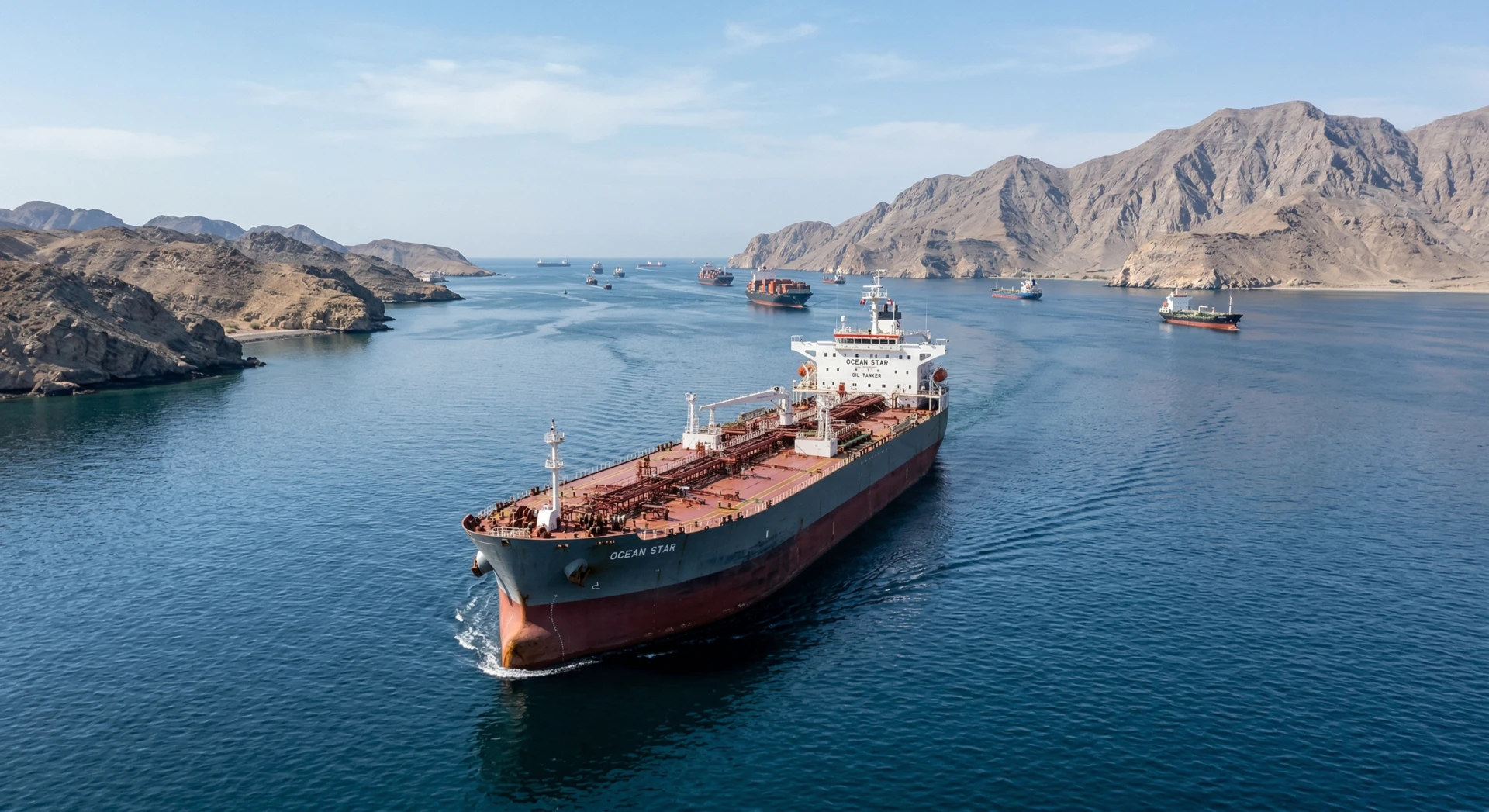
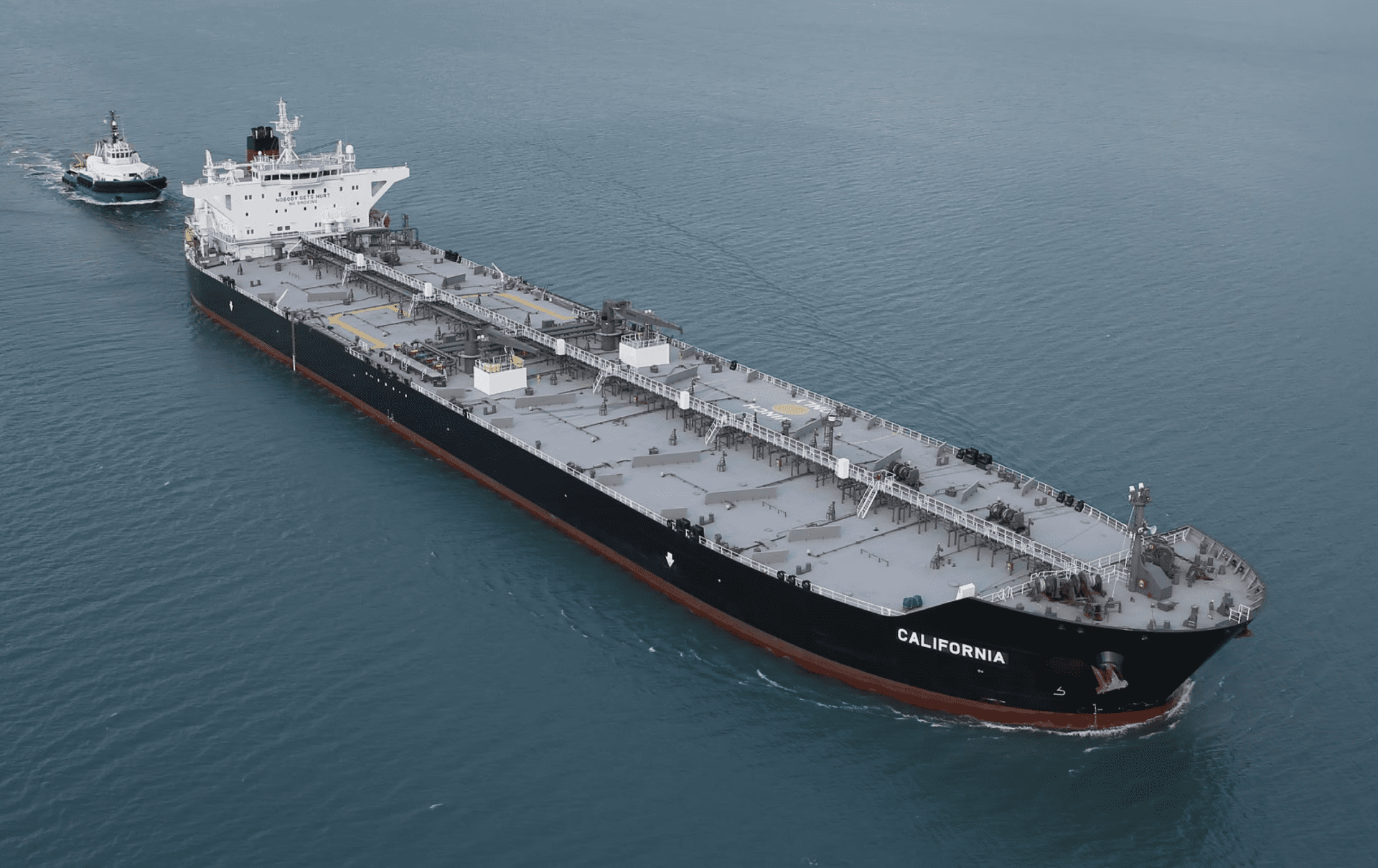
Freight rates compound the pressure. The Strait of Hormuz crisis has stranded tankers in the Persian Gulf and effectively closed the waterway that normally carries roughly one-fifth of global oil supply. VLCCs (Very Large Crude Carriers) that previously earned $15,000-20,000 per day shuttling between Gulf ports and Indian refineries now command $80,000-100,000 per day on alternative routes. Shipments from Russia are also slower to reach Indian ports than tankers from the Middle East. A VLCC carrying 2 million barrels from Primorsk to Jamnagar takes 25-30 days versus 10-15 days from Ras Tanura. The additional 15 days at current rates adds $1.2 million per voyage — roughly $0.60 per barrel in freight costs that someone must absorb. This freight differential accrues to vessel operators, not oil sellers, creating a second margin squeeze.
The financing structure reveals why premiums emerged so rapidly. There were 120-130 million barrels of Russian crude already loaded on vessels as of early March. These floating storage positions — oil already purchased and loaded but lacking discharge permission — represent stranded working capital earning carrying costs. Ship operators pay demurrage (vessel waiting time charges) of $25,000-40,000 per day for Aframax and Suezmax tankers unable to discharge. After 30 days of delays, a cargo's total cost increases by $750,000-1.2 million. Sellers holding these positions must clear inventory or face mounting losses, but buyers holding contracts for Middle East crude face supply gaps. Russian sellers can demand premiums because they control the available molecules when buyers face operational necessity.
On the buy side: India imports nearly 40-50% of its crude from the Middle East via the Strait of Hormuz, representing roughly 2.6 million barrels per day of exposure. With only 25 days of crude oil inventory, Indian refiners face operational shutdown if supply disruptions extend beyond their storage buffer. State refiners like Indian Oil Corporation, Bharat Petroleum, and Hindustan Petroleum operate integrated refining and marketing networks where crude supply interruptions cascade immediately to retail fuel availability. Indian refiners could push Russian inflows to 1.6-2 million barrels per day in the near term, though this cannot fully offset India's 2.6 million barrel per day Middle Eastern crude exposure.
On the sell side: Russian producers benefit from the supply crisis as buyers compete for available barrels. President Vladimir Putin urged Russian producers to capitalize on soaring prices but cautioned that the surge is temporary. Rosneft and Gazprom Neft can redirect previously discounted volumes to premium markets, capturing the $18 per barrel swing from discount to premium. However, Indian refiners have lifted only non-sanctioned Russian cargoes, as US sanctions on Rosneft and Lukoil — accounting for 60% of Moscow's crude supplies to India — remain in effect. This creates a two-tier Russian market: sanctioned barrels trading at deeper discounts, and non-sanctioned barrels commanding premiums.
For large integrated traders (Vitol, Trafigura, Gunvor): The crisis creates arbitrage opportunities for operators with global logistics capabilities and derivatives access. Traders holding long positions in Russian crude purchased at discounts can monetize premiums in Asian markets while hedging price exposure through Brent swaps or options. A trader long 10 million barrels of Urals at $65 and short equivalent Brent futures at $80 profits from basis convergence as Urals premiums emerge. Storage operators with tanks in Singapore or Fujairah can capture contango (near-term prices below forward prices) by storing discounted barrels for future delivery at higher prices.
For smaller regional operators — mid-sized Indian fuel distributors, cooperative refiners, independent importers: These entities lack financial derivatives access and storage flexibility, forcing them to accept spot market pricing. Legal teams at oil companies are currently vetting the waiver order to understand permitted transactions. Regional operators must secure letters of credit (LCs) from banks willing to finance Russian crude transactions, often requiring additional guarantees or insurance. Without hedging capabilities, they absorb the full $18 per barrel pricing swing, compressing refining margins that typically range $3-8 per barrel.
The route shift amplifies costs throughout the supply chain. Several ships have passed the strait during the conflict, mostly petroleum ships bound for China and India, with Iranian commanders allowing ships from specific nations including China, Russia, India, Iraq and Pakistan to transit. Alternative routes around Africa's Cape of Good Hope add 6,000 nautical miles and 15-20 days to voyages from the Middle East, increasing freight costs by $2-3 per barrel. Pipeline alternatives like Saudi Arabia's East-West Pipeline (7 million barrels per day capacity) and UAE's Fujairah pipeline offer partial solutions, but terminal infrastructure limits throughput. These constraints create supply bottlenecks where available molecules command premiums regardless of production costs.
Observers should monitor the Urals-Brent spread as the key signal for supply stress duration. In March 2026, the Urals-Brent differential fluctuated considerably, with Urals trading higher than Brent on certain dates. A sustained premium above $3 per barrel indicates structural supply shortages that cannot be resolved through inventory drawdowns. The US waiver expires on April 4, 2026. If Urals reverts to discounts before that date, it signals alternative supply chains are functioning. If premiums persist or widen beyond April 4, it indicates the crisis has fundamentally altered regional supply patterns. Watch Indian state refiner purchasing patterns — any return to Middle Eastern crude indicates Hormuz reopening; continued Russian purchases at premiums confirms supply crisis persistence.

.jpg)

'%3e%3cg id='Final-Copy-2_2_' transform='translate(1275.000000, 200.000000)'%3e%3cpath class='st0' d='M7.4,12.8h6.8l3.1-11.6H7.4C4.2,1.2,1.6,3.8,1.6,7S4.2,12.8,7.4,12.8z'/%3e%3c/g%3e%3c/g%3e%3c/g%3e%3cg id='final---dec.11-2020'%3e%3cg id='_x30_208-our-toggle' transform='translate(-1275.000000, -200.000000)'%3e%3cg id='Final-Copy-2' transform='translate(1275.000000, 200.000000)'%3e%3cpath class='st1' d='M22.6,0H7.4c-3.9,0-7,3.1-7,7s3.1,7,7,7h15.2c3.9,0,7-3.1,7-7S26.4,0,22.6,0z M1.6,7c0-3.2,2.6-5.8,5.8-5.8 h9.9l-3.1,11.6H7.4C4.2,12.8,1.6,10.2,1.6,7z'/%3e%3cpath id='x' class='st2' d='M24.6,4c0.2,0.2,0.2,0.6,0,0.8l0,0L22.5,7l2.2,2.2c0.2,0.2,0.2,0.6,0,0.8c-0.2,0.2-0.6,0.2-0.8,0 l0,0l-2.2-2.2L19.5,10c-0.2,0.2-0.6,0.2-0.8,0c-0.2-0.2-0.2-0.6,0-0.8l0,0L20.8,7l-2.2-2.2c-0.2-0.2-0.2-0.6,0-0.8 c0.2-0.2,0.6-0.2,0.8,0l0,0l2.2,2.2L23.8,4C24,3.8,24.4,3.8,24.6,4z'/%3e%3cpath id='y' class='st3' d='M12.7,4.1c0.2,0.2,0.3,0.6,0.1,0.8l0,0L8.6,9.8C8.5,9.9,8.4,10,8.3,10c-0.2,0.1-0.5,0.1-0.7-0.1l0,0 L5.4,7.7c-0.2-0.2-0.2-0.6,0-0.8c0.2-0.2,0.6-0.2,0.8,0l0,0L8,8.6l3.8-4.5C12,3.9,12.4,3.9,12.7,4.1z'/%3e%3c/g%3e%3c/g%3e%3c/g%3e%3c/g%3e%3c/svg%3e) Privacy Choices
Privacy Choices