.avif)
Turkish electric arc furnace (EAF) steelmakers — responsible for consuming 19 million tonnes of imported scrap annually — have surrendered to market forces, accepting price increases exceeding $15/MT for April scrap deliveries. Turkish metallurgical companies were the last to accept the inevitable price hike, having finally begun purchasing scrap metal for April at prices exceeding previous transaction levels by more than $15 per ton. The capitulation represents a structural breaking point for mills that had resisted price increases through aggressive substitution strategies and inventory management. For context, a mid-sized Turkish EAF mill processing 1 million tonnes annually faces an additional $15 million in annual feedstock costs — margin compression that immediately flows through to finished steel pricing and export competitiveness.
At least five US cargoes of 150,000-200,000 mt being sold at $396-98/mt for HMS 80/20, with shredded and bonus $20 higher. The breakthrough transactions established new pricing benchmarks across both Atlantic Basin origins. US East Coast terminals, emboldened by Turkish demand, pushed mixed HMS 80/20 and premium grade offers to $403-423/MT CFR respectively. European sellers followed suit, booking 7-10 additional cargoes at $390-395/MT CFR Turkey for April and May shipment. The pricing cascade demonstrates how Turkish import dependency — nearly 85% of total scrap consumption — creates systemic vulnerability when alternative supply routes tighten simultaneously.
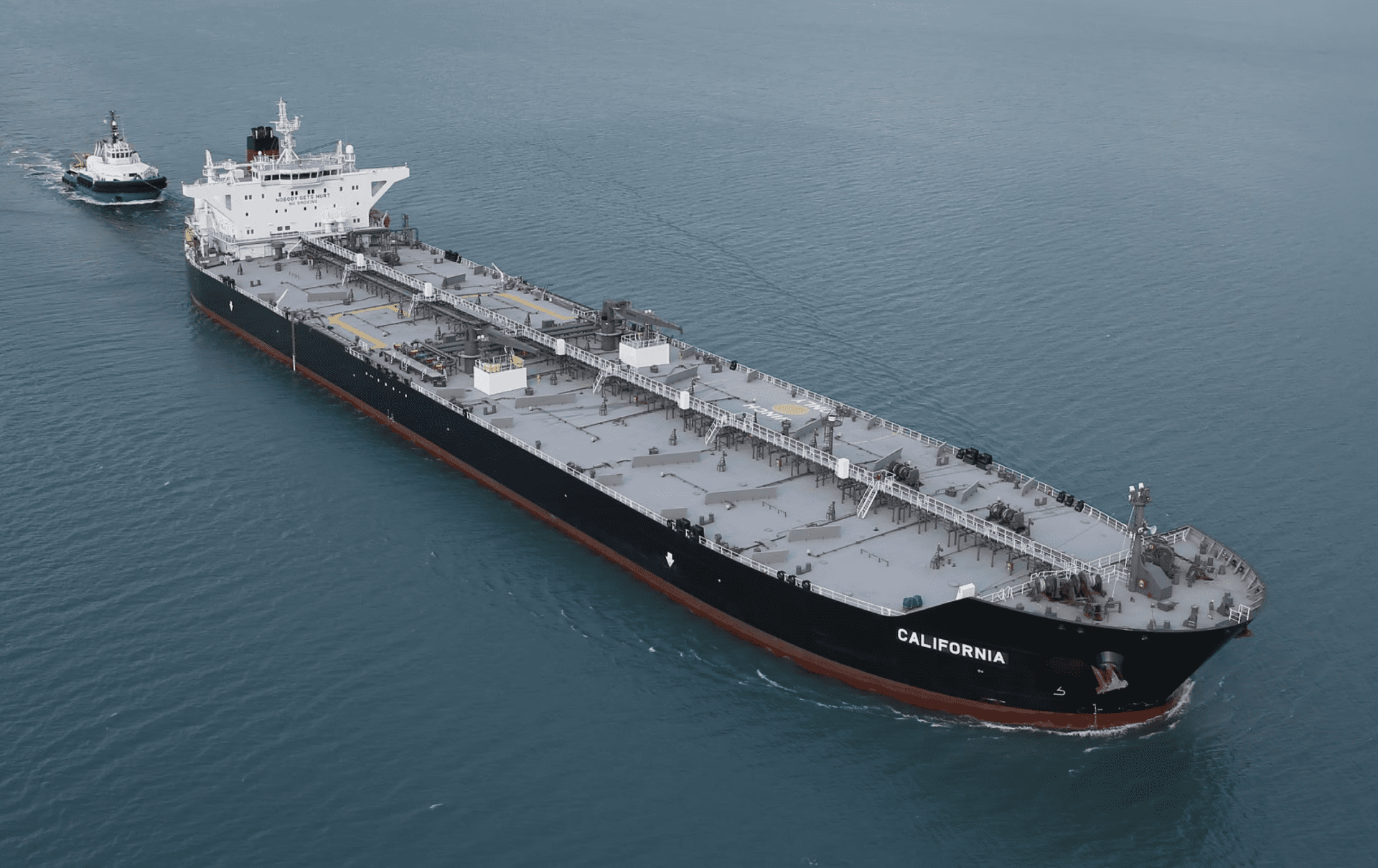
Freight rates have emerged as the decisive margin killer in this trade lane. The main contributor to this increase is sea freight, which is becoming increasingly expensive. A standard Handymax vessel (35,000 DWT) carrying scrap from Norfolk to Istanbul now commands approximately $28-32/MT versus $18-22/MT in Q4 2025. For a 30,000-tonne cargo, the additional $300,000-420,000 in freight costs accrues entirely to vessel operators, not cargo owners. Turkish mills cannot absorb this cost through operational efficiency — the mathematics are unforgiving. Where mills previously enjoyed landed margins of $45-55/MT on scrap-to-rebar conversion, the freight surge alone eliminates 18-25% of operational headroom before considering the underlying commodity price increase.
EU export restrictions are creating systematic supply tightness across traditional Turkish sourcing routes. The European Commission has initiated preparatory work on comprehensive measures designed to limit the outflow of aluminium scrap from EU territories, targeting implementation by spring 2026. While focused on aluminium, the regulatory framework signals broader EU resource retention policies affecting all ferrous scrap flows. German and Italian exporters — historically reliable suppliers of 4-6 million tonnes annually to Turkey — are increasingly directing material toward domestic consumption as European steelmakers expand EAF capacity. The structural shift reduces Turkish optionality precisely when North American supply faces its own constraints through elevated domestic mill demand.
On the buy side: Large integrated Turkish steelmakers (Erdemir, İskenderun) with captive raw material access are accepting the price reality to maintain production schedules, knowing that downstream demand for rebar and construction steel remains robust despite regional economic headwinds. Mid-sized operators (1-2 million tonne capacity) are experiencing severe margin compression — many have reduced utilisation rates to 70-75% from normal 85-90% levels rather than accept unprofitable conversion spreads. Smaller regional mills (under 500,000 tonnes annually) face potential production suspensions if scrap prices sustain above $400/MT CFR, as their limited working capital cannot finance the increased raw material costs.
On the sell side: US scrap exporters are capturing windfall margins of $15-20/MT above previous transaction levels, with East Coast terminals prioritising Turkish contracts over domestic mill sales for the first time since late 2024. European exporters face more complex dynamics — while achieving higher dollar prices, many are simultaneously reducing export tonnages to serve domestic demand under informal government pressure. The margin concentration favours large integrated trading houses (Sims Metal, OmniSource) with direct vessel access over smaller regional collectors dependent on freight intermediaries.
For traders and intermediaries: The arbitrage window has compressed dramatically as freight volatility eliminates predictable margins. Physical traders with pre-positioned inventory in Turkish proximity (Mediterranean hubs, Black Sea terminals) are extracting premiums of $8-12/MT over fresh supply. Financial intermediaries face increased collateral requirements as banks reassess credit lines for volatile commodity trades. The traditional 30-60 day payment terms are extending to 90+ days as Turkish mills preserve cash flow, creating additional financing costs for working capital-dependent operators.
The Turkish mills' substitution playbook — their primary defence against scrap price volatility — has reached practical limits under current market conditions. Turkish mills have meanwhile turned to cheap Asian-origin billet to replace scrap. However, billet imports from Malaysia, China, and Russia now command $580-620/MT CFR versus $520-540/MT in Q1 2025. More critically, available tonnages are insufficient to replace meaningful scrap volumes — the global billet export market totals approximately 35 million tonnes annually, while Turkish scrap imports alone approach 19 million tonnes. Energy costs for increased secondary processing also eliminate potential savings, as Turkish industrial electricity rates have risen 12% since January 2025.
For large integrated operators with derivatives access: LME Steel Scrap CFR Turkey futures offer hedging protection, but basis risk remains significant as physical premiums/discounts fluctuate with freight conditions. A 100,000-tonne hedge position at current volatility requires approximately $2.8-3.2 million in margin, manageable for major steelmakers but prohibitive for smaller operators. Swap agreements with trusted suppliers provide more practical risk management, typically structured as 6-12 month fixed-price contracts with quarterly volume adjustments. Currency hedging becomes essential as lira depreciation amplifies dollar-denominated input costs.
For smaller regional operators without derivatives access: Bilateral supply agreements with 2-3 diversified suppliers reduce single-origin dependency, typically structured with 30% spot exposure, 70% quarterly fixed pricing. Inventory management becomes critical — maintaining 45-60 days of consumption (versus normal 30 days) provides price volatility buffer but requires significant working capital. Some operators are forming purchasing cooperatives to aggregate volumes and improve negotiating power with international suppliers, pooling credit facilities to access better payment terms.
For observers: The LME Steel Scrap CFR Turkey contract — benchmark for global deep-sea pricing — signals Turkish import appetite and broader EAF feedstock costs. Current backwardation of $4-7/MT (spot premium to 3-month forward) indicates immediate supply tightness. LME Steel Scrap CFR Turkey (Platts) Ferrous · 409.50 1.36% When the benchmark sustains above $400/MT for 3+ consecutive weeks, expect systematic production cuts across smaller Turkish EAF operators. Freight rate indicators — specifically Handymax routes from US Gulf/East Coast to Turkish ports — provide 2-3 week forward visibility on landed cost pressures. Monitor Turkish rebar export offers as the ultimate margin check — when FOB prices fail to keep pace with scrap cost increases, domestic consumption absorbs the margin compression.


.jpg)



'%3e%3cg id='Final-Copy-2_2_' transform='translate(1275.000000, 200.000000)'%3e%3cpath class='st0' d='M7.4,12.8h6.8l3.1-11.6H7.4C4.2,1.2,1.6,3.8,1.6,7S4.2,12.8,7.4,12.8z'/%3e%3c/g%3e%3c/g%3e%3c/g%3e%3cg id='final---dec.11-2020'%3e%3cg id='_x30_208-our-toggle' transform='translate(-1275.000000, -200.000000)'%3e%3cg id='Final-Copy-2' transform='translate(1275.000000, 200.000000)'%3e%3cpath class='st1' d='M22.6,0H7.4c-3.9,0-7,3.1-7,7s3.1,7,7,7h15.2c3.9,0,7-3.1,7-7S26.4,0,22.6,0z M1.6,7c0-3.2,2.6-5.8,5.8-5.8 h9.9l-3.1,11.6H7.4C4.2,12.8,1.6,10.2,1.6,7z'/%3e%3cpath id='x' class='st2' d='M24.6,4c0.2,0.2,0.2,0.6,0,0.8l0,0L22.5,7l2.2,2.2c0.2,0.2,0.2,0.6,0,0.8c-0.2,0.2-0.6,0.2-0.8,0 l0,0l-2.2-2.2L19.5,10c-0.2,0.2-0.6,0.2-0.8,0c-0.2-0.2-0.2-0.6,0-0.8l0,0L20.8,7l-2.2-2.2c-0.2-0.2-0.2-0.6,0-0.8 c0.2-0.2,0.6-0.2,0.8,0l0,0l2.2,2.2L23.8,4C24,3.8,24.4,3.8,24.6,4z'/%3e%3cpath id='y' class='st3' d='M12.7,4.1c0.2,0.2,0.3,0.6,0.1,0.8l0,0L8.6,9.8C8.5,9.9,8.4,10,8.3,10c-0.2,0.1-0.5,0.1-0.7-0.1l0,0 L5.4,7.7c-0.2-0.2-0.2-0.6,0-0.8c0.2-0.2,0.6-0.2,0.8,0l0,0L8,8.6l3.8-4.5C12,3.9,12.4,3.9,12.7,4.1z'/%3e%3c/g%3e%3c/g%3e%3c/g%3e%3c/g%3e%3c/svg%3e) Privacy Choices
Privacy Choices