.avif)
.avif)
Indian crude traders face immediate margin compression as Brent crude hit $114.06/barrel on May 4, while PL Capital quantifies the remaining global supply deficit at 4.8 million barrels per day (mbpd) after accounting for strategic releases and alternative routes, requiring demand destruction to rebalance markets and "put downward pressure on crude prices". This is not theoretical adjustment it is happening now. Global oil demand contracted by 800 kb/d year on year in March and by 2.3 mbpd in April, marking the sharpest consumption cuts since the COVID-19 pandemic.
The anatomy of disruption reveals why partial offsets create stubborn deficits. Strait of Hormuz flows plummeted from 20 mbpd before the conflict to 3.8 mbpd in early April, while alternative export routes increased from 3.9 mbpd in February to 7.2 mbpd on average. But arithmetic is unforgiving the 16.2 mbpd shortfall against 7.2 mbpd of rerouted barrels leaves the market hunting for 9 mbpd of replacement supply or equivalent demand destruction. IEA member countries released 400 million barrels from strategic reserves roughly four days of global consumption to bridge the gap. That covers immediate needs, not structural rebalancing.
Demand destruction (demand reduction caused by sustained high prices) operates through predictable mechanisms, but unevenly across sectors and geographies. Naphtha, LPG and ethane have seen the clearest demand destruction, with global Q2 2026 demand for these products now estimated 1.5 mbpd lower than February forecasts. The petrochemical sector composed of price-sensitive industrial consumers responds first because feedstock costs directly determine operating margins. Asian petrochemical producers have curtailed operating rates as feedstock supply dried up, while LPG households and businesses have been impacted alongside sharp drops in jet fuel consumption from flight cancellations.
On the buy side: Asian refiners scramble to replace Middle East crude at premiums that erase processing margins. The Brent-WTI spread peaked at $15/barrel in April when production disruptions were largest, reflecting higher shipping costs and reduced oil flows between the Middle East and Asian markets. Consider a mid-sized South Korean refiner processing 200,000 barrels per day of Middle East crude: the $15/barrel spread differential alone costs $3 million per day in additional feedstock expense, before accounting for elevated freight rates and insurance premiums that add another $5-8/barrel.
On the sell side: Gulf producers face the opposite constraint crude backing up in storage with limited export capacity. With limited outlets after the effective closure of the Strait, floating storage of crude and oil products in the Middle East rose by 100 million barrels and onshore crude stocks increased by 20 million barrels in March. Saudi Arabia and UAE benefit from alternative pipeline capacity, but only 3.5-5.5 mbpd of available bypass capacity exists, while Iran, Iraq, Kuwait, Qatar and Bahrain rely on the Strait for the vast majority of their exports.
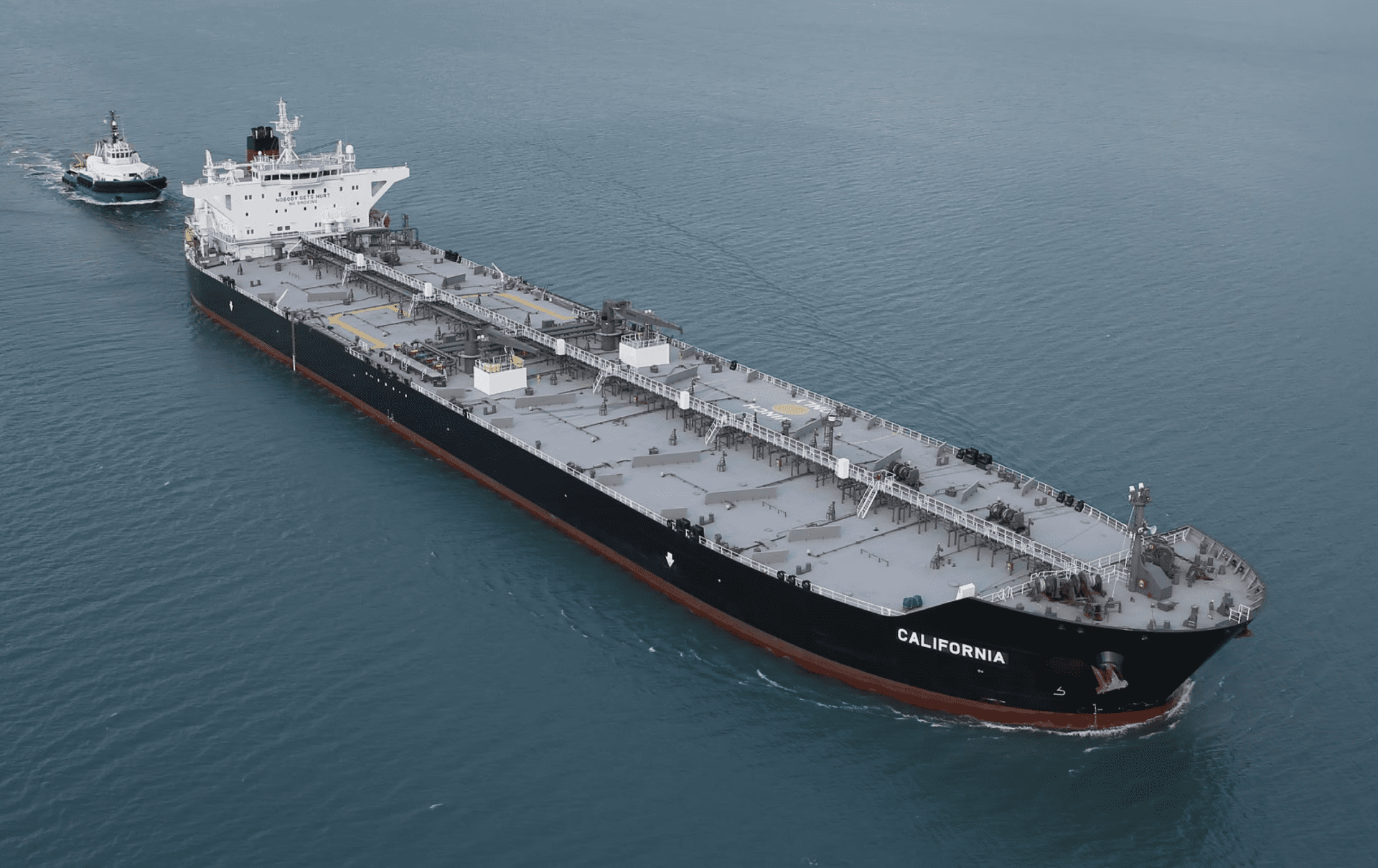
For large integrated traders Vitol, Trafigura, or national oil company trading arms the volatility creates arbitrage opportunities through strategic storage plays and derivative hedging. At current Brent levels above $114/barrel, a VLCC storage play (chartering a 2 million barrel supertanker for floating storage) costs approximately $35,000/day, or roughly $0.53/barrel/month. If traders expect prices to decline by $20/barrel over three months as demand destruction takes hold, the storage economics work: $20/barrel price appreciation minus $1.59/barrel storage cost equals $18.41/barrel gross margin.
For smaller regional operators independent fuel distributors, regional trading houses, industrial consumers without derivatives access the adjustment is more brutal. A mid-sized Indian fuel distributor importing 50,000 tonnes per month faces working capital requirements that have doubled since February. At current prices, the same volume now requires $50 million in financing compared to $25 million three months ago. Without access to sophisticated hedging instruments, these operators absorb the full price volatility and margin compression.
The 4.8 mbpd supply gap will cause demand destruction first in Asia-Pacific and Middle East markets, though IEA estimates of 1.5 mbpd demand contraction in Q2 2026 may prove optimistic. Industrial users with supply chain dependencies will maintain consumption longer than discretionary consumers. The result: uneven demand destruction that creates temporary margin opportunities for flexible operators while crushing those locked into fixed commitments.
For observers: monitor the resumption of flows through the Strait of Hormuz, which "remains the single most important variable in easing pressure on energy supplies, prices and the global economy" according to the IEA. The first reliable signal will be weekly inventory builds in Asia-Pacific storage hubs Singapore, South Korea, Japan when physical barrels start arriving again rather than just strategic reserve releases.





'%3e%3cg id='Final-Copy-2_2_' transform='translate(1275.000000, 200.000000)'%3e%3cpath class='st0' d='M7.4,12.8h6.8l3.1-11.6H7.4C4.2,1.2,1.6,3.8,1.6,7S4.2,12.8,7.4,12.8z'/%3e%3c/g%3e%3c/g%3e%3c/g%3e%3cg id='final---dec.11-2020'%3e%3cg id='_x30_208-our-toggle' transform='translate(-1275.000000, -200.000000)'%3e%3cg id='Final-Copy-2' transform='translate(1275.000000, 200.000000)'%3e%3cpath class='st1' d='M22.6,0H7.4c-3.9,0-7,3.1-7,7s3.1,7,7,7h15.2c3.9,0,7-3.1,7-7S26.4,0,22.6,0z M1.6,7c0-3.2,2.6-5.8,5.8-5.8 h9.9l-3.1,11.6H7.4C4.2,12.8,1.6,10.2,1.6,7z'/%3e%3cpath id='x' class='st2' d='M24.6,4c0.2,0.2,0.2,0.6,0,0.8l0,0L22.5,7l2.2,2.2c0.2,0.2,0.2,0.6,0,0.8c-0.2,0.2-0.6,0.2-0.8,0 l0,0l-2.2-2.2L19.5,10c-0.2,0.2-0.6,0.2-0.8,0c-0.2-0.2-0.2-0.6,0-0.8l0,0L20.8,7l-2.2-2.2c-0.2-0.2-0.2-0.6,0-0.8 c0.2-0.2,0.6-0.2,0.8,0l0,0l2.2,2.2L23.8,4C24,3.8,24.4,3.8,24.6,4z'/%3e%3cpath id='y' class='st3' d='M12.7,4.1c0.2,0.2,0.3,0.6,0.1,0.8l0,0L8.6,9.8C8.5,9.9,8.4,10,8.3,10c-0.2,0.1-0.5,0.1-0.7-0.1l0,0 L5.4,7.7c-0.2-0.2-0.2-0.6,0-0.8c0.2-0.2,0.6-0.2,0.8,0l0,0L8,8.6l3.8-4.5C12,3.9,12.4,3.9,12.7,4.1z'/%3e%3c/g%3e%3c/g%3e%3c/g%3e%3c/g%3e%3c/svg%3e) Privacy Choices
Privacy Choices