.avif)
.jpg)
India's battery-grade critical mineral importers buyers of lithium carbonate, cobalt sulphate, nickel sulphate, and manganese from Australia, Chile, the DRC, and China face their first credible domestic displacement signal, though meaningful volume competition is five to seven years away, not today.
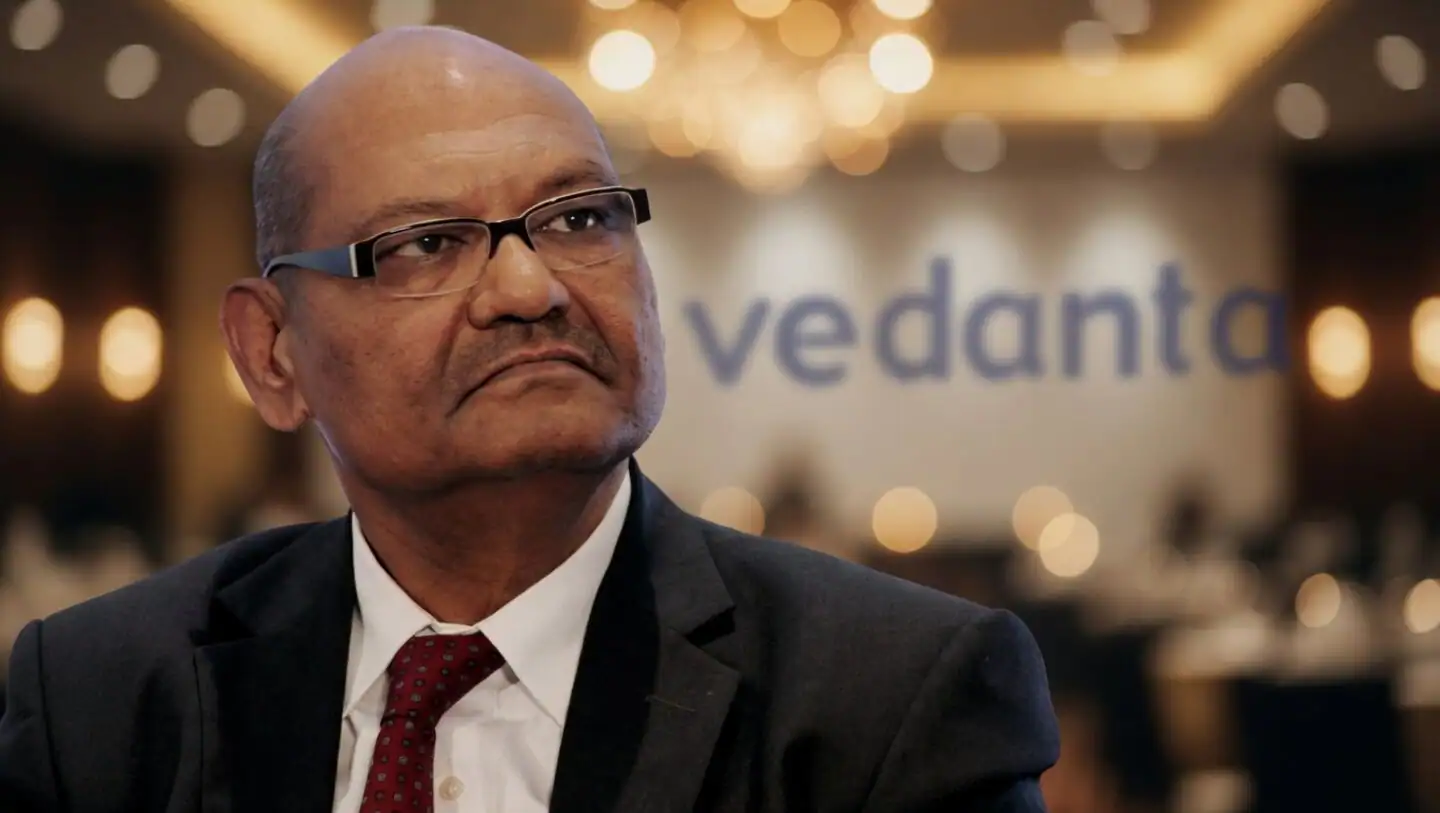
The formation of N.A.N. Silox GreenMet Pvt. Ltd., a 50:50 joint venture between N.A.N. GreenMet (linked to Vedanta's Navin Agarwal) and Belgium-based Silox, marks the most technically specific attempt yet to build a closed-loop critical minerals recovery platform inside India. The JV has announced a two-phase facility in Andhra Pradesh a state on India's southeastern coast with land allocation and incentives reportedly secured from the state government. Phase targets are 40,000 tonnes per annum (tpa) of mechanical shredding capacity and 20,000 tpa of hydrometallurgical processing. Hydrometallurgy chemical leaching and solvent extraction that converts shredded battery material into purified metal compounds is the industry standard for recovering battery-grade lithium, cobalt, and nickel from end of life cells. Silox brings a pilot validated proprietary process already tested in India; N.A.N. GreenMet provides execution infrastructure and market access. The ambition extends beyond recycling: the JV explicitly targets precursor cathode active materials (pCAM the refined metal blends fed into cathode production) and cathode active materials (CAM the finished electrode powders used in cell manufacturing), positioning the venture across multiple steps of the battery value chain.
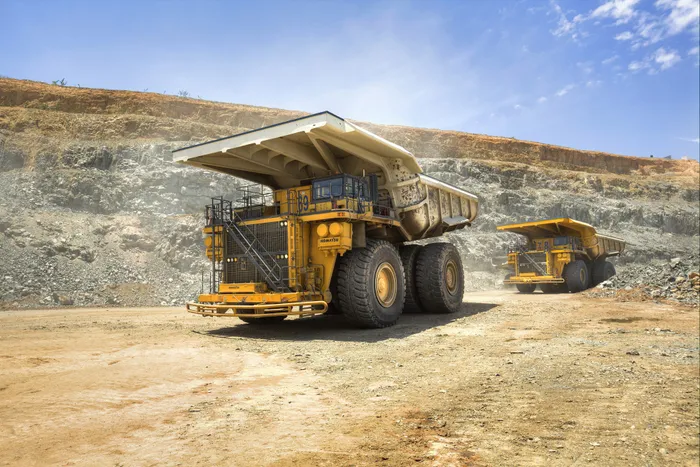
The margin anatomy here is worth decomposing carefully. Battery-grade lithium carbonate currently trades at approximately $12,000–14,000 per tonne on spot markets, down sharply from 2022 peaks but still at a substantial premium to industrial grade material. Cobalt sulphate for battery use commands a premium of roughly 15–20% over standard cobalt metal pricing. A hydrometallurgical plant achieving industry-standard recovery rates typically 85–92% for lithium, cobalt, and nickel transforms black mass (the shredded, powdered output of mechanically processed spent batteries, containing mixed metal oxides) valued at perhaps $800–1,200 per tonne into recovered compounds worth $6,000–10,000 per tonne on a contained metal basis. That is the margin the JV is building toward: the spread between scrap input cost and battery-grade recovered output. At 20,000 tpa hydromet throughput and even conservative recovery assumptions, the annual revenue potential from recovered materials alone is in the range of $120–200 million but only if the process performs at scale and feedstock is available at projected cost.
That feedstock constraint is the structural problem importers should track most carefully. India's EV fleet is still early-stage. The first meaningful wave of battery retirements from EVs sold in volume between 2019 and 2022 will not peak for several years, since lithium-ion battery packs in EVs typically reach end-of life after eight to twelve years of use. At current EV penetration rates in India, the domestic end of life battery pool in 2026 and 2027 is insufficient to sustain 40,000 tpa shredding at meaningful utilisation. The JV is building processing infrastructure ahead of the feedstock curve. This is not necessarily a strategic error first-mover infrastructure positions can lock in collection networks and regulatory approvals but it means the facility will almost certainly depend on imported black mass or electronic waste battery scrap from South Korea, Japan, or Europe in its early operating years, where recycled volumes exceed local processing capacity. No feedstock supply contracts or off-take agreements have been disclosed publicly. The JV that claims to reduce import dependency may, in its first operational phase, replicate a different form of it.
For buyers and sellers currently active in India's battery-grade mineral import trade, the practical implications split by time horizon. On the buy side Indian battery cell manufacturers, EV original equipment manufacturers, and energy storage integrators currently sourcing lithium, cobalt, and nickel sulphate under annual or spot contracts nothing changes in 2026 or 2027. The JV has no commercial output yet. The structural signal is that a credible domestic alternative is being constructed, which weakens the long-term pricing leverage of offshore suppliers. Procurement teams contracting beyond 2029 should begin building optionality into supply agreements rather than locking multi-year volume entirely offshore. On the sell side, existing traders routing Australian lithium carbonate, DRC cobalt, or Indonesian nickel sulphate into India face a five to seven year displacement horizon if the JV scales as planned not an immediate threat, but a directional signal worth embedding in route planning.
For a large integrated trader a Trafigura, Traxys, or a major national oil company's minerals trading arm with derivatives access and multi-origin supply chains, the relevant instrument is optionality preservation: avoid locking more than 30–40% of India-bound battery mineral volume into fixed-price, long-tenor contracts beyond 2028. The JV's scale, if achieved, could displace 15,000–20,000 tonnes of cobalt and nickel sulphate equivalent annually from India's import ledger, a volume that matters at the margin of a thinly traded market. For a smaller regional operator an independent Indian battery materials distributor or a mid-sized chemical importer without derivatives access the practical equivalent is to engage now with the JV's announced pCAM and CAM pathway, positioning as a potential domestic off-taker or blending partner rather than a displaced import competitor. The black mass import arbitrage is also real: sourcing processed black mass from South Korea or Japan, where collection infrastructure outpaces local refining capacity, and supplying it to the Andhra Pradesh facility as a tolling or merchant arrangement, is a commercially viable bridge trade for the JV's first three to four years of operation.
The single most time-bound signal for observers watching whether this JV translates from announcement to commercial reality is the Battery Waste Management Rules (BWMR) extended producer responsibility (EPR) credit price in India the compliance instrument that assigns financial value to collected and recycled battery material, effectively underwriting the economics of domestic recycling. EPR credits certificates issued to recyclers for verified material recovery, which EV and electronics manufacturers must purchase to meet their mandatory recycling obligations are currently trading at nascent, thin levels in India. If BWMR enforcement tightens and EPR credit prices rise materially above Rs 5,000–8,000 per tonne equivalent by Q2 2027, that is the signal that the domestic recycling economics are hardening and the JV's feedstock aggregation strategy is becoming commercially self-sustaining. Watch also for any disclosed off-take agreement between N.A.N. Silox GreenMet and an Indian cell manufacturer or battery pack assembler that single contract would confirm the downstream CAM pathway is real, not aspirational, and would accelerate the displacement timeline for import traders by two to three years.




'%3e%3cg id='Final-Copy-2_2_' transform='translate(1275.000000, 200.000000)'%3e%3cpath class='st0' d='M7.4,12.8h6.8l3.1-11.6H7.4C4.2,1.2,1.6,3.8,1.6,7S4.2,12.8,7.4,12.8z'/%3e%3c/g%3e%3c/g%3e%3c/g%3e%3cg id='final---dec.11-2020'%3e%3cg id='_x30_208-our-toggle' transform='translate(-1275.000000, -200.000000)'%3e%3cg id='Final-Copy-2' transform='translate(1275.000000, 200.000000)'%3e%3cpath class='st1' d='M22.6,0H7.4c-3.9,0-7,3.1-7,7s3.1,7,7,7h15.2c3.9,0,7-3.1,7-7S26.4,0,22.6,0z M1.6,7c0-3.2,2.6-5.8,5.8-5.8 h9.9l-3.1,11.6H7.4C4.2,12.8,1.6,10.2,1.6,7z'/%3e%3cpath id='x' class='st2' d='M24.6,4c0.2,0.2,0.2,0.6,0,0.8l0,0L22.5,7l2.2,2.2c0.2,0.2,0.2,0.6,0,0.8c-0.2,0.2-0.6,0.2-0.8,0 l0,0l-2.2-2.2L19.5,10c-0.2,0.2-0.6,0.2-0.8,0c-0.2-0.2-0.2-0.6,0-0.8l0,0L20.8,7l-2.2-2.2c-0.2-0.2-0.2-0.6,0-0.8 c0.2-0.2,0.6-0.2,0.8,0l0,0l2.2,2.2L23.8,4C24,3.8,24.4,3.8,24.6,4z'/%3e%3cpath id='y' class='st3' d='M12.7,4.1c0.2,0.2,0.3,0.6,0.1,0.8l0,0L8.6,9.8C8.5,9.9,8.4,10,8.3,10c-0.2,0.1-0.5,0.1-0.7-0.1l0,0 L5.4,7.7c-0.2-0.2-0.2-0.6,0-0.8c0.2-0.2,0.6-0.2,0.8,0l0,0L8,8.6l3.8-4.5C12,3.9,12.4,3.9,12.7,4.1z'/%3e%3c/g%3e%3c/g%3e%3c/g%3e%3c/g%3e%3c/svg%3e) Privacy Choices
Privacy Choices