.avif)

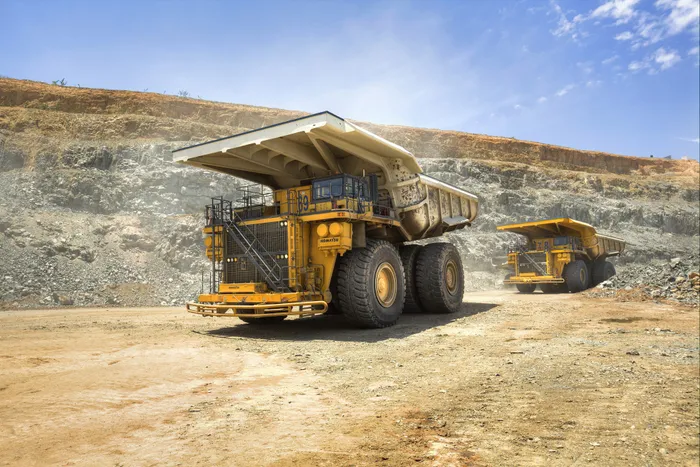
Deep-sea mining developers with active or financed projects over polymetallic sulphide deposits the mineral-rich formations found at hydrothermal vents face measurable cost of capital pressure starting now, as the IUCN's July 2026 classification of 125 of 201 hydrothermal vent mollusc species as threatened sharpens the regulatory and social-licence risk profile ahead of critical International Seabed Authority (ISA) talks.
The number is not marginal. Sixty-two percent of all assessed vent mollusc species threatened many discovered only within the last decade represents a biodiversity signal that project financiers and ESG-mandated institutional lenders cannot easily dismiss. Hydrothermal vents are seafloor fractures where superheated, mineral-rich water erupts from the ocean floor, creating ecosystems powered entirely by chemosynthesis the process by which specialised bacteria convert hydrogen sulphide (a toxic gas expelled by the vents) into usable energy, forming the base of food webs that support tube worms, shrimp, crabs, and the molluscs now under assessment. These ecosystems exist without sunlight. When sediment plumes from mining operations clouds of disturbed seafloor material that can travel hundreds of kilometres smother vent communities, recovery timelines are measured in decades, if recovery occurs at all. The IUCN assessment also flags a practical commercial loss: several vent mollusc species exhibit biomineralisation processes the biological production of mineral structures with documented applications in solar cell materials and potential plastics alternatives. Species extinction forecloses that option permanently.
The structural constraint here is institutional, not scientific. The ISA the UN-affiliated body that governs mineral extraction in international waters beyond national jurisdiction operates by consensus, meaning major mining-interested states including Norway, Japan, China, and the Cook Islands retain effective veto power over any moratorium resolution. Conservation advocacy at the ISA is a legitimate and necessary pressure channel, but it does not, on current evidence, translate quickly into binding extraction prohibitions. More consequential in the near term is the permitting trajectory in US-adjacent international waters, where the Trump administration has, according to reports, accelerated approvals outside the ISA's primary jurisdiction meaning the ISA negotiation timeline may simply be irrelevant to the first wave of extraction. For a deep-sea mining developer holding an exploration licence in the Clarion-Clipperton Zone (a vast Pacific seabed region and the primary target for nodule mining) or a polymetallic sulphide concession at an active vent field, the operative risk is not an ISA moratorium this quarter. It is the financing environment twelve to thirty-six months from now.
The worked numbers matter here. The Metals Company (TMC), the most visible listed deep-sea mining developer, has experienced equity valuation compression correlated with each major regulatory uncertainty event stock movements of 15–30% around ISA session outcomes are documented. For a large integrated developer or NOC-backed mining vehicle with access to project finance markets, the IUCN classification adds a quantifiable risk premium: environmental and social governance (ESG) screens applied by European institutional lenders who provide a significant share of project finance for extractive industries increasingly require biodiversity impact assessments meeting TNFD (Taskforce on Nature-related Financial Disclosures) standards. A project unable to credibly demonstrate vent ecosystem impact mitigation may face a 50–150 basis point uplift in debt cost, or exclusion from green-labelled tranches entirely. On the sell side, terrestrial cobalt and copper producers particularly DRC-origin cobalt refiners and Chilean copper miners gain an implicit supply floor: moratorium risk removes a potential 5–10% medium-term supply addition that deep-sea sources represented, supporting price floors that benefit conventional producers without any action on their part. On the buy side, battery manufacturers and EV supply chain procurement teams face the possibility that cobalt and copper supply diversification via seabed sources a scenario many had modelled for post-2030 becomes legally or commercially unavailable, tightening the medium-term supply picture.
For observers tracking the commercial signal: watch the ISA Council session outcomes scheduled for late 2026 specifically for whether a provisional moratorium resolution reaches a formal vote, and watch TMC's quarterly financing disclosures for evidence of institutional lender withdrawal or covenant tightening, both of which would confirm that biodiversity classification is moving from reputational to balance-sheet consequence. For a smaller regional operator a mid-tier battery materials trader or independent mineral project developer without derivatives access the practical equivalent is straightforward: avoid forward supply contracts that depend on deep-sea cobalt or copper volumes materialising before 2030, and flag seabed-origin supply assumptions in any long-term procurement model as a contingency scenario rather than a base case. The IFC's concurrent issuance of a $2 billion green bond oversubscribed 4x at $8 billion in orders signals that institutional capital is actively pricing biodiversity and climate resilience as bankable risk categories, not peripheral ones. The financing environment is shifting. Deep-sea mining developers who treat the IUCN classification as a communications problem rather than a capital markets signal are misreading the room.



'%3e%3cg id='Final-Copy-2_2_' transform='translate(1275.000000, 200.000000)'%3e%3cpath class='st0' d='M7.4,12.8h6.8l3.1-11.6H7.4C4.2,1.2,1.6,3.8,1.6,7S4.2,12.8,7.4,12.8z'/%3e%3c/g%3e%3c/g%3e%3c/g%3e%3cg id='final---dec.11-2020'%3e%3cg id='_x30_208-our-toggle' transform='translate(-1275.000000, -200.000000)'%3e%3cg id='Final-Copy-2' transform='translate(1275.000000, 200.000000)'%3e%3cpath class='st1' d='M22.6,0H7.4c-3.9,0-7,3.1-7,7s3.1,7,7,7h15.2c3.9,0,7-3.1,7-7S26.4,0,22.6,0z M1.6,7c0-3.2,2.6-5.8,5.8-5.8 h9.9l-3.1,11.6H7.4C4.2,12.8,1.6,10.2,1.6,7z'/%3e%3cpath id='x' class='st2' d='M24.6,4c0.2,0.2,0.2,0.6,0,0.8l0,0L22.5,7l2.2,2.2c0.2,0.2,0.2,0.6,0,0.8c-0.2,0.2-0.6,0.2-0.8,0 l0,0l-2.2-2.2L19.5,10c-0.2,0.2-0.6,0.2-0.8,0c-0.2-0.2-0.2-0.6,0-0.8l0,0L20.8,7l-2.2-2.2c-0.2-0.2-0.2-0.6,0-0.8 c0.2-0.2,0.6-0.2,0.8,0l0,0l2.2,2.2L23.8,4C24,3.8,24.4,3.8,24.6,4z'/%3e%3cpath id='y' class='st3' d='M12.7,4.1c0.2,0.2,0.3,0.6,0.1,0.8l0,0L8.6,9.8C8.5,9.9,8.4,10,8.3,10c-0.2,0.1-0.5,0.1-0.7-0.1l0,0 L5.4,7.7c-0.2-0.2-0.2-0.6,0-0.8c0.2-0.2,0.6-0.2,0.8,0l0,0L8,8.6l3.8-4.5C12,3.9,12.4,3.9,12.7,4.1z'/%3e%3c/g%3e%3c/g%3e%3c/g%3e%3c/g%3e%3c/svg%3e) Privacy Choices
Privacy Choices