.avif)
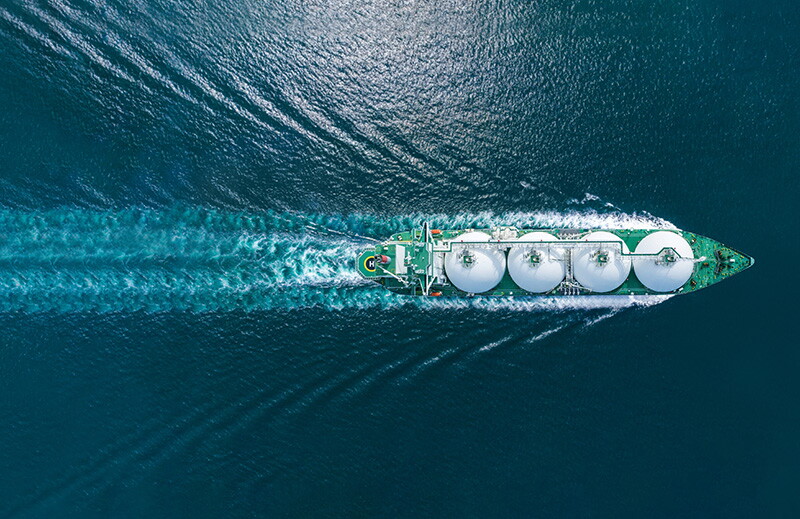
LNG shipping rates have surged to $300,000 per day — a 650% increase from the normal $40,000-50,000 range — as charterers scramble for vessels following Qatar's production halt and Strait of Hormuz disruptions. Qatar and the United Arab Emirates together account for roughly 20% of global LNG supply, transforming what began as a regional conflict into an immediate global energy shortage. For spot LNG charterers — utilities, independent power producers, and trading houses without long-term vessel commitments — the freight explosion represents an existential margin crisis. Asian spot LNG prices reached $25.40 per million British thermal units earlier this week, but the freight component alone now adds $4-6/MMBtu to delivered costs, versus the normal $1-2/MMBtu. The arithmetic is unforgiving: at $300,000 per day for a typical 174,000 cubic metre LNG carrier on a 25-day Asia-Europe voyage, freight costs approach $28 per tonne — nearly matching the entire netback margin on many routes.
The freight surge reflects more than simple supply-demand imbalance. It signals a fundamental breakdown in the global LNG logistics system. Charter rates (the daily hire cost for an LNG vessel) are the foundational cost in LNG trade, typically representing 20-30% of delivered price. When rates multiply eight-fold overnight, the economics of entire trade flows collapse. With Qatar's production halted and tanker traffic through the Strait of Hormuz severely disrupted, traders are already preparing for longer shipping routes and tighter vessel availability. A cargo that previously moved Qatar-to-Japan (4,500 nautical miles, 12 days) may now require sourcing from the US Gulf Coast (11,500 nautical miles, 25 days), doubling voyage duration and vessel requirements.
Force majeure — the legal doctrine allowing contract suspension during extraordinary events — cascades through LNG markets in predictable patterns. QatarEnergy CEO Saad al-Kaabi said an Iranian attack on Qatar's Ras Laffan gas facility wiped out about 17 percent of the country's LNG export capacity, affecting buyers across Italy, Belgium, South Korea and China. When producers declare force majeure, downstream contracts unravel systematically. Shell, TotalEnergies, and other portfolio players who aggregate Qatar volumes for resale to end-users must themselves declare force majeure to their customers. The repairs will sideline 12.8 million tonnes of LNG production per year for three to five years, meaning this is not a temporary freight spike but a structural shift in global LNG flows.
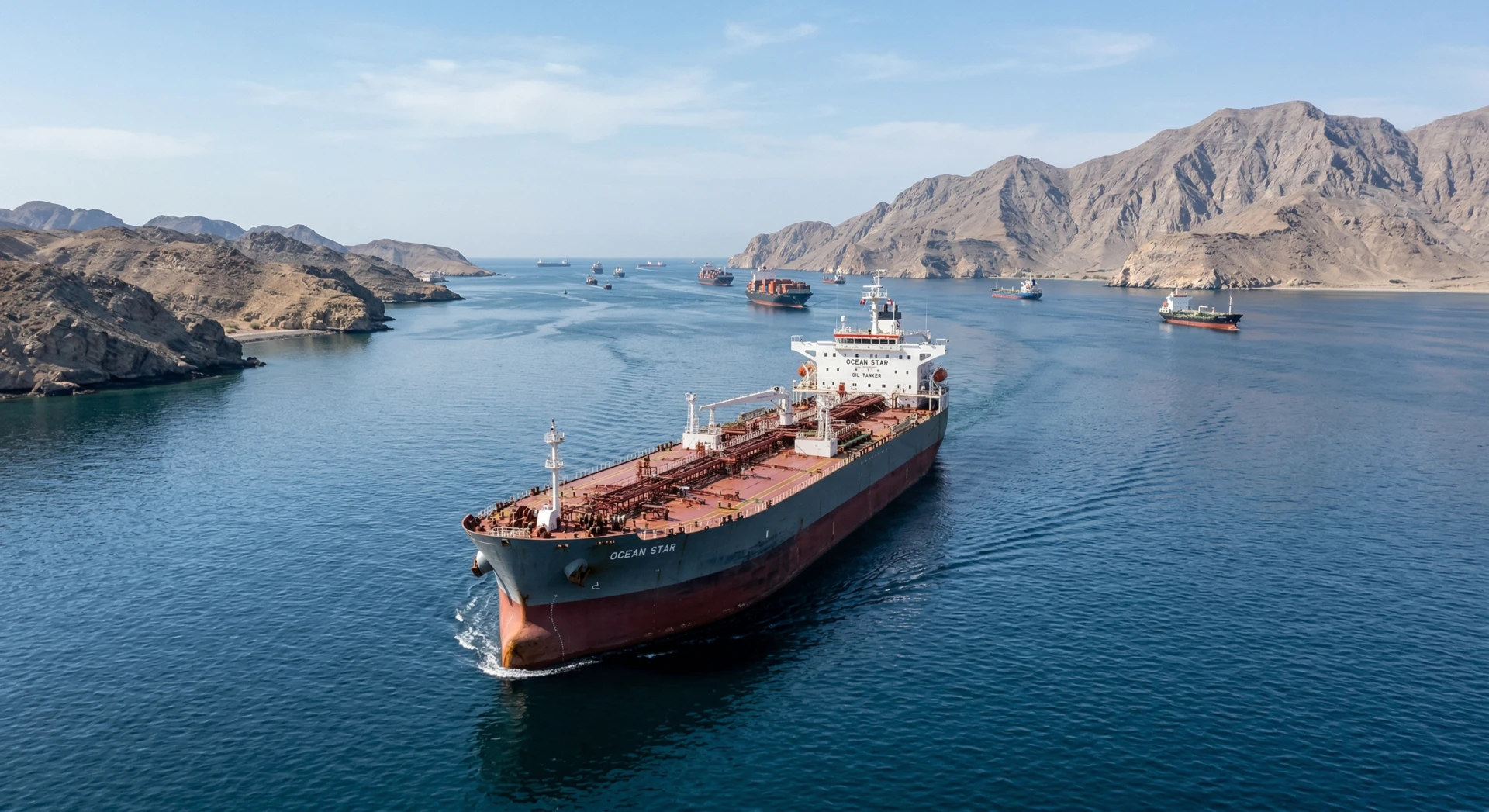
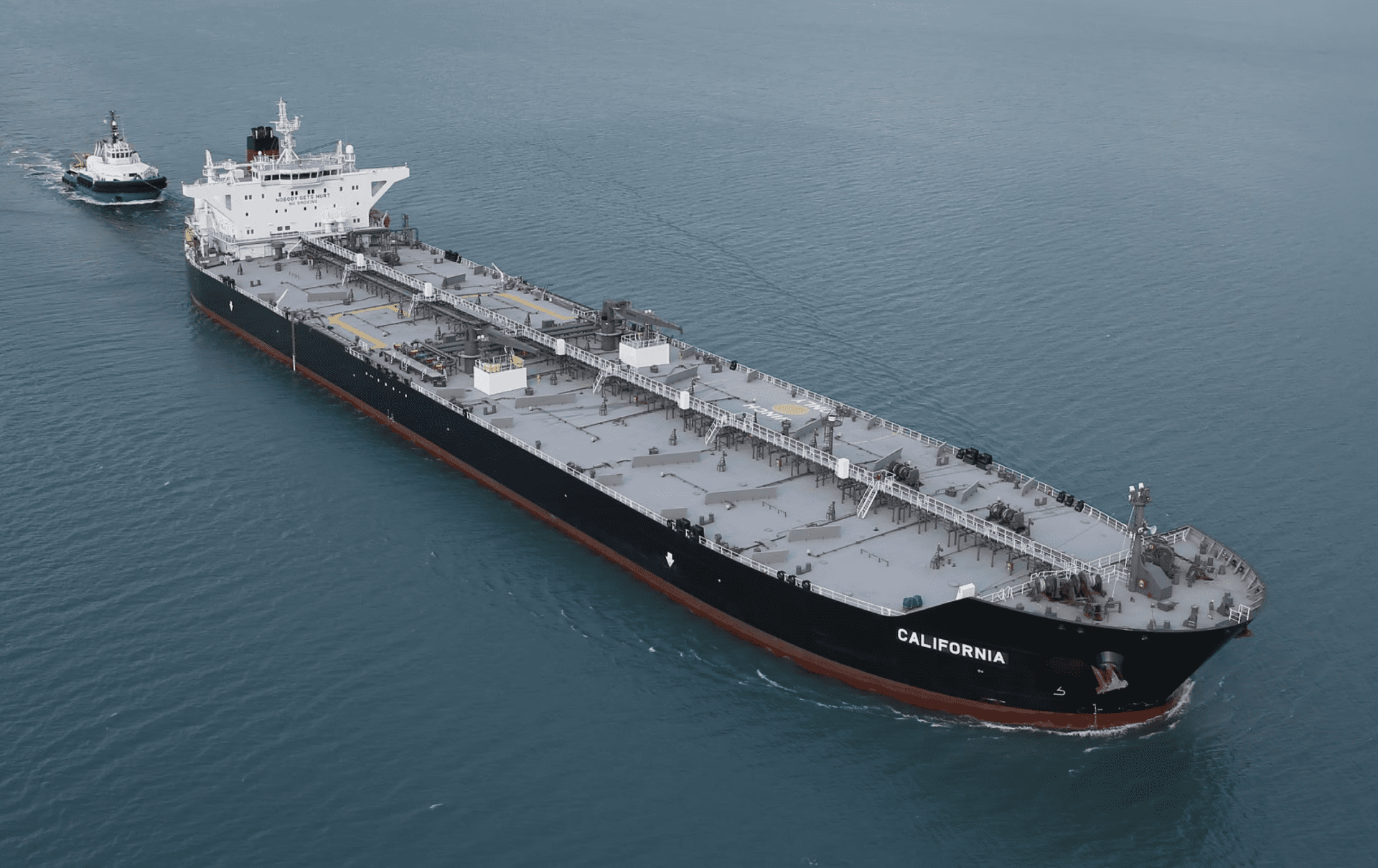
The vessel shortage compounds the production shortage. LNG carriers — highly specialised ships costing $200+ million each — cannot be substituted or quickly redeployed like crude tankers. The global fleet comprises roughly 650 vessels, with utilisation rates typically running 85-90%. Around 85% of Qatar's LNG exports normally go to Asian buyers, meaning 50-60 dedicated vessels are suddenly available but must now serve entirely different routes. A vessel optimised for Qatar-Japan shuttles (short, frequent voyages) cannot efficiently serve US-Asia routes (long, infrequent voyages) without significant commercial penalty.
On the buy side, Asian utilities face impossible choices. Japan, South Korea, and Taiwan — importers with minimal domestic gas production — cannot simply reduce consumption. Power generation, petrochemical feedstock, and industrial heating require continuous supply. India, which sources nearly half of its LNG intake from Qatari supply under long-term contracts, scrambles to secure replacement volumes in a spot market stripped of 20% of its normal supply. These buyers compete not on normal commercial terms but on pure desperation: securing supply at any cost versus grid instability or industrial shutdown.
On the sell side, vessel owners with available capacity capture unprecedented windfalls. A modern LNG carrier earning $50,000 per day before the crisis now commands $300,000 per day — an additional $250,000 daily premium that accrues entirely to the shipowner, not the cargo owner. Over a typical 25-day voyage, this represents $6.25 million in additional revenue per trip. For owners with a fleet of 20 vessels, the crisis generates $125 million in monthly windfall profits. Conversely, cargo owners (producers, traders, utilities with shipping obligations) bear the freight penalty with no offsetting benefit.
For large integrated players — national oil companies, major trading houses like Vitol or Trafigura, utilities with diversified supply portfolios — the crisis creates complex optimization challenges but manageable exposure. These operators maintain vessel pools, hold long-term charters at fixed rates, and can deploy financial derivatives to hedge freight exposure. An integrated player with 10 long-term charters at $50,000 per day can re-charter those vessels in the spot market at $300,000 per day, capturing a $2.5 million daily arbitrage while fulfilling supply obligations with alternative vessels or sources.
For smaller regional operators — independent LNG importers, mid-sized utilities, industrial gas users — the crisis offers no comparable hedging mechanisms. A regional power company in Thailand or Philippines, dependent on monthly spot LNG purchases, faces freight costs that exceed the commodity cost itself. These operators cannot access vessel derivatives markets, maintain strategic inventories, or negotiate alternative supply sources on short notice. They either pay the inflated freight costs (passing expense to consumers via fuel surcharges) or reduce gas consumption, triggering power sector cascading effects.
The critical question is not freight rates but vessel availability. Charter rates assume vessels will actually accept the assignments. The world's largest shipping association BIMCO advised vessels Friday to avoid the strait due to the threat of mines. The area is 'not declared safe for transit at this point'. War risk insurance — coverage for vessels transiting conflict zones — has spiked from 0.125% to over 5% of vessel value per transit. For a $200 million LNG carrier, this represents $10 million in insurance costs per voyage, often exceeding the cargo value itself.
Marine insurance operates on Lloyd's of London principles: coverage availability depends on underwriter assessment of acceptable risk. If Lloyd's syndicates refuse coverage — or demand premiums exceeding cargo economics — vessels simply cannot transit regardless of charter rates. During the blockade, commercial tanker transit collapsed to near zero as Lloyd's war risk insurance premiums made transit commercially unviable at over 5% of vessel value. This creates a paradox: charter rates spike to $300,000 per day for voyages that may be commercially impossible to execute.
The freight component reveals broader LNG market structure. Unlike crude oil (fungible, globally traded, multiple transport options), LNG requires dedicated infrastructure from wellhead to burner tip. Liquefaction plants, specialised vessels, regasification terminals, and pipeline networks form an integrated chain where disruption at any point affects the entire system. Until it was effectively closed, the waterway had been a critical artery for not only crude oil and liquefied natural gas, but several critical commodities as well. The Strait of Hormuz handles 20% of global LNG trade not because of geographic convenience but because Qatar's North Field — the world's largest gas reservoir — has no alternative export route.
Financing structures amplify the crisis. LNG projects typically rely on 20-year take-or-pay contracts (buyers commit to minimum volume regardless of actual need) supported by shipping agreements at fixed or formula-based freight rates. When force majeure breaks these contractual chains, buyers lose both supply security and freight hedging. A Japanese utility with a 20-year Qatar contract at formula-based shipping costs suddenly faces spot charter exposure at eight times normal rates. The financing implications extend beyond energy: LNG-dependent industries (steel, chemicals, power generation) face input cost shocks that cascade through manufacturing supply chains.
The solution horizon depends on physical restoration timelines, not market mechanisms. The repairs will sideline 12.8 million tonnes of LNG production per year for three to five years, meaning Qatar's production cannot quickly resume even if security improves. Alternative supplies — US export growth, Australian project acceleration, African developments — require 3-5 year lead times for meaningful volume increases. The freight crisis reflects this fundamental imbalance: vessel demand competing for reduced cargo supply across longer distances.
For market observers, the key monitoring signals are vessel positioning and insurance availability rather than reported charter rates. Transit activity through the Strait of Hormuz dropped to its lowest level since the blockade began. On April 19, just three vessels transited the Strait — one inbound and two outbound crossings. Real transit activity — measured by AIS tracking data — provides more reliable intelligence than reported charter fixtures. Lloyd's war risk insurance bulletin updates (typically weekly) signal whether vessels can actually execute charters at any price.
The longer-term structural shift favors Atlantic Basin LNG suppliers (US, West Africa, potentially Arctic developments) over traditional Middle East exporters. Charterers increasingly value supply security over delivered cost optimization. The second problem is that even if the strait were to reopen soon, the underlying supply and logistical stresses of the waterway's closure will likely persist for months. This preference shift — driven by geopolitical risk rather than economic fundamentals — may permanently alter global LNG trade patterns, supporting sustained freight premiums even after immediate crisis resolution.
.jpg)

'%3e%3cg id='Final-Copy-2_2_' transform='translate(1275.000000, 200.000000)'%3e%3cpath class='st0' d='M7.4,12.8h6.8l3.1-11.6H7.4C4.2,1.2,1.6,3.8,1.6,7S4.2,12.8,7.4,12.8z'/%3e%3c/g%3e%3c/g%3e%3c/g%3e%3cg id='final---dec.11-2020'%3e%3cg id='_x30_208-our-toggle' transform='translate(-1275.000000, -200.000000)'%3e%3cg id='Final-Copy-2' transform='translate(1275.000000, 200.000000)'%3e%3cpath class='st1' d='M22.6,0H7.4c-3.9,0-7,3.1-7,7s3.1,7,7,7h15.2c3.9,0,7-3.1,7-7S26.4,0,22.6,0z M1.6,7c0-3.2,2.6-5.8,5.8-5.8 h9.9l-3.1,11.6H7.4C4.2,12.8,1.6,10.2,1.6,7z'/%3e%3cpath id='x' class='st2' d='M24.6,4c0.2,0.2,0.2,0.6,0,0.8l0,0L22.5,7l2.2,2.2c0.2,0.2,0.2,0.6,0,0.8c-0.2,0.2-0.6,0.2-0.8,0 l0,0l-2.2-2.2L19.5,10c-0.2,0.2-0.6,0.2-0.8,0c-0.2-0.2-0.2-0.6,0-0.8l0,0L20.8,7l-2.2-2.2c-0.2-0.2-0.2-0.6,0-0.8 c0.2-0.2,0.6-0.2,0.8,0l0,0l2.2,2.2L23.8,4C24,3.8,24.4,3.8,24.6,4z'/%3e%3cpath id='y' class='st3' d='M12.7,4.1c0.2,0.2,0.3,0.6,0.1,0.8l0,0L8.6,9.8C8.5,9.9,8.4,10,8.3,10c-0.2,0.1-0.5,0.1-0.7-0.1l0,0 L5.4,7.7c-0.2-0.2-0.2-0.6,0-0.8c0.2-0.2,0.6-0.2,0.8,0l0,0L8,8.6l3.8-4.5C12,3.9,12.4,3.9,12.7,4.1z'/%3e%3c/g%3e%3c/g%3e%3c/g%3e%3c/g%3e%3c/svg%3e) Privacy Choices
Privacy Choices