.avif)
Western governments have sanctioned 636 shadow fleet tankers that transport Russian oil, yet these measures have done little to stop the illicit trade. Russian oil export prices in November showed Urals crude trading at approximately $61 per barrel from Baltic and Black Sea ports, with the discount to Brent narrowing to around $12 per barrel. For Chinese refiners operating in this market, the mathematics are stark: freight premiums for shadow fleet operators now reach $50,000-125,000 daily per vessel versus normal rates, creating a structural cost that sanctions cannot eliminate.
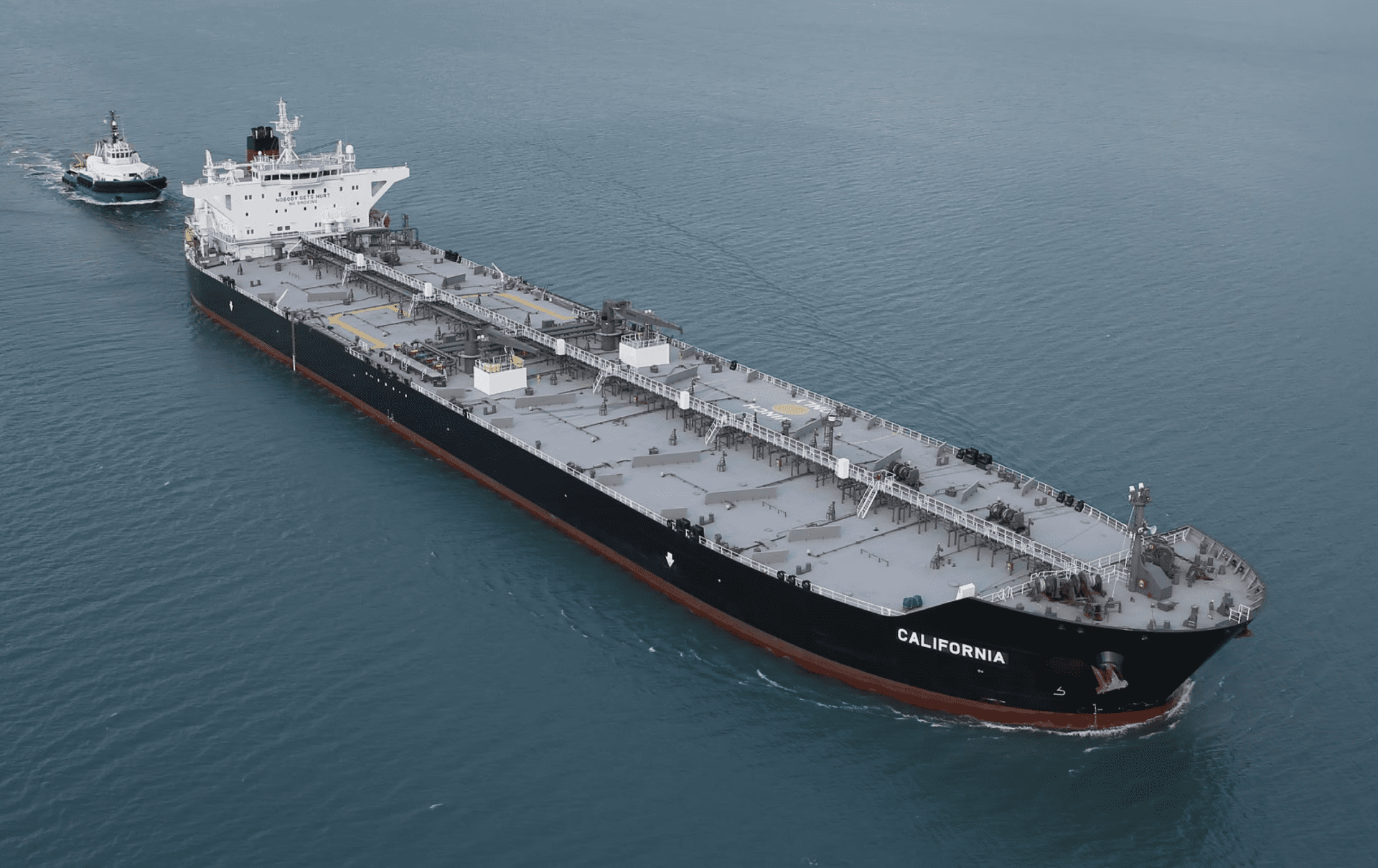
The shadow fleet has more than tripled in size since 2022, with the fleet reported as having more than tripled in size since the start of the Russo-Ukrainian war. Since Russia's invasion of Ukraine in 2022, Moscow has spent over $10 billion building a shadow fleet to circumvent restrictions, with 70% of Russia's seaborne exports now transported by the shadow fleet earning Russia an extra $8 billion in oil sales in the first nine months of 2024. The vessel arithmetic reveals why sanctions struggle: a 300,000-tonne VLCC (Very Large Crude Carrier — a supertanker capable of carrying roughly 2 million barrels of crude) moving Urals crude from Primorsk to Qingdao earns approximately $75,000 daily at current shadow fleet premiums, compared to $25,000 for a compliant vessel on comparable routes. The $50,000 daily premium — $1.5 million per 30-day voyage — more than compensates for sanctions risks.
Tankers are regularly renamed, reflagged, and transferred through shell companies, allowing them to evade detection. These vessels employ every trick in the book — flag swapping, name changes, hidden ownership, and ship-to-ship transfers — to keep Russian oil money flowing. Flag states such as Panama, the Marshall Islands, and Liberia stopped registering shadow fleet vessels, but non-existent flag registries are now illegally being set up by dubious companies without countries even knowing about it. The reflagging mechanism operates like financial shell companies: when sanctions hit the Eventin under Panama flag in February 2025, it was quickly transferred to a new registry claiming Malawi authority — a landlocked country with no maritime jurisdiction. The bureaucratic delay between sanctions designation and enforcement creates a 30-60 day window where vessels simply disappear administratively.
On the buy side, Chinese independent refiners ("teapots") face a procurement calculus where shadow fleet crude costs $8-15/barrel less than compliant alternatives, despite freight premiums. A 500,000-barrel cargo delivered to Shandong at $61/barrel versus $76/barrel for Saudi crude creates $7.5 million in feedstock savings that dwarf the additional $3-4 million in freight and insurance costs. On the sell side, shadow fleet vessel owners operating 15-20 year old tankers purchased for $15-25 million earn full payback within 12-18 months at current premium rates. For traders and intermediaries, the margin concentrates in the freight premium differential: brokers arranging shadow fleet charters earn 3-5% commission on inflated day rates versus 1.5-2% on standard fixtures.
The discount for Russian oil compared to international benchmark Brent crude has shrunk from as much as $35 per barrel to less than $10 per barrel. Export revenues averaged $16.4 billion per month for the first 11 months of 2024, 5% higher than in 2023 as Russian oil averaged $64 per barrel. Evading the cap earned Russia an extra $9.4 billion. For large integrated traders (Trafigura, Vitol, CNPC trading arms) with derivatives access, the hedge is straightforward: buy $60 put options on Brent-Urals spread while fixing shadow fleet tonnage at premium rates. For smaller regional operators — mid-sized Chinese refiners, independent fuel distributors — without derivatives access, the practical equivalent involves bilateral pricing formulas with 3-6 month averaging periods and diversifying across multiple shadow fleet operators to reduce vessel-specific sanctions risk.
In the first half of 2024, almost 42% of total Russian seaborne oil was exported from Baltic and Black Sea ports by shadow tankers, with Russia's shadow fleet transporting approximately 92.4 million barrels in April 2024, accounting for about 82% of all its exports passing through the Baltic Sea. The supply chain geography shows why enforcement fails: crude oil loaded at Primorsk onto a shadow fleet Aframax (medium-sized tanker carrying 700,000 barrels) transfers cargo ship-to-ship (STS) in international waters off Gibraltar or Malta. The receiving VLCC, potentially under different ownership and flag, completes the delivery to China. Each transfer point involves different legal jurisdictions, insurers, and service providers — creating enforcement fragmentation that no single authority can close.
Around 40% of tankers that carried Russian oil last year are now sanctioned by at least one government, cutting them off from insurance, certification, and compliant banking systems. A tightening web of US and European measures is sharply raising the cost of operating these tankers. Yet that model is now faltering as Western governments have shifted from targeting intermediaries to directly blacklisting tankers themselves. The insurance dimension reveals the enforcement gap: when the cap was first imposed, some 70% of Russian oil was transported on vessels with IG insurance, but that share has now fallen to 10%. Russian and non-Western insurers now provide coverage at 0.8-1.2% of hull value annually versus 0.3-0.5% for International Group coverage, but shadow fleet owners accept the premium as operational cost.
Russia's shadow tankers use AIS blackouts or spoofing to hide entry into Russian ports or ship to ship transfers at sea, where oil is moved sometimes multiple times between vessels. To conceal their activities further, the shadow fleet uses flags of convenience from countries that are less likely to enforce Western sanctions. From January to August 2024, there was a 277% increase in the number of shadow tankers passing through the Danish Straits compared with the same timeframe in 2022. During the same period, the Dover and Gibraltar Straits experienced a 355% increase in shadow tankers. The AIS (Automatic Identification System) spoofing technology allows vessels to broadcast false positions — showing a tanker near Bulgaria while satellite imagery confirms it's actually loading at Taman terminal. This "dark sailing" capability, combined with frequent identity changes, means enforcement authorities track vessel names and IMO numbers that no longer correspond to physical assets.
Despite the sanction regime imposed by EU, US and the G7, in 2024, Moscow's oil revenues actually increased about 5% from 2023, reaching approximately $16.4 billion. On January 10, 2025, the United States imposed new sanctions against Russia including 183 tankers belonging to the shadow fleet. The financing structure determines trade viability: shadow fleet operators use non-dollar letters of credit (LCs) issued by Chinese, Indian, or UAE banks to their Chinese refinery counterparties. A lower price cap of $30 per barrel would have slashed Russia's oil export revenue by 25% from the start of sanctions until December 2024, but in December alone, a $30 price cap would have slashed Russian revenues by 25%. However, enforcement depends entirely on correspondent banking relationships that Chinese and Indian banks increasingly bypass through bilateral clearing mechanisms.
For observers, the specific signal is the Brent-Urals spread traded on Shanghai International Energy Exchange (INE). When this spread exceeds $15/barrel for 5+ consecutive trading days, it indicates shadow fleet freight premiums are compressing margins sufficiently to reduce Russian export economics. Monitor this metric weekly through December 2026 — sustained narrowing below $12/barrel would signal effective sanctions pressure, while widening above $18/barrel confirms enforcement failure. The alternative indicator is Baltic Dry Index divergence: if Capesize rates rise above $25,000/day while shadow fleet Suezmax rates remain below $15,000/day, it signals legitimate shipping capacity constraints are forcing Russian crude into higher-cost logistics chains.


.jpg)

'%3e%3cg id='Final-Copy-2_2_' transform='translate(1275.000000, 200.000000)'%3e%3cpath class='st0' d='M7.4,12.8h6.8l3.1-11.6H7.4C4.2,1.2,1.6,3.8,1.6,7S4.2,12.8,7.4,12.8z'/%3e%3c/g%3e%3c/g%3e%3c/g%3e%3cg id='final---dec.11-2020'%3e%3cg id='_x30_208-our-toggle' transform='translate(-1275.000000, -200.000000)'%3e%3cg id='Final-Copy-2' transform='translate(1275.000000, 200.000000)'%3e%3cpath class='st1' d='M22.6,0H7.4c-3.9,0-7,3.1-7,7s3.1,7,7,7h15.2c3.9,0,7-3.1,7-7S26.4,0,22.6,0z M1.6,7c0-3.2,2.6-5.8,5.8-5.8 h9.9l-3.1,11.6H7.4C4.2,12.8,1.6,10.2,1.6,7z'/%3e%3cpath id='x' class='st2' d='M24.6,4c0.2,0.2,0.2,0.6,0,0.8l0,0L22.5,7l2.2,2.2c0.2,0.2,0.2,0.6,0,0.8c-0.2,0.2-0.6,0.2-0.8,0 l0,0l-2.2-2.2L19.5,10c-0.2,0.2-0.6,0.2-0.8,0c-0.2-0.2-0.2-0.6,0-0.8l0,0L20.8,7l-2.2-2.2c-0.2-0.2-0.2-0.6,0-0.8 c0.2-0.2,0.6-0.2,0.8,0l0,0l2.2,2.2L23.8,4C24,3.8,24.4,3.8,24.6,4z'/%3e%3cpath id='y' class='st3' d='M12.7,4.1c0.2,0.2,0.3,0.6,0.1,0.8l0,0L8.6,9.8C8.5,9.9,8.4,10,8.3,10c-0.2,0.1-0.5,0.1-0.7-0.1l0,0 L5.4,7.7c-0.2-0.2-0.2-0.6,0-0.8c0.2-0.2,0.6-0.2,0.8,0l0,0L8,8.6l3.8-4.5C12,3.9,12.4,3.9,12.7,4.1z'/%3e%3c/g%3e%3c/g%3e%3c/g%3e%3c/g%3e%3c/svg%3e) Privacy Choices
Privacy Choices