.avif)
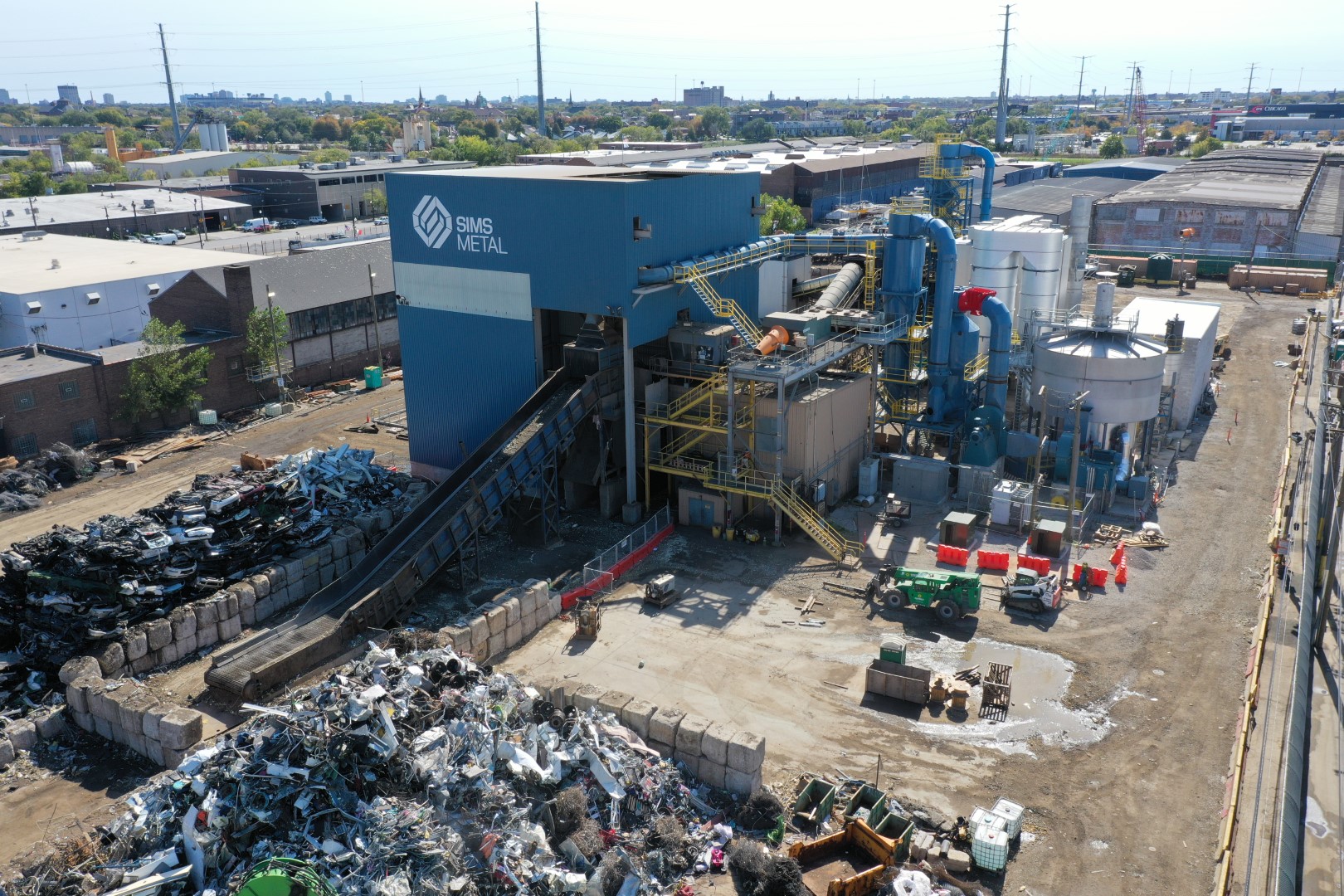
Scrap metal processors with significant North American non-ferrous exposure are capturing an earnings windfall in the second half of FY26 but the mechanism is a tariff wall, not a structural demand shift, and it carries an expiry date that no one can yet see.
Sims Limited's guidance upgrade from A$350M–A$400M to A$420M–A$435M in underlying EBIT (earnings before interest and tax, the core operating profit measure before financing costs) for the fiscal year ending 30 June 2026 is the most concrete signal yet that North American scrap conditions have materially firmed. At the midpoint, that is an A$42.5M lift versus the centre of the prior range, equivalent to roughly US$30M at current exchange rates. The upgrade is not evenly distributed. Sims North America Metals and SA Recycling its two principal North American non-ferrous processing businesses are carrying the majority of the incremental gain. Ferrous markets in Asia have improved but Australian and New Zealand ferrous scrap remains subdued, suppressed by a surge in Chinese steel exports that has flooded regional markets and removed the price incentive for domestic scrap collection. The story inside this guidance upgrade is therefore two markets moving in opposite directions simultaneously, and the gap between them is structural, not cyclical.
The non-ferrous engine driving North American outperformance is Zorba pricing. Zorba is the industry term for shredded mixed non-ferrous scrap primarily aluminium, with copper, zinc, and other metals present produced when automobile hulks and white goods pass through an industrial shredder. It is a feedstock commodity, sold by weight to secondary smelters. Zorba values have been elevated through 2026, supported by two concurrent forces: continued demand from the DDR4 memory chip recycling cycle (DDR4 being the previous generation of computer memory now being decommissioned at scale as data centres upgrade to DDR5 infrastructure) and, critically, US tariff protection. Those tariffs the specific rates are not published in Sims' disclosure are preventing North American Zorba from flowing freely to traditional Asian import markets, particularly Chinese secondary smelters. The domestic US Zorba price has therefore stayed elevated while Asian import prices have diverged downward. Sims is capturing that domestic price premium at scale.
To make the margin arithmetic concrete: consider a mid-sized North American scrap processor handling 15,000 tonnes of Zorba per month. At a processing cost of approximately US$80–90/MT (shredding, sorting, transport to port or domestic mill), a Zorba sale price of US$280–300/MT delivers a gross margin of roughly US$190–210/MT before overheads. In the absence of tariff protection and assuming free-flow to Asian buyers at a discount of US$30–40/MT to domestic US price the same cargo prices at US$245–265/MT, compressing gross margin to US$155–185/MT. Over 15,000 tonnes per month, that US$25–35/MT differential is worth US$375,000–$525,000 monthly, or US$4.5M–$6.3M annually, per processor of that scale. For Sims, operating at multiples of that volume, the arithmetic compounds quickly. This is not a rounding error. It is the margin.
On the buy side downstream smelters and foundries purchasing Zorba as a feedstock US tariff protection has reduced their access to price competition from Asian buyers. Domestic secondary aluminium smelters in the US are currently paying a tariff-elevated domestic price with limited ability to benchmark against Asian import alternatives. Their incentive is to lock in forward supply agreements before any tariff relaxation restores that competitive pressure and depresses Zorba prices. On the sell side scrap processors, shredder operators, and collectors the current environment is unusually favourable. But the risk is directional and asymmetric: any softening of US trade posture toward China or other Asian Zorba consumers would reprice the entire domestic market within weeks, not quarters. The Sims upgrade acknowledges this implicitly by citing US tariff protections as a named earnings driver, which means the guidance corridor lives and dies with that policy lever.
For large integrated scrap traders operators with derivatives access or bilateral hedging capacity the immediate action is to examine whether non-ferrous forward sale contracts can be fixed at current elevated levels for Q1 FY27 volumes, before the fiscal year end removes the current tariff environment from forward price discovery. Non-ferrous scrap does not have a deeply liquid forward curve in the way crude oil does, but Aluminium LME (London Metal Exchange) futures can serve as a partial hedge against Zorba price direction, even if the Zorba to LME spread is variable. For smaller regional scrap processors independent shredder operators, municipal recycling contractors, mid-sized auto wrecking networks the practical equivalent is to accelerate collections and throughput now, converting inventory to revenue while the domestic price premium holds. Sitting on stockpiles into an uncertain tariff environment is a carry risk, not a strategic position. The Sims Lifecycle Services division's A$170M–A$175M EBIT contribution from electronics and data centre recycling is also worth noting for smaller operators who service IT asset disposition: decommissioning volumes from hyperscale data centres are a multi-year flow, not a one-cycle event, and early relationship establishment with enterprise decommissioning teams creates recurring intake.
The signal to watch is not the next Sims earnings release. It is the US Trade Representative's (USTR) schedule of Section 232 and Section 301 tariff reviews, which typically occur on a 180 day or annual cycle. Any indication of renewed trade framework negotiations with China particularly any communiqué referencing secondary materials or scrap metal trade should be treated as a potential Zorba price reset event. Simultaneously, monitor the Chinese Steel Export Volume Index published monthly by the China Iron and Steel Association (CISA): if monthly export volumes remain above 10 million tonnes through July–August 2026, Australian and New Zealand ferrous scrap margins will remain compressed with no near-term floor. The two signals point in opposite directions: one tells you when the North American non-ferrous premium expires, the other tells you when the ANZ ferrous discount bottoms. Both are observable, named, and carry a 60 to 90 day relevance window from today. Track them together, not separately.






'%3e%3cg id='Final-Copy-2_2_' transform='translate(1275.000000, 200.000000)'%3e%3cpath class='st0' d='M7.4,12.8h6.8l3.1-11.6H7.4C4.2,1.2,1.6,3.8,1.6,7S4.2,12.8,7.4,12.8z'/%3e%3c/g%3e%3c/g%3e%3c/g%3e%3cg id='final---dec.11-2020'%3e%3cg id='_x30_208-our-toggle' transform='translate(-1275.000000, -200.000000)'%3e%3cg id='Final-Copy-2' transform='translate(1275.000000, 200.000000)'%3e%3cpath class='st1' d='M22.6,0H7.4c-3.9,0-7,3.1-7,7s3.1,7,7,7h15.2c3.9,0,7-3.1,7-7S26.4,0,22.6,0z M1.6,7c0-3.2,2.6-5.8,5.8-5.8 h9.9l-3.1,11.6H7.4C4.2,12.8,1.6,10.2,1.6,7z'/%3e%3cpath id='x' class='st2' d='M24.6,4c0.2,0.2,0.2,0.6,0,0.8l0,0L22.5,7l2.2,2.2c0.2,0.2,0.2,0.6,0,0.8c-0.2,0.2-0.6,0.2-0.8,0 l0,0l-2.2-2.2L19.5,10c-0.2,0.2-0.6,0.2-0.8,0c-0.2-0.2-0.2-0.6,0-0.8l0,0L20.8,7l-2.2-2.2c-0.2-0.2-0.2-0.6,0-0.8 c0.2-0.2,0.6-0.2,0.8,0l0,0l2.2,2.2L23.8,4C24,3.8,24.4,3.8,24.6,4z'/%3e%3cpath id='y' class='st3' d='M12.7,4.1c0.2,0.2,0.3,0.6,0.1,0.8l0,0L8.6,9.8C8.5,9.9,8.4,10,8.3,10c-0.2,0.1-0.5,0.1-0.7-0.1l0,0 L5.4,7.7c-0.2-0.2-0.2-0.6,0-0.8c0.2-0.2,0.6-0.2,0.8,0l0,0L8,8.6l3.8-4.5C12,3.9,12.4,3.9,12.7,4.1z'/%3e%3c/g%3e%3c/g%3e%3c/g%3e%3c/g%3e%3c/svg%3e) Privacy Choices
Privacy Choices