.avif)
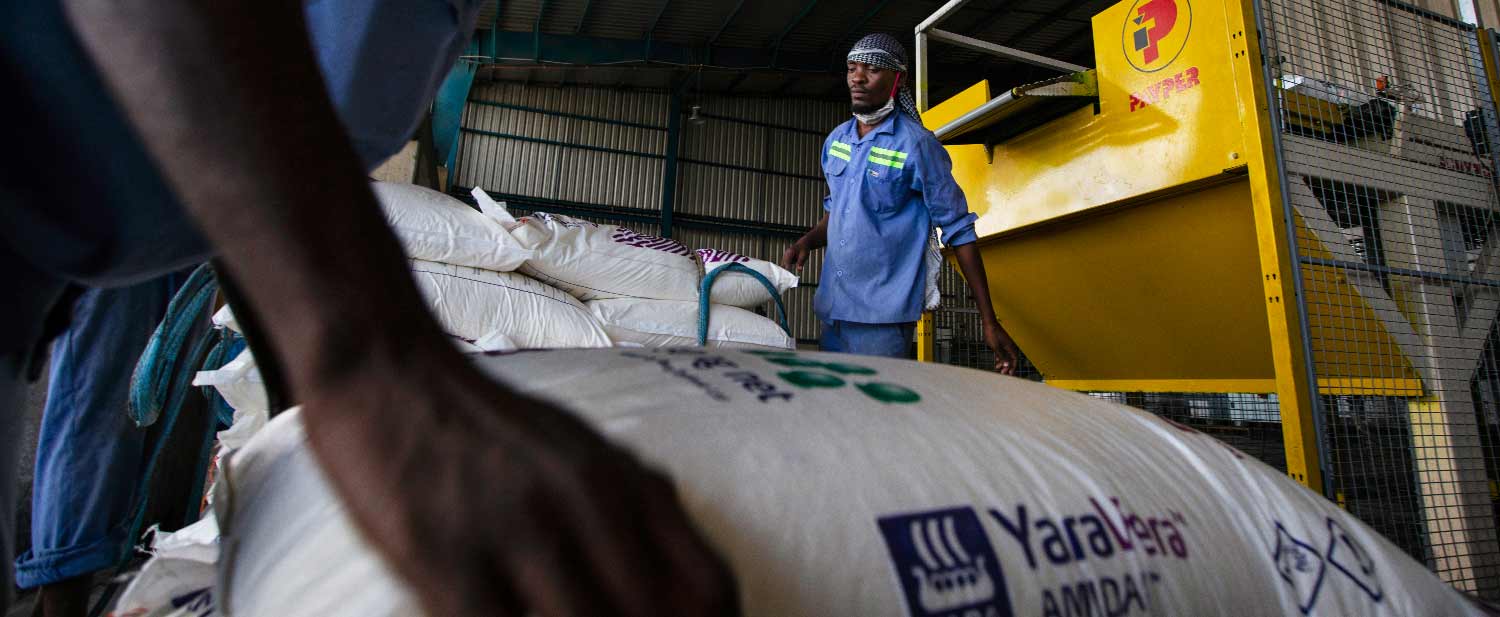
African governments that have budgeted for fertilizer imports in 2026 but cannot close contracts because commercial banks will not extend trade finance against sovereign purchase orders from sub-Saharan counterparties now have a mechanism designed specifically to unlock that impasse. The African Development Bank's Africa Fertilizer Financing Mechanism (AFFM), in its scaled-up second iteration, is deploying credit guarantees and blended finance instruments that convert previously unbankable government procurement programmes into transactions that private capital will actually touch. The commercial consequence is immediate: for any fertilizer supplier, trader, or development finance institution active in the region, the payment structure of African sovereign fertilizer deals is changing. Deals that died in 2023 on foreign exchange and bank risk grounds are being restructured and revived.
The binding constraint in African fertilizer markets has never been agronomic need. Sub-Saharan Africa uses an average of 17 kilograms of fertilizer per hectare, against a global average above 130 kg/ha a gap that represents tens of millions of tonnes of latent annual demand. What prevents that demand from becoming executed trade is the financing and foreign exchange (FX) problem. African government buyers typically hold purchase intentions in local currency. Fertilizer is priced and settled in US dollars. Commercial banks in Europe, the Middle East, and Asia the jurisdictions where most fertilizer producers bank are reluctant to extend letters of credit (LCs, the bank guarantees that assure sellers payment once shipping documents are presented) against sovereign purchase orders from many African counterparties, particularly where the country carries an IMF programme or elevated sovereign risk ratings. The AFFM's core instrument is the partial credit guarantee a commitment by the AfDB or a co-guarantor to cover a defined portion of payment default risk which moves these transactions from "unacceptable" to "insurable" on a commercial bank's credit committee.
The May 2024 Nairobi Declaration, according to reports from the African Union Commission, committed fifteen heads of state to tripling fertilizer use across the continent over ten years. AFFM 2.0 is the financial architecture designed to make that commitment executable rather than aspirational. The mechanism combines three instruments: partial credit guarantees, which de-risk the payment obligation for sellers; blended finance structures, where concessional capital from development finance institutions (DFIs) public institutions that lend at below market rates to catalyse private investment is stacked alongside commercial lending to lower the total cost of borrowing; and FX risk mitigation tools, which protect both buyers and sellers against currency depreciation between contract signature and delivery. The African Union's AUDA-NEPAD (the AU Development Agency, responsible for implementing AU decisions) reported progress to the AU Assembly in February 2026, indicating the institutional architecture is now operational rather than aspirational.
To understand what this means in margin terms, consider a worked example. A Kenyan government buyer contracts 50,000 tonnes of urea (a nitrogen fertilizer accounting for roughly half of global nitrogen demand) at $380 per tonne CFR (Cost and Freight the seller bears freight cost to the destination port) Mombasa. The total contract value is $19 million. Without a guarantee, a European commercial bank asked to issue a standby LC faces a Kenya sovereign risk charge of perhaps 4–6% per annum on the contingent liability, adding $760,000–$1.14 million to the cost of the instrument annually. The Kenyan Treasury cannot afford that premium on top of the fertilizer cost, the deal stalls. With an AfDB partial credit guarantee covering 70% of the payment obligation, the bank's net exposure drops to $5.7 million. The risk charge falls to below 1.5%, cutting the LC cost to under $285,000 and making the transaction viable. This is the mechanism the AFFM $2 million Kenya pilot which according to reports successfully expanded farmer access demonstrated at smaller scale.
On the buy side, for African government procurement agencies and national agricultural development ministries, the immediate opportunity is that previously draft tender documents can now be matched to a financing wrapper before they go to market. A Ministry of Agriculture that issues a tender with an AFFM guarantee pre-attached confirmed credit coverage, named guarantor, FX hedge structure already priced will receive a materially different set of supplier responses than one issuing a bare purchase order payable in local currency at an unspecified future date. Procurement timelines shorten, supplier pools widen (including producers in Russia, Morocco, Saudi Arabia, and Egypt who previously declined African sovereign tenders on payment grounds), and delivered prices fall because suppliers no longer need to embed a distress premium for payment uncertainty. The estimate from comparable DFI-backed procurement structures is that a credible payment guarantee reduces the delivered price premium on African government fertilizer tenders by $15–40 per tonne, depending on country risk.
On the sell side, the margin anatomy shifts decisively toward suppliers who have pre-positioned for DFI-backed business and away from those competing on spot price alone. A large integrated producer OCP Group (Morocco's state phosphate company and the world's largest phosphate exporter), Nutrien (Canada), or Eurochem (Russia/Switzerland) with a relationship banking structure capable of accepting AfDB guarantees, can bid into AFFM-backed tenders with confidence that payment risk is substantially managed. For these operators, the winning instrument is the framework agreement with the AFFM or a co-guarantor (IFC, USAID DCA, or national export credit agencies), signed in advance and referenced in each tender bid. This converts individual tender risk into portfolio exposure, which treasury functions can model and hedge on a portfolio basis using fertilizer futures or structured offtake.
For smaller and regional operators a mid-sized North African blender, an East African agri-input distributor, or a regional trading house without direct access to derivatives markets the practical equivalent is different but achievable. The critical move is establishing an agency or sub-distribution agreement with a producer that already holds AFFM framework eligibility, rather than attempting to bid directly. The physical supply chain for most East African government fertilizer programmes runs: production (Morocco, Egypt, Middle East, or FSU); bulk vessel loading at Jousefiya, Ain Sokhna, or Ruwais; transit through the Suez Canal or around the Cape (approximately 22–28 days to Mombasa, 35–42 days Cape routing); discharge and storage at Mombasa or Dar es Salaam; and then last-mile distribution to aggregation points. A regional distributor that controls warehouse capacity and last-mile logistics and can demonstrate this to an AFFM-backed procurer captures distribution margin even without upstream production assets. The margin here is not in product; it is in logistics certainty.
For traders and intermediaries, the arbitrage is specific and time-limited. The AFFM financing wrapper is currently available on a bilateral, negotiated basis not yet through a standardised tender process that levels the playing field. The operators who build relationships with AFFM technical teams, AfDB country offices, and the relevant national guarantee counterparties now are establishing positioning that will be difficult to replicate once the mechanism standardises. The structural signal to watch is when AFFM guarantee terms appear in public tender documents as a standard clause rather than a bespoke negotiated outcome at that point, the informational advantage narrows. Until then, the margin concentrates with intermediaries who can originate an AFFM-eligible transaction structure and bring it to a government buyer as a packaged proposition: product, financing wrapper, and logistics in a single commercial offer.
Observers should watch one specific indicator: the AU Assembly's next fertilizer financing progress report, expected at the February 2027 session, which will disclose the aggregate value of guarantees issued and the number of sovereign tenders completed under AFFM 2.0. If cumulative guarantees exceed $500 million by that date against a 2026 target implied by AFFM documentation it confirms the mechanism has crossed from pilot to operational scale and that the pricing shift described above is structural rather than episodic. The February 2027 session is the first hard evidence gate. Before that, the signal to track is whether any of the fifteen Nairobi Declaration signatories Kenya, Ethiopia, Tanzania, and Nigeria are the most commercially significant issue public tenders referencing AFFM guarantee coverage in their payment terms. That document, when it appears, is the clearest proof of concept the market will receive.
.jpg)


'%3e%3cg id='Final-Copy-2_2_' transform='translate(1275.000000, 200.000000)'%3e%3cpath class='st0' d='M7.4,12.8h6.8l3.1-11.6H7.4C4.2,1.2,1.6,3.8,1.6,7S4.2,12.8,7.4,12.8z'/%3e%3c/g%3e%3c/g%3e%3c/g%3e%3cg id='final---dec.11-2020'%3e%3cg id='_x30_208-our-toggle' transform='translate(-1275.000000, -200.000000)'%3e%3cg id='Final-Copy-2' transform='translate(1275.000000, 200.000000)'%3e%3cpath class='st1' d='M22.6,0H7.4c-3.9,0-7,3.1-7,7s3.1,7,7,7h15.2c3.9,0,7-3.1,7-7S26.4,0,22.6,0z M1.6,7c0-3.2,2.6-5.8,5.8-5.8 h9.9l-3.1,11.6H7.4C4.2,12.8,1.6,10.2,1.6,7z'/%3e%3cpath id='x' class='st2' d='M24.6,4c0.2,0.2,0.2,0.6,0,0.8l0,0L22.5,7l2.2,2.2c0.2,0.2,0.2,0.6,0,0.8c-0.2,0.2-0.6,0.2-0.8,0 l0,0l-2.2-2.2L19.5,10c-0.2,0.2-0.6,0.2-0.8,0c-0.2-0.2-0.2-0.6,0-0.8l0,0L20.8,7l-2.2-2.2c-0.2-0.2-0.2-0.6,0-0.8 c0.2-0.2,0.6-0.2,0.8,0l0,0l2.2,2.2L23.8,4C24,3.8,24.4,3.8,24.6,4z'/%3e%3cpath id='y' class='st3' d='M12.7,4.1c0.2,0.2,0.3,0.6,0.1,0.8l0,0L8.6,9.8C8.5,9.9,8.4,10,8.3,10c-0.2,0.1-0.5,0.1-0.7-0.1l0,0 L5.4,7.7c-0.2-0.2-0.2-0.6,0-0.8c0.2-0.2,0.6-0.2,0.8,0l0,0L8,8.6l3.8-4.5C12,3.9,12.4,3.9,12.7,4.1z'/%3e%3c/g%3e%3c/g%3e%3c/g%3e%3c/g%3e%3c/svg%3e) Privacy Choices
Privacy Choices