.avif)
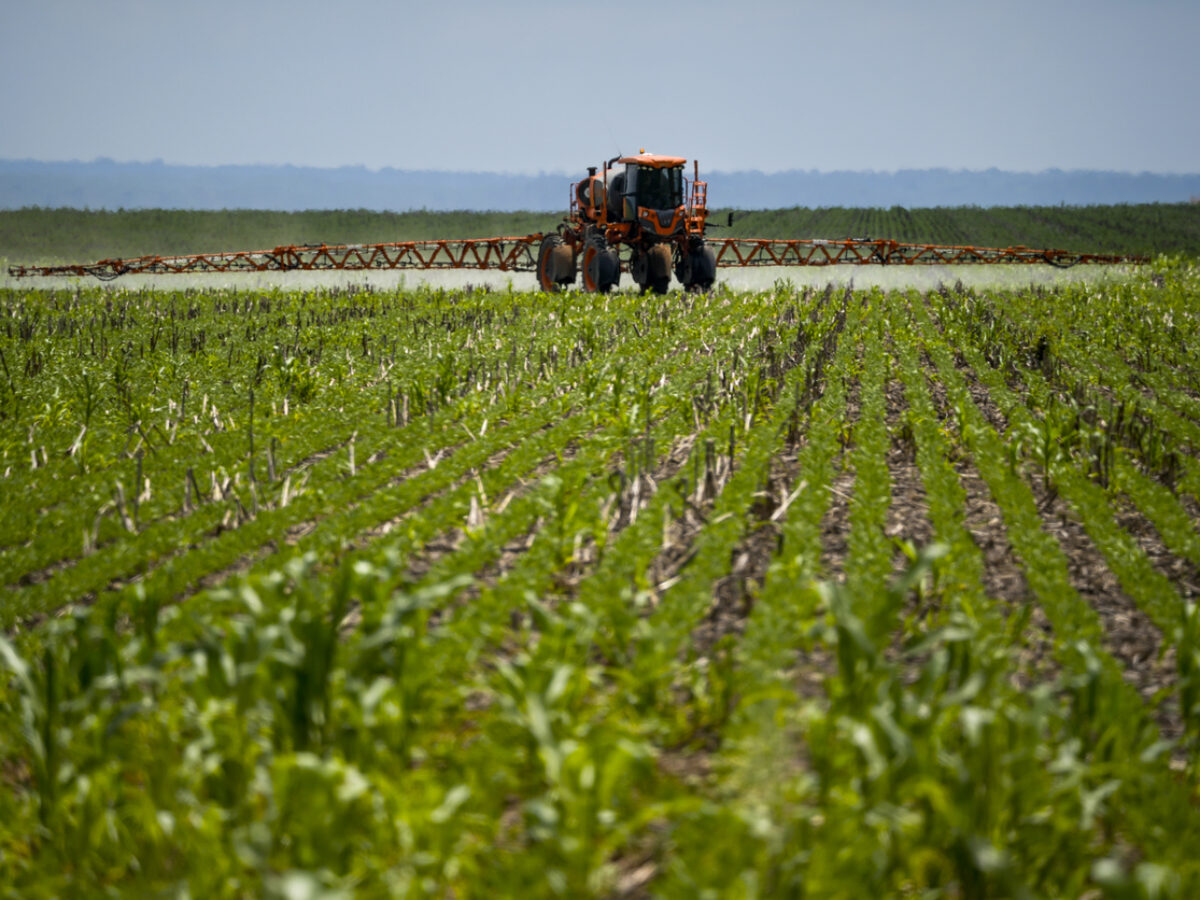
Brazilian specialty fertilizer makers who move decisively into organomineral and biofertilizer lines in 2026 are looking at a market worth approximately USD 2.1 billion this year, growing at 5.5 percent annually to USD 2.75 billion by 2031 while their counterparts anchored to commodity urea are watching margins erode in a global price war that shows no sign of resolution.
The structural split in Brazil's fertilizer market is now wide enough to constitute two entirely different businesses. Commodity urea the synthetic nitrogen fertilizer produced at scale from natural gas and traded globally is subject to relentless price competition from heavily subsidised producers in Russia, the Middle East, and China. Spot urea prices have oscillated between USD 220 and USD 350 per tonne over the past eighteen months, with the floor driven down by export surges from state-backed producers who treat market share as a strategic objective rather than a commercial one. In that environment, a Brazilian or African distributor of commodity nitrogen is essentially a price taker with a logistics cost attached. Specialty and organomineral lines operate on entirely different economics: differentiated inputs, regulatory tailwinds, and buyers who are selecting on efficacy and residue compliance rather than on the lowest tonne price.
Organomineral fertilizers products that marry an organic matrix, typically composted or processed biological material, with conventional mineral NPK (nitrogen, phosphorus, and potassium, the three primary macronutrients in crop nutrition) deliver a dual agronomic benefit. The mineral fraction provides the immediate nutrient response that crops require at each growth stage. The organic fraction builds soil organic matter over time, improving water retention, microbial activity, and long-run yield stability. That combination is commercially significant because it addresses two buyer concerns simultaneously: short-term yield performance, which drives farmer purchasing decisions in any single season, and long-term soil health, which is becoming a compliance and certification requirement in export-oriented Brazilian agriculture. Under Brazil's ABC+ Plan the federal government's low-carbon agriculture programme, which directs concessional credit and technical support toward sustainable farming practices organomineral adoption is explicitly incentivised. That policy support is not trivial; it reduces the effective cost of transition for farmers and de-risks the sales pipeline for producers.
To understand where the margin actually sits, consider a worked example. A Brazilian producer selling granular urea into a West African market at current spot prices of approximately USD 295 per tonne FOB (free on board meaning the seller's price obligation ends at the port of loading, with freight and insurance borne by the buyer) faces ocean freight costs of roughly USD 45–55 per tonne on a handysize vessel (a smaller bulk carrier of approximately 25,000–40,000 DWT, suited to ports with draft restrictions common in West Africa), landing the cargo at USD 340–350 per tonne. Against a local resale price constrained by competing cargoes from Russian and Ukrainian exporters, the delivered margin is typically USD 15–25 per tonne at best and negative on a bad week. Now consider the same producer selling an organomineral NPK blend 15-10-10 formulation with 20 percent organic carbon content at USD 480–540 per tonne FOB. Freight economics are identical. The delivered price lands at USD 525–595, and in markets where residue-free or certified-input premiums apply, the resale margin is USD 60–90 per tonne. The margin is not narrowed by the price war it is largely insulated from it.
On the buy side, the relevant actors in this trade are African agribusiness importers, national fertilizer distribution companies, and the procurement arms of large commercial farming operations across East and West Africa. These buyers face a genuine portfolio decision. For standard crop nutrition in commodity grain production maize, sorghum, wheat conventional urea and MAP (monoammonium phosphate) remain cost-effective and will continue to dominate volume. But for export-oriented horticulture, certified organic production, and any supply chain connected to European retailers operating maximum residue level (MRL) requirements the legal limits on pesticide and synthetic chemical residues allowed in produce the preference for biological and organomineral inputs is rapidly hardening from preference into requirement. Buyers sourcing for those chains are not shopping on price per tonne. They are shopping on input specification, traceability documentation, and the supplier's ability to provide consistent formulation across multiple shipments.
On the sell side, Brazilian specialty fertilizer producers particularly those with established composting or organic waste processing infrastructure hold a structural input cost advantage. Brazil generates enormous volumes of agricultural by-products: sugarcane filter cake, poultry litter, coffee husks, soybean meal processing residues. These organic matrices, when properly processed and certified, form the biological base of organomineral products at input costs that are largely domestic and relatively stable, unlike the gas-linked cost structure that drives commodity urea economics. A producer who controls their organic matrix supply is partially decoupled from the global energy price cycle that makes urea economics so volatile. For that producer, the margin anatomy looks like this: organic matrix input at USD 40–60 per tonne of finished product, mineral NPK sourced at commodity prices (which are low right now a temporary benefit, not a structural one), blending and granulation costs at USD 30–45 per tonne, and a finished product that sells at more than double the ex-works price of plain urea. The biofertilizer segment microbial inoculants and liquid biological products that fix nitrogen or solubilise phosphorus through microbial activity rather than chemical addition is smaller at approximately USD 155 million in 2026 but growing at 9.35 percent annually, the fastest rate in the portfolio, and carries gross margins that commodity nutrient businesses would find unrecognisable.
For a large integrated agri-input trader an operator with the balance sheet and logistics footprint to move multiple product lines across multiple African markets simultaneously the strategic play is portfolio construction. Commodity urea provides volume and relationship continuity with buyers who need full crop nutrition programmes; specialty and organomineral lines provide the margin that justifies the overhead of a Brazil to Africa trade structure. A well-constructed portfolio hedges the commodity price risk on urea through futures positions on the CME (Chicago Mercantile Exchange) or through forward purchase agreements with Brazilian producers, while preserving full upside on specialty line pricing, which has no liquid futures market precisely because it is not yet commoditised. That absence of a futures market is, paradoxically, a margin protection mechanism: without a transparent spot index to anchor buyer negotiations, the seller retains pricing power in direct commercial discussions.
For a smaller regional operator a mid-sized fertilizer importer serving, say, Côte d'Ivoire's cocoa belt or Kenya's horticultural export sector the derivatives toolkit is not available, and that is not actually a disadvantage in the specialty segment. The practical equivalent of a hedge is a direct offtake agreement with a Brazilian organomineral producer: fix volume, specification, and price for twelve months. Lock in a formulation that meets the buyer's certification requirements. Build the logistics relationship with a regional shipping agent who understands the port infrastructure constraints shallow drafts at many West African terminals mean smaller vessels, which means higher per-tonne freight but also faster turnaround and lower minimum lot sizes. A 1,000 tonne container-packed shipment of organomineral granules is commercially viable for a regional operator where a 25,000 tonne bulk urea cargo is not.
The time-bound signal to watch is the publication of Brazil's ABC+ Plan credit allocation for the 2026–27 agricultural year, expected from the Ministry of Agriculture in Q3 2026. If concessional credit volumes directed toward low-carbon input adoption including organomineral and biological fertilizers increase relative to the 2025–26 allocation, it confirms that domestic demand is being structurally supported rather than merely incentivised at the margin. That confirmation would justify accelerating market entry into the Brazil to Africa specialty corridor before larger integrated traders formalise their own product line extensions. The window to establish distribution relationships, secure preferred supplier agreements with Brazilian producers, and build buyer-side specification compliance documentation is approximately twelve to eighteen months before the segment attracts the kind of competitive attention that compresses the margins that currently make it worth entering.
.jpg)




'%3e%3cg id='Final-Copy-2_2_' transform='translate(1275.000000, 200.000000)'%3e%3cpath class='st0' d='M7.4,12.8h6.8l3.1-11.6H7.4C4.2,1.2,1.6,3.8,1.6,7S4.2,12.8,7.4,12.8z'/%3e%3c/g%3e%3c/g%3e%3c/g%3e%3cg id='final---dec.11-2020'%3e%3cg id='_x30_208-our-toggle' transform='translate(-1275.000000, -200.000000)'%3e%3cg id='Final-Copy-2' transform='translate(1275.000000, 200.000000)'%3e%3cpath class='st1' d='M22.6,0H7.4c-3.9,0-7,3.1-7,7s3.1,7,7,7h15.2c3.9,0,7-3.1,7-7S26.4,0,22.6,0z M1.6,7c0-3.2,2.6-5.8,5.8-5.8 h9.9l-3.1,11.6H7.4C4.2,12.8,1.6,10.2,1.6,7z'/%3e%3cpath id='x' class='st2' d='M24.6,4c0.2,0.2,0.2,0.6,0,0.8l0,0L22.5,7l2.2,2.2c0.2,0.2,0.2,0.6,0,0.8c-0.2,0.2-0.6,0.2-0.8,0 l0,0l-2.2-2.2L19.5,10c-0.2,0.2-0.6,0.2-0.8,0c-0.2-0.2-0.2-0.6,0-0.8l0,0L20.8,7l-2.2-2.2c-0.2-0.2-0.2-0.6,0-0.8 c0.2-0.2,0.6-0.2,0.8,0l0,0l2.2,2.2L23.8,4C24,3.8,24.4,3.8,24.6,4z'/%3e%3cpath id='y' class='st3' d='M12.7,4.1c0.2,0.2,0.3,0.6,0.1,0.8l0,0L8.6,9.8C8.5,9.9,8.4,10,8.3,10c-0.2,0.1-0.5,0.1-0.7-0.1l0,0 L5.4,7.7c-0.2-0.2-0.2-0.6,0-0.8c0.2-0.2,0.6-0.2,0.8,0l0,0L8,8.6l3.8-4.5C12,3.9,12.4,3.9,12.7,4.1z'/%3e%3c/g%3e%3c/g%3e%3c/g%3e%3c/g%3e%3c/svg%3e) Privacy Choices
Privacy Choices