.avif)
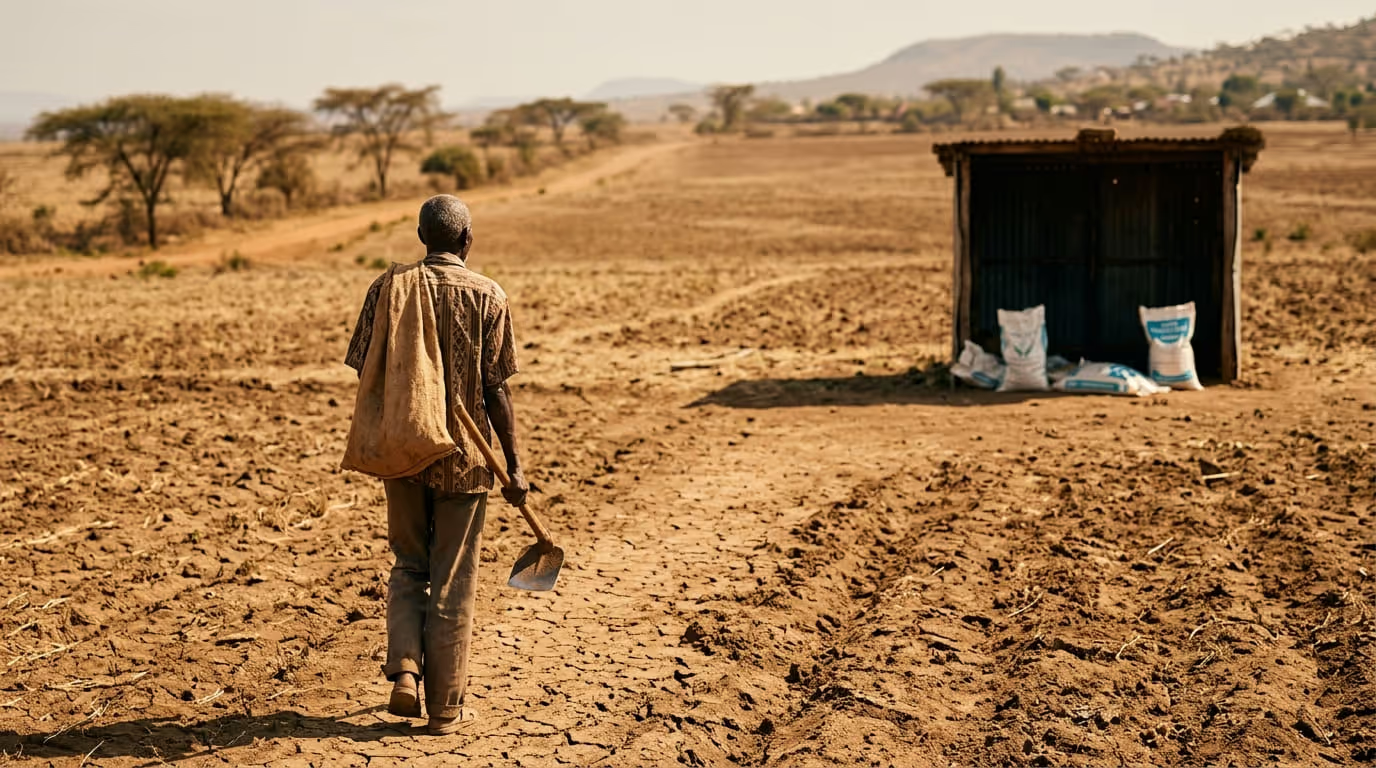
Fertilizer importers worldwide face a crisis that threatens to starve tens of millions. The UN warns 45 million more people could face hunger and starvation if the Strait of Hormuz through which 30% of internationally traded fertilizers normally pass remains blocked. Urea prices jumped 53.7% in March to $725.6 per ton, while 70% of US farmers report being unable to afford all the fertilizer they need. The margin erosion is complete. For a mid-sized Indian fertilizer importer shipping a 50,000-tonne urea cargo to Bangladesh a route representing typical South-South trade patterns the delivered cost has increased from approximately $480/MT in February to over $720/MT today. At current freight rates of $45/MT and insurance premiums that have tripled to $15/MT, the all-in landed cost exceeds $780/MT. Import-dependent countries cannot absorb this increase.
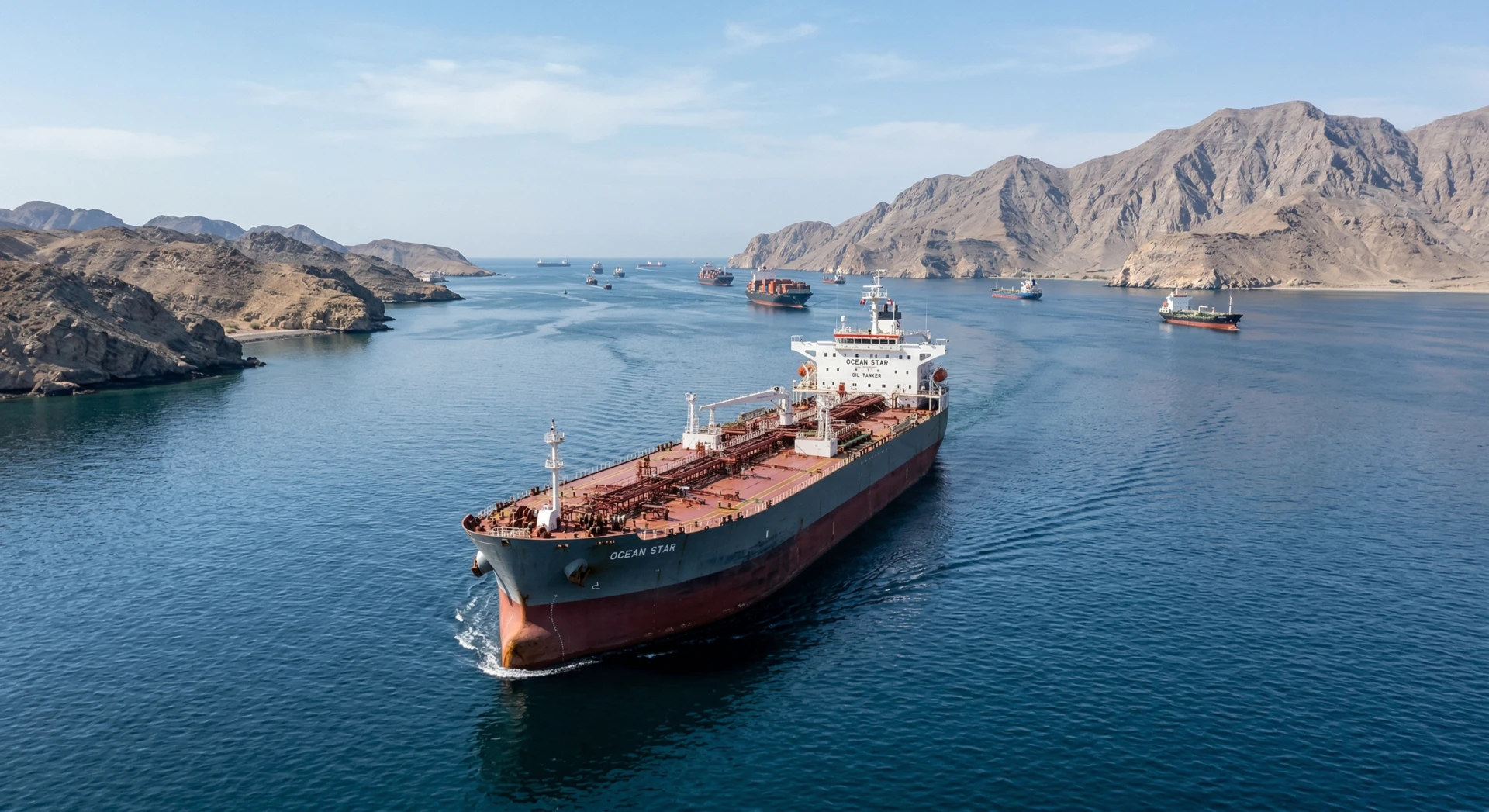
The Strait of Hormuz a 34 kilometre chokepoint between Iran and Oman has become agriculture's most critical vulnerability. Iran has blocked shipping through the strait since February 28, when the US and Israel launched an air war against Iran, with the Iranian Revolutionary Guard issuing warnings and laying sea mines. Shipping traffic has fallen from around 130 ships per day to single digits, a decline of more than 95%. This is not a temporary disruption. A conditional ceasefire is in place but almost no shipping has used the strait, and the US has announced a counter-blockade on ships seeking to use Iranian ports. The arithmetic is unforgiving: normal Hormuz fertilizer flows require roughly 45-50 vessel movements daily. Even perfect diplomatic success reducing this to the UN's proposed 5 ships daily represents 90% supply destruction.
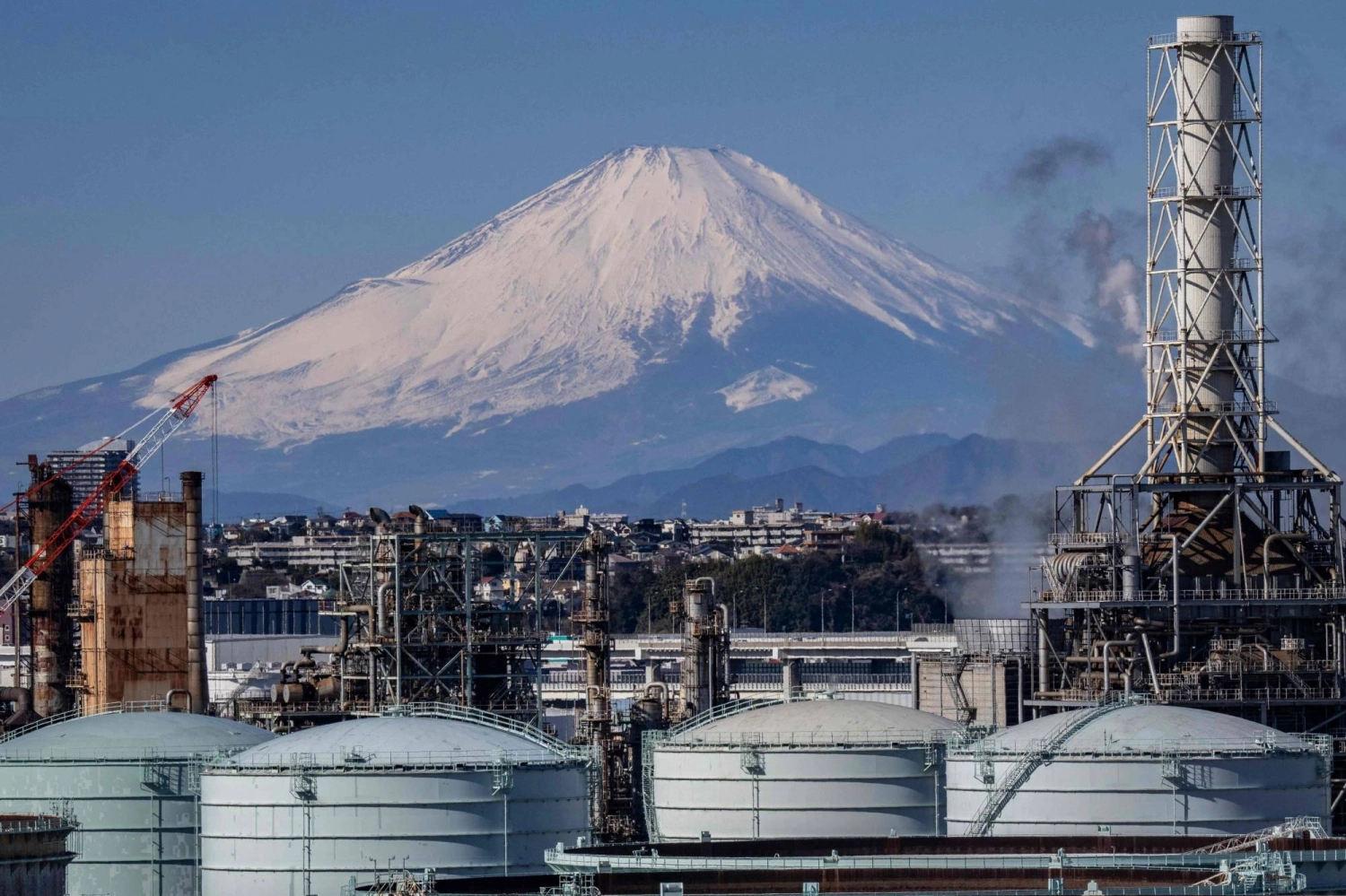
Urea a nitrogen fertilizer containing 46% nitrogen content exemplifies the supply chain breakdown. The region accounts for roughly 30-35% of global urea exports, with almost 50% of globally traded sulfur and around a third of all globally traded urea coming from that region. The production base cannot be easily replaced. Saudi Arabia's SABIC, Qatar Fertiliser Company (QAFCO), and Iran's Razi Petrochemical represent integrated ammonia-urea complexes with production costs of $280-320/MT among the world's lowest due to subsidised natural gas feedstock. Alternative suppliers in China, Russia, and North America face production costs of $420-480/MT. The replacement cost differential of $100-160/MT per tonne cannot be arbitraged away it reflects fundamental resource endowments.
For buyers, the crisis fragments into regional exposure patterns. Brazil the world's largest fertilizer importer sources roughly 40% of its urea from the Middle East through Hormuz. Countries such as Sudan, Somalia, Mozambique, Kenya, and Sri Lanka show high dependence on Persian Gulf fertilizers. A Brazilian soybean cooperative importing 100,000 tonnes annually now faces an additional cost of $25-30 million at current price differentials. For Sub-Saharan African importers, about 80% of fertilizer is imported at higher prices than Europe pays, the price surge forces impossible choices between fertilizer application and food imports. These are not margin compressions they are existential procurement decisions.
For sellers, the crisis creates extreme margin concentration in non-Hormuz suppliers. CF Industries North America's largest nitrogen producer benefits from a $200-300/MT premium over its normal netback to global markets. The price of nitrogen fertilizer in the United States is significantly lower than global prices, creating massive arbitrage opportunities for US exporters. CF Industries has converted 100 ammonium nitrate hopper railcars to granular urea service and delayed maintenance turnarounds to maximise supply during the crisis. Chinese urea producers face similar dynamics: China has indicated it may not export urea until August 2026, keeping millions of tonnes domestic while global prices soar.
Large integrated traders with derivatives access can hedge the price volatility, but the physical scarcity cannot be hedged. Cargill and ADM maintain global fertilizer distribution networks and can redirect cargoes from lower-priority markets. A large trader can secure urea from alternative origins Trinidad, Egypt, Algeria and pass the $150-200/MT cost increase to end customers. The constraint becomes freight, not price. Capesize vessels typically carrying 150,000-180,000 tonnes from US Gulf to Brazil cost approximately $35/MT. From Egypt to Brazil, the same cargo costs $50/MT due to longer sailing distances and limited vessel availability. For regional operators cooperative purchasing groups, smaller national importers without derivatives access, the crisis means physical rationing. There is no financial instrument to replace missing tonnes.
The fertilizer financing crisis amplifies the procurement challenge. Most international fertilizer trade operates through 90-180 day letters of credit (LCs) bank guarantees that payment will be made once shipping documents are presented. Safety concerns and unavailability of war risk coverage on affected vessels brought Hormuz shipping flows to a halt. War risk insurance typically 0.1-0.2% of cargo value has increased to 2-3% for Hormuz related shipments, adding $15-20/MT to delivered costs. Banks have restricted LC availability for Middle Eastern originators, forcing cash on delivery terms that many importers cannot finance. The financing constraint creates a secondary scarcity premium of $30-50/MT beyond the commodity price increase.
Seasonal timing maximises the humanitarian impact. Agriculture operates within a crop calendar that cannot be postponed, with fertilizers needing application at specific moments in the crop cycle. Some planting seasons end in African nations within weeks, while the first opportunity to see how farmers reacted will come with USDA's May World Agricultural Supply and Demand Estimates report. A delay of even a few weeks forces farmers to reduce fertilizer use, with impacts transmitted forward into next harvests tightening food supplies into the last half of 2026 and 2027. This is not a price elasticity question it is a biological deadline.
The UN task force proposal illustrates the mathematical impossibility of diplomatic solutions. Jorge Moreira da Silva's mechanism would allow 5 ships daily through Hormuz approximately 200,000-250,000 tonnes monthly of all commodities combined. The task force leader reports meeting with representatives of more than 100 countries, but the United States and Iran, as well as Gulf fertilizer producers, are not yet fully on board. Normal fertilizer flows through Hormuz exceed 1.3 million tonnes monthly. The UN proposal addresses roughly 15-20% of normal volumes, even assuming all 5 daily ships carry fertilizer rather than oil or LNG. The humanitarian gesture cannot solve the mathematical shortfall.
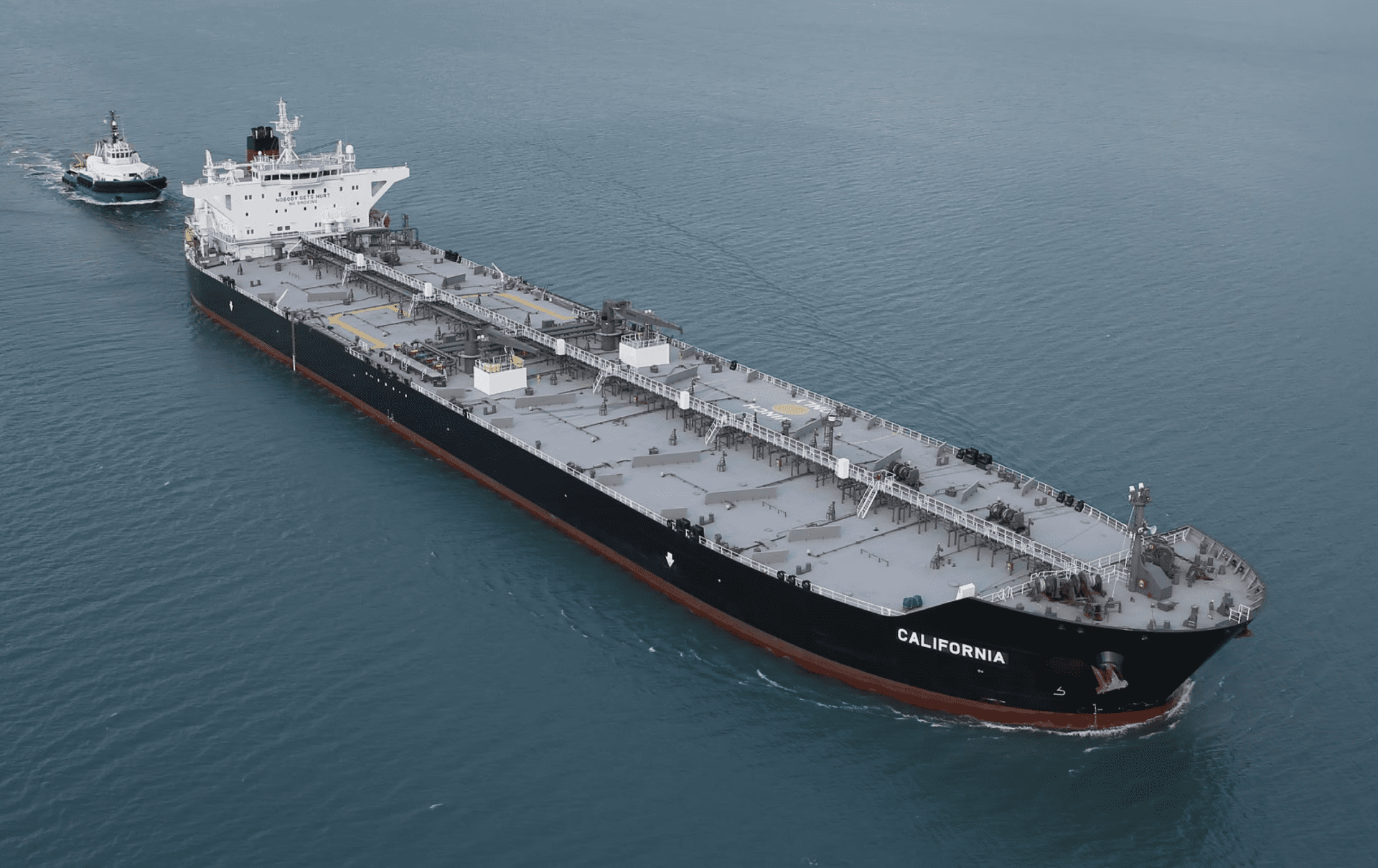
Freight markets demonstrate how scarcity concentrates in logistics rather than production. Ship captains bold enough to brave drone strikes would prefer to carry oil than fertilizer, reflecting cargo value density. A VLCC carrying 2 million barrels of crude represents $180-200 million of cargo value. The same vessel carrying 150,000 tonnes of urea represents $100-110 million at current prices. The voyage economics favour oil over fertilizer by 2:1, ensuring fertilizer ranks last in shipping priority. G7 countries don't maintain strategic fertilizer reserves to match their oil stockpiles, and Saudi Arabia's Red Sea pipeline is for oil, not ammonia products.
Alternative routing demonstrates the infrastructure constraints. Fertilizer cargoes avoiding Hormuz must circumnavigate Africa adding 3-4 weeks sailing time and $75-100/MT in additional freight costs. The Cape of Good Hope route from Middle East to Europe increases voyage time from 12 days to 35 days. For time-sensitive planting seasons, the delay often exceeds the remaining planting window. Overland routes through Central Asian pipelines carry oil and gas, not solid fertilizers. The physical infrastructure for large-scale fertilizer movement exists only through Hormuz.
Farmers' input decisions reveal the demand destruction already occurring. Around 70% of farmers report being unable to afford all needed fertilizer, with 78% in the South unable to afford all inputs. Urea shot up to nearly $700 per ton from $455 per ton on February 27, while diesel prices increased from $3.81 to $5.35 per gallon. A fifth-generation Illinois farmer reports "we're definitely either breaking even, if we're lucky, or losing money". It takes roughly 145 bushels of corn to buy one ton of urea versus about 125 bushels in April 2022 despite urea's absolute price being lower today than during the 2022 Ukraine crisis peak.
The pricing outlook offers no near-term relief regardless of diplomatic developments. Even in the most optimistic scenario, elevated prices on nitrogen and phosphate will continue through fall and into 2027. The World Bank expects urea to close 2026 at $675 per ton, nearly 60% above 2025 levels, declining by 25% in 2027 only if natural gas prices ease. Even if the strait were to reopen now, it would take three to four months to return to normality. The supply chain restoration timeline exceeds the remaining planting windows in most affected regions.
Watch NOLA urea futures and the Black Sea-Baltic freight differential by May 25. NOLA urea is to fertilizer what Chicago is to corn the base pricing reference. If NOLA prices exceed $650/MT while Black Sea alternative routes show freight premiums above $80/MT, the agricultural impact will manifest in Q4 2026 harvest yields. Monitor Chinese export quotas and EU industrial gas curtailments both represent supply destruction independent of Hormuz reopening. The crisis has moved beyond geopolitical resolution into biological deadlines.

.jpg)
.jpg)

'%3e%3cg id='Final-Copy-2_2_' transform='translate(1275.000000, 200.000000)'%3e%3cpath class='st0' d='M7.4,12.8h6.8l3.1-11.6H7.4C4.2,1.2,1.6,3.8,1.6,7S4.2,12.8,7.4,12.8z'/%3e%3c/g%3e%3c/g%3e%3c/g%3e%3cg id='final---dec.11-2020'%3e%3cg id='_x30_208-our-toggle' transform='translate(-1275.000000, -200.000000)'%3e%3cg id='Final-Copy-2' transform='translate(1275.000000, 200.000000)'%3e%3cpath class='st1' d='M22.6,0H7.4c-3.9,0-7,3.1-7,7s3.1,7,7,7h15.2c3.9,0,7-3.1,7-7S26.4,0,22.6,0z M1.6,7c0-3.2,2.6-5.8,5.8-5.8 h9.9l-3.1,11.6H7.4C4.2,12.8,1.6,10.2,1.6,7z'/%3e%3cpath id='x' class='st2' d='M24.6,4c0.2,0.2,0.2,0.6,0,0.8l0,0L22.5,7l2.2,2.2c0.2,0.2,0.2,0.6,0,0.8c-0.2,0.2-0.6,0.2-0.8,0 l0,0l-2.2-2.2L19.5,10c-0.2,0.2-0.6,0.2-0.8,0c-0.2-0.2-0.2-0.6,0-0.8l0,0L20.8,7l-2.2-2.2c-0.2-0.2-0.2-0.6,0-0.8 c0.2-0.2,0.6-0.2,0.8,0l0,0l2.2,2.2L23.8,4C24,3.8,24.4,3.8,24.6,4z'/%3e%3cpath id='y' class='st3' d='M12.7,4.1c0.2,0.2,0.3,0.6,0.1,0.8l0,0L8.6,9.8C8.5,9.9,8.4,10,8.3,10c-0.2,0.1-0.5,0.1-0.7-0.1l0,0 L5.4,7.7c-0.2-0.2-0.2-0.6,0-0.8c0.2-0.2,0.6-0.2,0.8,0l0,0L8,8.6l3.8-4.5C12,3.9,12.4,3.9,12.7,4.1z'/%3e%3c/g%3e%3c/g%3e%3c/g%3e%3c/g%3e%3c/svg%3e) Privacy Choices
Privacy Choices