.avif)
Fertilizer distributors across Asia and Africa are absorbing input cost increases of $120–200 per tonne as the Iran war chokes off one-third of global urea flows through the Strait of Hormuz while China simultaneously tightens sulphuric acid exports ahead of a planned May halt. The Profercy World Nitrogen Index has hit 352.95, its highest level since May 2022, as overall up to 30% of internationally traded fertilizers normally transit the Strait of Hormuz and China indicated it will halt exports of sulphuric acid starting in May. Unlike oil markets, fertilizer application timing is inflexible — missing the planting window means crop failure, not delayed application, making this a food production crisis rather than just a pricing event.
The margin anatomy reveals where pressure concentrates. Consider a mid-sized Indian phosphatic fertilizer importer sourcing DAP (diammonium phosphate) — a fertilizer containing both nitrogen and phosphorus essential for crop development. Gulf diammonium phosphate (DAP) prices rose from about $583 per ton in January 2025 to nearly $800 in August. That is a 36% increase in less than eight months. Before the dual supply shock, delivered margins for a 25,000-tonne cargo from the Middle East to India were approximately $35–45 per tonne — adequate for regional distributors. The Hormuz disruption adds roughly $80–120 per tonne in freight premiums and sourcing costs, while China's sulphuric acid restrictions — which account for 60% of phosphoric acid production used in DAP manufacturing — add another $40–60 per tonne. The combined $120–180 per tonne impact erases distributor margins entirely.
On the buy side, Indian fertilizer importers managing 30% import dependence find themselves trapped between government subsidy caps and soaring input costs. "The price of [dry urea] in January to February was $560 per ton," Ben Vig, a farmer and former state representative in North Dakota, told Responsible Statecraft. "At the end of March it was $770 per ton." According to Vig, that amounts to costs of $140 per acre to fertilize wheat and $135 per acre to fertilize corn, an increase of nearly $40 per acre. The Indian government's fertilizer subsidy mechanism — designed to absorb price volatility — faces unprecedented strain as international prices surge beyond historical parameters. Regional distributors are now requiring 50–70% advance payments from farmers, up from the typical 25%, to manage working capital pressures.
On the sell side, non-Hormuz fertilizer suppliers command significant premiums as desperate buyers scramble for alternative sources. Atlantic Basin urea suppliers — primarily from Trinidad, Algeria, and the United States — are extracting 15–30% premiums over traditional Gulf pricing. In the USA, news of India's return pushed NOLA values up to a four-year high of $734ps ton fob earlier in the week. However, the lower levels were isolated business as the market recovered to either side of $700ps ton on 9 April. A NOLA-based urea exporter shipping 40,000 tonnes to Brazil now earns approximately $65–85 per tonne versus the historical $35–45 per tonne — windfall margins that concentrate entirely with suppliers holding non-Gulf inventory.
For large integrated traders with derivatives access — Trafigura, Vitol, or national oil company trading arms — hedging instruments provide limited protection in fertilizer markets compared to crude oil. Urea futures on the Chicago Board of Trade offer some price discovery, but liquidity remains thin relative to energy markets. These operators are instead positioning around freight arbitrage, chartering vessels to secure Atlantic Basin-to-Asia routes while they remain economically viable. A large trader might lock in Handymax vessel capacity (35,000–45,000 tonnes) on the US Gulf-to-India route at current freight rates of approximately $45–55 per tonne, betting that tightening vessel availability will push rates higher.
For smaller regional operators — independent fertilizer distributors, agricultural cooperatives, mid-sized importers — without derivatives access, practical equivalents focus on supplier diversification and inventory management. A regional Indian cooperative might typically source 60% of annual requirements from Gulf suppliers and 40% from domestic production. The current crisis forces a complete rebalancing toward domestic sources and alternative imports from Russia or North Africa, often at 10–15% price premiums but with supply certainty. These operators are also extending payment terms to farmers from 30 to 60–90 days, effectively financing the margin compression through working capital rather than passing full costs to end users immediately.
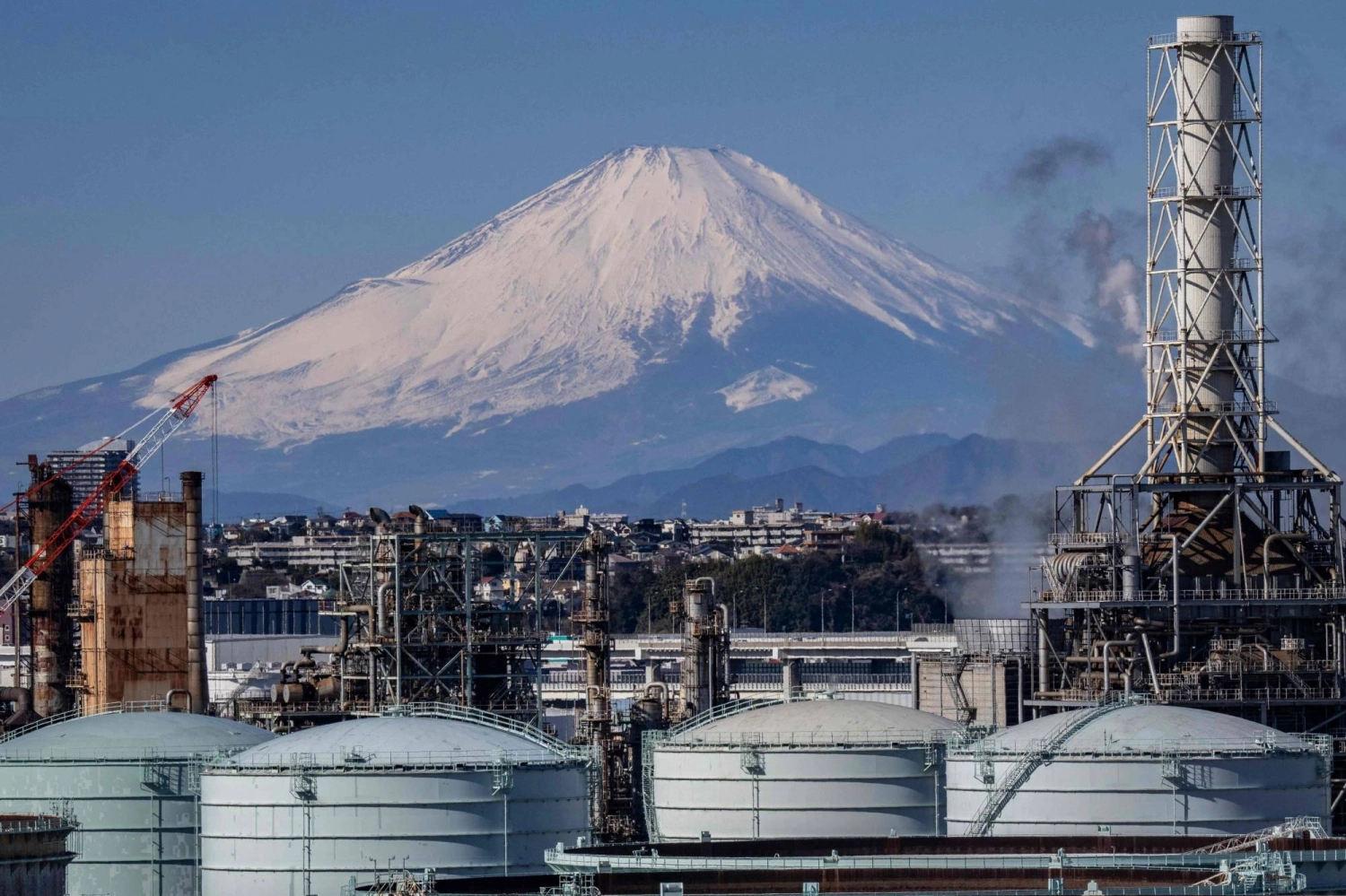
The supply chain disruption extends beyond simple route diversification. Urea from the Middle East — primarily produced at Qatar's state-owned facilities, UAE's ADNOC complex, and Iranian plants — typically moves on dedicated bulk carriers through a predictable Hormuz-to-destination routing. About one-third of global seaborne trade in fertilizers typically passes through the Strait of Hormuz, which has been nearly entirely closed since the United States and Israel attacked Iran on February 28. Alternative Atlantic Basin urea must now move via container shipping or smaller bulk vessels, adding 7–12 days transit time to major Asian destinations and increasing logistics complexity. The operational reality is that a container line slot from US Gulf to Mumbai costs approximately $4,500–5,500 per twenty-foot equivalent unit (TEU) compared to $2,800–3,200 pre-crisis — freight inflation that flows directly into delivered fertilizer costs.
China's simultaneous restriction of sulphuric acid exports creates a second-order supply shock specifically targeting phosphatic fertilizers. Sulphuric acid, with annual global production exceeding 260 million metric tonnes, is a foundational industrial input: roughly 60% feeds fertilizer production. The region produces one third of the world's sulfur, a raw material used to make sulfuric acid that's essential for some copper extraction and phosphate fertilizers. India consumes over 9 million tonnes of phosphatic fertilizers annually — all sulphuric acid-dependent — making the Chinese export halt a direct threat to the country's fertilizer self-sufficiency goals. Sulphuric acid prices in Chile, which buys over 1 million tons of Chinese sulfuric acid every year where a fifth of the copper output involves processing that depends on sulfuric acid, have increased 44% in just one month. The implication for fertilizer blenders is immediate: DAP production costs rise by $40–60 per tonne as sulphuric acid availability tightens.
The financing dimension reveals how credit constraints amplify physical shortages. Letters of credit (LC) — bank guarantees that payment will be made once shipping documents are presented — have become more expensive and difficult to obtain for fertilizer transactions involving Iranian or Gulf counterparties. A typical 90-day LC for a $15 million urea cargo now costs 2.5–3.5% annually in bank fees, up from 1.0–1.5% pre-crisis. More critically, many international banks are requiring 100% cash collateral for fertilizer transactions involving sanctioned regions, effectively eliminating trade finance leverage that smaller importers depend upon. This credit tightening means only well-capitalized operators can secure supply, concentrating available fertilizer volumes among fewer buyers and intensifying competition.
For observers monitoring this evolving situation, the critical signal is the Indian government's Strategic Petroleum Reserve-style approach to fertilizer stockpiling. If New Delhi announces emergency fertilizer imports beyond normal seasonal patterns — particularly urea and DAP purchases for delivery in Q3 2026 — it signals recognition that the current crisis may persist beyond the immediate planting season. Track the fortnightly fertilizer tender announcements from Indian Potash Ltd. (IPL) and other state-controlled importers: any tender volumes 25–30% above seasonal norms indicate preparation for extended supply disruption rather than temporary price management. The timing matters: fertilizer purchased in May-June for September-October delivery reflects planning for the next crop cycle, suggesting authorities expect the Hormuz situation to remain unresolved through 2026's critical agricultural seasons.
.jpg)



'%3e%3cg id='Final-Copy-2_2_' transform='translate(1275.000000, 200.000000)'%3e%3cpath class='st0' d='M7.4,12.8h6.8l3.1-11.6H7.4C4.2,1.2,1.6,3.8,1.6,7S4.2,12.8,7.4,12.8z'/%3e%3c/g%3e%3c/g%3e%3c/g%3e%3cg id='final---dec.11-2020'%3e%3cg id='_x30_208-our-toggle' transform='translate(-1275.000000, -200.000000)'%3e%3cg id='Final-Copy-2' transform='translate(1275.000000, 200.000000)'%3e%3cpath class='st1' d='M22.6,0H7.4c-3.9,0-7,3.1-7,7s3.1,7,7,7h15.2c3.9,0,7-3.1,7-7S26.4,0,22.6,0z M1.6,7c0-3.2,2.6-5.8,5.8-5.8 h9.9l-3.1,11.6H7.4C4.2,12.8,1.6,10.2,1.6,7z'/%3e%3cpath id='x' class='st2' d='M24.6,4c0.2,0.2,0.2,0.6,0,0.8l0,0L22.5,7l2.2,2.2c0.2,0.2,0.2,0.6,0,0.8c-0.2,0.2-0.6,0.2-0.8,0 l0,0l-2.2-2.2L19.5,10c-0.2,0.2-0.6,0.2-0.8,0c-0.2-0.2-0.2-0.6,0-0.8l0,0L20.8,7l-2.2-2.2c-0.2-0.2-0.2-0.6,0-0.8 c0.2-0.2,0.6-0.2,0.8,0l0,0l2.2,2.2L23.8,4C24,3.8,24.4,3.8,24.6,4z'/%3e%3cpath id='y' class='st3' d='M12.7,4.1c0.2,0.2,0.3,0.6,0.1,0.8l0,0L8.6,9.8C8.5,9.9,8.4,10,8.3,10c-0.2,0.1-0.5,0.1-0.7-0.1l0,0 L5.4,7.7c-0.2-0.2-0.2-0.6,0-0.8c0.2-0.2,0.6-0.2,0.8,0l0,0L8,8.6l3.8-4.5C12,3.9,12.4,3.9,12.7,4.1z'/%3e%3c/g%3e%3c/g%3e%3c/g%3e%3c/g%3e%3c/svg%3e) Privacy Choices
Privacy Choices