.avif)
Physical commodity operators across Asian refining hubs, European fuel importers, and independent distributors worldwide are facing a structural margin squeeze not a temporary spike as the gap between available crude and finished fuel supply widens by the day, with refining margins already at four-year highs as of July 2026.
The immediate cause is the partial but sustained disruption to flows through the Strait of Hormuz . According to the IEA's July 2026 assessment, Gulf crude exports in June reached only 16.1 million barrels per day (mbpd), against a pre-war average of 24 mbpd. That 7.9 mbpd shortfall equivalent to roughly the combined daily crude output of Iraq and Kuwait in normal times is not an abstraction. It represents cargoes that were contracted, vessels that were nominated, and refinery run-rates that had to be cut or covered elsewhere at significant premium.
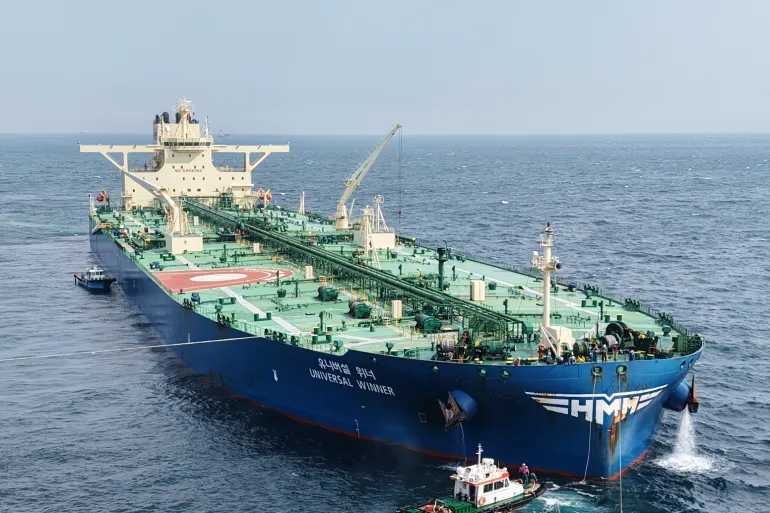
The supply-chain mechanics matter here. A VLCC a Very Large Crude Carrier capable of carrying 2 million barrels that would normally load at Ras Tanura in Saudi Arabia or Ruwais in the UAE, transit the Strait of Hormuz in under 12 hours, and deliver to a South Korean or Japanese refinery in 20–22 days, now faces a different reality. Vessels are diverting around the Persian Gulf entirely in some cases, or waiting for escort windows, adding 5–8 days to voyage times and meaningfully increasing operational costs. At current freight rates elevated substantially from pre-crisis levels a VLCC voyage from the Gulf to Northeast Asia that cost approximately $8–10 per metric tonne (MT) twelve months ago is now clearing $18–22/MT on some fixtures. On a 280,000 tonne cargo, that is an additional $2.2–3.4 million per voyage, accruing entirely to vessel operators or spot charter holders, not to the cargo buyer.
Total global oil output recovered to approximately 98.8 mbpd in June 2026, according to the IEA a meaningful rebound. But this figure obscures the structural damage: overall production remains roughly 9.4 mbpd below pre-war levels, with more than 14 mbpd of Middle Eastern capacity still shut in, according to reports. The UAE has partially compensated, with record output contributing to Gulf flows recovering to approximately two-thirds of normal rates. The result was the first rise in global inventories in four months a stabilising signal, but not a recovery. An inventory build of this kind, driven by emergency reserve releases rather than restored production, is not the same as structural supply health.
The IEA coordinated what it describes as a historic emergency release of 400 million barrels from Strategic Petroleum Reserves (SPRs) government-held stockpiles of crude and refined product maintained for exactly this type of supply shock to prevent an immediate collapse in logistics and pricing stability. To put that number in context: 400 million barrels represents roughly four days of global consumption. It buys time; it does not replace production. The release has materially softened what would otherwise have been a more severe price spike, but it has also drawn down the buffer that governments hold for the next disruption. If hostilities resume at scale which remains a live risk, according to sources monitoring the conflict the SPR cushion available for a second intervention is materially smaller.
The margin anatomy at the refinery gate deserves direct analysis. Refining margins the spread between the cost of crude input and the value of refined products such as diesel, jet fuel, and gasoline have surged to four-year highs. This is partly supply-driven: Gulf export refineries are not yet operating at full capacity, and Russian refinery and export infrastructure has reportedly sustained damage from intensified attacks, removing additional refined product supply from global markets. A complex refinery in Singapore or Rotterdam capable of processing a range of crude grades into high-value products that was operating at a crack spread (refining margin per barrel) of $12–15/barrel in mid-2025 is now clearing $22–28/barrel on some product slates. This is exceptional margin, but it is conditional margin: it depends on securing crude at a price and volume that does not erode the spread. Refiners who locked in crude supply contracts pre-crisis are the clear winners. Those sourcing on the spot market face a different calculation.
On the buy side, Asian independent refiners particularly those in India and China operating without long-term crude supply agreements are the most exposed. These operators must compete for spot cargoes in a market where Saudi Aramco's Official Selling Prices (OSPs) the benchmark-linked prices at which the state producer sells crude to term customers have risen, and where alternative Atlantic Basin grades carry freight penalties of $4–6/MT to reach Asian ports compared to Gulf origin. For a mid-sized Indian refiner processing 100,000 barrels per day, the combined effect of higher crude cost, elevated freight, and refinery throughput constraints translates to an operational margin compression of approximately $3–5 per barrel material on a daily throughput value of $7–10 million. On the sell side, integrated Gulf producers with operational export capacity the UAE's ADNOC being the clearest example are capturing exceptional netbacks (the revenue a producer receives after deducting transport and processing costs from the sale price). Record UAE output into a supply-constrained market, at elevated prices, with term buyers having limited alternatives, is a structurally advantaged position. The asymmetry between buyers and sellers has rarely been wider.
For large integrated traders Vitol, Trafigura, a national oil company's trading arm the current environment offers freight arbitrage and locational spread opportunities, but also demands careful hedging. Brent crude futures on the ICE exchange and Dubai sour crude swaps on CME allow these operators to lock in margins across the crude to product chain. The cost of protection options on Brent with a $5–10/barrel strike premium above current forwards is elevated but remains operationally viable for firms with derivatives infrastructure. For smaller regional operators a mid-sized fuel importer in Southeast Asia, an independent distributor in East Africa, a regional cooperative managing heating oil supply derivatives access is limited or absent. The practical equivalent is fixing bilateral term supply agreements now, before the winter demand season tightens product availability further, and building inventory where storage economics permit. At current contango (where forward prices are higher than spot prices), storage carries a cost; but against the risk of a second supply disruption, holding 15–20 days of additional cover is defensible.
The single most important signal for observers to track over the next 30 days is the Strait of Hormuz transit volume, as reported weekly by tanker-tracking platforms including Kpler and Vortexa. A sustained return above 20 mbpd of Gulf crude exports would indicate that the partial normalisation is holding and that the inventory rebuild can continue without further SPR intervention. Conversely, any confirmed drop back toward 14–15 mbpd the disrupted-period floor would signal that the ceasefire is fragile and that the market has significantly less buffer than the June inventory data implies. Watch also the IEA's monthly Oil Market Report, due in mid-August, for any revision to the 2027 surplus projection that is currently the market's medium-term stabilisation thesis. If that surplus is pushed back or revised down, the structural bid under crude prices will intensify, and the margin pressure on fuel buyers will extend well beyond the current crisis horizon.
.jpg)



'%3e%3cg id='Final-Copy-2_2_' transform='translate(1275.000000, 200.000000)'%3e%3cpath class='st0' d='M7.4,12.8h6.8l3.1-11.6H7.4C4.2,1.2,1.6,3.8,1.6,7S4.2,12.8,7.4,12.8z'/%3e%3c/g%3e%3c/g%3e%3c/g%3e%3cg id='final---dec.11-2020'%3e%3cg id='_x30_208-our-toggle' transform='translate(-1275.000000, -200.000000)'%3e%3cg id='Final-Copy-2' transform='translate(1275.000000, 200.000000)'%3e%3cpath class='st1' d='M22.6,0H7.4c-3.9,0-7,3.1-7,7s3.1,7,7,7h15.2c3.9,0,7-3.1,7-7S26.4,0,22.6,0z M1.6,7c0-3.2,2.6-5.8,5.8-5.8 h9.9l-3.1,11.6H7.4C4.2,12.8,1.6,10.2,1.6,7z'/%3e%3cpath id='x' class='st2' d='M24.6,4c0.2,0.2,0.2,0.6,0,0.8l0,0L22.5,7l2.2,2.2c0.2,0.2,0.2,0.6,0,0.8c-0.2,0.2-0.6,0.2-0.8,0 l0,0l-2.2-2.2L19.5,10c-0.2,0.2-0.6,0.2-0.8,0c-0.2-0.2-0.2-0.6,0-0.8l0,0L20.8,7l-2.2-2.2c-0.2-0.2-0.2-0.6,0-0.8 c0.2-0.2,0.6-0.2,0.8,0l0,0l2.2,2.2L23.8,4C24,3.8,24.4,3.8,24.6,4z'/%3e%3cpath id='y' class='st3' d='M12.7,4.1c0.2,0.2,0.3,0.6,0.1,0.8l0,0L8.6,9.8C8.5,9.9,8.4,10,8.3,10c-0.2,0.1-0.5,0.1-0.7-0.1l0,0 L5.4,7.7c-0.2-0.2-0.2-0.6,0-0.8c0.2-0.2,0.6-0.2,0.8,0l0,0L8,8.6l3.8-4.5C12,3.9,12.4,3.9,12.7,4.1z'/%3e%3c/g%3e%3c/g%3e%3c/g%3e%3c/g%3e%3c/svg%3e) Privacy Choices
Privacy Choices