.avif)
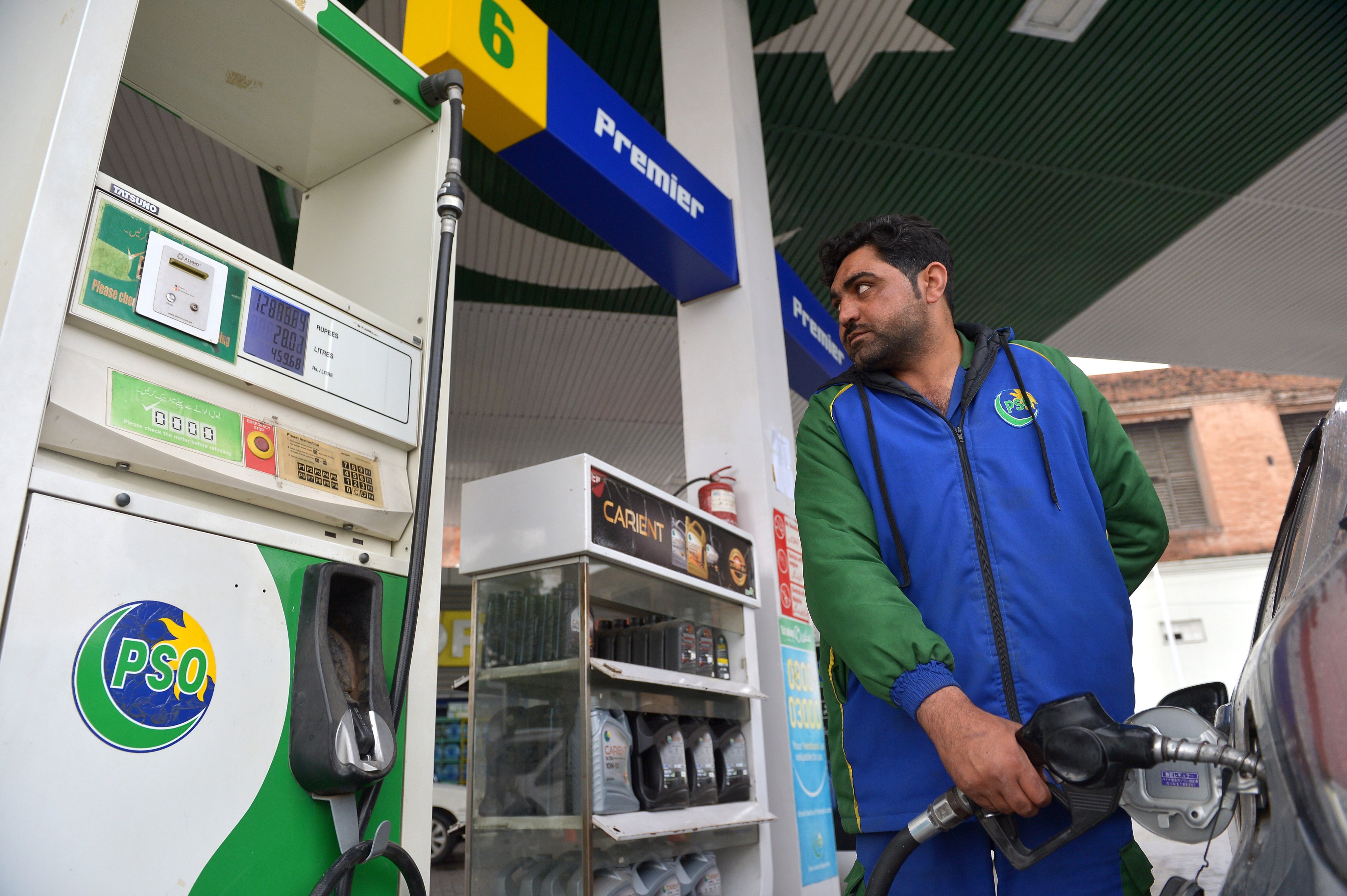
Indian state refiners face immediate margin losses of $8-12 per barrel at current Brent crude levels above $95, triggered by the collapse of US-Iran talks in Islamabad and Trump's announced naval blockade of Iranian ports. With Brent trading around $95-98 per barrel following Iran's re-closure of the Strait of Hormuz, Oil Marketing Companies (OMCs) — state-controlled entities like Indian Oil Corporation, Bharat Petroleum, and Hindustan Petroleum — cannot immediately pass through crude cost increases above regulated pricing thresholds to consumers. The arithmetic is unforgiving: at $95 Brent versus the $82-85 pricing assumption embedded in current regulated fuel rates, every rupee of currency weakness compounds the loss. A mid-sized state refiner processing 200,000 barrels per day loses approximately ₹240 crore monthly at current crude levels — money that flows directly from corporate margins to implicit government subsidy.
The Sensex and Nifty fell approximately 2% intraday as crude surged above $95, with sectoral selling concentrated in oil & gas, auto, and fertiliser stocks — each facing different transmission mechanisms from higher crude costs. For Indian equity markets, this is not merely an oil price shock but a fiscal burden transfer. State refiners operating under regulated pricing cannot hedge their crude exposure without government approval, creating a direct pass-through from geopolitical risk to public sector balance sheets. The India VIX spiking above 20.99 — an 11% increase — reflects traders pricing not just current losses but the political sustainability of fuel subsidies at these crude levels. Unlike upstream producers whose revenues track crude prices directly, OMCs incur marketing losses when global prices climb faster than they can pass costs to consumers — a situation worsened by current geopolitical tensions.
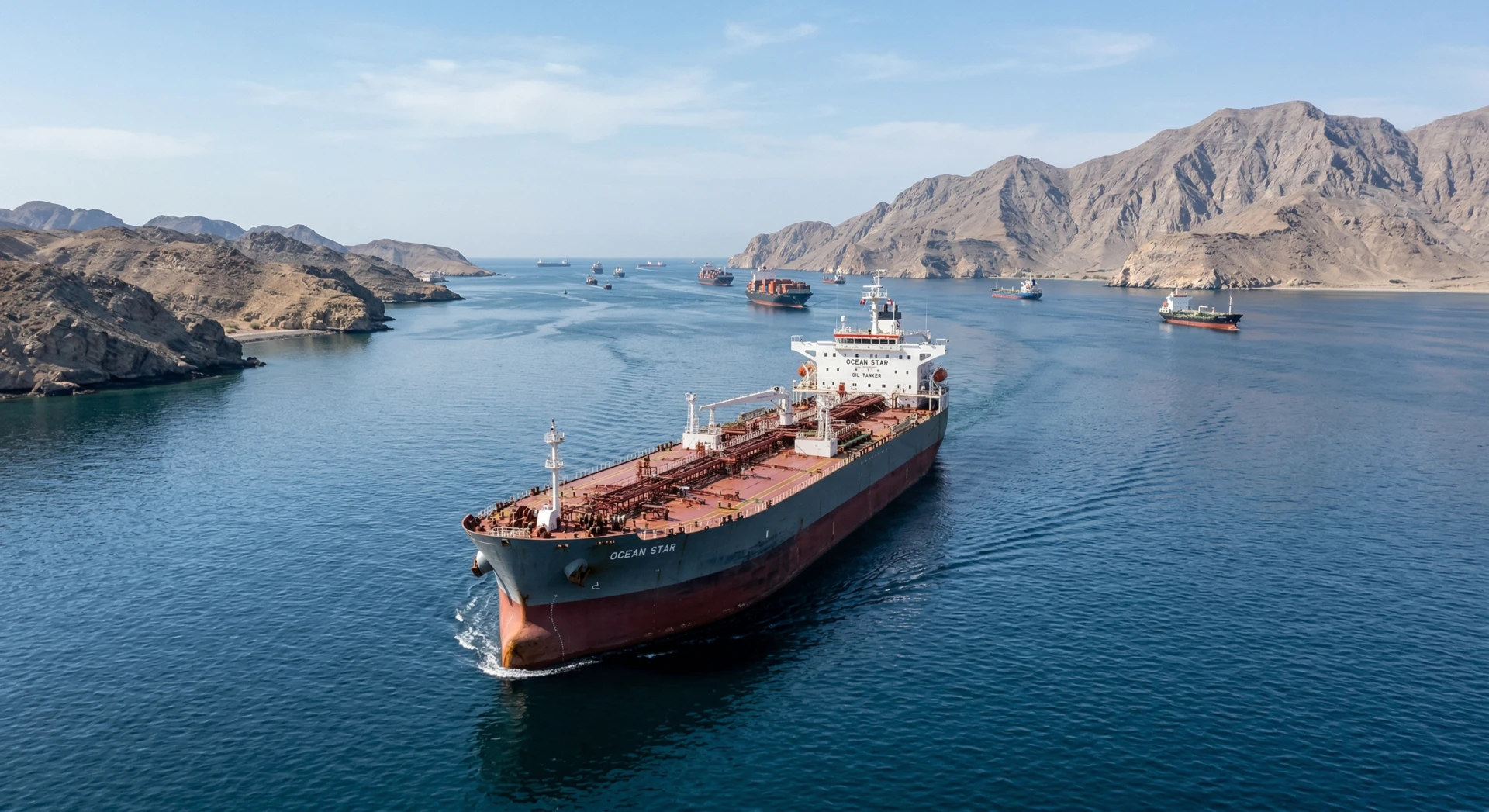
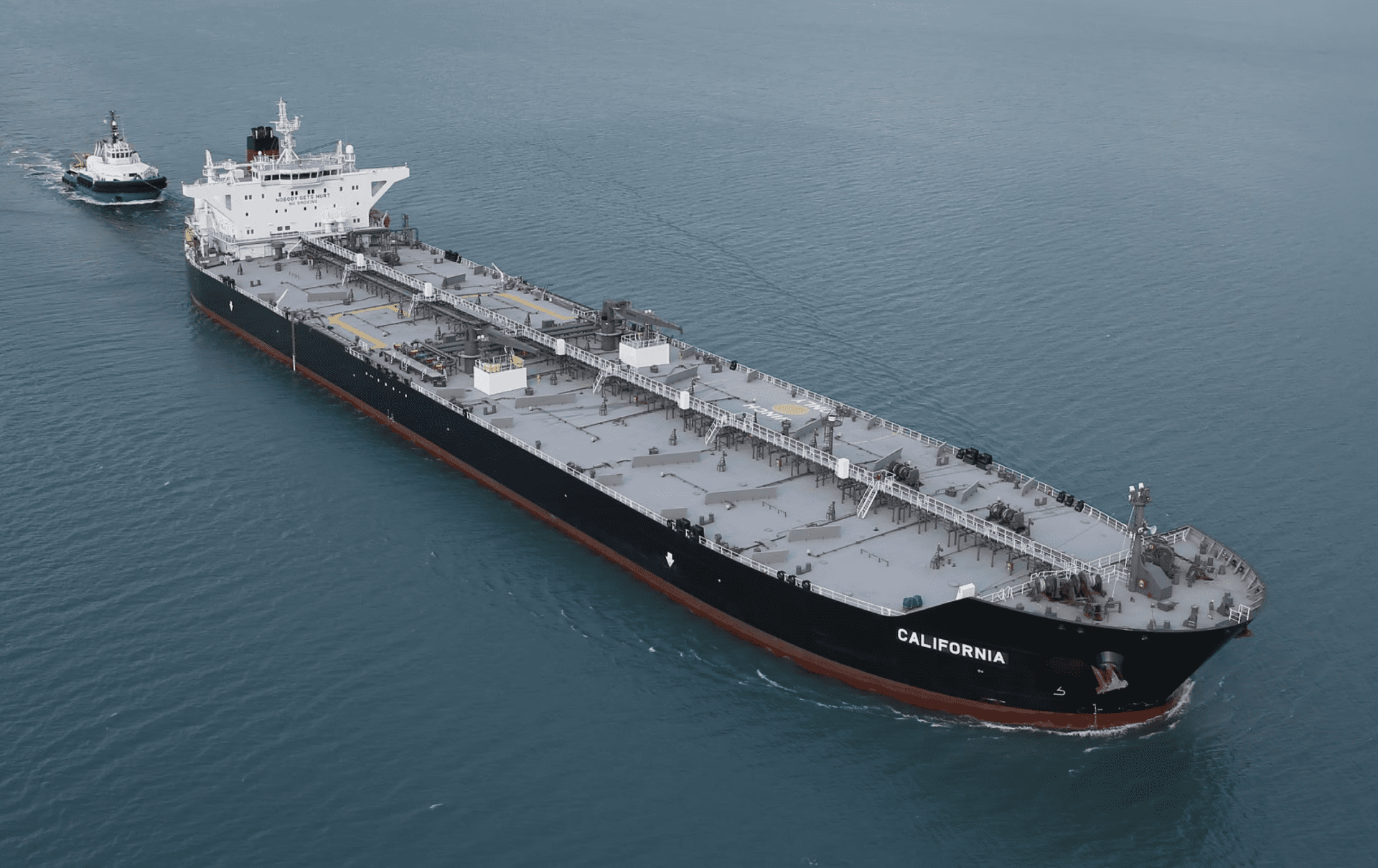
The Strait of Hormuz facilitates transit of around 20 million barrels per day, representing roughly 20% of global seaborne oil trade, primarily from producers like Saudi Arabia, UAE, Iraq, and Qatar. Iran's re-imposition of restrictions on the strait — reversing Friday's brief reopening announcement — creates a physical supply bottleneck that no financial instrument can fully offset. For Indian refiners, the challenge compounds: shipments through the strait averaged around 3.8 million barrels per day in early April, compared with more than 20 million barrels per day in February before the crisis. This forces a shift to higher-cost Atlantic Basin crude or alternative Middle East export routes, adding $2-4 per barrel in freight costs alone. A VLCC (Very Large Crude Carrier) — capable of carrying 2 million barrels — now commands $25,000-35,000 daily charter rates on Middle East-Asia routes, versus $12,000-18,000 in normal conditions. The additional $13,000-17,000 daily cost, spread across 2 million barrels, adds roughly $0.20-0.30 per barrel to delivered crude costs — seemingly modest, but representing ₹50-75 crore annually for a 200,000 barrels-per-day refiner.
For large integrated oil companies — Saudi Aramco's trading arm, Trafigura, Vitol — with derivatives access and global storage capacity, the Hormuz premium creates arbitrage opportunities. Spot crude benchmarks and differentials soared, outpacing futures markets, as refiners anxiously scrambled to replace locked-in Middle Eastern cargoes, with North Sea Dated crude trading around $130 per barrel — $60 above pre-conflict levels. These players can hedge exposure through Brent swaps or options, lock in Atlantic Basin cargoes at fixed differentials, and capture the physical-financial disconnect. The premium for immediate delivery versus three-month forward contracts — known as backwardation — reached $8-12 per barrel, allowing those with crude inventory to monetise scarcity directly. But Indian state refiners, operating under government oversight and procurement guidelines, cannot freely access these instruments or strategies.
For smaller regional operators — independent fuel distributors, cooperative societies, transport fleet operators — without derivatives access, the transmission mechanism operates through delayed price adjustments and inventory revaluation. A regional distributor carrying 30 days of diesel inventory faces an immediate ₹2-3 per litre revaluation loss when crude spikes $15 per barrel overnight. Unlike large integrated players, these operators cannot hedge through swaps or futures; their practical equivalent involves bilateral supply agreements with price adjustment clauses, diversifying supplier relationships, or negotiating extended payment terms during volatile periods. The challenge intensifies for diesel-dependent sectors: a mid-sized logistics operator running 500 trucks faces an additional ₹15-20 lakh monthly fuel cost at current crude levels — expense that cannot be immediately passed to customers under existing contracts.
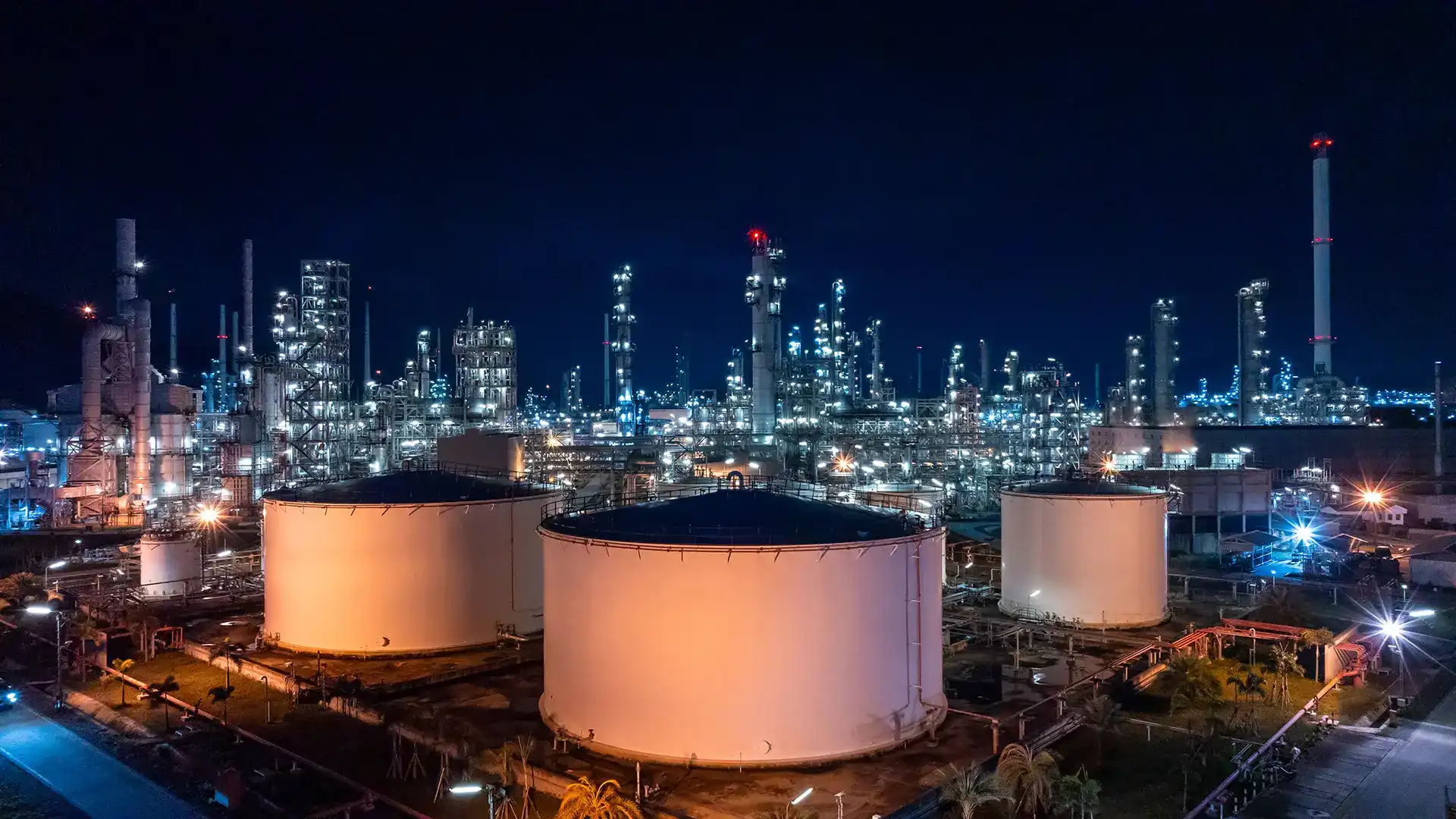
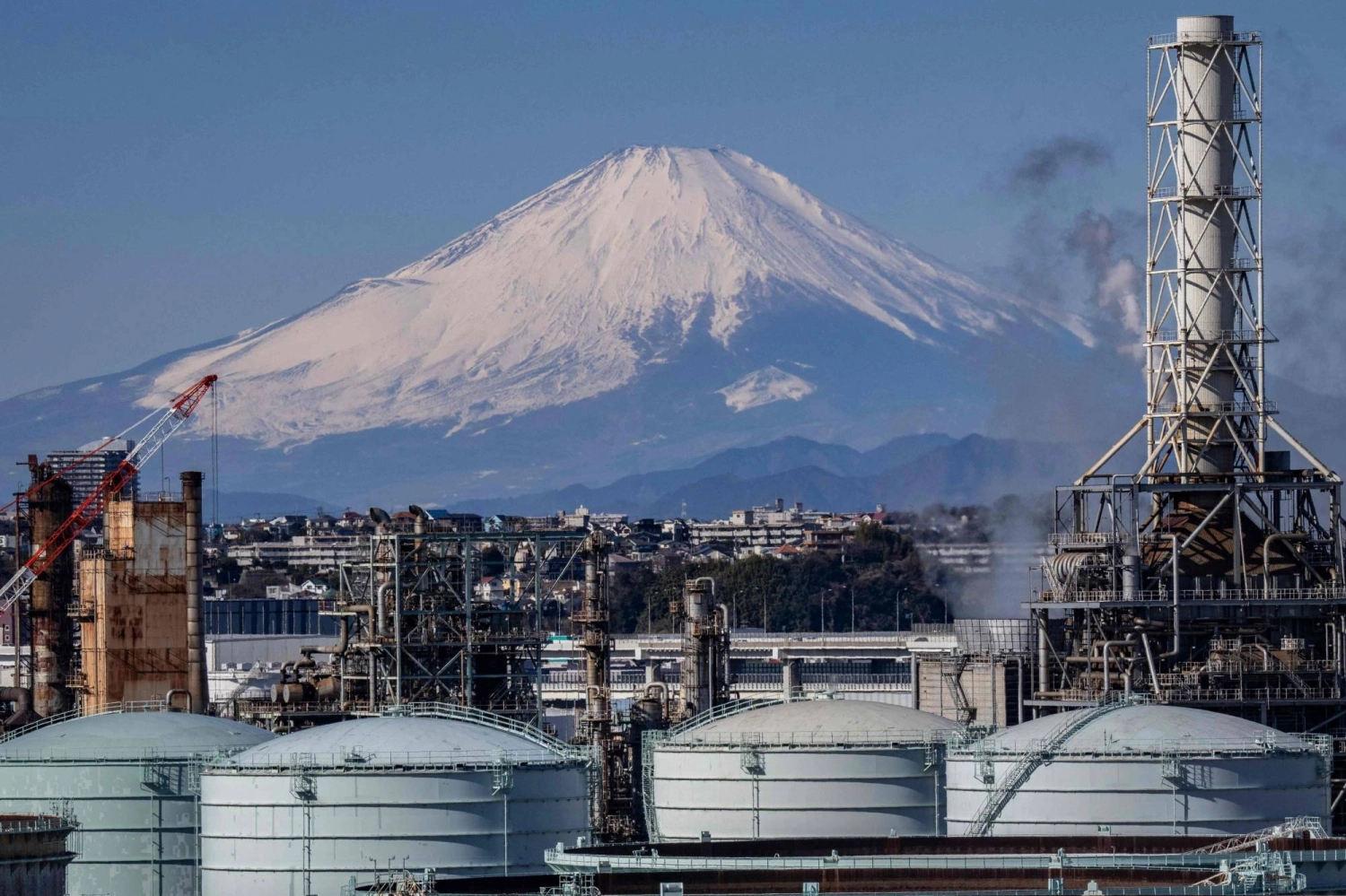
Global crude throughputs continue to struggle with disruptions to feedstock supplies and infrastructure damage tightening global product markets, with Middle East and feedstock-constrained refineries in Asia cutting runs by around 6 million barrels per day to 77.2 million barrels per day. This creates a cascading effect through refined product markets. Refining margins temporarily surged as middle distillate cracks reached all-time highs, but Indian state refiners cannot capture these gains due to regulated product pricing. The crack spread — the difference between crude oil cost and refined product prices — widened to $35-45 per barrel for diesel and $25-35 for gasoline in Asian markets, versus normal ranges of $15-25 and $8-15 respectively. Private refiners like Reliance Industries can monetise these margins through export sales, but state refiners must prioritise domestic supply obligations at regulated prices.
The financing dimension reveals the deeper structural challenge facing Indian OMCs. While the US side insisted on phased relief linked to compliance, Iran demanded comprehensive lifting of sanctions and release of assets, including $6 billion in frozen assets, as a precondition to meaningful deal. This financing deadlock directly impacts crude procurement patterns. Letters of credit (LCs) — bank guarantees that payment will be made once shipping documents are presented — remain the primary instrument for international crude trade. But geopolitical sanctions and banking restrictions force Indian refiners toward more expensive financing arrangements: cash-in-advance payments, shorter-tenor LCs with higher bank fees, or alternative currency settlements. A typical 2-million-barrel crude cargo requires a $190-200 million LC at current prices; bank charges of 0.15-0.25% per quarter versus normal rates of 0.08-0.12% add $150,000-400,000 per cargo — costs that compound across dozens of monthly shipments.
Brent crude, the global benchmark, has risen by around 40% since the war began, with Monday prices rising and nearing $100 per barrel. The 40% increase from pre-conflict levels of approximately $71 per barrel creates a systematic repricing across India's energy complex. For Indian Airlines — IndiGo, Air India, SpiceJet — jet fuel typically represents 35-45% of operating costs. At current crude levels, jet fuel costs increase by ₹8-12 per litre, translating to ₹15,000-25,000 additional cost per hour for narrow-body aircraft operations. Unlike cargo or passenger fares, aviation turbine fuel pricing adjusts more rapidly to crude movements, creating immediate cash flow pressure that cannot be offset through ticket price adjustments in the near term.
The equity market response reflects investors' recognition that this is not a temporary margin squeeze but a structural shift in the cost base for crude-dependent sectors. Geopolitical turmoil centered on the Strait of Hormuz is now the main force driving India's oil and gas sector, directly impacting company earnings and shifting market sentiment, with volatile crude oil prices fueled by fears of supply disruptions creating different outcomes across the industry. The 2% intraday decline in benchmark indices understates the sector-specific damage: oil marketing companies fell 4-6%, airlines dropped 3-5%, and fertiliser companies — dependent on naphtha feedstock — declined 3-4%. Earnings estimates for fiscal year 2027 have been revised upward for upstream producers, factoring in higher Brent crude prices of $85 per barrel, with higher crude prices directly boosting realisations for producers without price caps.
For observers tracking this situation, the key signal to monitor is the Brent-Dubai spread — the price difference between North Sea crude and Middle East crude — which determines the economic viability of alternative supply sources. At the time of writing, it remains unclear whether the ceasefire will turn into lasting peace and a return to regular shipping flows through the Strait of Hormuz, with resuming flows through the Strait remaining the single most important variable in easing pressure on energy supplies, prices and the global economy. Should the spread widen beyond $8-10 per barrel sustained for 30 days, it signals that Atlantic Basin crude arbitrage to Asia becomes economically attractive, potentially providing relief valve for Indian refiners willing to pay the freight premium. Conversely, if the spread contracts below $3-5 per barrel, it indicates either Hormuz reopening expectations or demand destruction sufficient to rebalance the market — both scenarios offering different pathways for margin recovery in Indian energy stocks.
.jpg)

'%3e%3cg id='Final-Copy-2_2_' transform='translate(1275.000000, 200.000000)'%3e%3cpath class='st0' d='M7.4,12.8h6.8l3.1-11.6H7.4C4.2,1.2,1.6,3.8,1.6,7S4.2,12.8,7.4,12.8z'/%3e%3c/g%3e%3c/g%3e%3c/g%3e%3cg id='final---dec.11-2020'%3e%3cg id='_x30_208-our-toggle' transform='translate(-1275.000000, -200.000000)'%3e%3cg id='Final-Copy-2' transform='translate(1275.000000, 200.000000)'%3e%3cpath class='st1' d='M22.6,0H7.4c-3.9,0-7,3.1-7,7s3.1,7,7,7h15.2c3.9,0,7-3.1,7-7S26.4,0,22.6,0z M1.6,7c0-3.2,2.6-5.8,5.8-5.8 h9.9l-3.1,11.6H7.4C4.2,12.8,1.6,10.2,1.6,7z'/%3e%3cpath id='x' class='st2' d='M24.6,4c0.2,0.2,0.2,0.6,0,0.8l0,0L22.5,7l2.2,2.2c0.2,0.2,0.2,0.6,0,0.8c-0.2,0.2-0.6,0.2-0.8,0 l0,0l-2.2-2.2L19.5,10c-0.2,0.2-0.6,0.2-0.8,0c-0.2-0.2-0.2-0.6,0-0.8l0,0L20.8,7l-2.2-2.2c-0.2-0.2-0.2-0.6,0-0.8 c0.2-0.2,0.6-0.2,0.8,0l0,0l2.2,2.2L23.8,4C24,3.8,24.4,3.8,24.6,4z'/%3e%3cpath id='y' class='st3' d='M12.7,4.1c0.2,0.2,0.3,0.6,0.1,0.8l0,0L8.6,9.8C8.5,9.9,8.4,10,8.3,10c-0.2,0.1-0.5,0.1-0.7-0.1l0,0 L5.4,7.7c-0.2-0.2-0.2-0.6,0-0.8c0.2-0.2,0.6-0.2,0.8,0l0,0L8,8.6l3.8-4.5C12,3.9,12.4,3.9,12.7,4.1z'/%3e%3c/g%3e%3c/g%3e%3c/g%3e%3c/g%3e%3c/svg%3e) Privacy Choices
Privacy Choices