.avif)
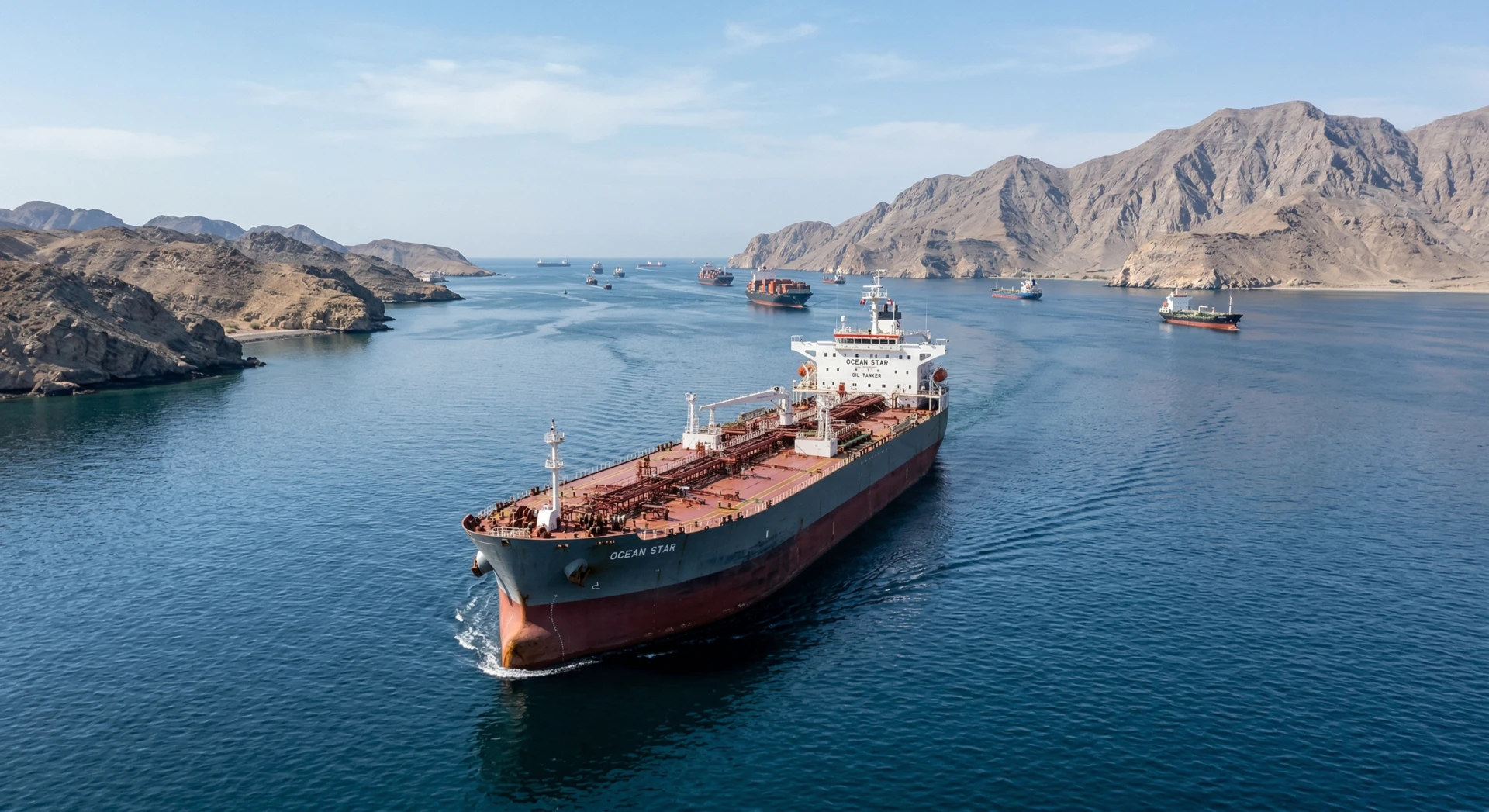
Iranian oil exports face complete maritime shutdown as Brent crude oil futures traded around $95 per barrel on Wednesday, fluctuating as markets weighed efforts to arrange a second round of US-Iran peace talks against the near-total blockade of oil flows through the Strait of Hormuz. CENTCOM's enforcement audio — a 26-second recording warning vessels to "turn back or face force" — signals the operational reality behind what is now the most effective oil supply disruption since the 1973 Arab embargo. For crude oil traders globally, this represents the sudden disappearance of approximately 1.5 million barrels per day of Iranian exports, worth $140 million daily at current prices. The margin impact is immediate and structural: alternative crude suppliers can command $15-25/barrel premiums while Iranian barrels remain entirely inaccessible to international markets.
The blockade — a maritime exclusion zone covering all Iranian ports along both the Persian Gulf and Gulf of Oman — operates with over 10,000 U.S. personnel, supported by more than a dozen warships and dozens of aircraft. This is not a checkpoint at the Strait of Hormuz but a perimeter enforcement system extending into international waters. The blockade that started Monday "has been fully implemented," said Adm. Brad Cooper, head of U.S. Central Command. "U.S. forces have completely halted economic trade going in and out of Iran by sea." For traders, this enforcement geography matters: vessels can be intercepted hundreds of miles from the strait itself, making evasion commercially impractical. The margin concentration flows to vessel operators and alternative suppliers, not Iranian exporters.
reveals why this blockade succeeds where sanctions have partially failed. Iranian oil previously reached international buyers through a network of sanctioned tankers, ship-to-ship transfers, and false flagging — methods that added costs but maintained flow. Iran-linked or sanctioned vessels that have left the Persian Gulf through the Strait of Hormuz have stopped or turned around, shipping data firms say. They appear to have jammed or faked their locations in some instances, complicating an uncertain and risky shipping situation. The physical interdiction removes these workarounds entirely. A Chinese-flagged tanker, Rich Starry, demonstrated this reality: it departed Iran with cargo, cleared the strait, then abruptly reversed course in the Gulf of Oman on Tuesday, heading back through the strait and toward Iran's coast Wednesday. The vessel operator chose to return rather than face boarding and seizure.
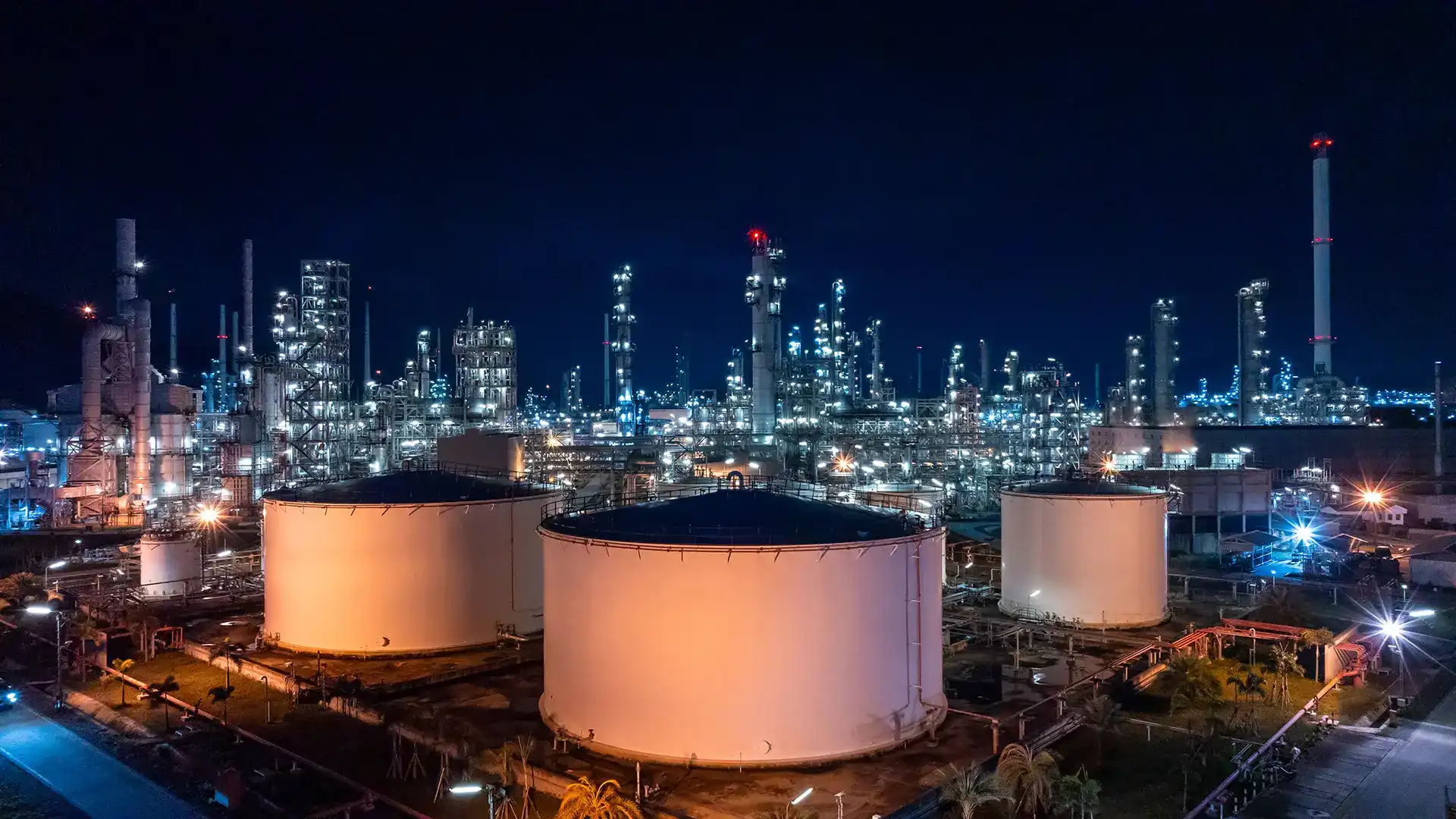
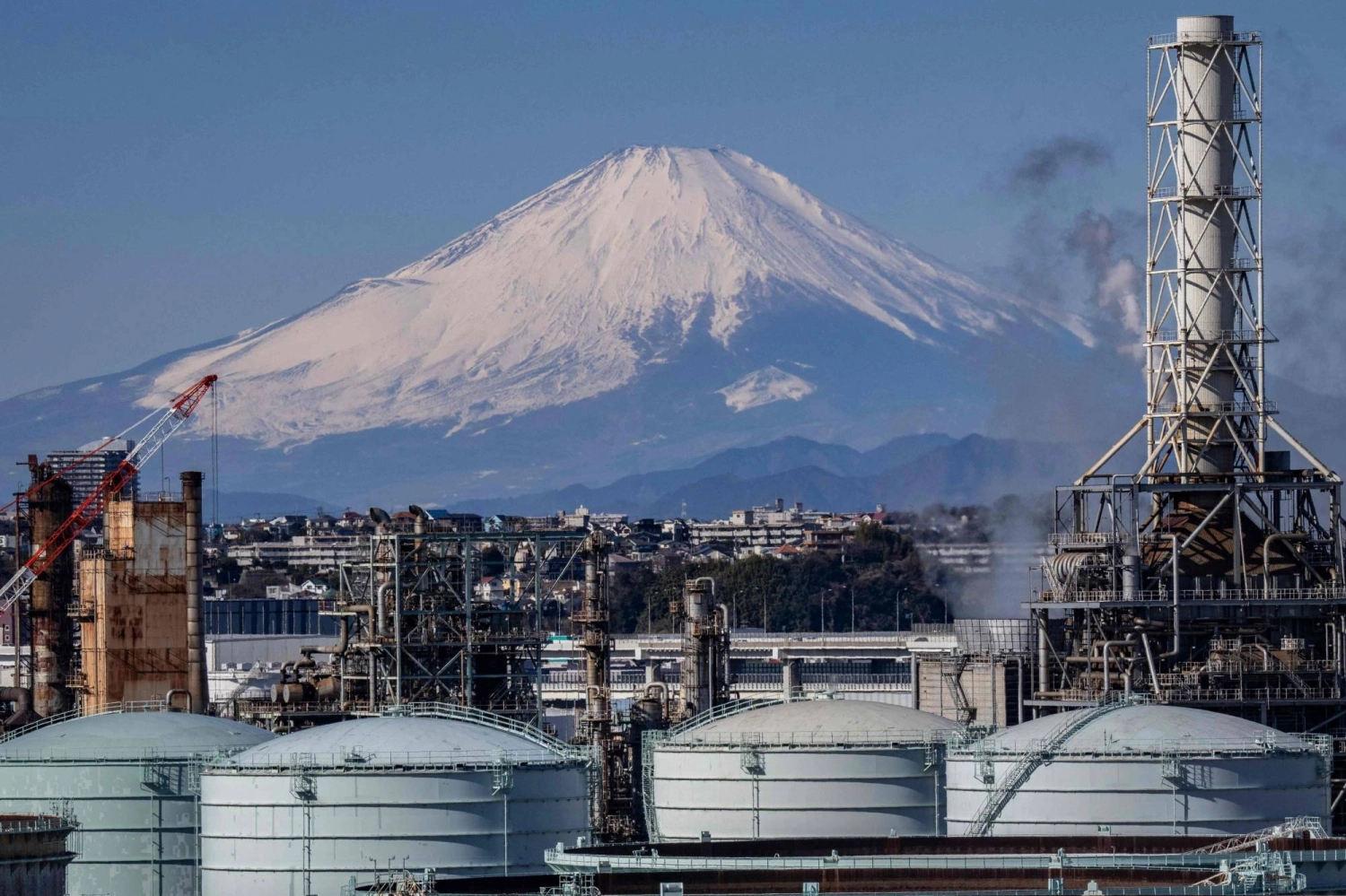
On the buy side, Asian refineries face immediate crude shortfalls requiring expensive spot market purchases. Indian refiners, who typically process 200,000 barrels per day of Iranian crude at $8-12/barrel discounts to Brent, must now source replacement barrels at market prices — adding $2-4 million daily to their feedstock costs. Chinese independent refiners — "teapots" that process Iranian crude through unofficial channels — face production cuts as their supply lines are severed. For these buyers, there are no hedging instruments to offset the price shock: their business models depend on discounted Iranian crude that no longer reaches market.
On the sell side, alternative crude suppliers capture windfall margins. Saudi Aramco and UAE's ADNOC can now price their exports at premiums that would have been impossible with Iranian barrels competing. A Saudi Heavy crude cargo to China — typically priced at $2-3/barrel below Brent — can now command near-parity pricing or even premiums. The arithmetic is straightforward: removing 1.5 million barrels per day of Iranian supply allows remaining Gulf producers to increase their netbacks by $15-20/barrel on cargoes they were already producing. For a 2-million-barrel VLCC cargo, this represents $30-40 million in additional revenue that accrues entirely to the producer.
Freight markets experience immediate disruption as Iranian-linked vessels become commercially unusable. The shadow fleet — an estimated 400-600 tankers that have carried Iranian crude despite sanctions — now faces physical interdiction rather than financial penalties. All tankers complied with directions to reverse course and no boarding was necessary. Tankers departing from the Chabahar Port were contacted by a U.S. destroyer, while Boeing P-8 Poseidon patrol aircraft were also used to intercept tankers. For vessel owners in this shadow fleet, the choice is stark: abandon Iranian trade entirely or risk seizure of hundred-million-dollar assets. Clean tankers — vessels not sanctioned for Iranian trade — capture rate premiums as demand concentrates on acceptable tonnage.
For large integrated oil companies — ExxonMobil, Shell, TotalEnergies — the blockade creates hedging opportunities through their derivative books. These companies can establish long positions in non-Iranian crude benchmarks while potentially shorting refined products if demand destruction follows from higher oil prices. Their scale allows them to monetize the crude shortage through their refining operations while using derivatives to hedge price volatility. A major international oil company can benefit from both upstream crude margins and downstream refining spreads as the market rebalances.
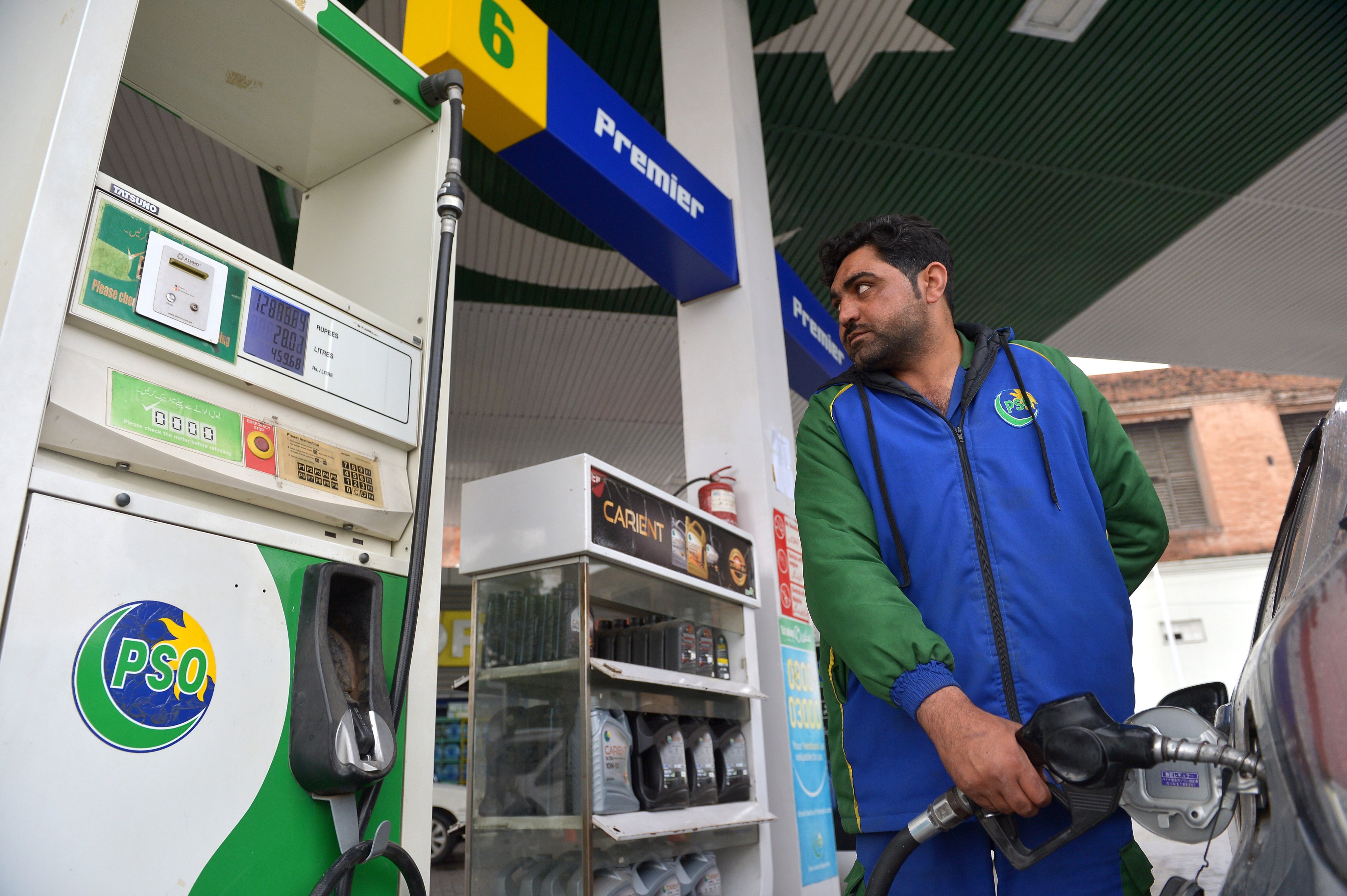
For smaller regional operators — independent fuel importers, regional distributors, state oil companies without derivatives access — the blockade imposes costs without providing hedging options. A regional fuel distributor in South Asia that relied on Iranian products through third-party traders must now source diesel and gasoline at spot market prices, adding $0.15-0.25/gallon to their costs without ability to hedge price risk. These operators face margin compression that cannot be offset through financial instruments, forcing them to pass costs to end consumers or absorb losses.
The enforcement mechanism demonstrates why vessel identification systems cannot defeat physical interdiction. It turned off its transponder for more than a week, a tactic smugglers often use called "running dark" to avoid showing its location... Smugglers sometimes "spoof" their locations by transmitting inaccurate coordinates. These electronic countermeasures — effective against sanctions enforcement that relies on documentation — become irrelevant when destroyers can physically board vessels. The US Navy's surveillance network combines satellite tracking, radar coverage, and aircraft patrols that identify vessels regardless of their transponder status. A tanker cannot hide its physical presence from maritime patrol aircraft operating in daylight hours.
Iranian retaliation threats reveal the escalation dynamics that determine whether the blockade becomes a long-term market factor. The commander of Iran's joint military command warned Wednesday that Iran would completely block exports and imports across the Persian Gulf region, the Sea of Oman and the Red Sea if the U.S. does not lift its blockade on Iranian ports. "Iran will act with strength to defend its national sovereignty and its interests," Ali Abdollahi said. This threat affects all Gulf oil exports — approximately 15 million barrels per day — not just Iranian production. If Iran follows through, crude prices would likely exceed $130/barrel within days, fundamentally altering the global energy market structure.
Shipping insurance markets price the new risk environment through immediate premium adjustments. War risk insurance for vessels transiting the Persian Gulf — previously elevated due to Iranian attacks on commercial shipping — now faces additional underwriting complexity. Insurers must assess both Iranian retaliation risks and the possibility of being caught in US enforcement actions. Lloyd's of London syndicates that provide maritime war risk coverage report premium increases of 200-400% for vessels with any Iranian exposure, while clean vessels see more modest increases of 25-50%. The insurance market effectively prices Iranian oil trade as uninsurable at commercial rates.
Chinese crude buyers face the largest supply disruption, having imported approximately 800,000 barrels per day of Iranian crude through unofficial channels. Araghchi also thanked China's foreign minister for China's blocking of a U.N. resolution, and he called the move "effective in preventing escalation," according to IRIB. On April 7, China and Russia vetoed a U.N. Security Council draft resolution that encouraged member countries to work to reopen the Strait of Hormuz. China's diplomatic support for Iran does not resolve the commercial reality: Chinese refiners must replace Iranian barrels with more expensive alternatives. Sinopec and PetroChina will likely increase purchases from Saudi Arabia and Russia, paying market prices rather than the significant discounts Iranian crude typically offered.
Diplomatic resolution timelines determine whether current price levels represent a temporary spike or structural shift. These developments come as a second round of talks between the US and Iran is expected in the near term. US President Trump said the conflict is "very close to over," adding that Iranian authorities appear willing to reach a peace agreement. However, the blockade's effectiveness creates incentives for the US to maintain pressure while giving Iran strong motivation to escalate if negotiations fail. For oil markets, this setup suggests sustained volatility with prices likely to remain above $90/barrel until either diplomatic resolution or Iranian counter-escalation forces a new equilibrium.
Observers should monitor the Brent-WTI spread for immediate market stress signals. When Iranian crude disappears, Asian refineries compete more aggressively for Atlantic Basin crudes, typically narrowing the Brent-WTI differential. A Brent premium over WTI expanding beyond $5/barrel would signal supply tightness severe enough to justify arbitrage shipments from the US Gulf Coast to Asia — a 45-day voyage that represents the market's structural response time to supply shocks of this magnitude.
.jpg)
.jpg)

'%3e%3cg id='Final-Copy-2_2_' transform='translate(1275.000000, 200.000000)'%3e%3cpath class='st0' d='M7.4,12.8h6.8l3.1-11.6H7.4C4.2,1.2,1.6,3.8,1.6,7S4.2,12.8,7.4,12.8z'/%3e%3c/g%3e%3c/g%3e%3c/g%3e%3cg id='final---dec.11-2020'%3e%3cg id='_x30_208-our-toggle' transform='translate(-1275.000000, -200.000000)'%3e%3cg id='Final-Copy-2' transform='translate(1275.000000, 200.000000)'%3e%3cpath class='st1' d='M22.6,0H7.4c-3.9,0-7,3.1-7,7s3.1,7,7,7h15.2c3.9,0,7-3.1,7-7S26.4,0,22.6,0z M1.6,7c0-3.2,2.6-5.8,5.8-5.8 h9.9l-3.1,11.6H7.4C4.2,12.8,1.6,10.2,1.6,7z'/%3e%3cpath id='x' class='st2' d='M24.6,4c0.2,0.2,0.2,0.6,0,0.8l0,0L22.5,7l2.2,2.2c0.2,0.2,0.2,0.6,0,0.8c-0.2,0.2-0.6,0.2-0.8,0 l0,0l-2.2-2.2L19.5,10c-0.2,0.2-0.6,0.2-0.8,0c-0.2-0.2-0.2-0.6,0-0.8l0,0L20.8,7l-2.2-2.2c-0.2-0.2-0.2-0.6,0-0.8 c0.2-0.2,0.6-0.2,0.8,0l0,0l2.2,2.2L23.8,4C24,3.8,24.4,3.8,24.6,4z'/%3e%3cpath id='y' class='st3' d='M12.7,4.1c0.2,0.2,0.3,0.6,0.1,0.8l0,0L8.6,9.8C8.5,9.9,8.4,10,8.3,10c-0.2,0.1-0.5,0.1-0.7-0.1l0,0 L5.4,7.7c-0.2-0.2-0.2-0.6,0-0.8c0.2-0.2,0.6-0.2,0.8,0l0,0L8,8.6l3.8-4.5C12,3.9,12.4,3.9,12.7,4.1z'/%3e%3c/g%3e%3c/g%3e%3c/g%3e%3c/g%3e%3c/svg%3e) Privacy Choices
Privacy Choices