.avif)

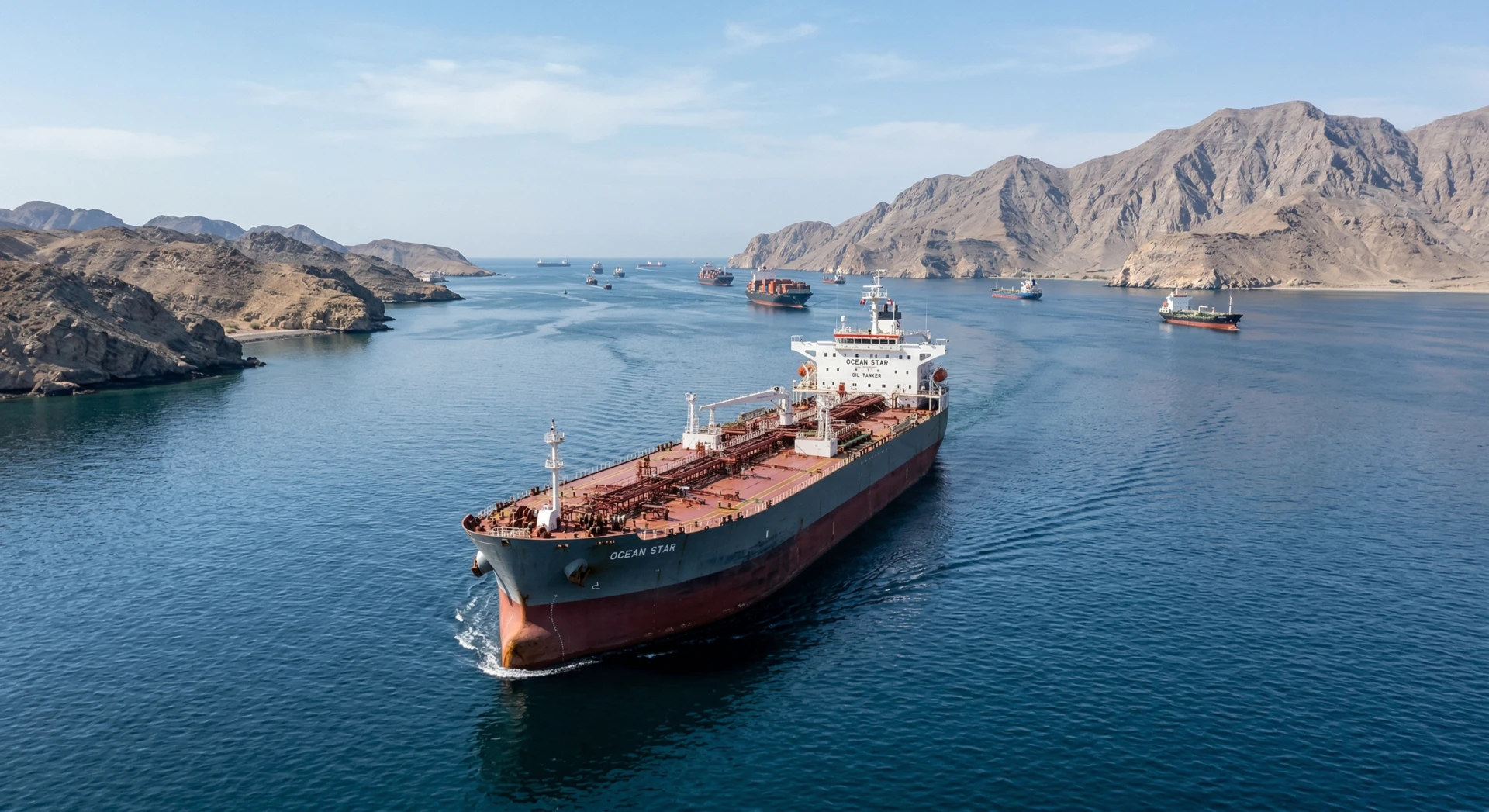
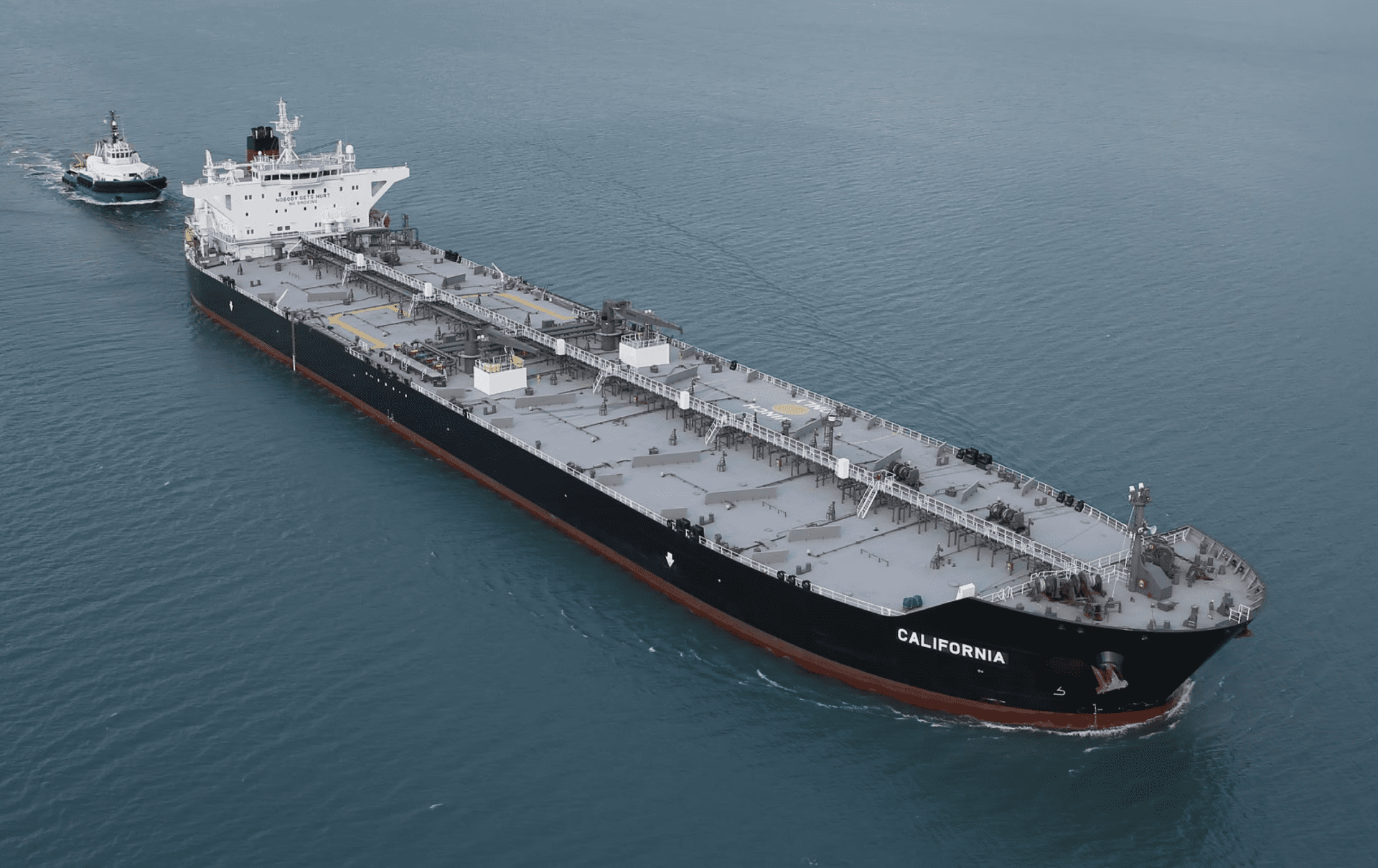
The world's largest independent tanker operators face margin compression of at least $28 million per VLCC voyage, starting immediately. Evangelos Marinakis, owner of more than 150 vessels including oil tankers, LNG carriers and bulk carriers, publicly stated at Posidonia 2026 that he is prepared to pay Iran's Strait of Hormuz transit fees of $100,000 to $200,000 depending on vessel size, legitimising a toll regime that governments oppose but markets increasingly accept. His statement, delivered at the world's largest maritime trade fair, signals that commercial operators are normalising Iran's fee structure faster than diplomatic resistance can contain it. VLCC rates for Middle East Gulf-China routes reached a record $423,736 per day on Monday, creating a perfect storm where operators must choose between paying Iran's toll or accepting freight rates that exceed all historical precedents while rerouting through alternative channels.
Marinakis's position represents a seismic shift in how tier-1 operators approach the Hormuz crisis. Capital Tankers his operating entity controls one of Greece's largest independent fleets, spanning VLCCs (Very Large Crude Carriers vessels carrying 2 million barrels), Aframax tankers (smaller vessels typically carrying 700,000 barrels), and product carriers. By publicly stating that toll money "can pay for all the damage of what has happened so far," Marinakis explicitly framed Iran's fee regime as fair compensation rather than illegal extortion. This legitimation matters because shipping operates on precedent and collective action. When a major operator publicly accepts a fee structure, it becomes commercially rational for competitors to follow suit rather than absorb higher rerouting costs alone.
The arithmetic driving Marinakis's position is stark. Iran's Persian Gulf Strait Authority (PGSA) the toll collection mechanism activated 18 May 2026 charges fees ranging from $100,000 to $2 million per voyage depending on vessel size. For a standard VLCC carrying 2 million barrels, the toll represents $1 per barrel if charged at the upper end. Current spot charter rates from alternative loading points like Yanbu reached $127 per tonne on 12 March, translating to $12 million more expensive than US Gulf Coast routes and $17 million more than West Africa on a per-voyage basis. The toll, even at its maximum, costs less than half the premium for rerouting through Saudi Arabia's west coast terminals or other alternatives.
Freight rate dynamics explain why Marinakis chose this moment for his announcement. Arabian Gulf-China earnings stood roughly 3 times above West Africa-China routes by end May, a regional dislocation that remains extraordinary by historical standards. VLCC spot hire equivalents for Arabian Gulf-East routes now exceed $200,000 per day, with one year period time charters above $100,000 per day and reports of year long deals at $135,000 per day. This rate environment means operators with access to Arabian Gulf loading even at Iran's toll rates earn substantially more than those locked into Atlantic Basin alternatives. The toll becomes a cost of accessing the most profitable routes, not a burden that erases margins.
For large integrated traders with derivatives access entities like Trafigura, Vitol, or national oil company trading arms Marinakis's statement creates operational clarity. These operators can hedge freight rate exposure through Forward Freight Agreements (FFAs) traded on the Baltic Exchange, allowing them to lock in current elevated rates while paying Iran's fees as a known cost. FFA forward curves show the market expects rate normalisation by Q3 2026, but the Hormuz crisis is fundamentally different as a supply-side shock rather than demand-side event. Large operators can capture the spread between current elevated rates and future normalisation while treating Iran's toll as operational overhead.
Smaller regional operators mid-sized fuel importers, independent distributors, or regional shipping cooperatives face a different calculus without derivatives access. These operators cannot hedge rate exposure and must choose between paying Iran's toll for reliable Arabian Gulf access or accepting volatile alternative routes. Marinakis's public acceptance gives them commercial cover: if a 150 vessel fleet owner treats the toll as legitimate business expense, smaller operators can justify the payment to their boards and compliance departments as industry standard practice rather than sanctions violation.
The financing dimension reveals why Marinakis's position matters strategically. Ships have already been paying transit fees to Iran in Chinese yuan, creating a parallel payment system outside Western financial channels. Operators with established yuan payment capabilities and relationships with Chinese banks gain speed and cost advantages over competitors who must negotiate new payment mechanisms. The yuan dimension also insulates operators from potential US Treasury enforcement, as yuan payments fall outside SWIFT and other dollar denominated systems that Treasury can monitor and restrict.
Physical supply chain mechanics amplify the importance of Marinakis's signal. Crude loadings around the Persian Gulf plummeted to 4 million barrels per day in the week starting 9 March, down from 19 million barrels per day in February, with Strait of Hormuz transits numbering just four on 16 March versus an average of 135 per day through February 2026. This collapse means that any operator willing to pay Iran's toll gains access to constrained supply that competitors cannot reach. The toll becomes a market access fee, not just a transit charge.
Buyer-side implications depend on operator scale and geographic focus. Asian refineries particularly Chinese state-owned enterprises and Indian integrated oil companies benefit from Marinakis's legitimation because it creates predictable access to Middle East crude supplies. These buyers can build Iran's toll into their crude procurement budgets as a known cost rather than facing supply uncertainty. European and US refineries, bound by sanctions compliance, lose relative access to Middle East crude and must rely more heavily on Atlantic Basin and alternative supplies, pushing up their feedstock costs.
Seller-side dynamics favour Middle East producers and operators with established Iranian relationships. Saudi Aramco, UAE's ADNOC, and other Gulf producers benefit because operators like Marinakis create demand for their crude even with toll costs included. Iranian entities obviously benefit directly through toll revenue, but the broader effect creates a two-tier market where Iran compliant operators access cheaper crude while sanctions compliant operators pay premiums for alternative supplies.
The trader and intermediary position becomes increasingly valuable as Marinakis's acceptance creates market segmentation. Operators who can navigate both Iran compliant and sanctions compliant routes gain arbitrage opportunities between the two market tiers. These intermediaries can buy crude through Iran toll routes and sell to operators or refineries that cannot access those routes directly, capturing the spread between constrained supply and restricted demand.
Insurance market responses will determine how quickly Marinakis's position becomes industry standard. War risk insurance premiums have created prohibitive costs for many operators attempting Hormuz transit, but the toll mechanism potentially provides Iranian authorities with incentives to ensure safe passage for fee paying vessels. If toll paying ships demonstrate lower incident rates than non-paying vessels, insurance markets may price this risk differential into their premiums, further incentivising toll payment.
Market normalisation accelerates once major operators like Marinakis public endorse controversial practices. Shipping operates through collective action and precedent setting. When tier-1 operators accept a fee structure, it becomes commercially irrational for competitors to absorb higher costs by avoiding that structure. The network effects compound: as more operators pay Iran's toll, the routes become safer through volume, making toll payment increasingly attractive relative to risky alternative routes.
Observational signals for tracking this trend include Baltic Exchange VLCC rate differentials between Middle East and Atlantic Basin routes, yuan denominated shipping transaction volume, and Iranian customs authority vessel transit reporting. The Baltic Exchange's TD3C index (Middle East Gulf-China VLCC rates) relative to West Africa-China rates provides the clearest margin differential measurement. If this spread narrows toward historical norms while toll payment increases, it confirms that operators are absorbing Iran's fees as business costs rather than market distortions.
The geopolitical sustainability of Marinakis's position depends on US Treasury enforcement priorities and Chinese government support for yuan payment mechanisms. If Treasury designates toll payment as sanctions violations and aggressively pursues enforcement, operators may retreat from Iran compliant routes despite commercial logic. Conversely, if Chinese authorities expand yuan clearing capabilities for shipping transactions, more operators gain practical access to the toll system, accelerating its normalisation across the industry regardless of Western government opposition.
For procurement professionals monitoring energy costs, Marinakis's statement signals that Middle East crude price differentials will persist but narrow as toll costs become standardised business expenses. The key indicator is not whether operators pay Iran's toll that decision appears increasingly inevitable for commercially rational actors but how quickly payment mechanisms become efficient enough to restore normal Middle East supply flows at predictable toll inclusive pricing.
.jpg)
'%3e%3cg id='Final-Copy-2_2_' transform='translate(1275.000000, 200.000000)'%3e%3cpath class='st0' d='M7.4,12.8h6.8l3.1-11.6H7.4C4.2,1.2,1.6,3.8,1.6,7S4.2,12.8,7.4,12.8z'/%3e%3c/g%3e%3c/g%3e%3c/g%3e%3cg id='final---dec.11-2020'%3e%3cg id='_x30_208-our-toggle' transform='translate(-1275.000000, -200.000000)'%3e%3cg id='Final-Copy-2' transform='translate(1275.000000, 200.000000)'%3e%3cpath class='st1' d='M22.6,0H7.4c-3.9,0-7,3.1-7,7s3.1,7,7,7h15.2c3.9,0,7-3.1,7-7S26.4,0,22.6,0z M1.6,7c0-3.2,2.6-5.8,5.8-5.8 h9.9l-3.1,11.6H7.4C4.2,12.8,1.6,10.2,1.6,7z'/%3e%3cpath id='x' class='st2' d='M24.6,4c0.2,0.2,0.2,0.6,0,0.8l0,0L22.5,7l2.2,2.2c0.2,0.2,0.2,0.6,0,0.8c-0.2,0.2-0.6,0.2-0.8,0 l0,0l-2.2-2.2L19.5,10c-0.2,0.2-0.6,0.2-0.8,0c-0.2-0.2-0.2-0.6,0-0.8l0,0L20.8,7l-2.2-2.2c-0.2-0.2-0.2-0.6,0-0.8 c0.2-0.2,0.6-0.2,0.8,0l0,0l2.2,2.2L23.8,4C24,3.8,24.4,3.8,24.6,4z'/%3e%3cpath id='y' class='st3' d='M12.7,4.1c0.2,0.2,0.3,0.6,0.1,0.8l0,0L8.6,9.8C8.5,9.9,8.4,10,8.3,10c-0.2,0.1-0.5,0.1-0.7-0.1l0,0 L5.4,7.7c-0.2-0.2-0.2-0.6,0-0.8c0.2-0.2,0.6-0.2,0.8,0l0,0L8,8.6l3.8-4.5C12,3.9,12.4,3.9,12.7,4.1z'/%3e%3c/g%3e%3c/g%3e%3c/g%3e%3c/g%3e%3c/svg%3e) Privacy Choices
Privacy Choices