.avif)
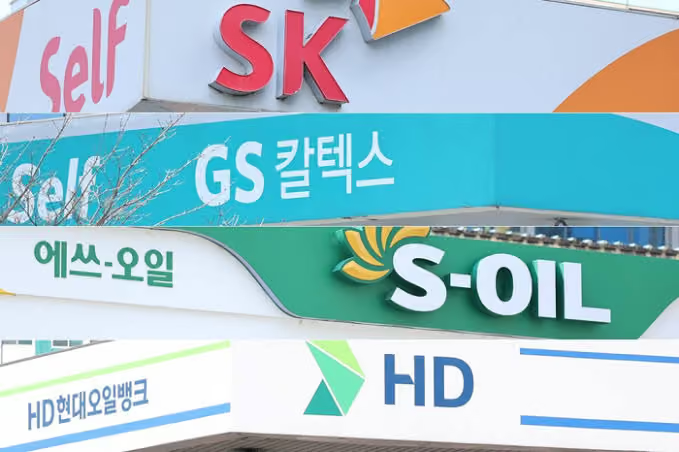
South Korea's four dominant petroleum refiners HD Hyundai Oilbank, SK Energy, GS Caltex, and S-Oil now face criminal indictment over an estimated 14.2 trillion won (~$10.3 billion) in allegedly coordinated fuel price increases, with the total anti-competitive impact reaching 26 trillion won (~$18.8 billion) when broader market price-following is included. The charges cover a period running from January 2021 through June 2025, with the most acute collusion activity alleged between July 2024 and February 2025 a window that coincides, according to reports, with the US-Iran war and the domestic fuel price spike that followed. Every domestic buyer of petroleum products in South Korea industrial consumers, transport operators, petrol station franchisees, and retail motorists effectively absorbed an overcharge during this period. The case, pursued by the Fair Trade Investigation Division of Seoul Central District Prosecutors' Office under Chief Prosecutor Na Hee-seok, marks the most consequential antitrust action against South Korea's oil sector in a generation.
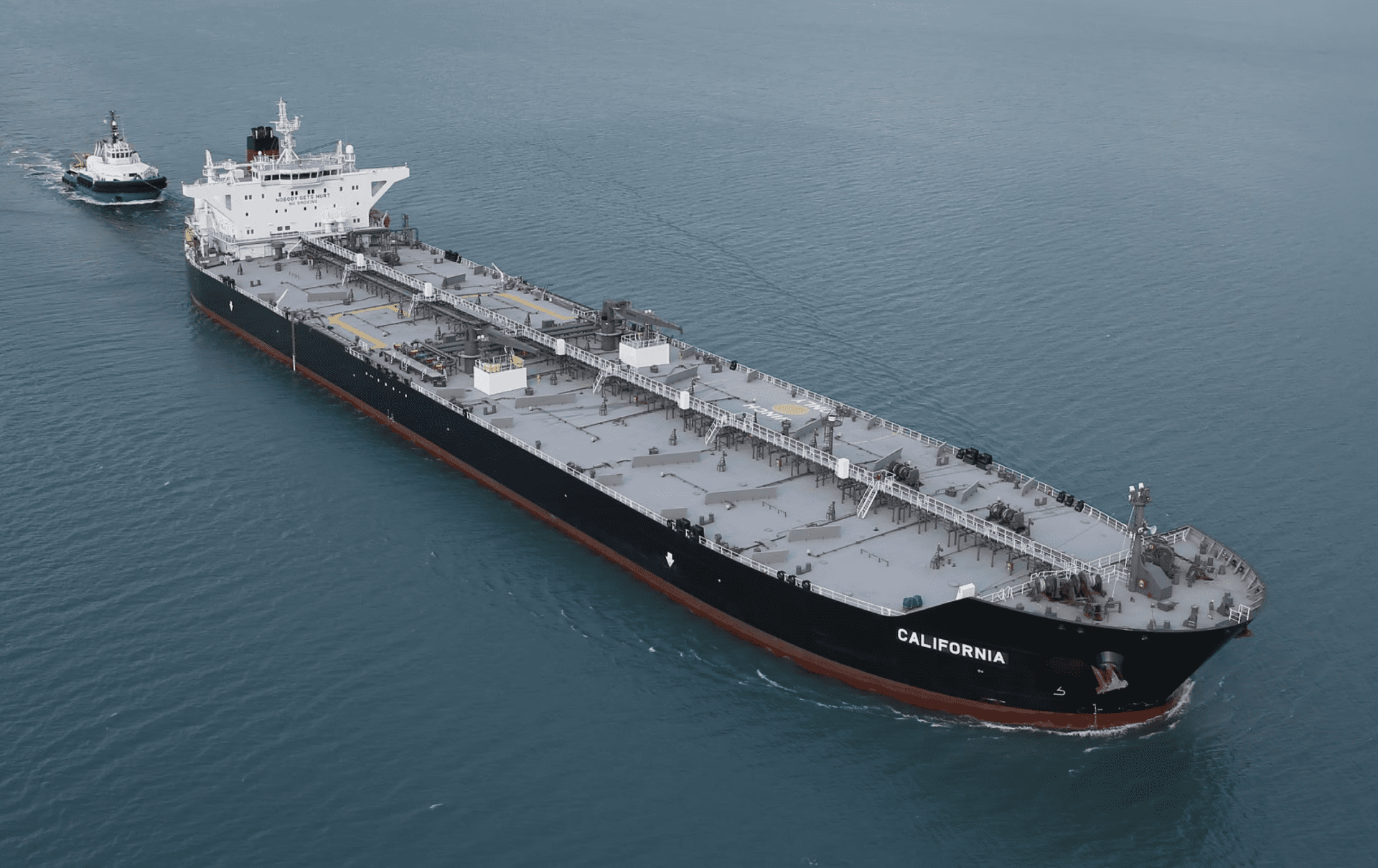
To understand what is alleged here, it helps to understand the market structure. South Korea has no meaningful domestic crude oil production. Its refineries process imported crude primarily from the Middle East, arriving via Very Large Crude Carriers (VLCCs, supertankers capable of carrying 2 million barrels) through the Strait of Hormuz and across the Western Pacific to terminals at Ulsan, Yeosu, and Incheon. The four indicted refiners collectively hold approximately 98.6% of the country's refining capacity. Downstream, they supply roughly 12,000 retail petrol stations across the peninsula, many of which operate under exclusive supply contracts meaning a station that signs with SK Energy, for example, cannot legally source product from GS Caltex or any importer. These exclusive dealing arrangements, sometimes called tied supply contracts, concentrate purchasing power entirely on the refiner side of the relationship. When the four refiners allegedly agreed to coordinate pricing, there was no domestic alternative supply channel through which the market could self-correct.
The margin anatomy of this case is unusually well-documented by prosecutors. The direct collusion margin the excess revenue captured by the four refiners above what competitive pricing would have yielded is estimated at 14.2 trillion won over the core collusion period. The broader anti-competitive effect, which includes price-following (where non-colluding parties in adjacent markets mirror elevated prices without explicit agreement), brings the total overcharge to approximately 26 trillion won. To contextualise the scale: South Korea's total refined petroleum product consumption runs at roughly 100–110 million tonnes per year. An overcharge of 14.2 trillion won across a seven-month core window implies an excess margin of approximately 20,000–25,000 won per tonne above competitive levels or roughly $15–18 per barrel equivalent. For a single mid-sized industrial buyer consuming 50,000 tonnes of diesel per year, that overcharge over a seven-month period translates to approximately 700–875 million won (~$500,000–630,000) in excess costs directly attributable to the alleged coordination.
The prosecution alleges that the coordination mechanism was not passive it was actively managed. The individual identified as A, the pricing division head at HD Hyundai Oilbank, is described as the central figure who led the pricing agreement and has been detained following an arrest warrant issued on 19 June. Two additional individuals B, a senior manager, and C, the legal affairs chief at HD Hyundai Oilbank were indicted alongside D, the domestic sales head at GS Caltex. Critically, investigators allege that the four refiners had stockpiled substantial crude oil in advance of the price spike, meaning the cost-push justification for the price increases that rising crude import costs necessitated higher retail prices did not hold. If confirmed, this is not a case of refiners passing through input costs. It is, prosecutors argue, a case of refiners exploiting a geopolitical disruption to extract margin that their inventory position did not require them to seek.
The evidence destruction allegations add a distinct legal and commercial dimension. C at HD Hyundai Oilbank is alleged to have received advance knowledge of an on-site inspection by the Korea Fair Trade Commission (KFTC, the country's competition authority) in March and ordered the deletion of internal pricing documents. D at GS Caltex is alleged to have deleted an internal messaging channel used to circulate pricing materials upon learning of the same inspection. In cartel cases globally, internal communications messaging threads, pricing circulars, meeting records are typically the most probative evidence, meaning the evidence most capable of proving explicit agreement rather than coincidental parallel behaviour. The destruction of that material is both a separate criminal charge and a structural weakening of the prosecution's ability to prove the criminal threshold. South Korean courts have historically been reluctant to convict large chaebols (the family-owned industrial conglomerates that dominate the economy) on cartel charges without direct documentary proof of explicit agreement. The timing of the deletions, prosecutors will argue, is itself evidence of consciousness of guilt.
On the buy side, the consequences are already tangible. For large industrial consumers of petroleum products shipping companies, petrochemical feedstock buyers, power generators operating liquid fuel capacity the overcharge period represents a direct cost item that may now be recoverable through civil proceedings if the criminal case establishes liability. Korean civil law permits downstream buyers to claim damages linked to proven cartel overcharges. For smaller buyers independent transport operators, regional logistics firms, smaller manufacturers the path to recovery is more complex and costly, typically requiring participation in class or representative actions. On the sell side, the four refiners now face not only criminal liability but the prospect of KFTC-imposed administrative fines, which under Korean competition law can reach 10% of relevant turnover during the infringement period a number that, applied to 14.2 trillion won, could reach 1.42 trillion won in regulatory penalties above and beyond any criminal sanctions.
For large integrated operators with trading arms a national oil company's marketing division, a major international trader active in Korean product markets the structural implication is worth monitoring. If the prosecution succeeds and the court mandates changes to exclusive supply contract practices, Korean domestic petroleum product prices could compress toward regional import parity levels: the CFR (Cost and Freight meaning the supplier covers cost and freight to a named destination port) Singapore benchmark, which prices gasoline, diesel, and jet fuel across the Asia-Pacific. That convergence, if it occurs, would represent an arbitrage opening the opportunity to supply Korean retail channels from Singapore-priced cargoes that were previously locked out by exclusive dealing. For smaller regional operators independent fuel importers, terminal operators the more immediate signal is the regulatory environment: the Seoul prosecutors' action indicates that the KFTC and criminal justice system are now willing to pursue coordinated enforcement against dominant energy sector players in a way not seen previously.
The prosecution's timeline creates a structural evidentiary challenge that should not be underestimated. The indictment spans January 2021 to June 2025 four and a half years encompassing pre-war market normalcy, mid-war supply disruption, and post-disruption correction. Distinguishing coordinated pricing from rational oligopolistic parallel pricing where competing firms independently reach similar price decisions because they face identical cost structures and read the same market signals is among the hardest tasks in competition law. The defence will argue that four refiners importing the same Gulf crude, processing it in similar configurations, and selling into the same domestic market will naturally produce similar prices without any coordination. The prosecution's response rests on the stockpile evidence: if the refiners had pre-purchased crude at pre-disruption prices, their actual input cost did not spike in the way retail prices did. That gap between actual cost and charged price is the evidentiary core of the case.
For observers tracking this case as a forward signal, the most specific and time-bound indicator is the Korea Fair Trade Commission's formal penalty determination, expected in the second half of 2026. Watch the KFTC's ruling on whether to uphold the exclusive supply contract model if it mandates open supply access for petrol station franchisees, domestic product margins will compress rapidly toward Singapore CFR parity as import alternatives become viable for the first time. A secondary signal is the criminal court's interim ruling on the admissibility of reconstructed digital evidence in place of the deleted messaging records: a ruling that admits reconstructed evidence materially strengthens the prosecution's case and raises the probability of a criminal conviction that would set a precedent constraining pricing behaviour across South Korea's entire downstream energy sector for years ahead.

.jpg)

'%3e%3cg id='Final-Copy-2_2_' transform='translate(1275.000000, 200.000000)'%3e%3cpath class='st0' d='M7.4,12.8h6.8l3.1-11.6H7.4C4.2,1.2,1.6,3.8,1.6,7S4.2,12.8,7.4,12.8z'/%3e%3c/g%3e%3c/g%3e%3c/g%3e%3cg id='final---dec.11-2020'%3e%3cg id='_x30_208-our-toggle' transform='translate(-1275.000000, -200.000000)'%3e%3cg id='Final-Copy-2' transform='translate(1275.000000, 200.000000)'%3e%3cpath class='st1' d='M22.6,0H7.4c-3.9,0-7,3.1-7,7s3.1,7,7,7h15.2c3.9,0,7-3.1,7-7S26.4,0,22.6,0z M1.6,7c0-3.2,2.6-5.8,5.8-5.8 h9.9l-3.1,11.6H7.4C4.2,12.8,1.6,10.2,1.6,7z'/%3e%3cpath id='x' class='st2' d='M24.6,4c0.2,0.2,0.2,0.6,0,0.8l0,0L22.5,7l2.2,2.2c0.2,0.2,0.2,0.6,0,0.8c-0.2,0.2-0.6,0.2-0.8,0 l0,0l-2.2-2.2L19.5,10c-0.2,0.2-0.6,0.2-0.8,0c-0.2-0.2-0.2-0.6,0-0.8l0,0L20.8,7l-2.2-2.2c-0.2-0.2-0.2-0.6,0-0.8 c0.2-0.2,0.6-0.2,0.8,0l0,0l2.2,2.2L23.8,4C24,3.8,24.4,3.8,24.6,4z'/%3e%3cpath id='y' class='st3' d='M12.7,4.1c0.2,0.2,0.3,0.6,0.1,0.8l0,0L8.6,9.8C8.5,9.9,8.4,10,8.3,10c-0.2,0.1-0.5,0.1-0.7-0.1l0,0 L5.4,7.7c-0.2-0.2-0.2-0.6,0-0.8c0.2-0.2,0.6-0.2,0.8,0l0,0L8,8.6l3.8-4.5C12,3.9,12.4,3.9,12.7,4.1z'/%3e%3c/g%3e%3c/g%3e%3c/g%3e%3c/g%3e%3c/svg%3e) Privacy Choices
Privacy Choices