.avif)
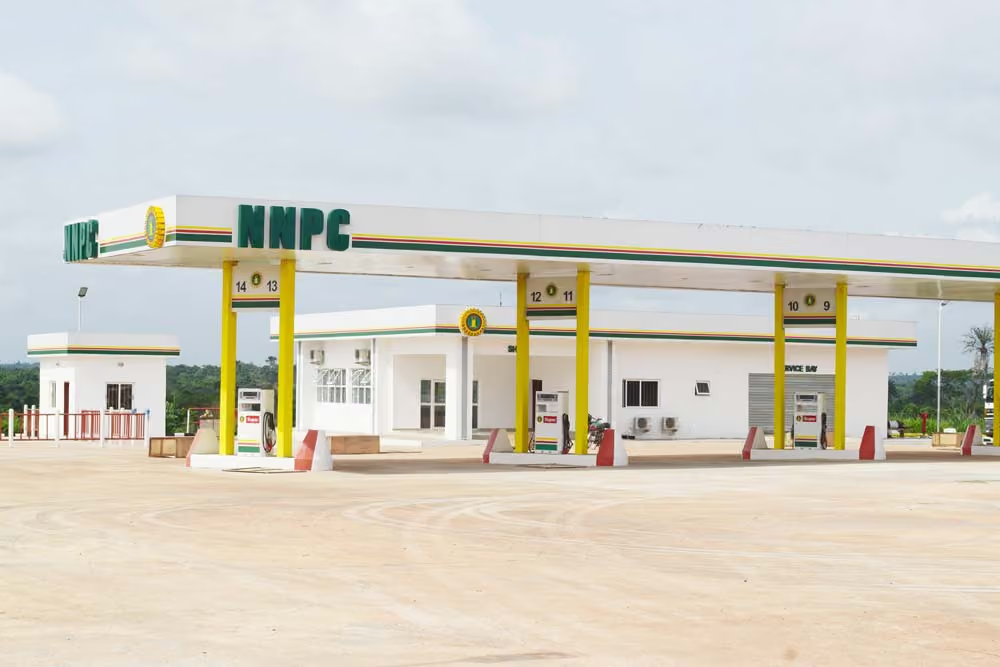
Nigerian petrol retailers across Abuja and the wider national network began cutting pump prices on or around 4 July 2026, with prices falling to 1,191–1,240 naira per litre reductions of roughly 60–110 naira per litre from the preceding level of approximately 1,300 naira within two days of Dangote Refinery lowering its gantry price to 1,075 naira per litre. For a filling station moving 50,000 litres per day, that margin compression or relief depending on which side of the supply chain you occupy translates to between ₦3 million and ₦5.5 million per day in changed economics. The speed of the retail response confirms what Nigeria's deregulation framework was designed to produce: a domestic refinery with scale can now set the effective price signal for the entire downstream market, displacing the import parity benchmark that governed pump prices for most of the past decade.
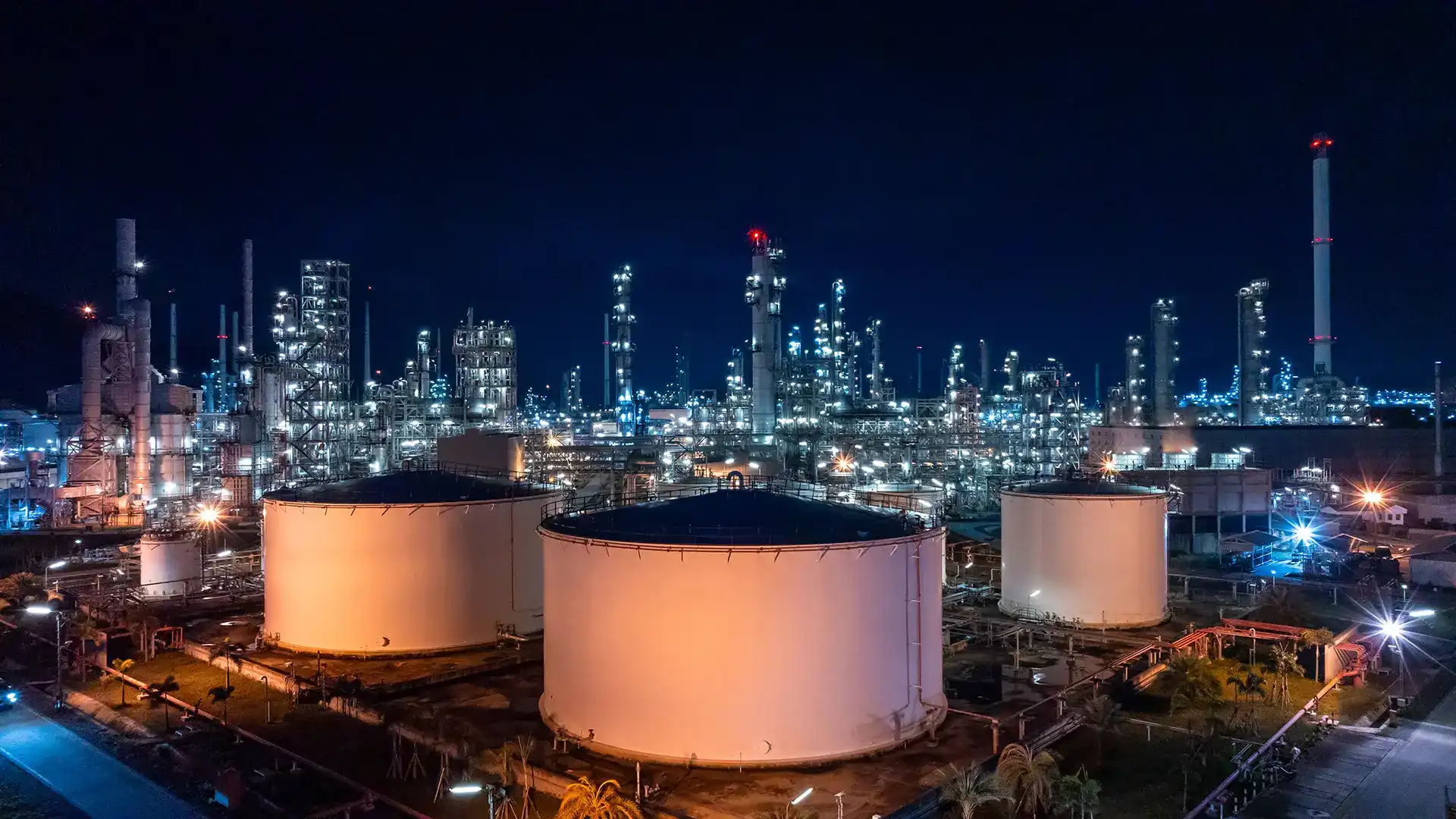
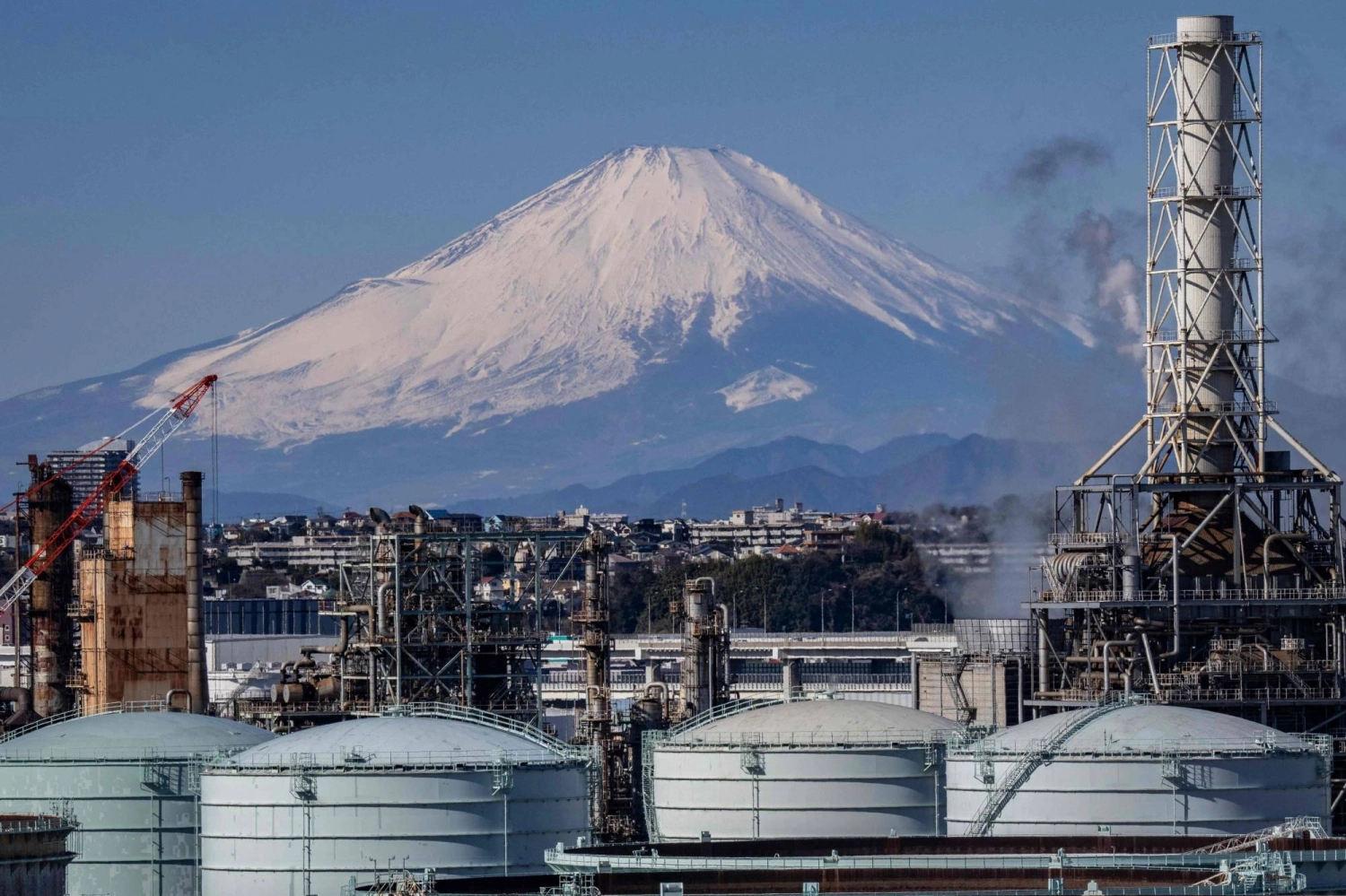
To understand why this matters structurally, it helps to trace the physical supply chain. Dangote Refinery, located at Lekki on the Lagos coast, has a nameplate capacity of 650,000 barrels per day making it the largest single-train refinery in Africa and one of the largest globally. When the refinery sets a gantry price the gantry being the point at which trucks or pipeline offtake receive product at the refinery gate, before distribution costs are added that price becomes the floor from which retail margins and logistics costs are built upward. At 1,075 naira per litre ex-gantry, a retailer in Abuja must add road transport (roughly 50–80 naira per litre on a 600 kilometre trunk haul by tanker truck), working capital costs, and a retail margin. The resulting pump price of 1,205–1,240 naira per litre in Abuja is arithmetically coherent: the gantry price plus distribution plus a thin retail margin. What has changed is the anchor, not the structure.
The margin anatomy here deserves precise disaggregation. Under the previous import-parity regime where Nigerian pump prices were benchmarked against the cost of shipping refined petrol (PMS, or Premium Motor Spirit, the standard 91 octane gasoline sold at Nigerian filling stations) from European or Indian refineries the landed cost of imported product at Lagos included the cargo price, ocean freight, insurance, port handling, and the foreign exchange cost of converting naira at the parallel or official rate. At crude around $68–72 per barrel, European refinery crack spreads (the margin a refinery earns converting crude into petrol) and freight together placed import parity for Nigerian PMS at roughly 1,300–1,350 naira per litre delivered Lagos. Dangote's gantry at 1,075 naira undercuts that by 225–275 naira per litre. For importers, that gap is not a rounding error it is the difference between a viable trade and a structurally loss making one. Import based supply into Nigeria is, at current crude levels, effectively closed as an economic activity.
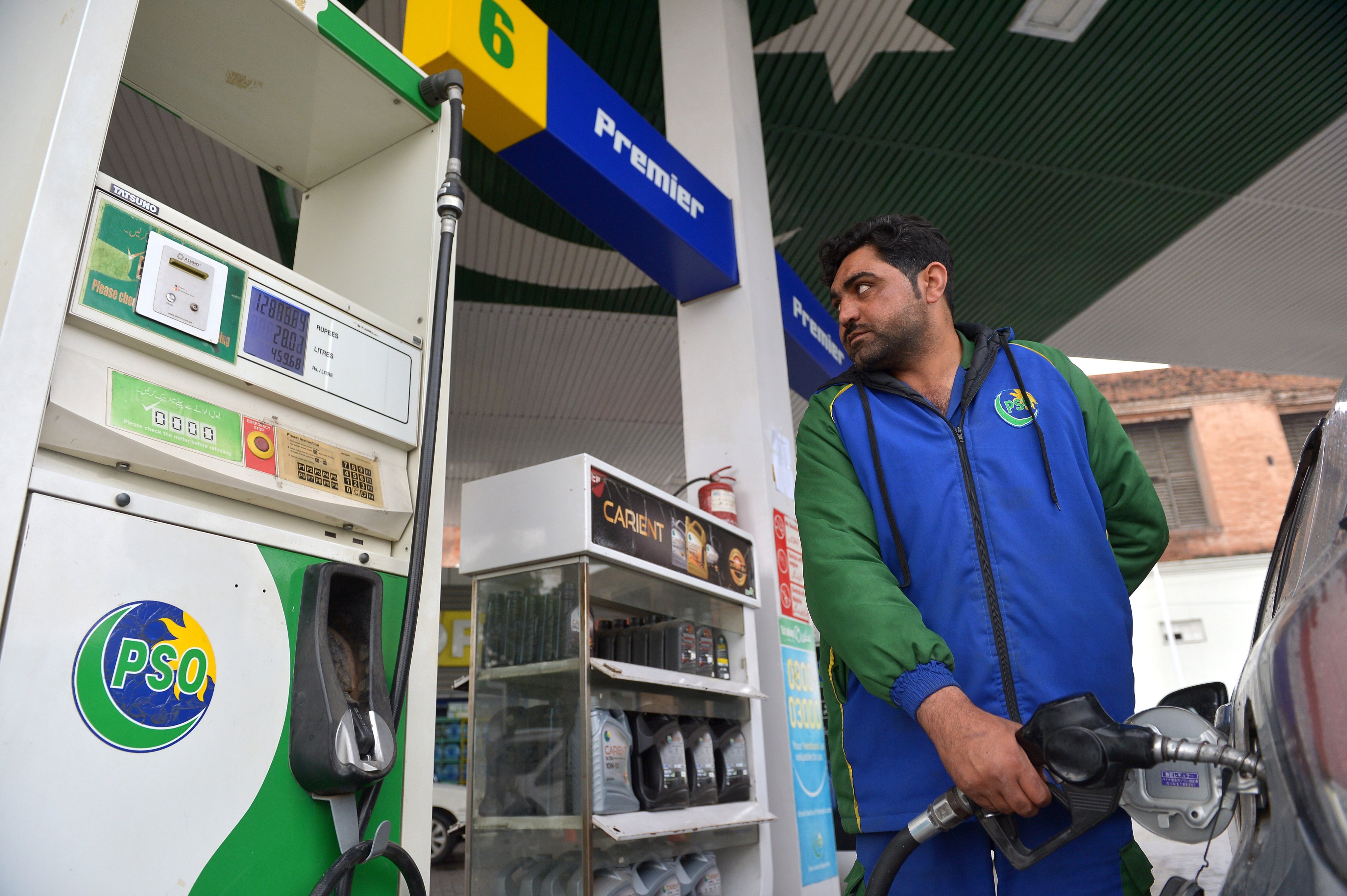
On the sell side, the winners and losers separate sharply. Dangote Refinery gains by setting the gantry at a level that captures volume share from importers while still generating a refinery margin on crude it processes at $68–72/bbl input cost, and with a naira denominated output price, the refinery's economics are partially insulated from dollar exchange rate moves by the fact that both its crude cost and its product revenues are subject to the same exchange rate. NNPCL the Nigerian National Petroleum Company Limited, the state-owned entity cut its pump price to 1,210 naira per litre, absorbing the gantry reduction into its own retail and distribution network. MRS, a Dangote affiliated marketer, went to 1,191 naira the lowest among named retailers reflecting direct supply chain integration with the Dangote gantry. Independent retailers such as AA Rano, Ranoil, and NIPCO (Nigerian Independent Petroleum Company) moved to 1,205–1,240 naira, suggesting they sourced from Dangote or aligned competitively rather than from more expensive import cargoes.
On the buy side, the consumer relief is real but partial. Prices have fallen from approximately 1,300 naira to 1,191–1,240 naira a reduction of 5–8%. But the pre-conflict reference level of approximately 1,000 naira per litre remains 20–24% below current prices. For a Lagos commuter filling a 50 litre tank, today's price represents roughly ₦10,000 more per fill than the pre-conflict baseline. For logistics operators trucking companies, bus fleets, agricultural distributors the fuel bill remains a significant structural cost. The direction is right; the destination is not yet reached. Whether prices approach 1,000 naira depends on two independent variables: global crude staying in or below the $68–72 range, and Dangote being able to sustain sufficient PMS output volume to supply the national distribution network without forcing marketers back to import sources.
That second variable is the structural constraint that the retail price headlines obscure. Dangote's 650,000 bpd nameplate capacity is not the same as its current operational throughput and its product slate (the mix of petrol, diesel, jet fuel, naphtha, and other products a refinery produces) is not publicly reported with precision. A large complex refinery processing predominantly Nigerian crude, which tends toward middle distillate yield, may not maximise gasoline output relative to diesel or naphtha. If Dangote's actual PMS yield is, say, 30–35% of throughput at current crude slate, and if throughput is running below nameplate during commissioning phases, the total domestic PMS supply from Dangote could be materially below the 35–40 million litres per day Nigeria consumes. Any operational disruption planned maintenance, feedstock variability, yield shift could force marketers back to the import market overnight, snapping the retail price back toward 1,300 naira or above without any change in global crude prices.
For large integrated operators a national oil company trading arm or a major marketer with both Dangote supply agreements and import infrastructure the practical instrument is a bilateral offtake agreement with Dangote at a fixed gantry price for a defined volume and duration, combined with a standby import position hedged via a paper swap on European gasoline (Eurobob, the standard Northwest European gasoline benchmark). This combination locks the domestic supply economics while preserving the ability to source imports if Dangote supply falters, without taking unhedged price exposure on the import leg. The hedge cost on a 50,000 tonne monthly import position is approximately $0.50–1.00/MT in option premium negligible against the 225 naira/litre structural advantage of domestic supply while it holds.
For smaller regional operators an independent filling station network in, say, Kano or Port Harcourt without direct Dangote supply access the practical equivalent is sourcing from a Dangote aligned distributor (MRS or NNPCL depots) rather than from importers, and fixing a 30–60 day supply contract at a price indexed to the Dangote gantry rather than a spot import price. This approach sacrifices some upside if the gantry falls further, but eliminates the risk of being caught holding expensive import sourced inventory if the market reprices downward again. The secondary risk to watch is cross-border arbitrage: as Nigerian pump prices fall below those in Benin, Niger, and Cameroon, informal cross-border fuel flows will increase, potentially drawing down depot stocks in border states faster than distribution networks can replenish them.
The signal to watch over the next 30 days is the Dangote gantry price itself, published through the Depot and Petroleum Products Marketers Association of Nigeria (DAPPMAN) and confirmed by NNPCL depot postings. If the Dangote gantry holds at 1,075 naira while Brent crude the international crude benchmark against which most Nigerian supply economics are calculated trades below $70/bbl, there is scope for a further gantry reduction toward 1,020–1,040 naira, which would bring Abuja retail prices into the 1,150–1,180 naira range. If crude firms above $75/bbl, the gantry is more likely to hold or nudge upward, capping further consumer relief. The secondary signal is product availability reports at Dangote aligned depots: any queue formation or allocation rationing at Lagos, Warri, or Apapa terminals would indicate supply volume is not keeping pace with demand at the new lower price, and would be the earliest warning that the structural constraint is binding before it shows up in retail prices.
.jpg)

'%3e%3cg id='Final-Copy-2_2_' transform='translate(1275.000000, 200.000000)'%3e%3cpath class='st0' d='M7.4,12.8h6.8l3.1-11.6H7.4C4.2,1.2,1.6,3.8,1.6,7S4.2,12.8,7.4,12.8z'/%3e%3c/g%3e%3c/g%3e%3c/g%3e%3cg id='final---dec.11-2020'%3e%3cg id='_x30_208-our-toggle' transform='translate(-1275.000000, -200.000000)'%3e%3cg id='Final-Copy-2' transform='translate(1275.000000, 200.000000)'%3e%3cpath class='st1' d='M22.6,0H7.4c-3.9,0-7,3.1-7,7s3.1,7,7,7h15.2c3.9,0,7-3.1,7-7S26.4,0,22.6,0z M1.6,7c0-3.2,2.6-5.8,5.8-5.8 h9.9l-3.1,11.6H7.4C4.2,12.8,1.6,10.2,1.6,7z'/%3e%3cpath id='x' class='st2' d='M24.6,4c0.2,0.2,0.2,0.6,0,0.8l0,0L22.5,7l2.2,2.2c0.2,0.2,0.2,0.6,0,0.8c-0.2,0.2-0.6,0.2-0.8,0 l0,0l-2.2-2.2L19.5,10c-0.2,0.2-0.6,0.2-0.8,0c-0.2-0.2-0.2-0.6,0-0.8l0,0L20.8,7l-2.2-2.2c-0.2-0.2-0.2-0.6,0-0.8 c0.2-0.2,0.6-0.2,0.8,0l0,0l2.2,2.2L23.8,4C24,3.8,24.4,3.8,24.6,4z'/%3e%3cpath id='y' class='st3' d='M12.7,4.1c0.2,0.2,0.3,0.6,0.1,0.8l0,0L8.6,9.8C8.5,9.9,8.4,10,8.3,10c-0.2,0.1-0.5,0.1-0.7-0.1l0,0 L5.4,7.7c-0.2-0.2-0.2-0.6,0-0.8c0.2-0.2,0.6-0.2,0.8,0l0,0L8,8.6l3.8-4.5C12,3.9,12.4,3.9,12.7,4.1z'/%3e%3c/g%3e%3c/g%3e%3c/g%3e%3c/g%3e%3c/svg%3e) Privacy Choices
Privacy Choices