.avif)
VLCC charterers and cargo owners on Middle East Gulf to Asia crude routes are carrying an estimated $0.50–$2.50 per barrel in elevated war-risk surcharges as of early July 2026 costs that France's mine countermeasure deployment does not, by itself, remove.
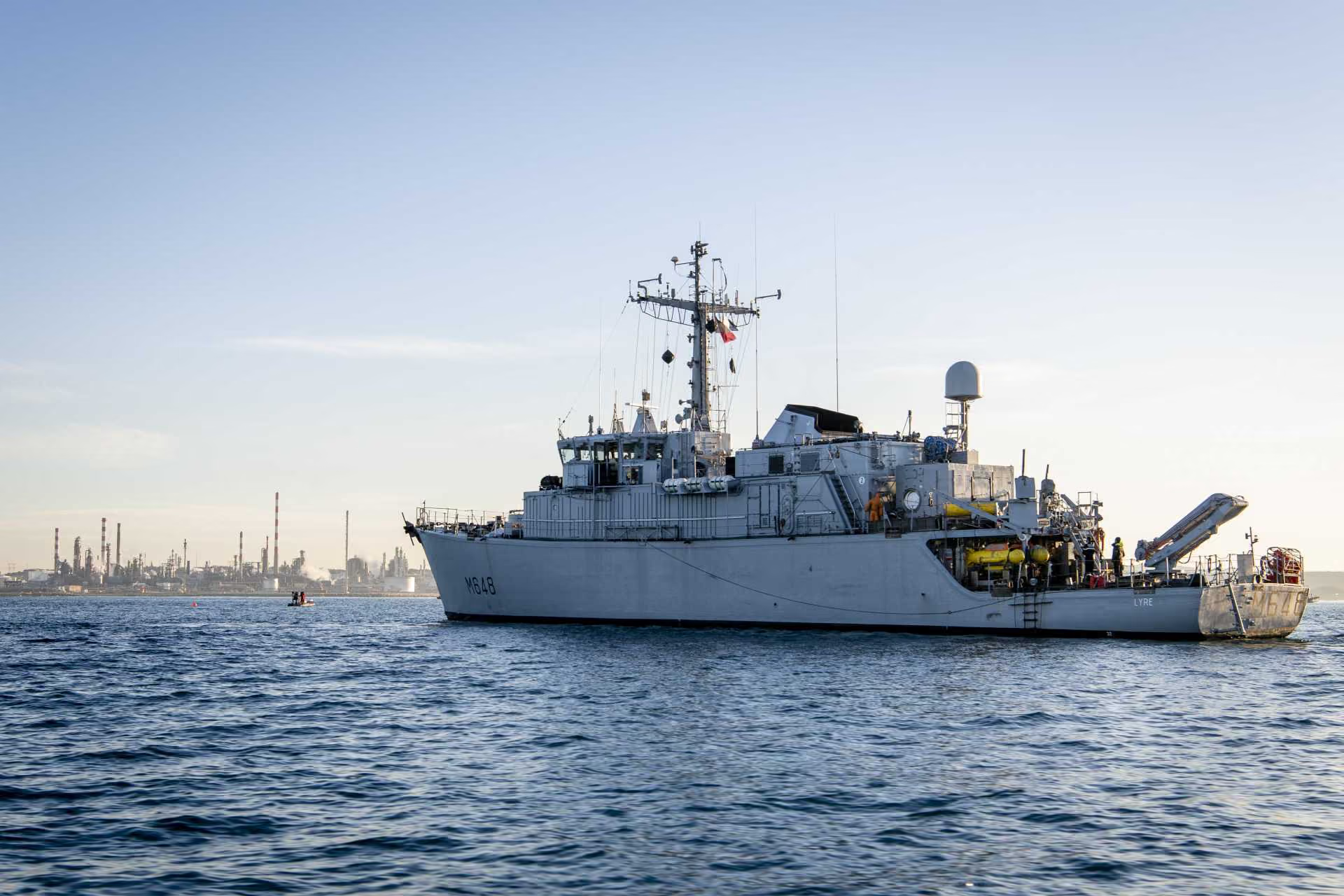
France has positioned two minehunters specialised naval vessels equipped with sonar and remotely operated vehicles designed to detect and neutralise underwater mines without triggering them alongside escorting frigates and a maritime patrol aircraft at the Strait of Hormuz. According to reports, President Emmanuel Macron adapted the deployment following constructive discussions with Sultan Haitham bin Tariq Al Said of Oman, with Oman agreeing to work with France and the United Kingdom to safeguard navigation through its territorial waters. The UK has formally backed the initiative, with Prime Minister Keir Starmer and President Macron issuing a joint statement describing the Strait as a vital artery for the global economy. The aircraft carrier Charles de Gaulle has returned to Toulon, but Paris and London are framing the remaining assets as a sustained stabilisation mission rather than a drawdown. Iran has, if reports are accurate, rejected France's proposed security role a diplomatic friction point that carries direct commercial consequences for every operator moving crude through the 33 kilometre wide chokepoint through which approximately 20% of the world's traded oil flows each day.
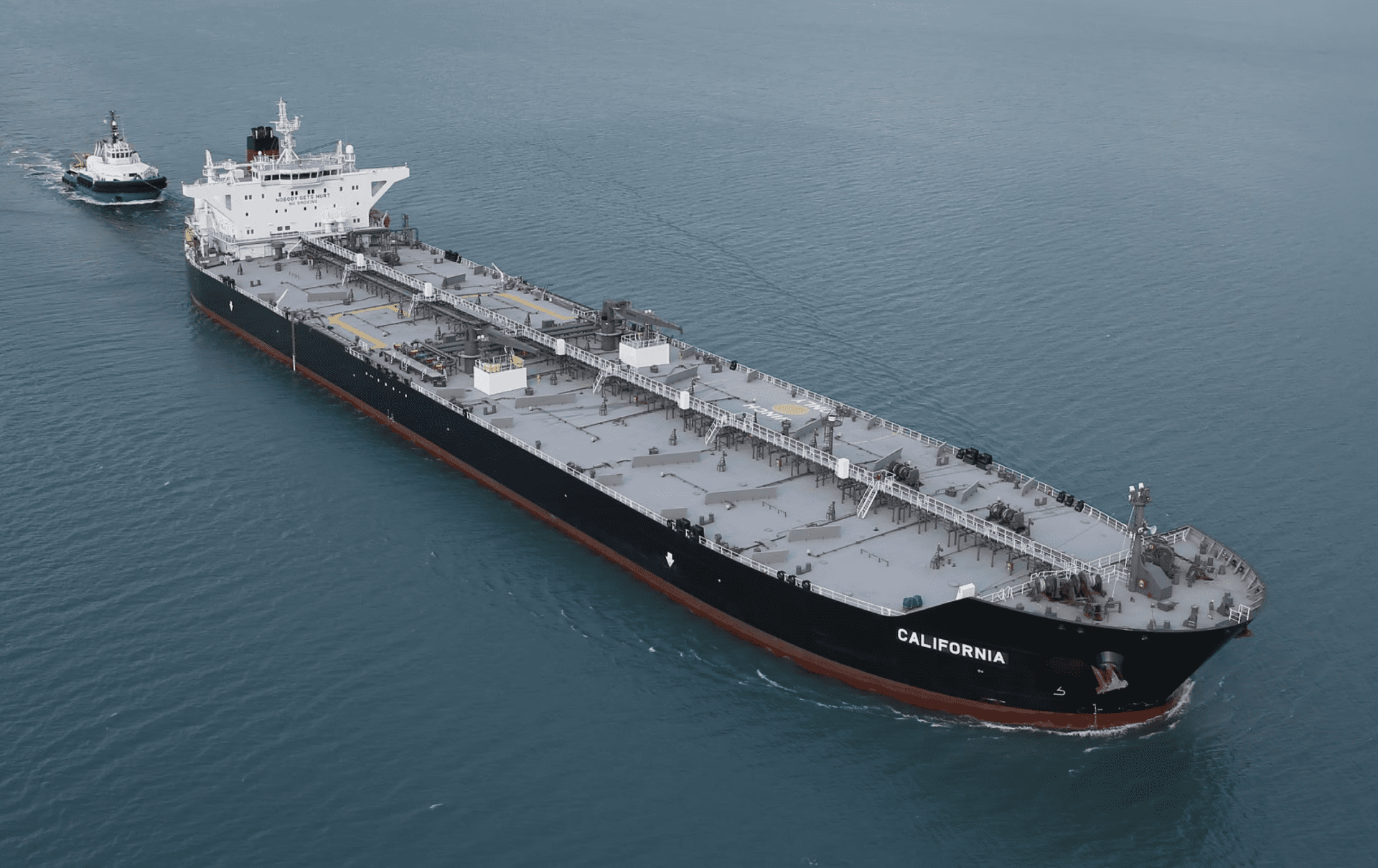
The Strait of Hormuz is not merely a geographic feature it is a pricing mechanism. A VLCC (Very Large Crude Carrier a supertanker capable of loading approximately 2 million barrels, or roughly 270,000 metric tonnes of crude) loaded at Kharg Island or Ras Tanura transits the Strait, crosses the Arabian Sea, and arrives at a Japanese, South Korean, or Chinese refinery 18 to 22 days later. That voyage's economics are built from four stacked costs: base freight (the daily hire rate for the vessel), port and canal dues, bunker fuel (the heavy fuel oil that powers the vessel), and war-risk insurance. In normal operating conditions say, 2019 war-risk insurance on a MEG to Japan VLCC voyage was a rounding error, often below $0.10 per barrel. As of mid-2026, underwriters at Lloyd's and specialist war-risk markets are pricing that same coverage at $0.50 to $2.50 per barrel depending on vessel class, cargo, and specific route. On a 2 million barrel cargo, that upper band represents $5 million in additional voyage cost not absorbed by the vessel owner, but passed directly to the charterer or cargo owner.
Here is where the margin anatomy of this deployment becomes commercially precise. War-risk insurance premiums are set by underwriters based on incident frequency actual mine strikes, vessel seizures, or confirmed hostile acts and on sovereign threat posture, meaning whether the state capable of creating the hazard has formally stood down. Western naval assets on station do not, by themselves, satisfy either condition. If Iran has not formally withdrawn its maritime threat posture in conjunction with or following the June 17 US-Iran memorandum of understanding a preliminary agreement between Washington and Tehran that, according to reports, covered nuclear and regional security matters underwriters have no actuarial basis to rerate. The minehunters reduce the probability of a successful mine strike. They do not reduce the underwriter's liability until the threat that created that liability is formally rescinded. The surcharge persists. The charterer pays.
Consider a worked example. A Qatari national oil company charters a VLCC to lift 2 million barrels of Al-Shaheen crude for delivery to a Taiwanese refinery. The base TD3C freight rate the benchmark assessed by the Baltic Exchange for Middle East Gulf to China VLCC voyages is currently assessed at approximately Worldscale 65, equivalent to roughly $14 per metric tonne. Bunker costs at IFO 380 prices add approximately $8 per tonne. War-risk insurance at current elevated premiums adds another $6–$8 per tonne, depending on underwriter and route specifics. Total voyage cost: approximately $28–$30 per tonne, against a normalised pre-disruption equivalent of $20–$22 per tonne. The $8–$10 per tonne gap across 270,000 tonnes is $2.16 million to $2.70 million per voyage, every voyage, until the threat posture resolves. On the sell side, a producer marketing free on board (FOB) cargo where the buyer takes ownership and freight risk at the loading terminal faces buyers demanding price discounts equivalent to the elevated freight cost. The netback, meaning the effective price the producer receives after freight deductions, compresses accordingly.
On the buy side, Asian refinery buyers particularly independent Chinese teapot refineries that purchase on a delivered basis and do not have the hedging infrastructure of a major integrated operator face a direct margin squeeze. A teapot refinery running at 5 million tonnes per year of Middle East crude imports is paying an incremental $40–$50 million annually in elevated freight and insurance costs relative to 2024 baselines. That is not recoverable through refinery efficiency. It comes out of operating margin, or it forces a shift in crude slate. The Brent-Dubai spread the price difference between North Sea Brent crude and Dubai benchmark crude, which determines whether Atlantic Basin oil can economically displace Middle East barrels in Asian refineries has widened during the disruption period, making West African and North Sea crude marginally more attractive to some Asian buyers, provided the voyage economics via the Cape of Good Hope or Suez Canal are competitive. For smaller cargoes of refined products, a Cape diversion adds approximately 10–12 additional sailing days and $15–$20 per tonne in additional bunker cost, making it viable only for operators who cannot absorb the war-risk surcharge at all.
For a large integrated trader Trafigura, Vitol, or a national oil company trading arm with access to listed derivatives and bilateral war-risk insurance facilities the current environment is manageable, if expensive. These operators can hedge freight exposure using Forward Freight Agreements (FFAs exchange cleared derivatives that lock in a freight rate for a future voyage) on the TD3C route, and can access war-risk cover through panel underwriters at pre-negotiated rates. The cost of that protection is real but budgeted. For a smaller regional operator a mid-sized fuel importer in South or Southeast Asia sourcing 3–5 Aframax sized cargoes (vessels of approximately 80,000–120,000 tonnes, smaller than VLCCs) per month from Middle East refineries derivatives access is limited and war-risk exposure is managed through bilateral fixed-price contracts with suppliers, or by accepting spot exposure. These operators benefit most from any genuine de-escalation that causes underwriters to rerate, because they cannot hedge their way through a sustained premium environment the way a major trading house can.
The structural unknown that no deployment announcement resolves is Iran's operational posture in the weeks immediately ahead. The June 17 US-Iran memorandum of understanding has been described by President Macron as a step forward for regional stability, but the commercial market is waiting for something more specific: a formal Iranian naval stand-down, a sustained absence of hostile maritime incidents, or an explicit underwriter communication that the Joint War Committee the Lloyd's body that designates high-risk areas has revised its Listed Areas assessment for the Gulf region. None of those has occurred as of early July 2026. Until one does, the French and UK naval presence represents a physical risk reduction mines are being hunted, escort is available without translating into the insurance rerate that would actually reduce VLCC voyage costs for charterers.
Observers monitoring this situation should focus on two named signals with specific time windows. First, watch the Baltic Exchange TD3C Worldscale assessment daily through July if war-risk surcharges begin to compress, the overall rate will fall even if base freight holds steady, which is the clearest market signal that underwriters have begun to rerate. Second, monitor the Lloyd's Joint War Committee Listed Areas bulletin for any revision removing or downgrading the Arabian Gulf designation; a formal revision there would immediately allow underwriters to reduce premiums without waiting for individual policy renewals. If neither signal moves by the end of July, the French minehunter deployment has stabilised the physical risk environment without resolving the commercial cost environment and charterers should budget elevated war-risk costs through at least Q3 2026.
.jpg)
.jpg)

'%3e%3cg id='Final-Copy-2_2_' transform='translate(1275.000000, 200.000000)'%3e%3cpath class='st0' d='M7.4,12.8h6.8l3.1-11.6H7.4C4.2,1.2,1.6,3.8,1.6,7S4.2,12.8,7.4,12.8z'/%3e%3c/g%3e%3c/g%3e%3c/g%3e%3cg id='final---dec.11-2020'%3e%3cg id='_x30_208-our-toggle' transform='translate(-1275.000000, -200.000000)'%3e%3cg id='Final-Copy-2' transform='translate(1275.000000, 200.000000)'%3e%3cpath class='st1' d='M22.6,0H7.4c-3.9,0-7,3.1-7,7s3.1,7,7,7h15.2c3.9,0,7-3.1,7-7S26.4,0,22.6,0z M1.6,7c0-3.2,2.6-5.8,5.8-5.8 h9.9l-3.1,11.6H7.4C4.2,12.8,1.6,10.2,1.6,7z'/%3e%3cpath id='x' class='st2' d='M24.6,4c0.2,0.2,0.2,0.6,0,0.8l0,0L22.5,7l2.2,2.2c0.2,0.2,0.2,0.6,0,0.8c-0.2,0.2-0.6,0.2-0.8,0 l0,0l-2.2-2.2L19.5,10c-0.2,0.2-0.6,0.2-0.8,0c-0.2-0.2-0.2-0.6,0-0.8l0,0L20.8,7l-2.2-2.2c-0.2-0.2-0.2-0.6,0-0.8 c0.2-0.2,0.6-0.2,0.8,0l0,0l2.2,2.2L23.8,4C24,3.8,24.4,3.8,24.6,4z'/%3e%3cpath id='y' class='st3' d='M12.7,4.1c0.2,0.2,0.3,0.6,0.1,0.8l0,0L8.6,9.8C8.5,9.9,8.4,10,8.3,10c-0.2,0.1-0.5,0.1-0.7-0.1l0,0 L5.4,7.7c-0.2-0.2-0.2-0.6,0-0.8c0.2-0.2,0.6-0.2,0.8,0l0,0L8,8.6l3.8-4.5C12,3.9,12.4,3.9,12.7,4.1z'/%3e%3c/g%3e%3c/g%3e%3c/g%3e%3c/g%3e%3c/svg%3e) Privacy Choices
Privacy Choices