.avif)

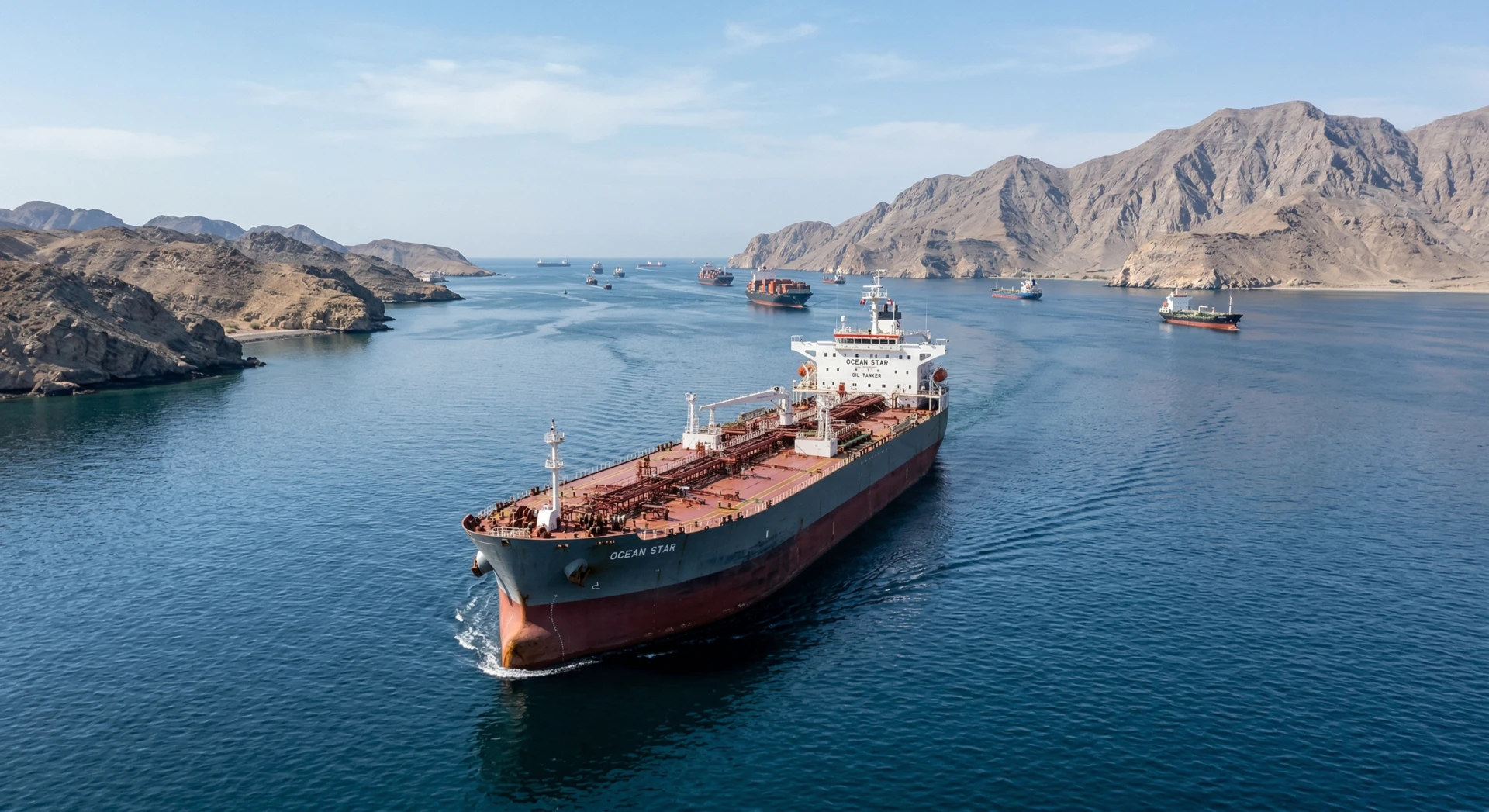
Container shipping operators running Asia-Europe services via the Cape of Good Hope are earning elevated freight premiums that persist directly because the Suez Canal the 193 kilometre waterway connecting the Red Sea to the Mediterranean, through which roughly 15% of global trade normally transits remains functionally closed to commercial container traffic, and the €1.5 billion EU tranche arriving in Cairo within days does nothing to reopen it.
The Suez Canal Authority the Egyptian state body that collects tolls on every transiting vessel has absorbed an estimated $10.5 billion in lost revenue since Red Sea disruptions pushed operators onto the Cape of Good Hope route, adding approximately 10–14 days each way around the southern tip of Africa. To put that in commercial terms: a 15,000 TEU (twenty-foot equivalent unit, the standard container measure) vessel consuming roughly 150 tonnes of fuel per day at $600/tonne for marine fuel oil incurs approximately $900,000 in additional fuel cost per one-way voyage on the Cape diversion. Multiply that across a carrier's weekly string of ten or twelve vessels and the operating cost addition reaches $9–11 million per week, per service. Carriers have recovered much of that through emergency surcharges and elevated spot rates but the structural point is this: the EU's €7.4 billion support package for Egypt, of which €4 billion has now been disbursed and €3 billion remains, is roughly equivalent in scale to the canal revenue hole. The EU is, in effect, partially backstopping the fiscal damage that the Red Sea crisis has inflicted on Cairo's foreign exchange position not repairing the underlying disruption.
On the buy side, Asian manufacturers and European retailers who import finished goods on Asia-Europe container services are absorbing freight rates that remain materially above pre-disruption levels. A 40 foot container (FEU) on the Shanghai–Rotterdam lane that cost approximately $1,500–2,000 in mid-2023 has traded in the $3,500–5,500 range through 2025–2026, depending on seasonal peaks a cost burden that compounds across supply chains with thin retail margins. European grocery and fast-fashion importers in particular, operating on 8–12% gross margins, find that a $2,000 per FEU freight premium across hundreds of containers per month becomes a direct hit to operating profit measured in millions of euros per quarter. On the sell side, Egyptian exporters textiles, agricultural products, petrochemicals face two compounding pressures: elevated outbound freight costs on Cape routed vessels, and a weakened Egyptian pound (EGP) that, while beneficial for export competitiveness in theory, is constrained by import-dependent input costs. The EU disbursement stabilises Egypt's macro position and reduces the risk of a disorderly EGP devaluation, which would otherwise scramble export pricing contracts already agreed in dollar terms.
For large integrated container carriers Maersk, MSC, CMA CGM, operating fleets of 600–700 vessels with full route optionality the strategic question is not whether to use Suez today, but when to pre-position assets for a Suez return. If a regional ceasefire eventually enables commercial normalisation, the Cape premium collapses within weeks as carriers rush transit slots. Those with early route flexibility and hedged fuel positions will compress their own costs faster than spot-rate revenues fall, briefly widening margin before the market equilibrates. For smaller regional operators a feeder carrier running intra-Mediterranean services, a mid-sized freight forwarder fixing 12 month contracts with European retailers the practical move is to build Suez normalisation as a scenario into contract pricing now: include freight adjustment clauses (FACs) tied to named benchmarks such as the Drewry World Container Index (WCI) Shanghai–Rotterdam lane, so that a rapid rate compression does not strand you on above market long-term commitments. It is worth noting that the EU's framing of Egypt as an 'indispensable partner' with disbursement conditions that, according to available reporting, include governance and reform metrics whose precise fulfilment status has not been independently verified suggests geopolitical urgency may be as material to the disbursement timeline as technical reform compliance. If conditionality is being applied flexibly, the fiscal stabilisation effect is real but the reform dividend is uncertain.
The forward signal for container shipping operators to watch is not the EU disbursement itself that is a fiscal event, not a routing event. The actionable trigger is the Suez Canal Authority's weekly transit volume, published by maritime data providers including Lloyd's List Intelligence and Kpler, which currently sits at a fraction of its 2023 peak of approximately 25,000 vessel transits annually. When weekly northbound container transits through the Bab-el-Mandeb Strait the 29-kilometre chokepoint at the southern entrance to the Red Sea begin recovering toward 80–100 vessels per week on a sustained four-week trend, that is the market's early signal that Suez normalisation is operationally underway, not merely diplomatically signalled. At that point, Cape-route freight premiums will compress sharply, fuel cost advantages for vessels already at sea will evaporate, and operators holding long positions in Cape-route capacity will need to reposition quickly. Watch Bab-el-Mandeb weekly transit data through Q3 2026 as the definitive lead indicator.

.jpg)



'%3e%3cg id='Final-Copy-2_2_' transform='translate(1275.000000, 200.000000)'%3e%3cpath class='st0' d='M7.4,12.8h6.8l3.1-11.6H7.4C4.2,1.2,1.6,3.8,1.6,7S4.2,12.8,7.4,12.8z'/%3e%3c/g%3e%3c/g%3e%3c/g%3e%3cg id='final---dec.11-2020'%3e%3cg id='_x30_208-our-toggle' transform='translate(-1275.000000, -200.000000)'%3e%3cg id='Final-Copy-2' transform='translate(1275.000000, 200.000000)'%3e%3cpath class='st1' d='M22.6,0H7.4c-3.9,0-7,3.1-7,7s3.1,7,7,7h15.2c3.9,0,7-3.1,7-7S26.4,0,22.6,0z M1.6,7c0-3.2,2.6-5.8,5.8-5.8 h9.9l-3.1,11.6H7.4C4.2,12.8,1.6,10.2,1.6,7z'/%3e%3cpath id='x' class='st2' d='M24.6,4c0.2,0.2,0.2,0.6,0,0.8l0,0L22.5,7l2.2,2.2c0.2,0.2,0.2,0.6,0,0.8c-0.2,0.2-0.6,0.2-0.8,0 l0,0l-2.2-2.2L19.5,10c-0.2,0.2-0.6,0.2-0.8,0c-0.2-0.2-0.2-0.6,0-0.8l0,0L20.8,7l-2.2-2.2c-0.2-0.2-0.2-0.6,0-0.8 c0.2-0.2,0.6-0.2,0.8,0l0,0l2.2,2.2L23.8,4C24,3.8,24.4,3.8,24.6,4z'/%3e%3cpath id='y' class='st3' d='M12.7,4.1c0.2,0.2,0.3,0.6,0.1,0.8l0,0L8.6,9.8C8.5,9.9,8.4,10,8.3,10c-0.2,0.1-0.5,0.1-0.7-0.1l0,0 L5.4,7.7c-0.2-0.2-0.2-0.6,0-0.8c0.2-0.2,0.6-0.2,0.8,0l0,0L8,8.6l3.8-4.5C12,3.9,12.4,3.9,12.7,4.1z'/%3e%3c/g%3e%3c/g%3e%3c/g%3e%3c/g%3e%3c/svg%3e) Privacy Choices
Privacy Choices