.avif)
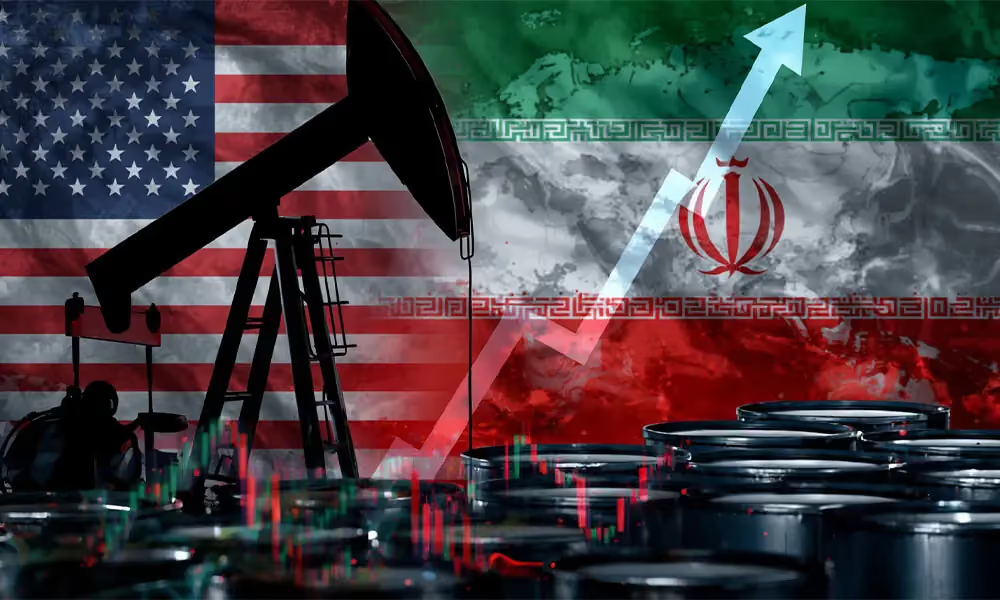
Brent crude collapsed 11% last week to $91.20 per barrel on Friday, marking the steepest monthly decline since March 2020 as markets priced in a US-Iran ceasefire agreement that would reopen the Strait of Hormuz a critical chokepoint for 20% of global oil flows. But President Trump has not signed the memorandum of understanding, ending a meeting in the White House Situation Room without announcing his final decision. For crude oil traders, the risk is not symmetric. A deal collapse sends Brent back toward $103, an 11% move. A successful agreement might push prices toward the EIA's Q4 projection of $89, just 3% below current levels. That 4:1 risk ratio has concentrated margin in those holding long positions.
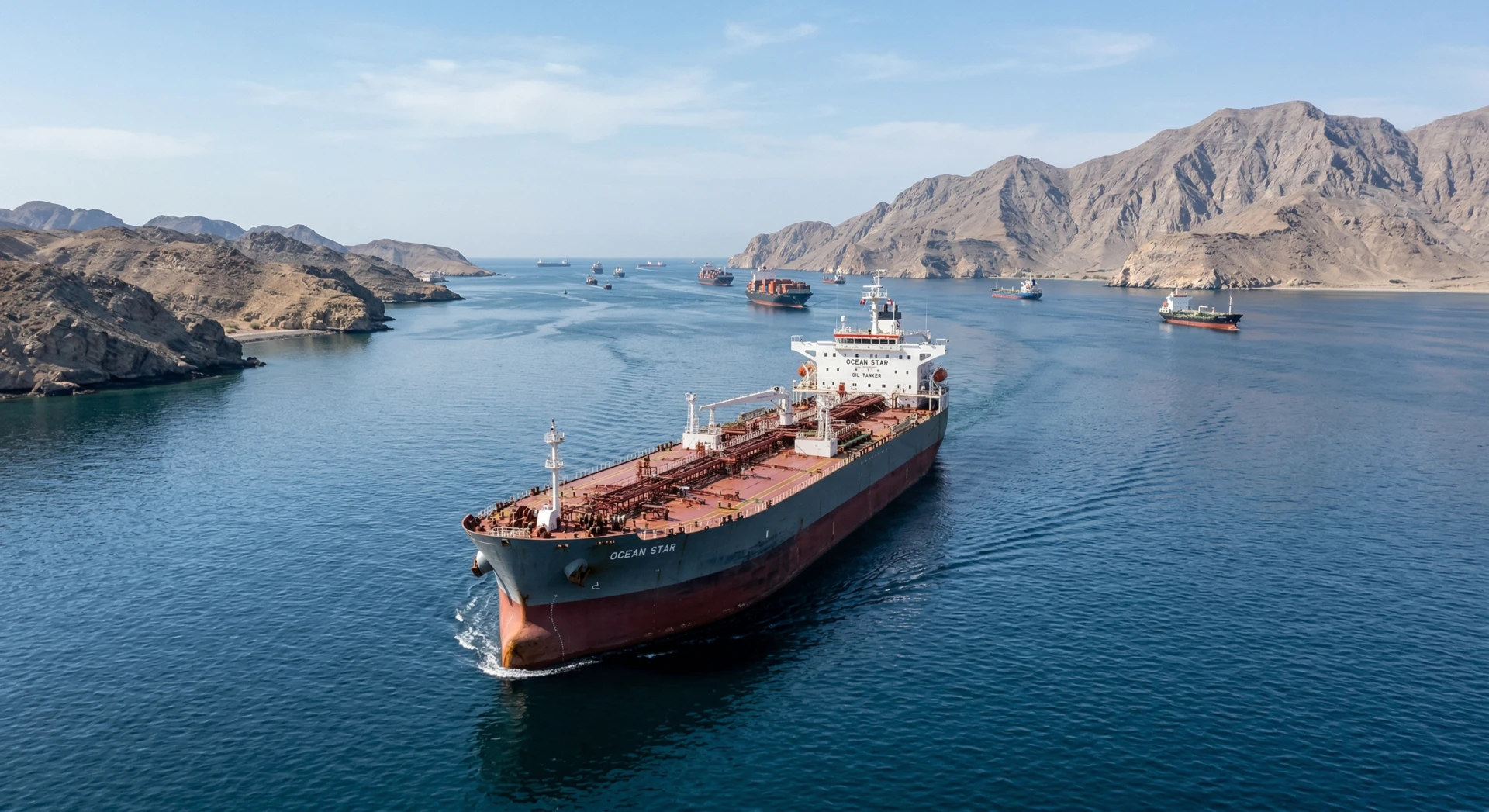
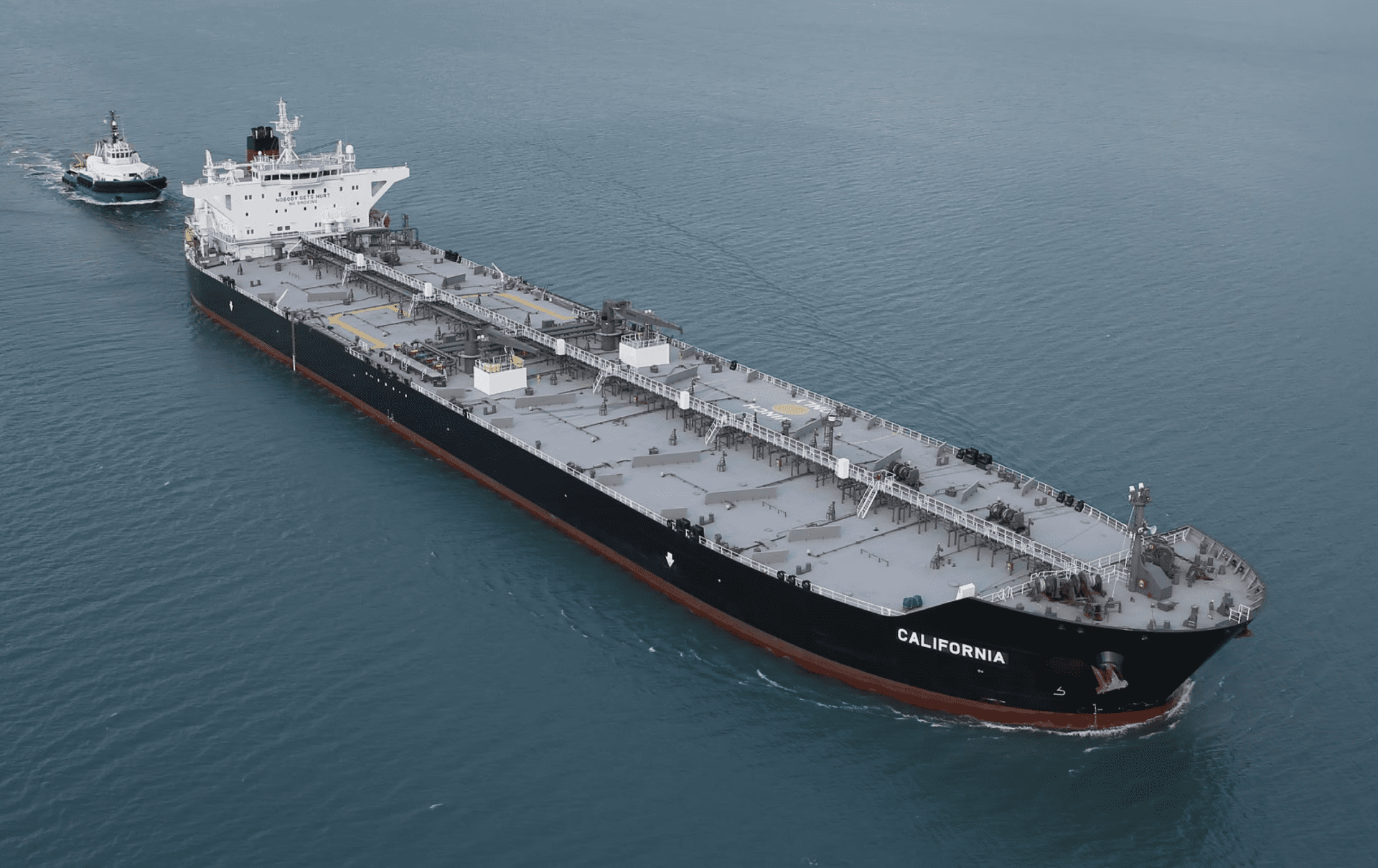
The proposed agreement centers on Iran removing naval mines from the Strait of Hormuz within 30 days of any signature, while the US lifts its naval blockade of Iranian ports. During the 60-day period, the Strait of Hormuz would be open with no tolls and Iran would agree to clear the mines it deployed in the strait to let ships pass freely. For a VLCC (Very Large Crude Carrier a supertanker capable of carrying 2 million barrels) currently waiting outside the Persian Gulf, this means the difference between a 45 day voyage via the Cape of Good Hope at $35,000 per day and a 25 day direct route at current rates. The additional 20 days costs approximately $700,000 per voyage margin that accrues to vessel operators, not cargo owners. Freight is not a rounding error when Brent moves $11 in five trading days.
On the buy side, European refiners face a storage crisis independent of crude price movements. European gas storage sits at 35-37% capacity versus a seasonal norm of 50%, while Equinor confirmed publicly that Europe will not reach the EU-mandated 80% winter storage target. For a mid-sized refinery processing 200,000 barrels per day, the gap between $92 crude and €46 gas (versus €90 in a Hormuz disruption scenario) creates a margin opportunity in diesel and heating oil that crude price alone does not capture. Gas to oil switching in power generation during potential winter shortages could drive distillate demand regardless of peace deal outcomes.
On the sell side, the UAE's exit from OPEC on May 1 has freed 1.6 million barrels per day of constrained capacity. Before the war, the UAE's production capacity had grown to 4.8 million bpd, but under its OPEC agreement, it was only allowed to produce 3.2 million bpd. For UAE crude marketers, a Hormuz reopening combined with no production quota creates a margin expansion opportunity worth approximately $25-30 per barrel on incremental volume. The arithmetic is straightforward: 1.6 million barrels per day at $30 margin equals $48 million daily, or $17.5 billion annually. If the conflict ends with an agreement that allows for the resumption of free navigation through the strait, this could all change.
For large integrated traders Vitol, Trafigura, the trading arms of national oil companies the opportunity concentrates in basis risk and storage arbitrage. Consider a trader holding 10 million barrels in floating storage off Fujairah, the UAE's east coast terminal that bypasses the Strait. At current contango structure (where future prices exceed spot prices), that position earns approximately $2-3 per barrel per month in storage margin. But a Hormuz reopening would flatten the curve, erasing storage premiums while potentially creating backwardation where immediate delivery commands a premium. The same 10 million barrels could shift from earning $20-30 million per month to losing $15-20 million overnight if peace emerges unexpectedly.
For smaller regional operators without derivatives access independent fuel distributors, regional trading houses, smaller national oil companies the practical hedging equivalent involves bilateral term contracts with suppliers. A European heating oil distributor serving 50,000 households might secure fixed-price supply agreements through winter, effectively purchasing protection against both crude price spikes and supply disruptions. The premium paid typically 3-5% above spot equivalent provides the same downside protection that a major trader achieves through options markets. But this protection only works if counterparties remain financially viable during extreme price moves.
The distillate supply reality complicates the crude oil narrative. US refiners operated at 94.5% of maximum capacity for the week ending May 22, with distillate inventories falling 2.1 million barrels in a single week more than twice analyst expectations. Distillate stocks now sit 11% below seasonal averages, reflecting refinery utilization at technical limits rather than crude feedstock availability. Even if Brent drifts toward $89 by August on successful Iran negotiations, European heating oil buyers will not experience proportional cost relief. The gap between crude price signals and refined product reality is where margin concentrates for those controlling refining capacity.
Freight markets reveal the true constraint. A VLCC earns approximately $14 per metric ton at current rates roughly $28 million per 2 million barrel voyage. Three months ago, the same voyage earned $16 million at $8 per metric ton. The additional $12 million per voyage flows entirely to vessel operators. For crude oil traders, freight represents 15-20% of delivered cost on long-haul routes. When freight doubles, as it has since February, that cost increase often exceeds the profit margin on the underlying commodity trade. This is why many Atlantic Basin cargoes destined for Asia remain uncommitted despite attractive paper arbitrage opportunities.
The financing structure determines who captures margin during volatility. Letters of credit bank guarantees that payment will be made once shipping documents are presented are the instruments that make international commodity trade possible. But LC costs have tripled since the Hormuz crisis began, from approximately 150-200 basis points to 450-500 basis points for Iranian route crude. For a $180 million cargo (2 million barrels at $90), that represents $2.7-4.5 million in additional financing costs. Traders with strong banking relationships or internal financing capacity gain competitive advantage, as smaller operators face prohibitive LC costs or outright credit line restrictions.
Trump's specific demands reveal implementation challenges that markets may be underestimating. Iran must agree to never have a nuclear weapon, and enriched material buried at nuclear facilities will be unearthed and destroyed. The logistics of nuclear material extraction and destruction could require 6-12 months, not the 30-60 day timeframe markets are pricing. Fars News reported there is no such nuclear dismantlement clause in the agreement text, and that Iran expects immediate payment of $12 billion in frozen assets. These implementation gaps suggest higher probability of deal failure than current Brent pricing implies.
Political risk extends beyond US-Iran bilateral negotiations. Israeli officials describe the emerging agreement as bad because it signals Iran possesses a weapon no less effective than nuclear control over the Strait of Hormuz. Netanyahu's opposition, combined with Republican criticism that Trump is conceding too much, creates domestic political pressure that could derail agreement even if technical terms are resolved. The market is pricing diplomatic optimism while political implementation hurdles remain substantial.
European gas storage deficits mean that even successful Iran negotiations may not prevent winter energy crisis. Any recovery in Hormuz flows would likely be slow, as mines need clearing, damaged infrastructure requires repair, and tanker delays limit supply restoration. UAE production increases take 6-12 months to reach full capacity. The timeline mismatch between immediate price relief expectations and gradual supply restoration creates opportunity for those positioned in near-term supply tightness.
The asymmetric risk structure favors specific positioning strategies. Large integrated traders should maintain long crude positions while hedging through short-dated options to capture upside volatility while limiting downside exposure. Regional operators should prioritize supply security through term contracts rather than spot optimization. European refiners should maximize distillate production while crude feedstock remains relatively cheap, building inventory ahead of winter demand surge. The key insight: crude price direction matters less than volatility capture and supply chain positioning during the transition period.
For observers tracking resolution signals, monitor three specific indicators by mid-June: Trump's Truth Social posts regarding "final determination" language, Iranian Revolutionary Guard statements about mine-clearing timelines, and UAE crude loading schedules at Fujairah terminal. A shift from conditional language to implementation details indicates genuine progress. Conversely, renewed US military positioning in the Gulf or Iranian threats against shipping signal deal collapse and price snapback toward $100-plus levels. The market priced a deal. Now politics and logistics determine whether that price was justified.

.jpg)

'%3e%3cg id='Final-Copy-2_2_' transform='translate(1275.000000, 200.000000)'%3e%3cpath class='st0' d='M7.4,12.8h6.8l3.1-11.6H7.4C4.2,1.2,1.6,3.8,1.6,7S4.2,12.8,7.4,12.8z'/%3e%3c/g%3e%3c/g%3e%3c/g%3e%3cg id='final---dec.11-2020'%3e%3cg id='_x30_208-our-toggle' transform='translate(-1275.000000, -200.000000)'%3e%3cg id='Final-Copy-2' transform='translate(1275.000000, 200.000000)'%3e%3cpath class='st1' d='M22.6,0H7.4c-3.9,0-7,3.1-7,7s3.1,7,7,7h15.2c3.9,0,7-3.1,7-7S26.4,0,22.6,0z M1.6,7c0-3.2,2.6-5.8,5.8-5.8 h9.9l-3.1,11.6H7.4C4.2,12.8,1.6,10.2,1.6,7z'/%3e%3cpath id='x' class='st2' d='M24.6,4c0.2,0.2,0.2,0.6,0,0.8l0,0L22.5,7l2.2,2.2c0.2,0.2,0.2,0.6,0,0.8c-0.2,0.2-0.6,0.2-0.8,0 l0,0l-2.2-2.2L19.5,10c-0.2,0.2-0.6,0.2-0.8,0c-0.2-0.2-0.2-0.6,0-0.8l0,0L20.8,7l-2.2-2.2c-0.2-0.2-0.2-0.6,0-0.8 c0.2-0.2,0.6-0.2,0.8,0l0,0l2.2,2.2L23.8,4C24,3.8,24.4,3.8,24.6,4z'/%3e%3cpath id='y' class='st3' d='M12.7,4.1c0.2,0.2,0.3,0.6,0.1,0.8l0,0L8.6,9.8C8.5,9.9,8.4,10,8.3,10c-0.2,0.1-0.5,0.1-0.7-0.1l0,0 L5.4,7.7c-0.2-0.2-0.2-0.6,0-0.8c0.2-0.2,0.6-0.2,0.8,0l0,0L8,8.6l3.8-4.5C12,3.9,12.4,3.9,12.7,4.1z'/%3e%3c/g%3e%3c/g%3e%3c/g%3e%3c/g%3e%3c/svg%3e) Privacy Choices
Privacy Choices