.avif)

Shizuoka Gas Co. has locked approximately 0.84 million tonnes per annum (MTPA) of LNG supply through a seven-year agreement with Petronas LNG Ltd. starting in 2032, removing that volume from the open recontract market for nearly a decade and crystallising a supply commitment that both parties will now have to physically honour across a six-year lead time.
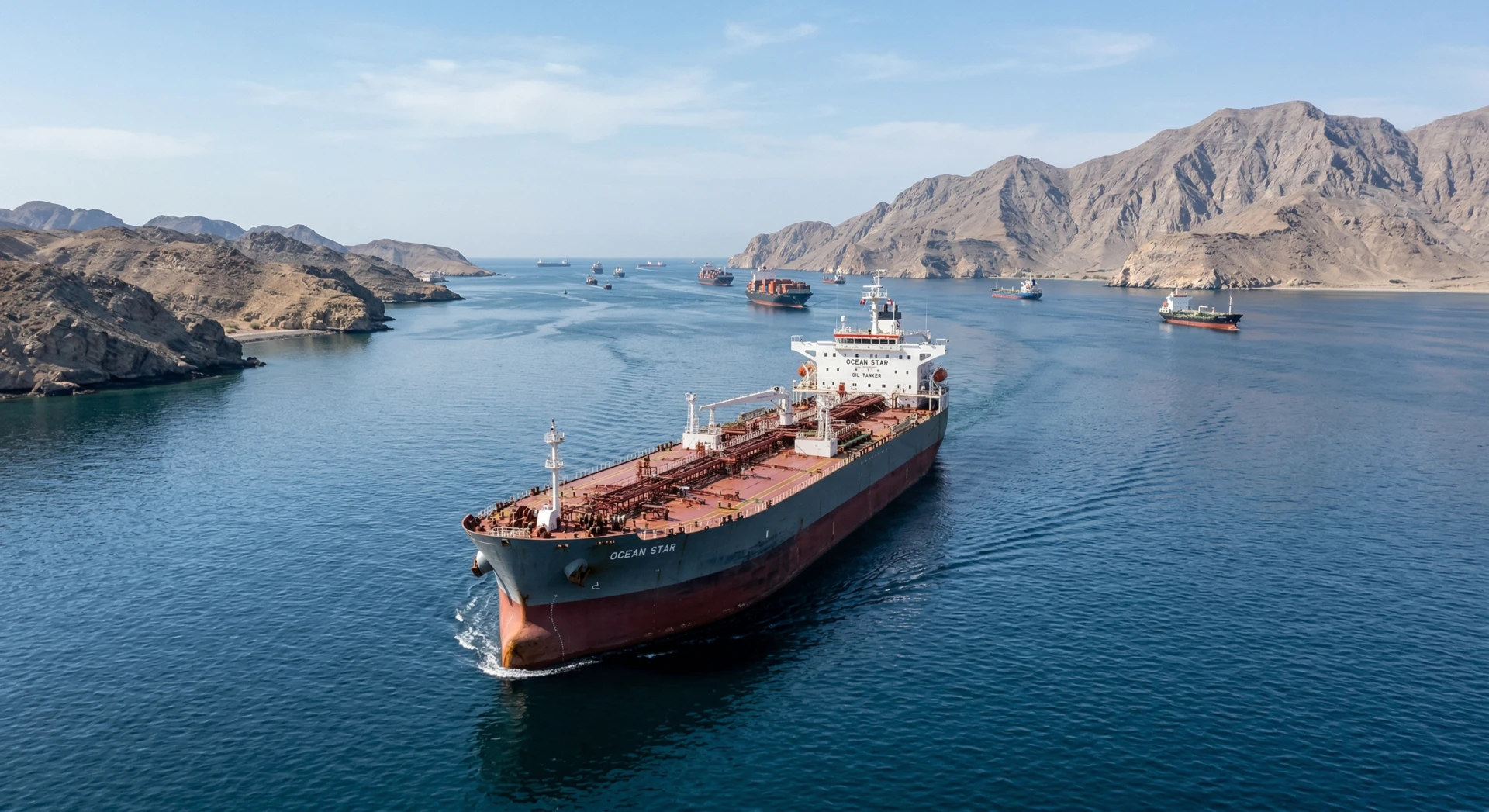
LNG sale and purchase agreements (SPAs) — long-term contracts specifying volume, delivery schedule, and pricing mechanism between a producer or portfolio holder and an end-user — are the structural backbone of global gas trade. Most Japanese city gas utilities, Shizuoka Gas included, depend almost entirely on imported LNG because Japan produces negligible domestic natural gas. Shizuoka Gas, founded in 1910 and serving the Shizuoka prefecture, has received more than 200 LNG cargoes from Petronas over 30 years — roughly one cargo every seven to eight weeks, each typically in the range of 60,000–70,000 cubic metres of liquefied gas. This new agreement extends that dependency formally to 2039, at roughly 0.84 MTPA, or approximately 12–14 cargoes per year, delivered most likely into Shizuoka Gas's Shimizu terminal on Japan's Pacific coast from Petronas's Bintulu LNG complex in Sarawak, Malaysia — a voyage of approximately 4,500 nautical miles taking 10–12 days aboard an LNG carrier.
The commercial mechanism here deserves scrutiny, because the announcement obscures a genuine supply-side tension. Petronas's Bintulu facility — the world's largest single LNG complex by historical output — is a plateau-to-decline asset. Malaysian upstream gas fields feeding Bintulu have been in gradual depletion, and Petronas's new upstream commitments, including its stake in LNG Canada (a major liquefaction project in British Columbia targeting first LNG exports in 2025–2026), carry execution and timeline risk. The 2032 start date means Petronas must reliably source approximately 0.84 MTPA from its global portfolio six years from now. That is not a trivial commitment. If Bintulu output falls short, Petronas may need to procure volumes from third parties — a portfolio-level swap or purchase — adding basis risk (the financial exposure created when the price of the replacement supply differs from the contracted delivery price) and counterparty complexity that Shizuoka Gas will not directly see but will indirectly bear if it forces renegotiation. The pricing terms were not disclosed, so whether a slope-linked price formula (a common mechanism tying LNG prices to a percentage of the Japanese Crude Cocktail, the average price of crude oil imported by Japan) protects either party adequately against 2032 market conditions is unknown.
On the buy side, Shizuoka Gas secures supply certainty in a long-term LNG contracting market that has tightened noticeably since 2022, when European buyers scrambled for alternative supply following Russia's invasion of Ukraine and absorbed volumes previously destined for Asia. For a mid-sized Japanese city gas utility — not a major integrated player like JERA or Tokyo Gas with deep portfolio diversification — locking 0.84 MTPA under a named counterparty with a 30-year track record is defensible procurement. The alternative, attempting to buy equivalent volumes on the spot market (where individual cargoes trade on short-term terms, often at sharp premiums during demand spikes), would expose Shizuoka Gas to price volatility it has neither the balance sheet nor the trading infrastructure to absorb. On the sell side, Petronas avoids merchant risk — the cost of holding uncontracted volume and selling it opportunistically — on approximately 0.84 MTPA of production or portfolio volume for seven years. Without pricing disclosure, the exact netback (the revenue per tonne after shipping and liquefaction costs are deducted) cannot be calculated, but portfolio utilisation at this scale, across a proven bilateral relationship, eliminates the premium Petronas would otherwise pay to place volumes via spot tender or trading house intermediaries. Those intermediaries — trading houses that might have brokered Shizuoka Gas's recontract volumes on a spot or short-term basis — lose the commission margin on whatever share of that 0.84 MTPA they might have captured. The magnitude is unquantifiable without pricing terms, but at typical LNG brokerage margins of $0.05–0.15 per MMBtu (million British thermal units, the standard LNG energy measure), on 0.84 MTPA over seven years, the foregone intermediary margin could reach tens of millions of dollars in aggregate.
For large integrated LNG portfolio traders — a Vitol, Shell's trading arm, or a major Japanese trading house like Marubeni or Mitsui — the relevant signal is the continued contraction of addressable spot and short-term volume in the Japan-Korea-Taiwan buyer cluster as utilities progressively recontract. Each bilateral SPA closed at this scale removes liquidity from the merchant market. The practical response is to monitor which Japanese utilities still face contract expirations between 2027 and 2033 and approach them ahead of formal tender. For smaller regional operators — a Southeast Asian city gas distributor or an emerging market LNG importer without a long-term supply anchor — this deal is a reminder that bilateral relationships with portfolio holders like Petronas command a structural queue advantage over spot market participants. The specific signal to watch: track the Japan Korea Marker (JKM) — the spot LNG price benchmark for Northeast Asia, published daily by S&P Global Commodity Insights — through Q3 2026. If JKM remains above $12/MMBtu into September, expect additional Japanese utility recontract announcements to accelerate, as utilities and producers both prefer to lock in terms above that threshold rather than test a volatile spot market in 2032.




'%3e%3cg id='Final-Copy-2_2_' transform='translate(1275.000000, 200.000000)'%3e%3cpath class='st0' d='M7.4,12.8h6.8l3.1-11.6H7.4C4.2,1.2,1.6,3.8,1.6,7S4.2,12.8,7.4,12.8z'/%3e%3c/g%3e%3c/g%3e%3c/g%3e%3cg id='final---dec.11-2020'%3e%3cg id='_x30_208-our-toggle' transform='translate(-1275.000000, -200.000000)'%3e%3cg id='Final-Copy-2' transform='translate(1275.000000, 200.000000)'%3e%3cpath class='st1' d='M22.6,0H7.4c-3.9,0-7,3.1-7,7s3.1,7,7,7h15.2c3.9,0,7-3.1,7-7S26.4,0,22.6,0z M1.6,7c0-3.2,2.6-5.8,5.8-5.8 h9.9l-3.1,11.6H7.4C4.2,12.8,1.6,10.2,1.6,7z'/%3e%3cpath id='x' class='st2' d='M24.6,4c0.2,0.2,0.2,0.6,0,0.8l0,0L22.5,7l2.2,2.2c0.2,0.2,0.2,0.6,0,0.8c-0.2,0.2-0.6,0.2-0.8,0 l0,0l-2.2-2.2L19.5,10c-0.2,0.2-0.6,0.2-0.8,0c-0.2-0.2-0.2-0.6,0-0.8l0,0L20.8,7l-2.2-2.2c-0.2-0.2-0.2-0.6,0-0.8 c0.2-0.2,0.6-0.2,0.8,0l0,0l2.2,2.2L23.8,4C24,3.8,24.4,3.8,24.6,4z'/%3e%3cpath id='y' class='st3' d='M12.7,4.1c0.2,0.2,0.3,0.6,0.1,0.8l0,0L8.6,9.8C8.5,9.9,8.4,10,8.3,10c-0.2,0.1-0.5,0.1-0.7-0.1l0,0 L5.4,7.7c-0.2-0.2-0.2-0.6,0-0.8c0.2-0.2,0.6-0.2,0.8,0l0,0L8,8.6l3.8-4.5C12,3.9,12.4,3.9,12.7,4.1z'/%3e%3c/g%3e%3c/g%3e%3c/g%3e%3c/g%3e%3c/svg%3e) Privacy Choices
Privacy Choices