.avif)
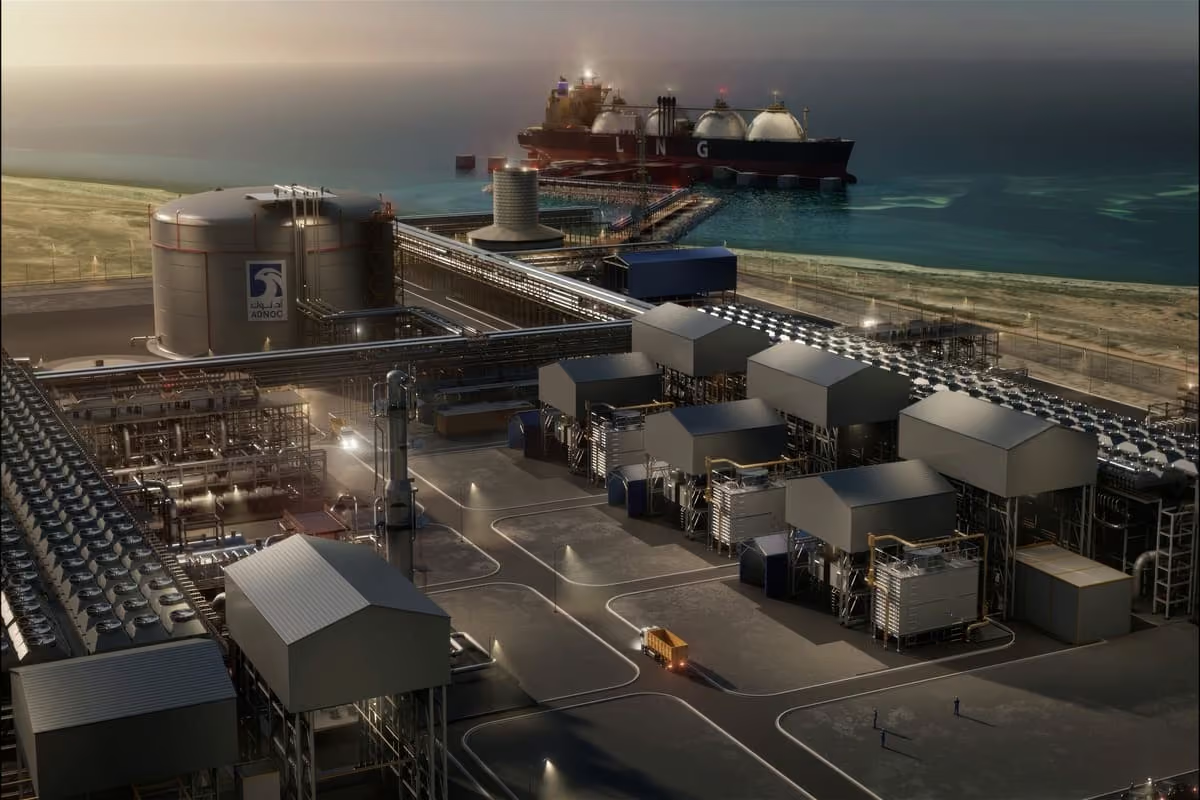
LNG buyers negotiating or renewing long-term offtake agreements with ADNOC now face a structurally more capable counterparty one targeting 47 million tonnes per annum (MTPA) of marketable LNG by 2035, with a unified commercial machine behind every cargo offer.
ADNOC's announcement on 6 July 2026 consolidates three previously siloed entities ADNOC Gas's marketing unit, XRG's marketing arm, and ADNOC Trading into a single integrated platform headquartered at Abu Dhabi Global Market (ADGM), Abu Dhabi's international financial centre. The practical effect is that functions which previously operated under separate commercial mandates origination, trading, and shipping now sit under one roof, with Rashid Al Mazrouei appointed as Chief Marketing and Origination Officer to lead the combined equity LNG portfolios. ADNOC Trading remains the legal counterparty for all trading transactions, so existing customer interfaces and contracts are formally unchanged. But the internal architecture that shapes what ADNOC can offer buyers timing flexibility, cargo swaps, destination optionality has been transformed. For buyers, the key question is not whether their existing contract changed. It is whether ADNOC's negotiating position in the next contract has.
To understand why integration matters, consider what a fragmented marketing structure costs in a commodity where timing and destination are worth real money. LNG liquefied natural gas, natural gas supercooled to minus 162°C and reduced to 1/600th of its volume for ocean transport is priced against two key benchmarks: JKM (Japan Korea Marker, the spot price for LNG delivered to northeast Asia) and TTF (Title Transfer Facility, the Dutch gas hub price that serves as the European LNG benchmark). The JKM-TTF spread the price difference between Asian and European spot LNG determines whether a given cargo is more valuable in Tokyo Bay or at a northwest European regasification terminal. In a siloed structure, a marketing team sitting in Abu Dhabi could identify that the spread favoured Europe, but lacked the shipping and trading authority to redirect the cargo without clearing multiple organisational hurdles. A unified platform removes that friction. The arbitrage window often open for days, not weeks can now be acted on.
The margin anatomy of this platform is clearest when examined at the cargo level. Consider a standard LNG cargo: approximately 3.4 trillion British thermal units (TBtu), or roughly 65,000 to 70,000 cubic metres of LNG, carried on a standard Q-Flex or Q-Max vessel from a Middle East loading terminal. On a term contract, ADNOC would typically sell this cargo at a price linked to oil an oil-indexed formula common in legacy Asian supply agreements. On the spot market, the same cargo might be priced against JKM or TTF, whichever is higher at the time of delivery. The optimisation margin the uplift from placing a cargo at its highest value destination rather than its contractually default one is estimated at $0.10 to $0.30 per MMBtu (million British thermal units, the standard LNG energy measure) when executed at scale with full shipping flexibility. On a 3.4 TBtu cargo, that range represents $340,000 to over $1 million per cargo. Across a portfolio heading toward 47 MTPA roughly 650 cargoes per year the cumulative value of that optimisation capability is in the hundreds of millions of dollars annually. That margin now stays inside ADNOC, not with the third-party traders and brokers who previously provided this function.
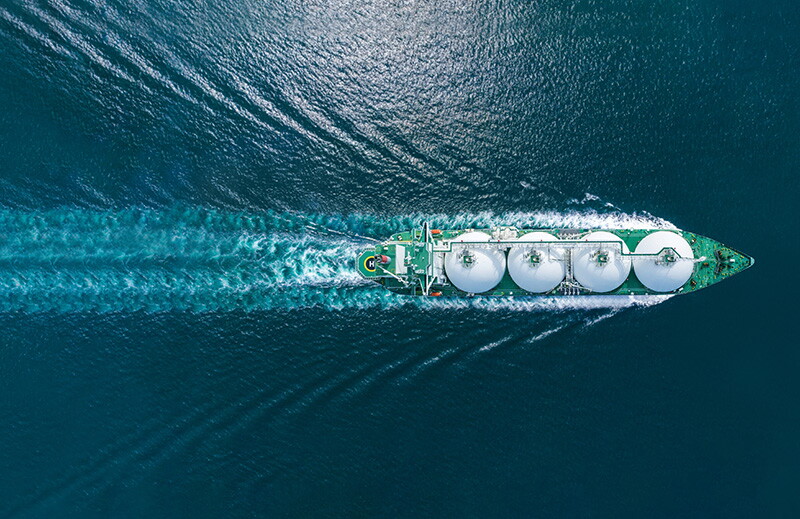
Freight is not a supporting detail here it is where the platform's optionality either materialises or does not. ADNOC Logistics and Services (ADNOC L&S), the group's shipping and maritime arm, has been formally expanded to support the platform's logistics capability. An LNG carrier sailing from the Ruwais LNG terminal on Abu Dhabi's northwest coast the cornerstone new volume project underpinning the 47 MTPA target to a northwest European DES (Delivered Ex-Ship, meaning the seller bears cost and risk until the cargo is unloaded at the buyer's terminal) regasification terminal in the UK or Belgium would cover approximately 12,000 nautical miles, a voyage of 25 to 30 days. The same vessel redirected to a Japanese or Korean terminal via the Indian Ocean and the Malacca Strait adds roughly 4,000 nautical miles and seven to ten days. At current LNG shipping rates spot charter rates for LNG carriers have oscillated between $30,000 and $120,000 per day through 2024–2026 depending on seasonal tightness that extra ten days costs $300,000 to $1.2 million in freight alone. The platform's ability to capture the JKM-TTF spread depends entirely on controlling that freight decision in-house, quickly. If ADNOC L&S cannot supply sufficient tonnage and the fleet size relative to the 47 MTPA ambition has not been publicly disclosed the platform will be forced to charter vessels in a market where LNG shipping capacity has remained structurally tight since 2022.
On the buy side, the implications divide sharply by buyer type and contract structure. For large integrated buyers Japan's JERA, South Korea's KOGAS, India's Petronet LNG, European utilities with long-term supply portfolios ADNOC's platform increases the creditworthiness and operational reliability of the counterparty. A unified platform with consolidated shipping and trading authority is better placed to guarantee delivery performance, manage force majeure events, and offer flexible volume provisions (downward quantity tolerance, or DQT, clauses that allow buyers to take less than contracted volume in low-demand periods). These buyers should expect ADNOC to negotiate harder in the next contract cycle more confident pricing, tighter DQT allowances, and firmer destination clauses. On the sell side, ADNOC gains the internal architecture to shift from a predominantly term-contract, oil-indexed seller toward a player capable of managing a blended portfolio of term, spot, and structured volumes the model that has made Shell, TotalEnergies, and Qatar Energy Trading dominant in global LNG markets.
For smaller regional buyers Southeast Asian state utilities, emerging market importers in South Asia, or European mid-sized energy retailers buying on a spot or short-term basis the platform's establishment is a mixed signal. Positively, a more liquid and flexible ADNOC portfolio means more cargo availability on the spot market as the platform optimises its term book and generates excess. Negatively, the same buyers lose the informal leverage they had when dealing with separate ADNOC units that sometimes competed with each other on price. One commercial team, one pricing discipline, one shipping decision. For a mid-sized South Asian importer buying two to four spot cargoes per quarter, the practical equivalent of hedging this counterparty consolidation is to maintain at least two to three alternative spot suppliers Qatari, Australian, or US under framework agreements, so that no single negotiation becomes a monopoly situation. Bilateral term sheets with 60 day price-fixing windows remain the most effective tool for operators without access to financial LNG derivatives.
The structural constraint that should temper every projection is Ruwais LNG. The 47 MTPA target is not achievable on ADNOC's existing production base, which is approximately 9.6 MTPA from the Das Island liquefaction facility. Ruwais LNG a two-train project with a combined nameplate capacity of approximately 9.6 MTPA, designed to roughly double Abu Dhabi's export capability must reach full commercial production on schedule for the platform to have the portfolio mass required to generate genuine destination and timing optionality. That project has not yet completed the EPC (Engineering, Procurement and Construction) execution phase and is operating in a global LNG construction market where cost overruns and timeline slippage have become endemic. The last comparable Middle East LNG capacity expansion, Qatar's North Field expansion, has faced its own scheduling pressures. If Ruwais is delayed by 18 to 24 months a scenario consistent with current EPC market conditions the platform's marketable portfolio remains below the threshold where freight and destination optimisation generates the scale advantages ADNOC's leadership has described.
For observers and procurement professionals tracking this development, the most specific and time-bound signal is the Ruwais LNG project's EPC milestone disclosures, expected in ADNOC's quarterly operational updates through late 2026 and 2027. A secondary signal is ADNOC L&S's LNG fleet order book: any material new vessel orders or long-term charter commitments filed with classification societies or disclosed in ADNOC L&S's market communications will indicate whether the shipping backbone of this platform is being resourced to match the 47 MTPA ambition or remains sized for the current 9.6 MTPA base. Watch the JKM-TTF spread on the Platts and ICIS daily assessments when the spread exceeds $1.50/MMBtu and holds for more than two weeks, that is the precise market condition in which ADNOC's new platform is designed to extract its maximum optimisation value. If and when Ruwais cargoes begin appearing in spot market tenders in the early 2030s, the platform will have moved from strategic aspiration to commercial reality.


.jpg)

'%3e%3cg id='Final-Copy-2_2_' transform='translate(1275.000000, 200.000000)'%3e%3cpath class='st0' d='M7.4,12.8h6.8l3.1-11.6H7.4C4.2,1.2,1.6,3.8,1.6,7S4.2,12.8,7.4,12.8z'/%3e%3c/g%3e%3c/g%3e%3c/g%3e%3cg id='final---dec.11-2020'%3e%3cg id='_x30_208-our-toggle' transform='translate(-1275.000000, -200.000000)'%3e%3cg id='Final-Copy-2' transform='translate(1275.000000, 200.000000)'%3e%3cpath class='st1' d='M22.6,0H7.4c-3.9,0-7,3.1-7,7s3.1,7,7,7h15.2c3.9,0,7-3.1,7-7S26.4,0,22.6,0z M1.6,7c0-3.2,2.6-5.8,5.8-5.8 h9.9l-3.1,11.6H7.4C4.2,12.8,1.6,10.2,1.6,7z'/%3e%3cpath id='x' class='st2' d='M24.6,4c0.2,0.2,0.2,0.6,0,0.8l0,0L22.5,7l2.2,2.2c0.2,0.2,0.2,0.6,0,0.8c-0.2,0.2-0.6,0.2-0.8,0 l0,0l-2.2-2.2L19.5,10c-0.2,0.2-0.6,0.2-0.8,0c-0.2-0.2-0.2-0.6,0-0.8l0,0L20.8,7l-2.2-2.2c-0.2-0.2-0.2-0.6,0-0.8 c0.2-0.2,0.6-0.2,0.8,0l0,0l2.2,2.2L23.8,4C24,3.8,24.4,3.8,24.6,4z'/%3e%3cpath id='y' class='st3' d='M12.7,4.1c0.2,0.2,0.3,0.6,0.1,0.8l0,0L8.6,9.8C8.5,9.9,8.4,10,8.3,10c-0.2,0.1-0.5,0.1-0.7-0.1l0,0 L5.4,7.7c-0.2-0.2-0.2-0.6,0-0.8c0.2-0.2,0.6-0.2,0.8,0l0,0L8,8.6l3.8-4.5C12,3.9,12.4,3.9,12.7,4.1z'/%3e%3c/g%3e%3c/g%3e%3c/g%3e%3c/g%3e%3c/svg%3e) Privacy Choices
Privacy Choices