.avif)

Pakistan's state LNG buyer awarded BP Singapore a spot cargo at $18.2345/MMBtu on July 13, 2026 - locking in roughly $3–4/MMBtu above its QatarEnergy term price and committing an estimated $6–8 million in additional cost on a single 140,000-cubic-metre cargo, effective delivery July 15–16 at Port Qasim, Karachi.
Pakistan LNG Limited (PLL) - the state-owned entity responsible for procuring liquefied natural gas on behalf of the national gas network - has now executed five spot purchases since March 2026, according to available reports. Each spot cargo represents a deliberate decision to pay a premium over term supply, driven by what sources indicate are disruptions to longer-term delivery commitments amid regional conflict. The pattern is not opportunistic: it is structural. Pakistan is running a dual-track procurement strategy - QatarEnergy term volumes priced at 13.37% of Brent (the international crude oil benchmark, currently implying roughly $14.50–15.00/MMBtu depending on prevailing Brent levels) as a cost anchor, supplemented by spot market purchases whenever term volumes fall short of demand. By mid-July, Pakistan's total 2026 LNG import count is expected to reach ten cargoes, combining both sources.
The margin anatomy of this tender is unusually legible. Three bids arrived: BP Singapore at $18.2345/MMBtu, PetroChina International at $18.5991/MMBtu, and TotalEnergies at $18.7200/MMBtu. The spread between the winning bid and the highest rejected bid is $0.4855/MMBtu - on a standard Q-Flex cargo of approximately 3.4 trillion BTU equivalent, that gap represents roughly $1.65 million that PLL saved by selecting BP over TotalEnergies. But PLL's real cost pain lies not in inter-bid competition but in the spot-versus-term differential. At $18.2345/MMBtu versus an implied QatarEnergy term price near $14.80/MMBtu, the premium is approximately $3.43/MMBtu per cargo. A 140,000-cubic-metre LNG cargo contains roughly 2.8 million MMBtu of gas equivalent - meaning this single purchase costs PLL an estimated $9.6 million more than an equivalent term delivery would. Across five spot cargoes since March, the cumulative premium burden approaches $40–50 million, carried entirely by the Pakistani state.
BP Singapore's margin in this transaction is not publicly disclosed, but the bidding arithmetic is instructive. The $18.2345/MMBtu winning price sits 37 cents below the nearest competitor. Traders operating at that level of precision are not guessing - they are bidding off a known procurement cost. Middle East and Atlantic Basin spot LNG on DES (Delivered Ex-Ship - where the seller bears freight and delivery risk to the named port) terms has been trading in the $16.50–17.50/MMBtu range in the relevant loading windows. If BP sourced this cargo at or below $17.50/MMBtu on a DES Port Qasim equivalent basis, the delivered margin is approximately $0.73/MMBtu or better - roughly $2 million on the full cargo before overhead. That margin is thin by historical standards but entirely rational for a house with the freight flexibility to compete. The SK Resolute cargo, carrying TotalEnergies LNG at $17.37/MMBtu for July 11 berth, suggests the sub-$17.50 procurement range is achievable, lending confidence to this margin estimate.
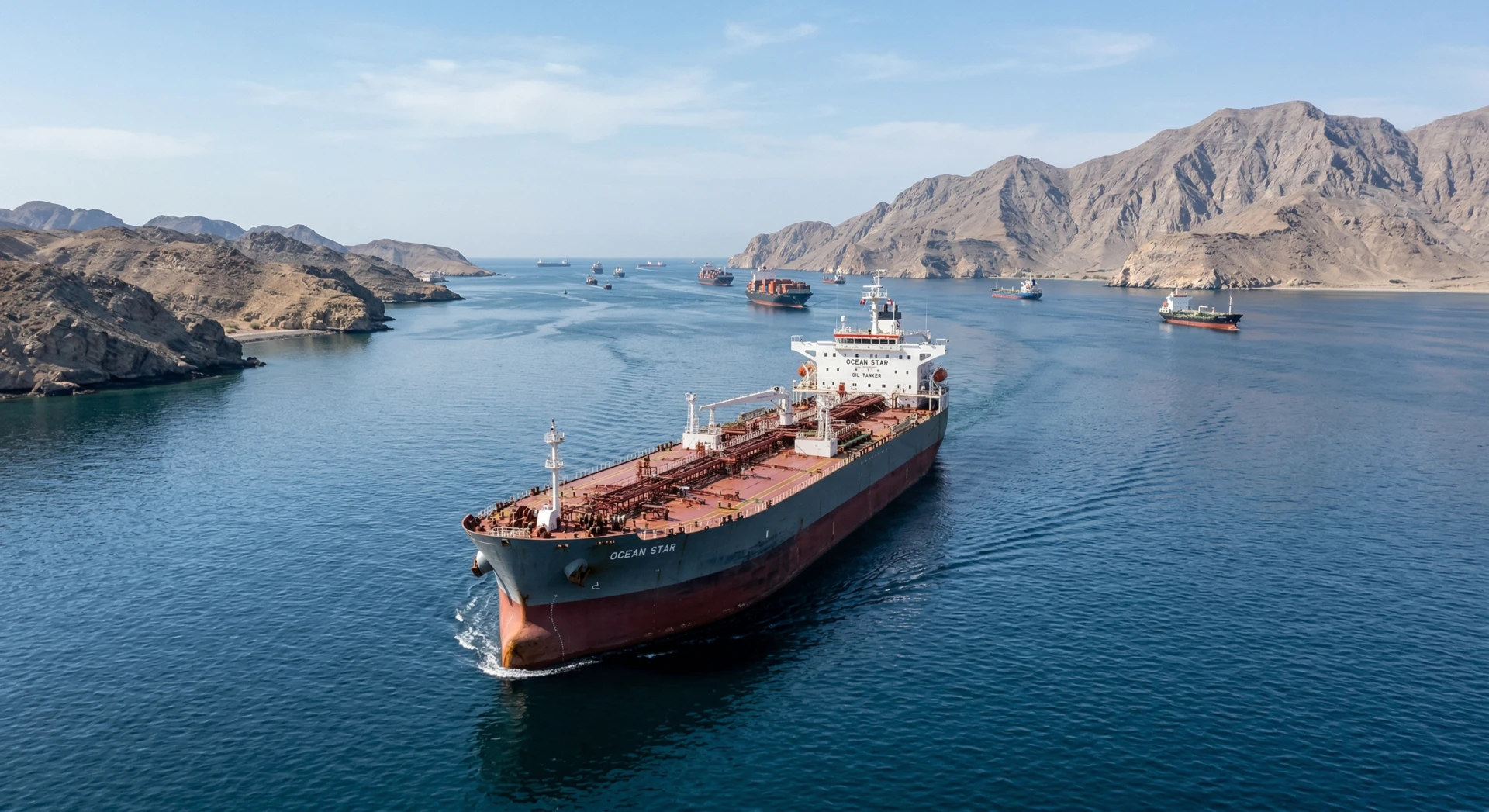
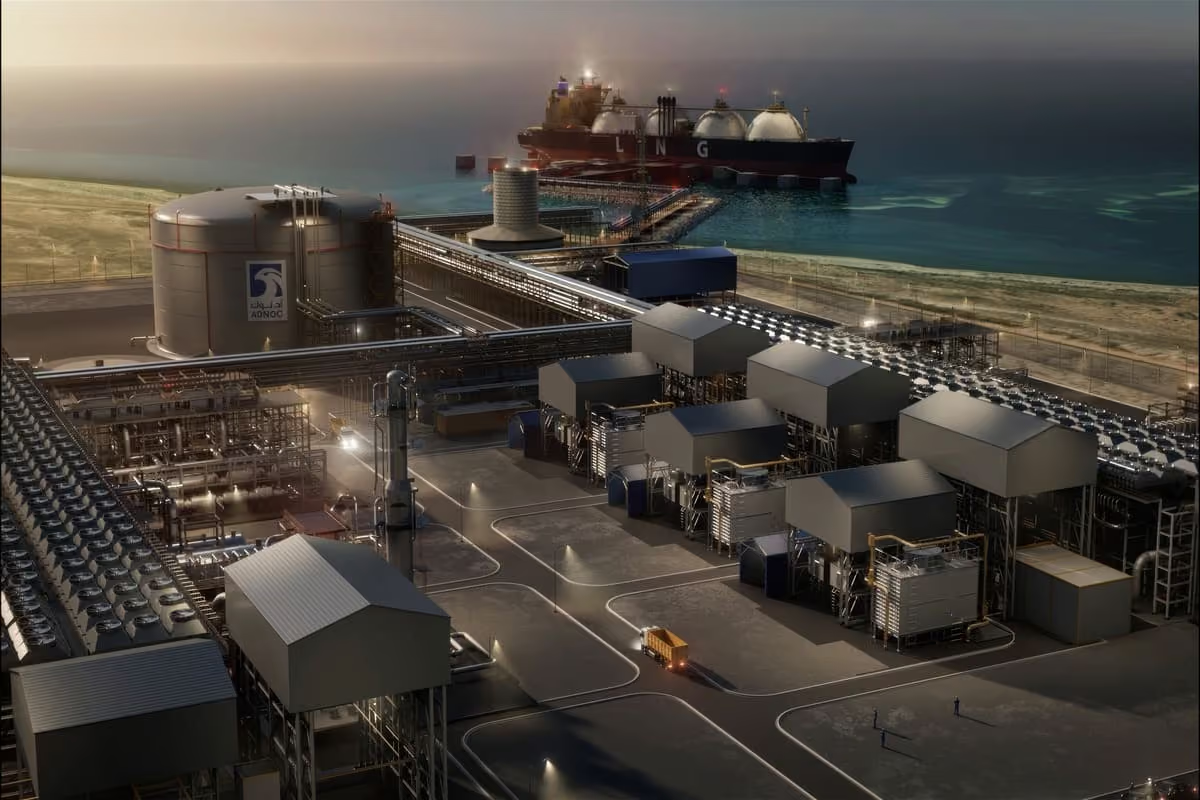
The physical supply chain for this cargo runs from an Atlantic Basin or Middle East LNG liquefaction terminal — most likely in Qatar, the UAE, or a European reloading hub — aboard a Q-Flex or similarly sized LNG carrier (vessels capable of carrying 200,000–216,000 cubic metres of LNG in cryogenic tanks at approximately minus 162 degrees Celsius) through the Arabian Sea to the Pakistan GasPort Consortium Limited (PGPCL) terminal at Port Qasim, Karachi. Port Qasim is Pakistan's primary LNG import gateway, equipped with FSRU-based regasification infrastructure. An FSRU — Floating Storage and Regasification Unit — is a converted or purpose-built vessel that receives LNG from a carrier, stores it, and converts it back to natural gas for injection into the onshore pipeline grid. The transit from a Middle East loading port to Port Qasim runs approximately 5–8 days; from an Atlantic source, 18–22 days. Both windows are consistent with the July 9 tender date and July 15–16 delivery, suggesting a Middle East or nearby origin for this cargo.
The constraint that procurement price does not capture is regasification throughput. With the SK Resolute berthing July 11 and the BP cargo arriving July 15–16, two large LNG carriers are converging on the PGPCL terminal within a five-day window. FSRU-based terminals operate with finite send-out capacity — the rate at which regasified LNG can be injected into the grid — and berth scheduling is managed to the hour. If PGPCL's regasification rate is at or near its nameplate capacity during this window, one vessel may face a waiting period at anchor, incurring demurrage — the daily fee (typically $30,000–80,000/day for LNG carriers) charged when a vessel is delayed beyond its agreed laycan, or loading/unloading window. That cost falls on whoever holds the risk under the cargo's terms — potentially PLL under a DES structure. More critically, delay in regasification means gas volumes committed to the grid are delivered late, with downstream consequences for power generation and industrial offtake during peak summer demand.
On the buy side, PLL's procurement team faces a classic price-versus-availability trade-off sharpened by conflict-related disruption to term volumes, according to reports. Each spot tender is floated under amended PPRA (Public Procurement Regulatory Authority) rules requiring acceptance or rejection of the lowest conforming bid by 10:00 pm on bid day — a tight commercial clock that limits price negotiation but ensures delivery certainty. For a large integrated buyer with term contract diversity, this rigidity would be manageable. For PLL, operating with a constrained term book and peak-season grid obligations, the spot market is not an option — it is a necessity. The cost is a sovereign-level problem: $40–50 million in spot premium this year flows directly from Pakistani state finances to international LNG traders and shipping operators, at a time when Pakistan's fiscal position remains under significant pressure.
For large integrated LNG trading houses — those with diversified term offtake, shipping fleets, and active positions on the JKM (Japan Korea Marker, the benchmark for spot LNG in northeast Asia), TTF (Title Transfer Facility, the European gas benchmark), and Henry Hub (the US natural gas benchmark) — Pakistan's accelerating spot tender cadence represents a bookable arbitrage. Traders holding Middle East term offtake at sub-$15/MMBtu DES, with destination-flexible contract clauses permitting diversion to South Asian ports, can capture $3 or more per MMBtu by routing to PLL tenders rather than selling into the JKM spot market. That is the logic behind BP Singapore's competitive bid. For smaller regional LNG traders and independent gas importers without term book access or large vessel positions, direct participation in PLL tenders is difficult — minimum cargo sizes, credit requirements, and the logistics of Port Qasim FSRU scheduling all create barriers. Their practical read-through is in freight and regasification availability: PGPCL terminal congestion during peak windows could open secondary opportunities in storage or regasification services rather than cargo trading.
The signal to watch over the next thirty days is PGPCL terminal utilisation and PLL's next spot tender, expected in late July as Pakistan approaches peak summer cooling demand. Observers should track the JKM forward curve for August delivery — published daily by Platts — alongside the Brent crude price, which directly sets the cost of Pakistan's QatarEnergy term volumes at 13.37% linkage. If JKM softens below $17/MMBtu while Brent holds above $80/barrel (implying a term price near $10.70/MMBtu at 13.37%), the spot-versus-term spread narrows and Pakistan's spot premium burden eases materially. If JKM firms — driven by Japanese restocking, Indian power demand, or Atlantic supply tightness — PLL's next tender will draw fewer competitive bids and at higher prices. The BP cargo at $18.2345/MMBtu is a data point, not a ceiling.




'%3e%3cg id='Final-Copy-2_2_' transform='translate(1275.000000, 200.000000)'%3e%3cpath class='st0' d='M7.4,12.8h6.8l3.1-11.6H7.4C4.2,1.2,1.6,3.8,1.6,7S4.2,12.8,7.4,12.8z'/%3e%3c/g%3e%3c/g%3e%3c/g%3e%3cg id='final---dec.11-2020'%3e%3cg id='_x30_208-our-toggle' transform='translate(-1275.000000, -200.000000)'%3e%3cg id='Final-Copy-2' transform='translate(1275.000000, 200.000000)'%3e%3cpath class='st1' d='M22.6,0H7.4c-3.9,0-7,3.1-7,7s3.1,7,7,7h15.2c3.9,0,7-3.1,7-7S26.4,0,22.6,0z M1.6,7c0-3.2,2.6-5.8,5.8-5.8 h9.9l-3.1,11.6H7.4C4.2,12.8,1.6,10.2,1.6,7z'/%3e%3cpath id='x' class='st2' d='M24.6,4c0.2,0.2,0.2,0.6,0,0.8l0,0L22.5,7l2.2,2.2c0.2,0.2,0.2,0.6,0,0.8c-0.2,0.2-0.6,0.2-0.8,0 l0,0l-2.2-2.2L19.5,10c-0.2,0.2-0.6,0.2-0.8,0c-0.2-0.2-0.2-0.6,0-0.8l0,0L20.8,7l-2.2-2.2c-0.2-0.2-0.2-0.6,0-0.8 c0.2-0.2,0.6-0.2,0.8,0l0,0l2.2,2.2L23.8,4C24,3.8,24.4,3.8,24.6,4z'/%3e%3cpath id='y' class='st3' d='M12.7,4.1c0.2,0.2,0.3,0.6,0.1,0.8l0,0L8.6,9.8C8.5,9.9,8.4,10,8.3,10c-0.2,0.1-0.5,0.1-0.7-0.1l0,0 L5.4,7.7c-0.2-0.2-0.2-0.6,0-0.8c0.2-0.2,0.6-0.2,0.8,0l0,0L8,8.6l3.8-4.5C12,3.9,12.4,3.9,12.7,4.1z'/%3e%3c/g%3e%3c/g%3e%3c/g%3e%3c/g%3e%3c/svg%3e) Privacy Choices
Privacy Choices