.avif)
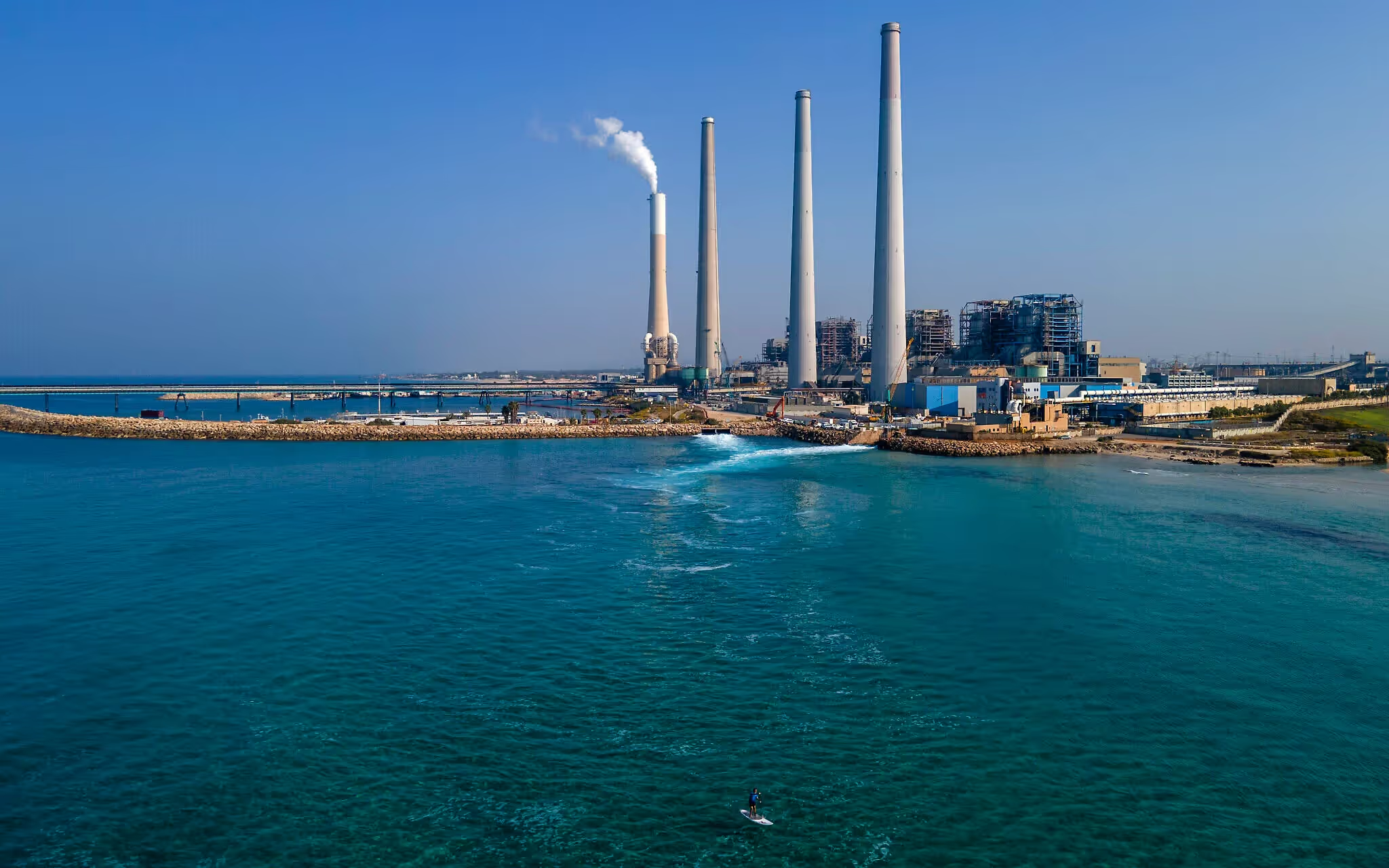
Carbon project developers operating in Israeli territories face an immediate strategic withdrawal as fiscal pressures from ongoing military operations fundamentally alter the regulatory and operational landscape for environmental credit generation. Israel's newly approved NIS 850.6 billion ($271 billion) budget allocates over NIS 142 billion to defense spending while pushing the deficit ceiling to 4.9% of GDP, creating conditions that make carbon offset project financing uneconomical. For large-scale developers like South Pole or Gold Standard-certified operators managing portfolios exceeding $50 million, the combination of currency volatility, regulatory uncertainty, and potential emergency requisitioning of land assets creates an unacceptable risk profile. Mid-tier developers operating renewable energy or reforestation projects valued between $5-20 million face even starker mathematics: development timelines of 18-24 months for credit generation clash directly with a 30-day operational window before emergency budget provisions potentially freeze asset transfers or impose capital controls.
The mechanism driving this exodus centers on Israel's emergency fiscal architecture, which grants unprecedented discretionary spending authority to military and civilian security apparatus. Carbon projects require stable, predictable regulatory frameworks for credit verification and international trading — a letter of credit (LC) structure that guarantees payment upon delivery of verified emission reductions. Under emergency budget provisions, developers face the prospect of retroactive land use restrictions, altered environmental permitting processes, or mandatory contribution of assets to civilian emergency reserves. A typical afforestation project spanning 1,000 hectares and targeting 50,000 tonnes of CO2 sequestration over ten years requires upfront investment of approximately $2-3 million. Emergency budget authority could theoretically redesignate such land for security installations, refugee housing, or military training — with compensation mechanisms tied to bureaucratic processes that could extend years rather than months.
On the buy side, international carbon credit purchasers are immediately reassessing Israeli-originated offsets within their compliance and voluntary portfolios. Corporate buyers like Microsoft, Shell, or Unilever typically structure carbon procurement through multi-year agreements with price escalators and delivery guarantees — contracts that become legally problematic when the underlying jurisdiction operates under emergency fiscal authority. A major technology company purchasing 100,000 tonnes annually of Israeli-generated credits at $25-30/tonne faces potential non-delivery risk that standard force majeure clauses may not adequately cover. More critically, carbon accounting standards like the Voluntary Carbon Standard (VCS) or Climate Action Reserve require ongoing monitoring and verification of project permanence — impossible to guarantee when host government budget priorities shift dramatically toward military expenditure and away from environmental oversight infrastructure.
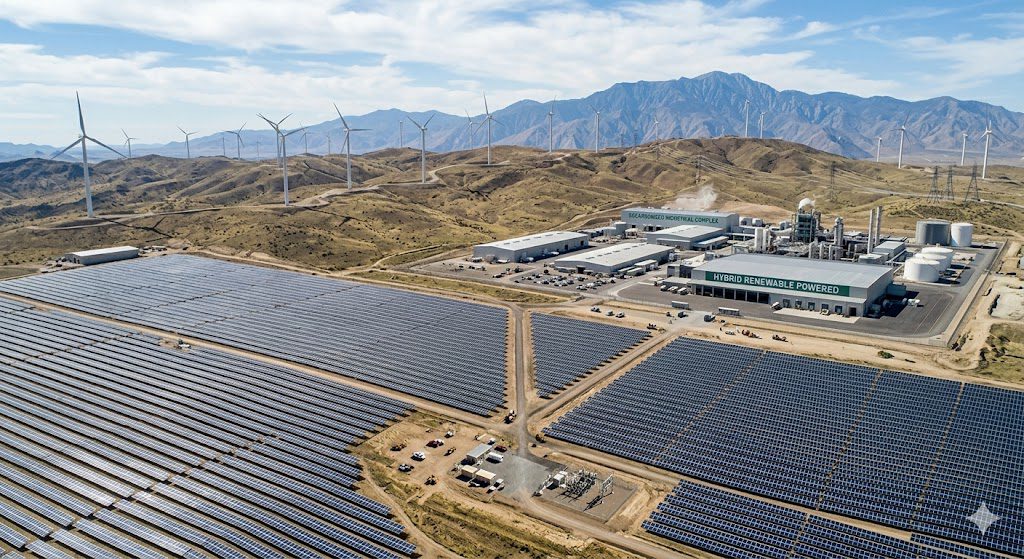
On the sell side, Israeli project developers confront margin compression that makes immediate exit the only viable option. A wind farm developer in the Negev region generating both renewable energy and carbon credits faces a dual revenue squeeze: electricity sales to the national grid become subordinated to military energy security requirements, while carbon credit generation requires international verification bodies that may suspend operations due to security concerns. Before the emergency budget, a 50MW wind installation could generate approximately 150,000 MWh annually, yielding both power sales revenue of roughly $7-9 million and carbon credits worth an additional $1.5-2 million. Under emergency fiscal authority, power purchase agreements (PPAs) with the Israel Electric Corporation become subject to emergency modification, while carbon credit buyers demand price discounts of 40-50% to compensate for heightened political risk — turning profitable operations into loss-making ventures within 60-90 days.
For large integrated carbon developers with global portfolios, the Israeli market exit triggers immediate geographic reallocation toward jurisdictions offering superior risk-adjusted returns. Companies like Verra-certified developers managing programs across multiple countries can redirect capital from Israeli projects toward expansion in Morocco, Jordan, or UAE markets where regulatory stability supports premium pricing for Middle Eastern carbon credits. A $100 million developer portfolio losing $15-20 million in Israeli exposure can redeploy that capital toward North African solar installations or Jordanian wind projects yielding comparable carbon generation at 20-25% lower political risk. The mathematics favor immediate exit: rather than maintaining Israeli positions requiring 15-20% risk premiums, developers achieve better risk-adjusted returns by concentrating exposure in neighboring markets offering stable regulatory frameworks and established international buyer relationships.
Smaller and regional developers lack the portfolio diversification options of major players, making immediate asset liquidation the dominant survival strategy. An independent developer operating a 5MW solar installation with associated carbon credit generation faces impossible financing conditions: Israeli banks prioritize lending to defense-related sectors, international project finance becomes prohibitively expensive due to country risk premiums, and carbon credit pre-purchase agreements become legally problematic for buyers concerned about delivery risk. These operators typically maintain limited cash reserves and depend on project cash flows for operational continuity — making rapid asset sales to larger, better-capitalized players the only mechanism to avoid complete capital loss. Regional renewable energy developers report inquiries from Jordanian and Egyptian buyers seeking to acquire Israeli installations at 30-40% discounts to pre-crisis valuations, creating a distressed asset market that benefits cash-rich acquirers while devastating smaller operators.
Forward market signals indicate this Israeli carbon market contraction will persist well beyond immediate fiscal pressures, as emergency budget frameworks typically remain in effect for 12-18 months following crisis resolution. Carbon credit futures trading on exchanges like the European Energy Exchange (EEX) already price Israeli-origin credits at significant discounts to comparable regional offerings, suggesting institutional buyers anticipate prolonged supply disruption rather than temporary operational pause. International climate finance institutions including the Green Climate Fund and World Bank carbon facilities have suspended new Israeli project approvals pending regulatory clarity — a process that historically requires 6-12 months even after political resolution. For procurement teams managing corporate carbon neutrality commitments, Israeli supply represents less than 2% of global voluntary carbon market volume, making geographic substitution relatively straightforward through expanded contracting with Turkish, Egyptian, or Moroccan developers offering similar project types at competitive pricing.

.avif)
'%3e%3cg id='Final-Copy-2_2_' transform='translate(1275.000000, 200.000000)'%3e%3cpath class='st0' d='M7.4,12.8h6.8l3.1-11.6H7.4C4.2,1.2,1.6,3.8,1.6,7S4.2,12.8,7.4,12.8z'/%3e%3c/g%3e%3c/g%3e%3c/g%3e%3cg id='final---dec.11-2020'%3e%3cg id='_x30_208-our-toggle' transform='translate(-1275.000000, -200.000000)'%3e%3cg id='Final-Copy-2' transform='translate(1275.000000, 200.000000)'%3e%3cpath class='st1' d='M22.6,0H7.4c-3.9,0-7,3.1-7,7s3.1,7,7,7h15.2c3.9,0,7-3.1,7-7S26.4,0,22.6,0z M1.6,7c0-3.2,2.6-5.8,5.8-5.8 h9.9l-3.1,11.6H7.4C4.2,12.8,1.6,10.2,1.6,7z'/%3e%3cpath id='x' class='st2' d='M24.6,4c0.2,0.2,0.2,0.6,0,0.8l0,0L22.5,7l2.2,2.2c0.2,0.2,0.2,0.6,0,0.8c-0.2,0.2-0.6,0.2-0.8,0 l0,0l-2.2-2.2L19.5,10c-0.2,0.2-0.6,0.2-0.8,0c-0.2-0.2-0.2-0.6,0-0.8l0,0L20.8,7l-2.2-2.2c-0.2-0.2-0.2-0.6,0-0.8 c0.2-0.2,0.6-0.2,0.8,0l0,0l2.2,2.2L23.8,4C24,3.8,24.4,3.8,24.6,4z'/%3e%3cpath id='y' class='st3' d='M12.7,4.1c0.2,0.2,0.3,0.6,0.1,0.8l0,0L8.6,9.8C8.5,9.9,8.4,10,8.3,10c-0.2,0.1-0.5,0.1-0.7-0.1l0,0 L5.4,7.7c-0.2-0.2-0.2-0.6,0-0.8c0.2-0.2,0.6-0.2,0.8,0l0,0L8,8.6l3.8-4.5C12,3.9,12.4,3.9,12.7,4.1z'/%3e%3c/g%3e%3c/g%3e%3c/g%3e%3c/g%3e%3c/svg%3e) Privacy Choices
Privacy Choices