.avif)
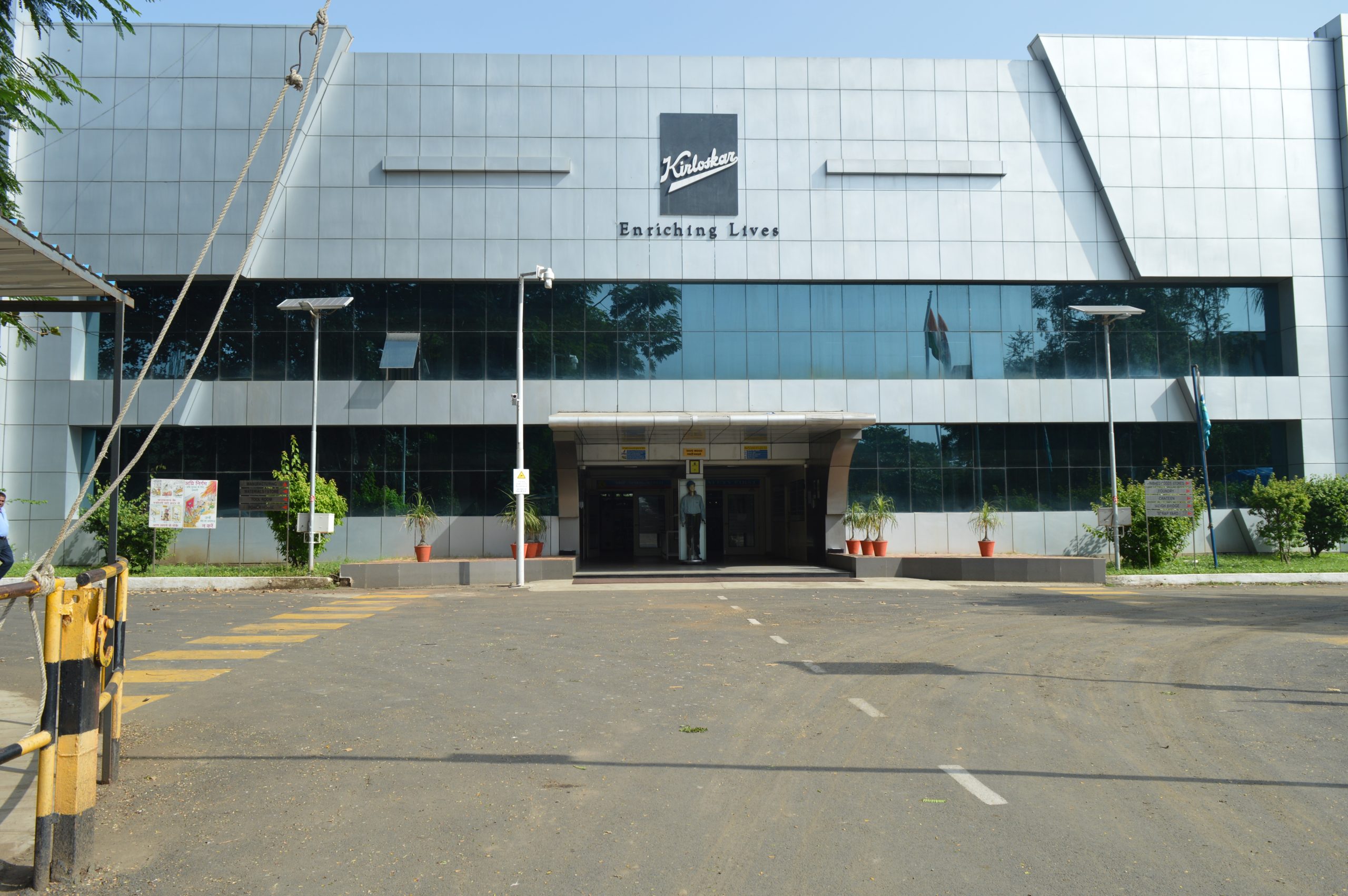
Kirloskar Ferrous Industries has locked in $13.51 million of pig iron export revenue roughly 30,000 metric tonnes destined for a London-based buyer on FOB terms with the final shipment due by August 15, 2026, and payment secured by a sight letter of credit. A sight LC a bank instrument that releases funds to the exporter the moment compliant shipping documents are presented to the nominated bank is the most cash-efficient payment mechanism in physical commodity trade: there is no deferred payment period, no open credit extended to the buyer, and no reliance on the buyer's balance sheet. That payment certainty is commercially significant. At an implied price of approximately $450 per metric tonne (FOB India), this single contract contributes an estimated $1.5–1.8 million in EBITDA earnings before interest, taxes, depreciation and amortisation, the operating profit measure based on Kirloskar's reported 11.5% standalone EBITDA margin. The market read the announcement as a clean revenue event: shares opened with a 3.59% gap-up and reached an intraday high of Rs 502.45, a range spanning roughly 8.45% against the day's weighted average price.
Basic pig iron crude iron produced in a blast furnace and cast into ingots, used as a metallic feedstock by electric arc furnaces and foundries is not a generic bulk commodity. It is a chemistry contract. Basic grade pig iron is defined by tight tolerances on silicon (Si), sulphur (S), and phosphorus (P) content, because electric arc furnace (EAF) operators steelmakers who melt scrap and metallic feedstocks using high-voltage electric arcs rather than coal-fired blast furnaces and precision foundries cannot adjust their downstream metallurgy if the input chemistry varies. The contract's ±5% quantity tolerance (meaning the buyer accepts anywhere between 28,500 and 31,500 tonnes) is standard in bulk commodity trade and signals normal voyage parcel flexibility. It does not, however, relax the specification tolerance. If Kirloskar's blast furnace output during the July–August production window drifts outside contracted Si, S, or P limits a genuine operational risk in integrated steelmaking, where furnace conditions shift with raw material batches the LC bank is entitled to refuse payment on non-compliant documents. The exporter would then face re-selling 28,500–31,500 tonnes into whatever the spot market offers in mid-August.
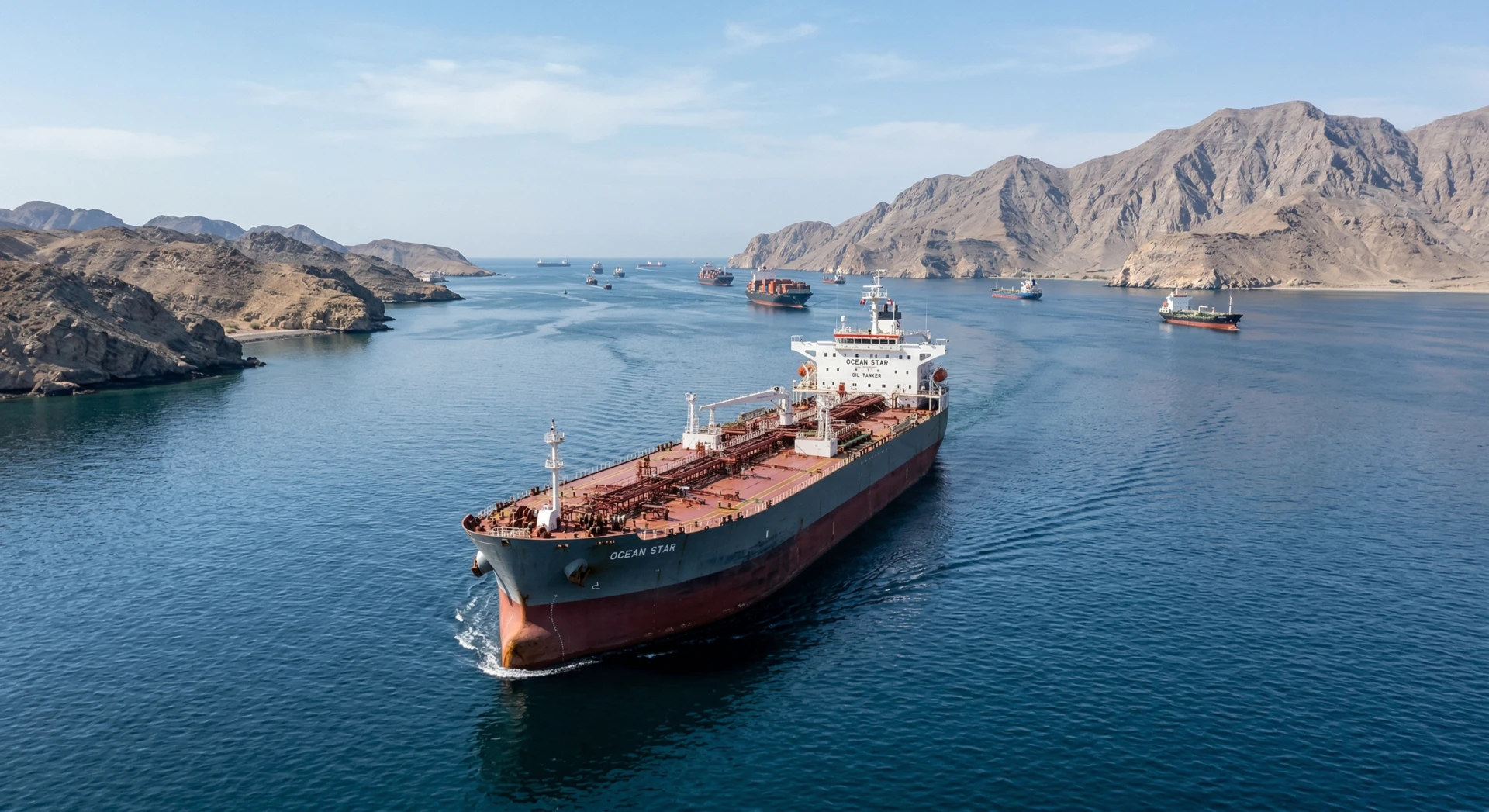
The physical route matters here. Pig iron from an Indian blast furnace complex likely loaded at Goa New Quay or Visakhapatnam, Kirloskar's nearest major export-capable ports travels to the UK on a Supramax dry bulk vessel (a general-purpose bulk carrier typically carrying 50,000–60,000 tonnes, smaller than the iron ore Capesize class and able to enter a wider range of ports). The India–UK voyage runs approximately 25–30 days via the Suez Canal, arriving at a UK steelmaking or foundry reception terminal such as Teesside or Immingham. At current Supramax freight rates on that corridor, freight costs approximately $28–34 per tonne. Consider the arithmetic: FOB price of $450/MT, freight of $31/MT (midpoint), and CFR cost and freight, meaning the seller pays freight to the destination port cost to the UK buyer of approximately $481/MT. European HMS 1&2 scrap heavy melting scrap, the standard ferrous feedstock is currently trading at roughly $390–420/MT CFR northern Europe. Indian pig iron is therefore priced at a $60–90/MT premium to scrap. That premium is paid for guaranteed chemistry and consistent carbon content, not bulk volume. If Supramax freight rises above $35/MT, the arbitrage closes entirely and the UK buyer's purchasing committee will revisit the economics of the next order.
On the buy side, the London-based buyer most likely an EAF operator or specialist foundry purchasing pig iron as a clean metallic charge to dilute residual elements in scrap has secured supply into August at a fixed FOB price with LC payment terms that protect them from delivery default. Their risk is specification failure on receipt; if chemistry is out of tolerance, they face a demurrage clock (port detention charges, typically $15,000–25,000 per day for a Supramax) while disputes are resolved. On the sell side, Kirloskar has converted a production volume into a hard-currency, bank-guaranteed receivable a structurally stronger position than domestic rupee sales into a softer Indian pig iron market. European scrap dealers, however, face quiet substitution pressure: every tonne of Indian pig iron consumed by a UK EAF is a tonne of HMS scrap not purchased, and at $60–90/MT differential, procurement managers at those mills are running the comparison actively. For a large integrated trader with an India–Europe metals book a Trafigura or Louis Dreyfus Metals the arbitrage between Indian FOB pig iron and European CFR scrap creates a spread trade opportunity if they can lock both legs simultaneously using exchange freight derivatives. For a smaller Indian pig iron producer without derivatives access, the practical equivalent is exactly what Kirloskar has done: fix the price bilaterally, demand a sight LC, and ship before August monsoon conditions complicate port scheduling.
The signal to watch between now and August 15 is the Baltic Supramax Index specifically the BSI TC2 route (trans-Atlantic, which proxies India–Europe Supramax rates) published daily by the Baltic Exchange. If BSI TC2 rates move above $34/MT equivalent on the India–UK leg, the economics of this trade deteriorate below Kirloskar's current margin floor, and the likelihood of follow-on orders at similar price levels drops sharply. Procurement professionals tracking Indian pig iron as a scrap substitute should also monitor the UK's HMRC monthly trade statistics for ferrous metals import volumes (published with a six-week lag), which will confirm whether this shipment represents a broadening trade flow or a one-off. The stock's 52-week recovery narrative is real but it is a single contract, not a pipeline. The next proof point is whether a second LC-backed order materialises before end of Q2 FY27.

.jpg)



'%3e%3cg id='Final-Copy-2_2_' transform='translate(1275.000000, 200.000000)'%3e%3cpath class='st0' d='M7.4,12.8h6.8l3.1-11.6H7.4C4.2,1.2,1.6,3.8,1.6,7S4.2,12.8,7.4,12.8z'/%3e%3c/g%3e%3c/g%3e%3c/g%3e%3cg id='final---dec.11-2020'%3e%3cg id='_x30_208-our-toggle' transform='translate(-1275.000000, -200.000000)'%3e%3cg id='Final-Copy-2' transform='translate(1275.000000, 200.000000)'%3e%3cpath class='st1' d='M22.6,0H7.4c-3.9,0-7,3.1-7,7s3.1,7,7,7h15.2c3.9,0,7-3.1,7-7S26.4,0,22.6,0z M1.6,7c0-3.2,2.6-5.8,5.8-5.8 h9.9l-3.1,11.6H7.4C4.2,12.8,1.6,10.2,1.6,7z'/%3e%3cpath id='x' class='st2' d='M24.6,4c0.2,0.2,0.2,0.6,0,0.8l0,0L22.5,7l2.2,2.2c0.2,0.2,0.2,0.6,0,0.8c-0.2,0.2-0.6,0.2-0.8,0 l0,0l-2.2-2.2L19.5,10c-0.2,0.2-0.6,0.2-0.8,0c-0.2-0.2-0.2-0.6,0-0.8l0,0L20.8,7l-2.2-2.2c-0.2-0.2-0.2-0.6,0-0.8 c0.2-0.2,0.6-0.2,0.8,0l0,0l2.2,2.2L23.8,4C24,3.8,24.4,3.8,24.6,4z'/%3e%3cpath id='y' class='st3' d='M12.7,4.1c0.2,0.2,0.3,0.6,0.1,0.8l0,0L8.6,9.8C8.5,9.9,8.4,10,8.3,10c-0.2,0.1-0.5,0.1-0.7-0.1l0,0 L5.4,7.7c-0.2-0.2-0.2-0.6,0-0.8c0.2-0.2,0.6-0.2,0.8,0l0,0L8,8.6l3.8-4.5C12,3.9,12.4,3.9,12.7,4.1z'/%3e%3c/g%3e%3c/g%3e%3c/g%3e%3c/g%3e%3c/svg%3e) Privacy Choices
Privacy Choices