.avif)
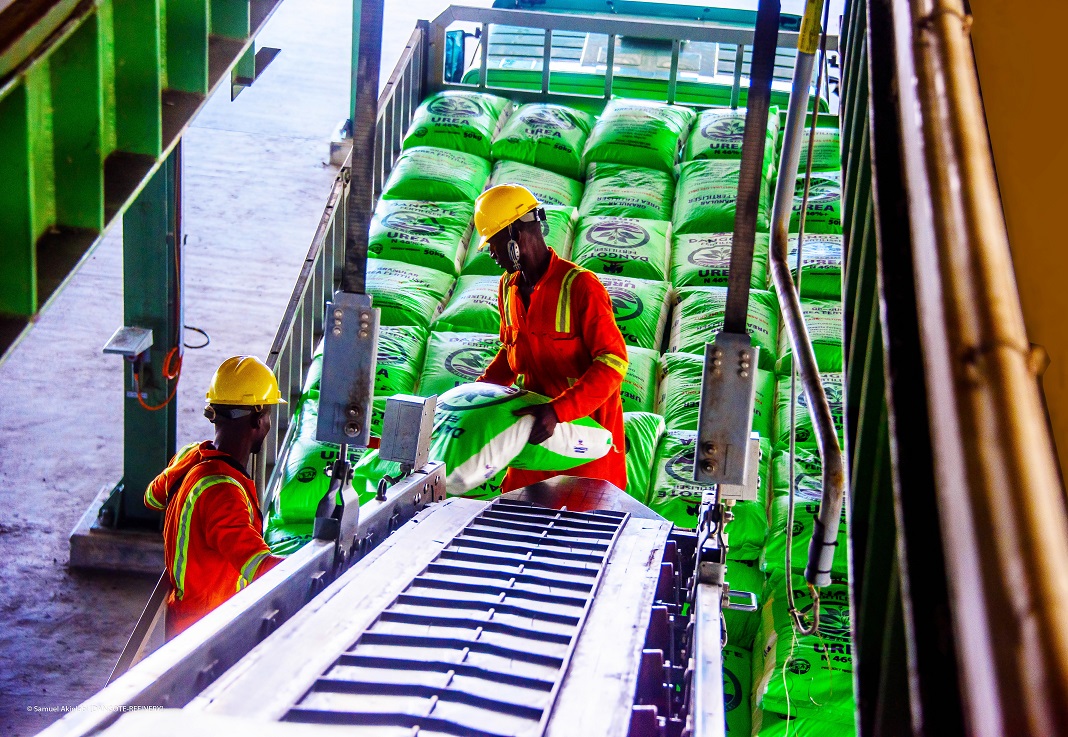
Nigerian urea exporters are displacing roughly 2–3 million tonnes per year of imported nitrogen supply across West and Central Africa as of Q1 2026 a structural reversal that renders the traditional commodity-trading playbook into that region economically redundant within eighteen months.
Nigeria's fertilizer export line crossed NGN 1.3 trillion (approximately USD 840 million at current parallel rates) in the first quarter of 2026 alone, up 64 percent year on year, and now ranks third in the country's export ledger behind crude oil and natural gas. This is not a marginal shift. It is a reclassification of West Africa on the global nitrogen map from a net import destination, dependent on Middle Eastern and European granular urea, to an emerging export origin with two anchor producers scaling toward combined nameplate capacity of roughly 16 million tonnes per year by 2028. For traders who have built positions around supplying West Africa with offshore urea, the commercial logic of those positions is now structurally impaired. The question is no longer whether Nigerian supply will displace them. It already is.
The two producers driving this are structurally distinct but reinforcing. Dangote Fertilizer, located in the Lekki Free Zone near Lagos, is currently Africa's largest granulated-urea producer granulated urea being the prilled, free-flowing form preferred for bulk blending and bagging, as distinct from the older prilled urea which is smaller and more dust-prone. Its current nameplate capacity sits at approximately 3 million tonnes per year (Mt/yr), with expansion financing of USD 600 million secured from the Africa Finance Corporation to reach 12 Mt/yr by 2028. Indorama Eleme, operating near Port Harcourt in Rivers State, runs what is reported to be the world's largest single-train urea plant a single production line, rather than multiple parallel units at approximately 2.8 Mt/yr. Its third production line, backed by USD 1.25 billion in financing from the International Finance Corporation (IFC), is now commissioning, lifting total Indorama output to approximately 4.2 Mt/yr. Together, and even before Dangote's full expansion materialises, these two facilities represent a volume overhang that structurally changes the addressable supply picture for the entire continent.
The margin anatomy here is not about the spot urea price which on the Baltic Exchange's urea FOB (free on board, meaning seller loads cargo at origin) Middle East benchmark has traded between USD 280 and USD 360 per metric tonne in 2025–26. The relevant margin is the delivered cost differential. Consider a standard 30,000-tonne Handysize (a vessel class carrying 25,000–40,000 tonnes) urea cargo moving from the Arab Gulf typically Oman or Abu Dhabi to Cotonou, Benin, one of West Africa's primary import terminals. At current Handysize freight of approximately USD 45–55/MT on that route, plus inspection, port costs and financing, the delivered cost to a West African buyer is roughly USD 330–420/MT depending on origin grade. A comparable cargo originating from Dangote's Lekki terminal, loading costs approximately USD 15–20/MT in freight to Lagos hinterland and USD 25–35/MT to Abidjan or Dakar a structural freight saving of USD 20–30/MT before any price negotiation begins. That is not a rounding error. That is the margin.
On the buy side, regional fertilizer importers the West African trading houses, cooperative wholesalers and national supply agencies that have historically sourced offshore urea for seasonal distribution face a direct cost challenge. Their offshore supply chain is now competing against shorter-voyage, lower-freight Nigerian tonnes. The natural response is to consolidate volume around Dangote and Indorama on longer-term offtake agreements rather than spot cargoes, which means accepting producer pricing power in exchange for supply security. The seasonal planting window in West Africa primarily March to June for the long rains concentrates demand sharply, giving producers significant leverage over buyers who left procurement too late. On the sell side, the traditional commodity traders supplying this region primarily the large nitrogen merchants who route Arab Gulf or Black Sea urea through Rotterdam or Singapore hubs before onward shipment face route displacement. Their volume into West Africa is compressible and, as Nigerian output scales, increasingly uncompetitive on delivered cost. The margin that once sat with the intermediary shifts to the integrated producer.
For large integrated producers and trading houses with derivatives access, the Nigerian expansion creates an arbitrage corridor worth monitoring precisely. Nigerian urea into Brazil is one. Brazil is the world's largest urea importer it consumed approximately 9 Mt in 2025 and its procurement is concentrated in Q3 and Q4 ahead of the soy planting season. A Panamax (a vessel class of roughly 60,000–80,000 tonnes, the largest that can transit the original Panama Canal locks) cargo from Lagos to Santos, Brazil's primary fertilizer import terminal, runs approximately 22–26 days and currently costs around USD 30–38/MT in freight. At Dangote's production cost estimated at USD 160–180/MT given Nigeria's subsidised gas feedstock the FOB economics to Brazil are compelling even against Saudi Arabia's SAFCO or UAE's FERTIL on a delivered basis. A large trader with forward freight agreements (FFA derivatives that lock in freight rates) and urea futures access at the Chicago Mercantile Exchange can hedge both legs and crystallise that spread. The east Africa corridor Kenya, Tanzania, Ethiopia is the second arbitrage route, serviced from Lagos via the Cape of Good Hope at roughly 20–25 days to Mombasa.
For smaller regional operators a mid-sized Ghanaian agri-input distributor, a Senegalese cooperative purchasing bloc, a Nigerian state procurement agency the derivatives toolkit is not available. The practical equivalent is relationship capital: early engagement with Dangote's and Indorama's commercial teams on forward purchase agreements covering one to two planting seasons, locking price at a fixed premium to a named benchmark (typically Granular Urea FOB Middle East as assessed by Argus Media or Fertilizer Week) rather than accepting spot exposure. The distributor who arrives in September to buy for the March window will pay a seasonal premium of USD 20–40/MT above the distributor who committed volume in May. The cost of that premium, compounded over multiple seasons, is the cost of not having a supply relationship.
The policy versus practice gap is acute and commercially significant. Nigeria is exporting nitrogen at scale while domestic smallholder farmers who represent the majority of Nigeria's 40 million agricultural holdings report persistent inability to access subsidised or even market-rate fertilizer. This is not primarily a production failure. It is a last-mile distribution failure: granular urea is produced at the coast, but the truck, storage, finance and retail infrastructure to move it to a smallholder in Kogi or Kebbi State is underdeveloped. This gap is a commercial opportunity for operators who can build or aggregate that distribution capability. Specialty blends NPK compounds (nitrogen, phosphorus and potassium combined in a single granule), micronutrient enriched urea, slow-release formulations command a USD 40–80/MT premium over straight granular urea and are the product class for which domestic demand is structurally undersupplied. The commodity margin is captured by the producer. The specialty and distribution margin is available to the operator who builds the infrastructure.
The structural anchor for this moment is instructive. The last comparable transformation in African nitrogen supply was OCP Group of Morocco's pivot from pure phosphate rock exporter to integrated fertilizer producer after 2014 a shift that took roughly a decade to fully reshape the MAP (monoammonium phosphate) and DAP (diammonium phosphate) trade flows into sub-Saharan Africa and displaced European exporters who had held those routes for thirty years. Nigeria's nitrogen transformation is moving faster, with larger individual facility sizes and deeper capital backing. The signal to monitor is Dangote's commissioning timeline for its expansion tranches watch for IFC or AFC disbursement notices, which are public and typically precede production ramp-up by six to nine months. Any disbursement announcement in Q3 or Q4 2026 signals additional Nigerian urea volume entering the market by mid-2027, the point at which the displacement of offshore commodity supply into West Africa becomes arithmetically unavoidable.
.jpg)


'%3e%3cg id='Final-Copy-2_2_' transform='translate(1275.000000, 200.000000)'%3e%3cpath class='st0' d='M7.4,12.8h6.8l3.1-11.6H7.4C4.2,1.2,1.6,3.8,1.6,7S4.2,12.8,7.4,12.8z'/%3e%3c/g%3e%3c/g%3e%3c/g%3e%3cg id='final---dec.11-2020'%3e%3cg id='_x30_208-our-toggle' transform='translate(-1275.000000, -200.000000)'%3e%3cg id='Final-Copy-2' transform='translate(1275.000000, 200.000000)'%3e%3cpath class='st1' d='M22.6,0H7.4c-3.9,0-7,3.1-7,7s3.1,7,7,7h15.2c3.9,0,7-3.1,7-7S26.4,0,22.6,0z M1.6,7c0-3.2,2.6-5.8,5.8-5.8 h9.9l-3.1,11.6H7.4C4.2,12.8,1.6,10.2,1.6,7z'/%3e%3cpath id='x' class='st2' d='M24.6,4c0.2,0.2,0.2,0.6,0,0.8l0,0L22.5,7l2.2,2.2c0.2,0.2,0.2,0.6,0,0.8c-0.2,0.2-0.6,0.2-0.8,0 l0,0l-2.2-2.2L19.5,10c-0.2,0.2-0.6,0.2-0.8,0c-0.2-0.2-0.2-0.6,0-0.8l0,0L20.8,7l-2.2-2.2c-0.2-0.2-0.2-0.6,0-0.8 c0.2-0.2,0.6-0.2,0.8,0l0,0l2.2,2.2L23.8,4C24,3.8,24.4,3.8,24.6,4z'/%3e%3cpath id='y' class='st3' d='M12.7,4.1c0.2,0.2,0.3,0.6,0.1,0.8l0,0L8.6,9.8C8.5,9.9,8.4,10,8.3,10c-0.2,0.1-0.5,0.1-0.7-0.1l0,0 L5.4,7.7c-0.2-0.2-0.2-0.6,0-0.8c0.2-0.2,0.6-0.2,0.8,0l0,0L8,8.6l3.8-4.5C12,3.9,12.4,3.9,12.7,4.1z'/%3e%3c/g%3e%3c/g%3e%3c/g%3e%3c/g%3e%3c/svg%3e) Privacy Choices
Privacy Choices