.avif)
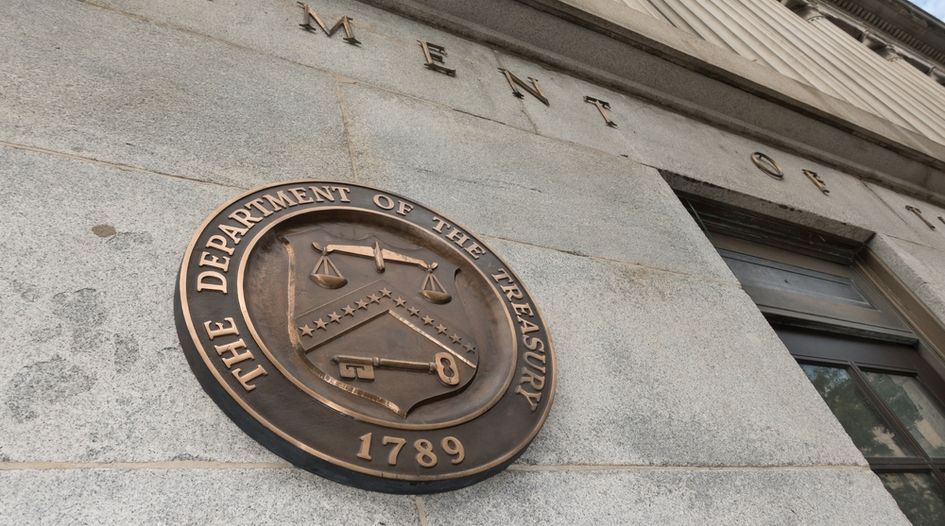
Third-party commodity traders handling Cuban nickel, cobalt, and steel face elevated compliance costs and potential offtake contract termination exposure starting immediately, as OFAC the US Treasury's Office of Foreign Assets Control, the sanctions enforcement body designated five Cuban entities on 23 June 2026, targeting the financial and logistical infrastructure through which Cuba monetises its mineral and industrial output.
GAESA the Grupo de Administración Empresarial, Cuba's military controlled commercial conglomerate that operates an estimated 60–80% of the island's foreign currency generating businesses sits at the centre of the designations. Five entities directly linked to GAESA or the Cuban state were named: Almacenes Universales, which handles container logistics and port operations at Mariel Cuba's principal deep-water port, purpose-built with Chinese and Brazilian investment to handle Panamax-class vessels Rafin, GAESA's financial services arm; Banco Financiero Internacional, a GAESA controlled bank used to clear hard-currency transactions; Geominera, the state mining entity under Cuba's Ministry of Energy and Mines, responsible for exploration and mineral resource management; and José Martí, described as Cuba's primary raw steel producer. Annalie Lilliam Rueda Cardero, daughter in law of Raúl Castro, was also designated. OFAC designation means any US person and any non-US entity with material US dollar clearing exposure is prohibited from transacting with these counterparties, with potential civil penalties running to $1.5 million per violation or twice the transaction value.
The structural constraint that matters most to commodity traders is not the designation itself, but the enforcement gap that follows it. Cuba's nickel and cobalt output the island holds the world's fourth largest nickel reserves, with annual production running at roughly 45,000–55,000 tonnes of nickel in laterite is predominantly sold through European, Canadian, and Chinese intermediaries that clear outside US-dollar systems. Sherritt International, a Canadian mining company, operates the Moa joint venture and historically has been Cuba's most significant Western mineral offtake counterparty; it has operated under existing US sanctions exposure for years. The question OFAC's action raises but does not answer is whether secondary sanctions penalties imposed on non-US firms that continue trading with designated entities will follow. Secondary sanctions against sovereign linked Chinese or European traders would be a structurally different and historically rare enforcement step, and nothing in the 23 June package announces that. Until that clarification arrives, the designation functions primarily as a compliance cost event, not a volume disruption event. A mid-sized European trading house with an active Cuban nickel offtake contract say, 5,000 tonnes per annum at spot prices near $15,500/tonne, representing roughly $77.5 million in annual contract value now faces legal review costs, potential bank de-risking, and renegotiation exposure on that contract even if no US counterparty is involved, because correspondent banks the intermediary banks that process cross-border payments may refuse to clear euro-denominated transactions involving OFAC designated counterparties.
On the buy side, Asian stainless steel mills and battery precursor manufacturers sourcing Cuban nickel face no immediate volume shock, because Cuban output is a marginal global supplier and alternative laterite sources in the Philippines, Indonesia, and New Caledonia can absorb demand. The disruption, if it materialises, is a compliance friction cost: additional due diligence, slower documentation, and potential premium payments to non-Cuban suppliers. On the sell side, Geominera and José Martí lose access to any financial channel with US-dollar clearing exposure which, in practice, means most European trade finance banks will not issue letters of credit (LCs bank guarantees that payment will be made once shipping documents are presented, the instrument underpinning most physical commodity trade) for cargoes connected to these entities. Mariel port operations face a parallel disruption: with Almacenes Universales designated, any vessel operator with US-linked financing or flag-state exposure must avoid using that entity's stevedoring and container-handling services, potentially forcing cargo diversion to secondary Cuban ports with lower throughput capacity. For a large integrated trader a Trafigura or Gunvor with in-house legal and compliance teams the response is a rapid counterparty audit and, where exposure exists, contract restructuring or novation to a non-designated Cuban state entity, if any remains available. For a smaller regional trader or independent distributor without that infrastructure, the practical step is immediate communication with correspondent banks to determine whether existing payment channels remain open, and bilateral renegotiation of any open Cuban commodity contracts to include force majeure or sanctions-trigger termination clauses.
The forward signal to watch is whether the US State Department or Treasury issues guidance specifically referencing secondary sanctions applicability to Cuban commodity counterparties in the 30 days following the 23 June designations. The London Metal Exchange (LME) nickel benchmark the global reference price for primary nickel, published daily will show whether physical tightness emerges: a sustained backwardation (where near-month nickel prices rise above three month forward prices, signalling that buyers need immediate physical supply) in the LME nickel curve would indicate that Cuban supply disruption is registering in the global market. As of the designation date, the LME nickel curve shows no such signal, consistent with the view that Cuban volume is not the marginal unit in global supply. The more consequential indicator is the Baltic Dry Index sub-index for Panamax vessel rates on Atlantic routes a sustained freight rate increase on routes serving Caribbean ports would indicate that the Mariel logistics disruption is forcing cargo rerouting at scale. Monitor both benchmarks weekly through the end of July 2026. If neither moves, the sanctions are a compliance story, not a supply story and pricing strategy should remain unchanged.

.jpg)




'%3e%3cg id='Final-Copy-2_2_' transform='translate(1275.000000, 200.000000)'%3e%3cpath class='st0' d='M7.4,12.8h6.8l3.1-11.6H7.4C4.2,1.2,1.6,3.8,1.6,7S4.2,12.8,7.4,12.8z'/%3e%3c/g%3e%3c/g%3e%3c/g%3e%3cg id='final---dec.11-2020'%3e%3cg id='_x30_208-our-toggle' transform='translate(-1275.000000, -200.000000)'%3e%3cg id='Final-Copy-2' transform='translate(1275.000000, 200.000000)'%3e%3cpath class='st1' d='M22.6,0H7.4c-3.9,0-7,3.1-7,7s3.1,7,7,7h15.2c3.9,0,7-3.1,7-7S26.4,0,22.6,0z M1.6,7c0-3.2,2.6-5.8,5.8-5.8 h9.9l-3.1,11.6H7.4C4.2,12.8,1.6,10.2,1.6,7z'/%3e%3cpath id='x' class='st2' d='M24.6,4c0.2,0.2,0.2,0.6,0,0.8l0,0L22.5,7l2.2,2.2c0.2,0.2,0.2,0.6,0,0.8c-0.2,0.2-0.6,0.2-0.8,0 l0,0l-2.2-2.2L19.5,10c-0.2,0.2-0.6,0.2-0.8,0c-0.2-0.2-0.2-0.6,0-0.8l0,0L20.8,7l-2.2-2.2c-0.2-0.2-0.2-0.6,0-0.8 c0.2-0.2,0.6-0.2,0.8,0l0,0l2.2,2.2L23.8,4C24,3.8,24.4,3.8,24.6,4z'/%3e%3cpath id='y' class='st3' d='M12.7,4.1c0.2,0.2,0.3,0.6,0.1,0.8l0,0L8.6,9.8C8.5,9.9,8.4,10,8.3,10c-0.2,0.1-0.5,0.1-0.7-0.1l0,0 L5.4,7.7c-0.2-0.2-0.2-0.6,0-0.8c0.2-0.2,0.6-0.2,0.8,0l0,0L8,8.6l3.8-4.5C12,3.9,12.4,3.9,12.7,4.1z'/%3e%3c/g%3e%3c/g%3e%3c/g%3e%3c/g%3e%3c/svg%3e) Privacy Choices
Privacy Choices