.avif)

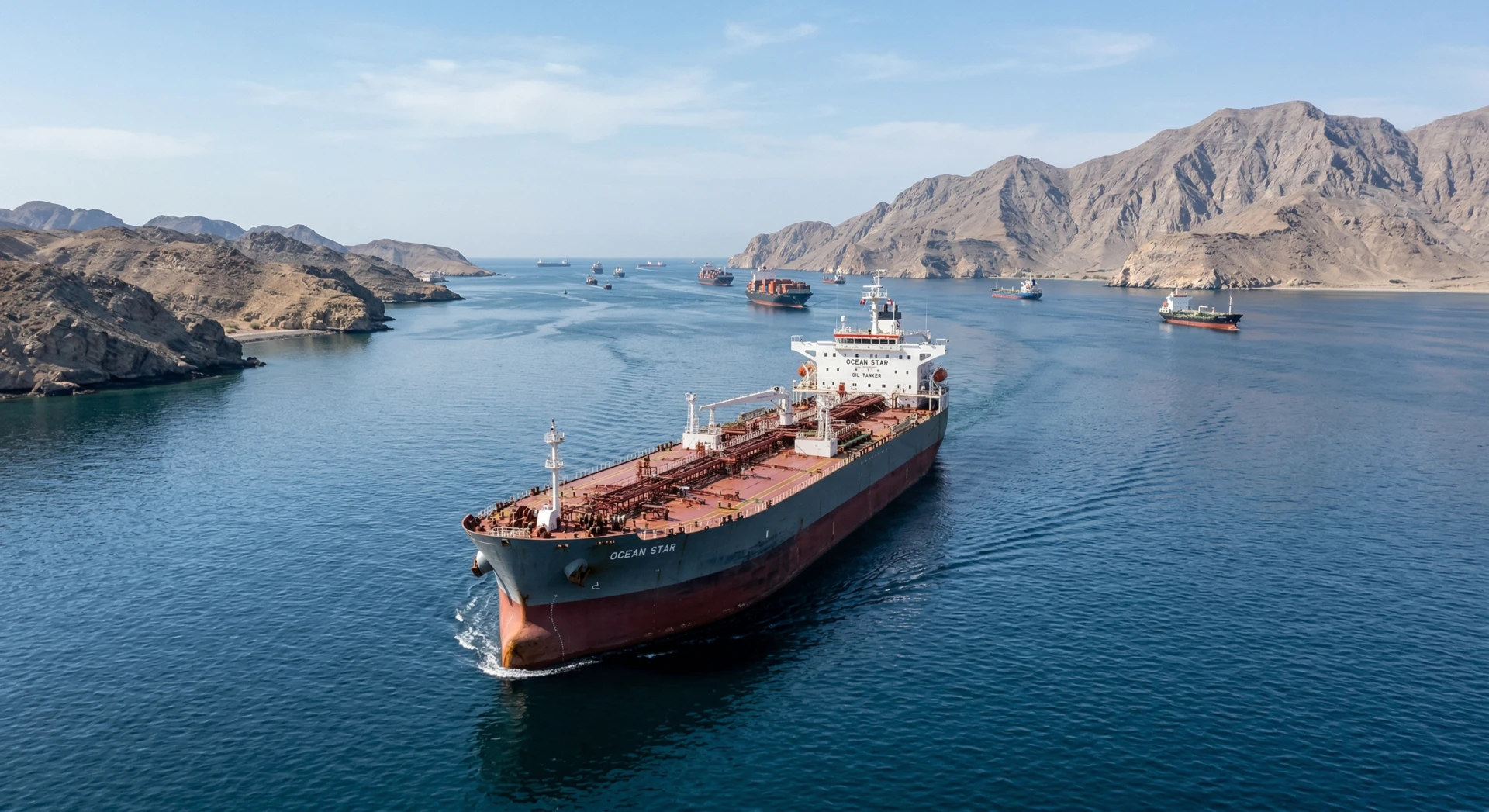
Malaysian pharmaceutical importers facing Gulf-origin shipments are looking at freight and insurance cost increases of 15–30% from mid-July 2026, with delivery timelines extending by up to two weeks if the Strait of Hormuz closure reported on July 12 holds and the real exposure is wider than the official product count suggests.
According to reports, Iran renewed closure of the Strait on July 12. Malaysia's Health Ministry has confirmed that 106 categories of imported pharmaceutical products pass through this chokepoint. That figure, however, counts finished-dose medicines the tablets, injectables, and syrups that arrive ready for dispensing. It does not count the active pharmaceutical ingredients (APIs the chemically active compounds that make a medicine work), excipients (the inert binding and coating materials), or packaging inputs that feed Malaysian domestic manufacturers. Many of those upstream materials originate in India and China and route through, or adjacent to, the same chokepoint. A domestic manufacturer that appears insulated on finished product metrics may be quietly watching its input pipeline tighten.
To see what the cost pressure looks like in practice: a Malaysian importer bringing in a 20 tonne consolidated pharmaceutical shipment from a Gulf-based distributor on CIF terms meaning the seller delivers the goods to a named port with cost, insurance, and freight already included in the price would have been paying a baseline sea freight rate plus modest war-risk insurance premiums before July 12. War-risk insurance is a separate premium charged when a vessel transits a zone designated as actively dangerous; it is priced daily by Lloyd's and the International Group of P&I Clubs and can move sharply. On current war-risk premium trajectories, that same 20-tonne shipment now costs 15–30% more to land in Port Klang. If the importer reroutes via the Cape of Good Hope the southern tip of Africa, adding approximately 10–14 extra transit days by avoiding the Gulf entirely freight costs increase further, and temperature controlled cold-chain requirements (maintaining 2–8°C for biologics and some vaccines throughout transit) become harder to guarantee over a longer voyage. The choice is between paying the war-risk premium or accepting longer lead times that strain safety stock.
On the buy side, Malaysian pharmaceutical importers and hospital procurement teams are the immediate pressure point. Those holding contracts priced before July 12 and sourcing on CIF terms cannot immediately pass the cost increase to end buyers retail pharmacy prices and public tender awards are sticky, often locked for six to twelve months. Margin compression is the near-term outcome. Smaller regional importers without established relationships at Singapore or Indian west-coast bonded warehouses facilities where goods are stored duty-free pending onward shipment face the sharpest squeeze, because traders holding pharmaceutical inputs already outside the Hormuz corridor can command a premium for non-exposed inventory. For a large integrated pharmaceutical trading house with derivatives and freight hedging access, the play is locking forward freight agreements (FFAs contracts fixing a future freight rate today) on Middle East–Southeast Asia corridors now, before sustained disruption is fully priced. For a smaller Malaysian importer without that access, the practical equivalent is contacting current Gulf suppliers to negotiate ex-works or FOB terms shifting responsibility for freight booking to the buyer, who can then select Cape of Good Hope routing directly and control the insurance separately. On the sell side, domestic Malaysian manufacturers with locally sourced inputs are gaining relative cost competitiveness: their finished-goods cost base is not rising in step with import costs, creating a rare window to convert public tender share.
Malaysia's mandatory disruption reporting requirement, introduced July 1 by the Health Ministry, means visibility into emerging shortages will be faster than in previous disruption cycles a genuine structural improvement. But visibility is not the same as insulation. The signal to watch is the Baltic and International Maritime Council (BIMCO) weekly freight rate index for Middle East–Asia container routes, specifically the rate differential between Hormuz transiting and Cape-routing vessels: if that spread widens beyond $400/TEU (a twenty-foot equivalent unit the standard container measurement) by end of July, it indicates that rerouting costs are being absorbed into pharmaceutical logistics budgets at scale, and domestic Malaysian manufacturers with stable input sourcing should expect inbound tender inquiries from buyers looking to substitute imports. The 30 day window from July 12 is the operative horizon: Hormuz disruptions that resolve within a month typically leave freight insurance elevated for a further quarter but do not force permanent supply chain restructuring. A closure extending past mid-August is the threshold at which upstream API sourcing strategies not just finished product procurement will need formal review.

.jpg)



'%3e%3cg id='Final-Copy-2_2_' transform='translate(1275.000000, 200.000000)'%3e%3cpath class='st0' d='M7.4,12.8h6.8l3.1-11.6H7.4C4.2,1.2,1.6,3.8,1.6,7S4.2,12.8,7.4,12.8z'/%3e%3c/g%3e%3c/g%3e%3c/g%3e%3cg id='final---dec.11-2020'%3e%3cg id='_x30_208-our-toggle' transform='translate(-1275.000000, -200.000000)'%3e%3cg id='Final-Copy-2' transform='translate(1275.000000, 200.000000)'%3e%3cpath class='st1' d='M22.6,0H7.4c-3.9,0-7,3.1-7,7s3.1,7,7,7h15.2c3.9,0,7-3.1,7-7S26.4,0,22.6,0z M1.6,7c0-3.2,2.6-5.8,5.8-5.8 h9.9l-3.1,11.6H7.4C4.2,12.8,1.6,10.2,1.6,7z'/%3e%3cpath id='x' class='st2' d='M24.6,4c0.2,0.2,0.2,0.6,0,0.8l0,0L22.5,7l2.2,2.2c0.2,0.2,0.2,0.6,0,0.8c-0.2,0.2-0.6,0.2-0.8,0 l0,0l-2.2-2.2L19.5,10c-0.2,0.2-0.6,0.2-0.8,0c-0.2-0.2-0.2-0.6,0-0.8l0,0L20.8,7l-2.2-2.2c-0.2-0.2-0.2-0.6,0-0.8 c0.2-0.2,0.6-0.2,0.8,0l0,0l2.2,2.2L23.8,4C24,3.8,24.4,3.8,24.6,4z'/%3e%3cpath id='y' class='st3' d='M12.7,4.1c0.2,0.2,0.3,0.6,0.1,0.8l0,0L8.6,9.8C8.5,9.9,8.4,10,8.3,10c-0.2,0.1-0.5,0.1-0.7-0.1l0,0 L5.4,7.7c-0.2-0.2-0.2-0.6,0-0.8c0.2-0.2,0.6-0.2,0.8,0l0,0L8,8.6l3.8-4.5C12,3.9,12.4,3.9,12.7,4.1z'/%3e%3c/g%3e%3c/g%3e%3c/g%3e%3c/g%3e%3c/svg%3e) Privacy Choices
Privacy Choices