.avif)
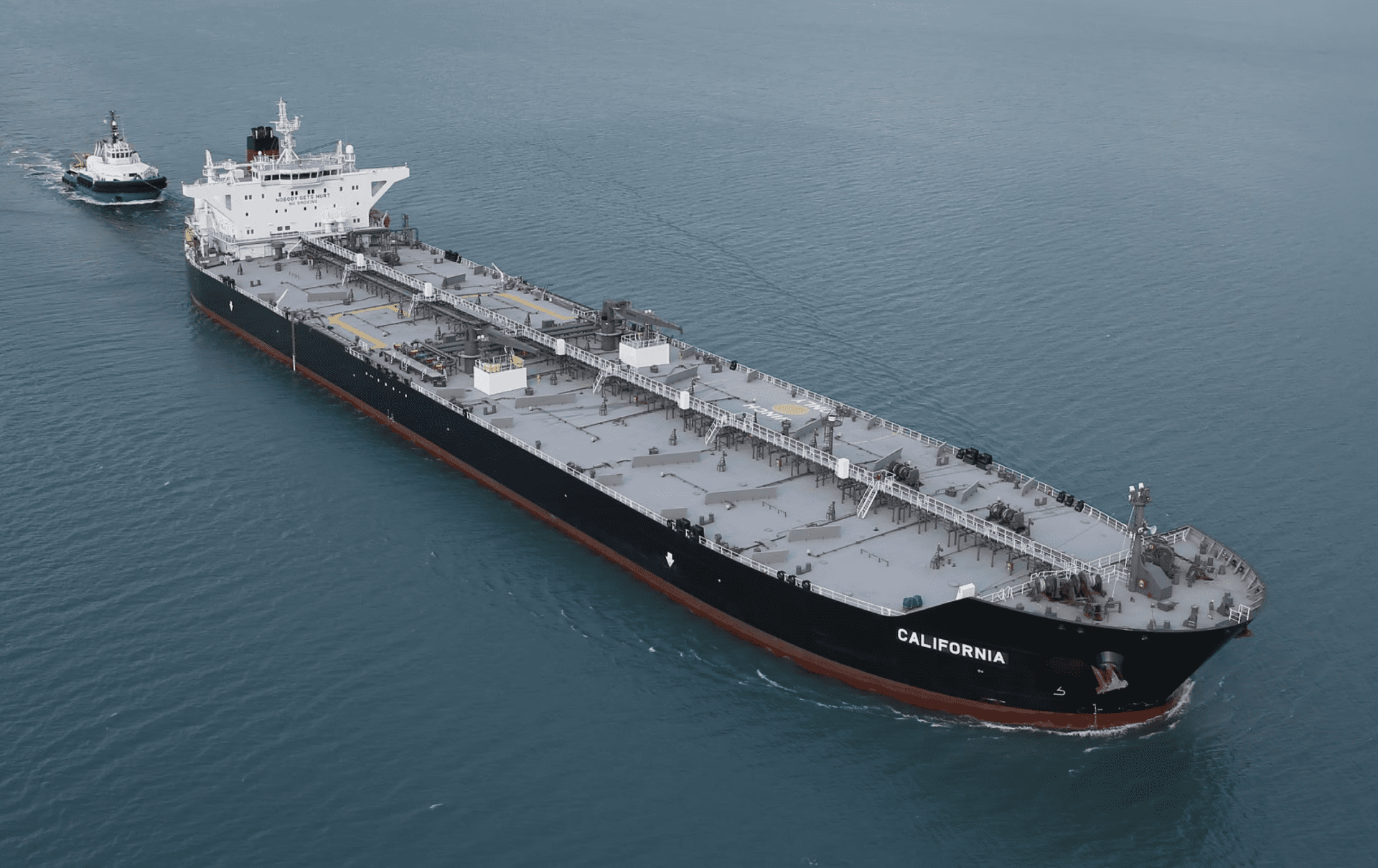
Foreign flagged MR (medium-range) product tanker operators collecting an estimated $15,000–$30,000/day in coastwise rate premiums above normal international market rates face an abrupt margin event by August 16, 2026, when the current Jones Act waiver expires and the White House has not yet decided whether to extend it.
The Jones Act formally the Merchant Marine Act of 1920 requires that goods moved between two U.S. ports be carried on vessels that are U.S. built, U.S. flagged, U.S. owned, and crewed predominantly by U.S. citizens. In a normal market, this creates a protected domestic fleet with monopoly pricing power on coastwise routes. The current waivers, first issued in March 2026 covering approximately 659 product categories, and then extended for 90 days on April 24, temporarily suspended that protection, allowing foreign-flagged vessels to carry petroleum products and other goods between U.S. ports. That 90 day extension now approaches its limit. According to reports, the White House is considering a further extension potentially with geographic restrictions that would limit where foreign vessels can operate but officials have confirmed no decision has been made.
To understand why this matters physically, consider the product tanker supply chain serving the U.S. East Coast. Refined petroleum products gasoline, diesel, jet fuel produced at Gulf Coast refineries in Texas and Louisiana are loaded onto tankers at ports such as Houston's Barbours Cut or the Beaumont marine terminals and shipped north to terminals in New York Harbor, Boston, or Baltimore. Normally, only Jones Act compliant vessels may operate this corridor. An MR tanker a medium-range product tanker typically carrying 30,000–50,000 metric tonnes is the workhorse vessel class for these movements. Under waiver, foreign MR operators enter this lane; without waiver, they are excluded entirely. The physical infrastructure of U.S. petroleum distribution pipelines, terminals, blending facilities is calibrated around these coastwise tanker movements, particularly for the Northeast, which lacks sufficient pipeline capacity to source product from the Gulf by land alone.
The core structural problem is this: even if the waivers expire on August 16, the Jones Act-compliant fleet cannot absorb the volume. Fewer than 50 Jones Act-eligible product tankers are in active service across the entire U.S. market, and the majority are already fully committed to existing contractual obligations. There is no reserve of idle domestic tonnage waiting to step into the breach. The SPR the Strategic Petroleum Reserve, the U.S. government's emergency crude stockpile has already been drawn down by 172 million barrels as of mid-March 2026, according to reports, leaving reserves near their lowest level since 1983, from approximately 400 million barrels before the drawdown. The SPR releases crude, not refined product; it eases refinery feedstock costs but does not solve the distribution problem of moving finished fuel from refinery to consumer. The administration has effectively exhausted two of its three main policy levers waiver and reserve drawdown leaving only partial, geographically restricted waivers as the remaining middle-ground option.
The margin anatomy here is straightforward but consequential. A foreign-flagged MR operator currently running a coastwise Gulf to Northeast voyage under waiver earns an estimated $15,000–$30,000/day above what the same vessel would earn on an equivalent international voyage. On a 10 day round trip, that is $150,000–$300,000 in additional revenue per voyage cycle. At current utilisation assume five active foreign MRs on this corridor the aggregate waiver premium accruing to foreign operators is roughly $1.5–3 million per week on the Gulf-Northeast lane alone. When the waiver expires, that margin disappears entirely and reverts to Jones Act operators but only if Jones Act vessels are available to capture it, which, given fleet constraints, they largely are not. The freight disappears from the market rather than transferring. That is the gap. It shows up as a supply deficit, not a margin transfer.
The geographic restriction scenario, if implemented, is not a moderate compromise it is a new source of distortion. Consider the plausible structure: foreign vessels retain access on the Gulf to Northeast corridor (where Iran-related disruption pressure is most acute) but Jones Act rules re-apply on West Coast intra-coastal movements. West Coast supply is structurally tighter because there is no pipeline equivalent to the Colonial Pipeline the 5,500 mile pipeline that moves refined products from Texas refineries to the Southeast and Mid-Atlantic serving California's marine terminals. If foreign tonnage is excluded from West Coast corridors, cargo destined for California that arrives at Gulf refineries faces a rerouting decision: either transship through a Canadian or Mexican port (adding 5–8 days and $8–15/MT in additional handling costs) or remain unshipped. The localized price spike in Los Angeles or San Francisco wholesale diesel markets would not be arbitrageable domestically without Jones Act tonnage or pipeline access neither of which is available in sufficient volume. Traders with pipeline access in unrestricted zones or Jones Act vessels operating outside restricted corridors could capture inter-coastal price differentials, but that arbitrage is available only to a narrow set of operators.
On the buy side, fuel distributors and terminal operators on the U.S. Northeast and West Coast face the most immediate exposure. A regional fuel distributor in Boston or Portland, Maine sourcing product via coastwise tanker from Gulf refineries faces a pricing cliff if waivers expire and Jones Act vessels are unavailable to replace waived foreign tonnage. In practice, product shortages at this scale do not manifest as empty terminals overnight; they manifest as a $0.15–$0.30/gallon wholesale spike over 2–4 weeks as spot availability tightens and distributors compete for scarce Jones Act slots. For a mid-sized regional distributor moving 50 million gallons per month, a $0.20/gallon wholesale increase represents $10 million in additional monthly procurement cost a figure that cannot be passed through instantly in fixed-price supply contracts. On the sell side, Gulf Coast refiners who have optimised run rates around coastwise tanker availability will need to reconsider throughput if the distribution outlet is constrained, creating a secondary pressure on refinery utilisation rates.
For large integrated traders a Trafigura, a Vitol, or a major refiner's trading arm the instrument of choice in this environment is a combination of freight forward agreements (FFAs) financial contracts that lock in a future tanker rate on MR Atlantic routes and physical position-taking in Jones Act vessels under term charter. An FFA on the MR USG-UKC route (U.S. Gulf to U.K./Continent, a benchmark international route) can hedge the international rate component, but it cannot hedge the coastwise premium, which is a regulated policy variable rather than a market one. For smaller regional operators a mid-sized fuel importer, an independent terminal operator without FFA access, the practical response is to fix bilaterally: negotiate term supply contracts with Gulf refiners that include a freight component agreed now, before August 16, locking in delivery cost regardless of what the waiver decision produces. Any contract executed after the decision date will price in the policy outcome; any contract executed before it carries the policy risk but also the potential upside if waivers are extended on favourable terms.
The single most time-bound signal to monitor is the White House announcement window between now and August 14 two clear business days before the August 16 expiry. Watch the U.S. Maritime Administration (MARAD) Federal Register for any new waiver notice; MARAD is the agency through which Jones Act waivers are formally published, and a notice typically precedes the effective date by 24–72 hours. A full extension announcement will immediately deflate Jones Act MR spot rates as domestic vessel scarcity eases and will sustain foreign-flagged operator premiums. A geographic restriction announcement will bifurcate the market within hours Northeast corridor rates stabilise while West Coast and inter-coastal rates spike sharply. A non-renewal will trigger a Jones Act rate surge of 20–40% on any domestically available tonnage within days of expiry. The administration's political calculus balancing more than 50 Republican lawmakers publicly opposing the waivers, according to reports, against active supply pressure in Northeast retail fuel markets is genuinely unresolved. Operators who have not positioned before the announcement window will be pricing in the outcome rather than ahead of it.


.jpg)
.jpg)


'%3e%3cg id='Final-Copy-2_2_' transform='translate(1275.000000, 200.000000)'%3e%3cpath class='st0' d='M7.4,12.8h6.8l3.1-11.6H7.4C4.2,1.2,1.6,3.8,1.6,7S4.2,12.8,7.4,12.8z'/%3e%3c/g%3e%3c/g%3e%3c/g%3e%3cg id='final---dec.11-2020'%3e%3cg id='_x30_208-our-toggle' transform='translate(-1275.000000, -200.000000)'%3e%3cg id='Final-Copy-2' transform='translate(1275.000000, 200.000000)'%3e%3cpath class='st1' d='M22.6,0H7.4c-3.9,0-7,3.1-7,7s3.1,7,7,7h15.2c3.9,0,7-3.1,7-7S26.4,0,22.6,0z M1.6,7c0-3.2,2.6-5.8,5.8-5.8 h9.9l-3.1,11.6H7.4C4.2,12.8,1.6,10.2,1.6,7z'/%3e%3cpath id='x' class='st2' d='M24.6,4c0.2,0.2,0.2,0.6,0,0.8l0,0L22.5,7l2.2,2.2c0.2,0.2,0.2,0.6,0,0.8c-0.2,0.2-0.6,0.2-0.8,0 l0,0l-2.2-2.2L19.5,10c-0.2,0.2-0.6,0.2-0.8,0c-0.2-0.2-0.2-0.6,0-0.8l0,0L20.8,7l-2.2-2.2c-0.2-0.2-0.2-0.6,0-0.8 c0.2-0.2,0.6-0.2,0.8,0l0,0l2.2,2.2L23.8,4C24,3.8,24.4,3.8,24.6,4z'/%3e%3cpath id='y' class='st3' d='M12.7,4.1c0.2,0.2,0.3,0.6,0.1,0.8l0,0L8.6,9.8C8.5,9.9,8.4,10,8.3,10c-0.2,0.1-0.5,0.1-0.7-0.1l0,0 L5.4,7.7c-0.2-0.2-0.2-0.6,0-0.8c0.2-0.2,0.6-0.2,0.8,0l0,0L8,8.6l3.8-4.5C12,3.9,12.4,3.9,12.7,4.1z'/%3e%3c/g%3e%3c/g%3e%3c/g%3e%3c/g%3e%3c/svg%3e) Privacy Choices
Privacy Choices