.avif)

From Q2 FY2026-27 approximately October 2026 pharma cold-chain logistics providers routing temperature sensitive biologics out of Southeast Asia face a new, permanent lane requirement: commercial insulin glargine shipments from Johor, Malaysia, to European distribution hubs, generating incremental refrigerated cargo volume on a corridor that has historically carried little regulated pharmaceutical freight at scale.
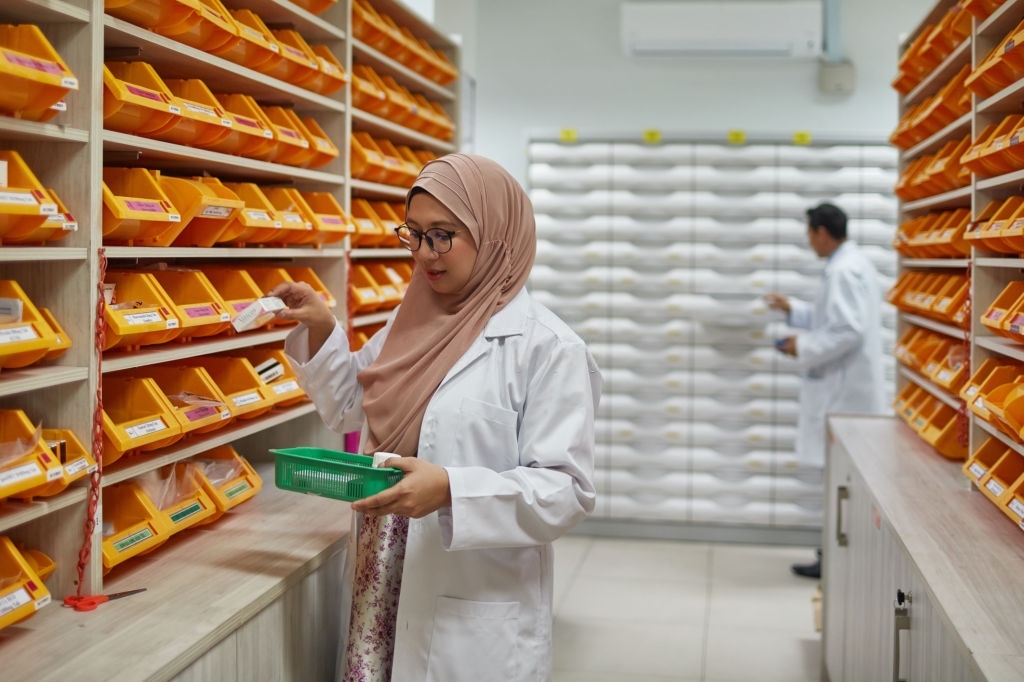
EMA approval clearance from the European Medicines Agency, the regulatory body that authorises medicinal products for the 27 nation EU market was granted to Biocon's Johor based fill finish line dedicated to Semglee insulin glargine (a biosimilar version of long-acting insulin, used by millions of diabetic patients across Europe). Fill-finish is the final manufacturing stage: sterile filling of the drug substance into individual vials or cartridges, sealing, and packaging for distribution. Owning this stage in-house eliminates the need for a contract manufacturer to perform it a cost layer estimated at 5–12% of ex-works cost for outsourced sterile fill-finish. For Biocon Biologics, which reported total income of ₹4,569 crore (approximately $546 million) for Q4 FY2026, the margin recapture from internalising fill-finish on European volumes is commercially meaningful. For cold-chain logistics providers, the implication is different: a new origin point is now regulatory eligible to ship to Europe, and someone must move that product across roughly 11,000 kilometres under continuous 2–8°C temperature control.
The physical supply chain from Johor to a European distribution hub such as Rotterdam or Hamburg runs as follows. Finished vials leave the Johor plant in temperature controlled packaging either GDP compliant (Good Distribution Practice, the EU's standard for pharmaceutical logistics) reefer containers loaded onto container vessels, or in insulated shippers dispatched as air freight. By sea, the Johor to Rotterdam leg via the Strait of Malacca and Suez Canal takes approximately 25–28 days; by air through major hubs such as Singapore Changi or Kuala Lumpur International, transit is 2–4 days but costs roughly 4–6 times more per kilogram. For insulin glargine which commands a high value to weight ratio air freight is viable for launch volumes and supply assurance cargoes, but sustained commercial scale typically migrates toward GDP compliant sea freight to protect landed cost economics. A worked example: a 20 foot GDP reefer container holding approximately 4,000 cartons of insulin might cost $8,000–$12,000 in freight from Johor to Rotterdam by sea, versus $35,000–$50,000 equivalent by air. At tender award prices for biosimilar insulin in European markets where public health systems purchase on competitive bid and margins are already thin that freight differential is not a rounding error. It is a direct input into whether Biocon's Malaysian supply is cost competitive against product from European or Indian plants with shorter transit legs.
On the buy side, European national health procurement agencies and hospital group purchasers running biosimilar insulin tender processes stand to gain from additional low-cost Asian supply entering the market. More approved suppliers on a tender list compress floor pricing every additional compliant bidder reduces the leverage of incumbents. On the sell side, European biosimilar insulin manufacturers Sanofi's Toujeo biosimilar competitors, Novo Nordisk's generics adjacent portfolio, smaller Eastern European producers face incremental pricing pressure if Biocon's Malaysian volumes ramp quickly and at competitive landed cost. The magnitude of that pressure depends entirely on how fast Biocon scales throughput on the new fill-finish line, which is not disclosed, and on what cold-chain freight costs do to their all-in European delivered price. For large integrated pharmaceutical logistics operators a DHL Supply Chain, a Kuehne+Nagel pharma division this lane activation is an opportunity to lock in long-term GDP compliant sea freight contracts from Johor before the route is commoditised. For smaller regional cold-chain operators in Southeast Asia without established European pharma freight relationships, the practical equivalent is to audit their GDP certification status now and approach Biocon's Johor logistics team directly, as the company will need qualified local last-mile handling for airport and port transfers before ocean or air departure.
The forward signal to watch is Biocon's Q2 FY2026-27 earnings commentary, expected around October–November 2026, for any disclosed volume guidance on European Semglee shipments. If management quantifies the first commercial consignment size or names a European distribution partner, that confirms the cold-chain lane is operationally live not merely regulatory approved. A second indicator is the Pharmaceutical Cold Chain Index published quarterly by IATA's Centre of Excellence for Independent Validators (CEIV Pharma) a shift in Southeast Asia–Europe pharmaceutical freight rates or capacity constraints on that corridor would directly affect whether Biocon's sea-freight economics hold. Logistics providers should also monitor whether Biocon Malaysia secures a GDP certified 3PL (third-party logistics provider) hub in the Netherlands or Germany, which would signal the company is building a European distribution architecture rather than relying on direct to customer shipments a structure that would concentrate handling revenue at the European end of the chain rather than at origin.

'%3e%3cg id='Final-Copy-2_2_' transform='translate(1275.000000, 200.000000)'%3e%3cpath class='st0' d='M7.4,12.8h6.8l3.1-11.6H7.4C4.2,1.2,1.6,3.8,1.6,7S4.2,12.8,7.4,12.8z'/%3e%3c/g%3e%3c/g%3e%3c/g%3e%3cg id='final---dec.11-2020'%3e%3cg id='_x30_208-our-toggle' transform='translate(-1275.000000, -200.000000)'%3e%3cg id='Final-Copy-2' transform='translate(1275.000000, 200.000000)'%3e%3cpath class='st1' d='M22.6,0H7.4c-3.9,0-7,3.1-7,7s3.1,7,7,7h15.2c3.9,0,7-3.1,7-7S26.4,0,22.6,0z M1.6,7c0-3.2,2.6-5.8,5.8-5.8 h9.9l-3.1,11.6H7.4C4.2,12.8,1.6,10.2,1.6,7z'/%3e%3cpath id='x' class='st2' d='M24.6,4c0.2,0.2,0.2,0.6,0,0.8l0,0L22.5,7l2.2,2.2c0.2,0.2,0.2,0.6,0,0.8c-0.2,0.2-0.6,0.2-0.8,0 l0,0l-2.2-2.2L19.5,10c-0.2,0.2-0.6,0.2-0.8,0c-0.2-0.2-0.2-0.6,0-0.8l0,0L20.8,7l-2.2-2.2c-0.2-0.2-0.2-0.6,0-0.8 c0.2-0.2,0.6-0.2,0.8,0l0,0l2.2,2.2L23.8,4C24,3.8,24.4,3.8,24.6,4z'/%3e%3cpath id='y' class='st3' d='M12.7,4.1c0.2,0.2,0.3,0.6,0.1,0.8l0,0L8.6,9.8C8.5,9.9,8.4,10,8.3,10c-0.2,0.1-0.5,0.1-0.7-0.1l0,0 L5.4,7.7c-0.2-0.2-0.2-0.6,0-0.8c0.2-0.2,0.6-0.2,0.8,0l0,0L8,8.6l3.8-4.5C12,3.9,12.4,3.9,12.7,4.1z'/%3e%3c/g%3e%3c/g%3e%3c/g%3e%3c/g%3e%3c/svg%3e) Privacy Choices
Privacy Choices