.avif)
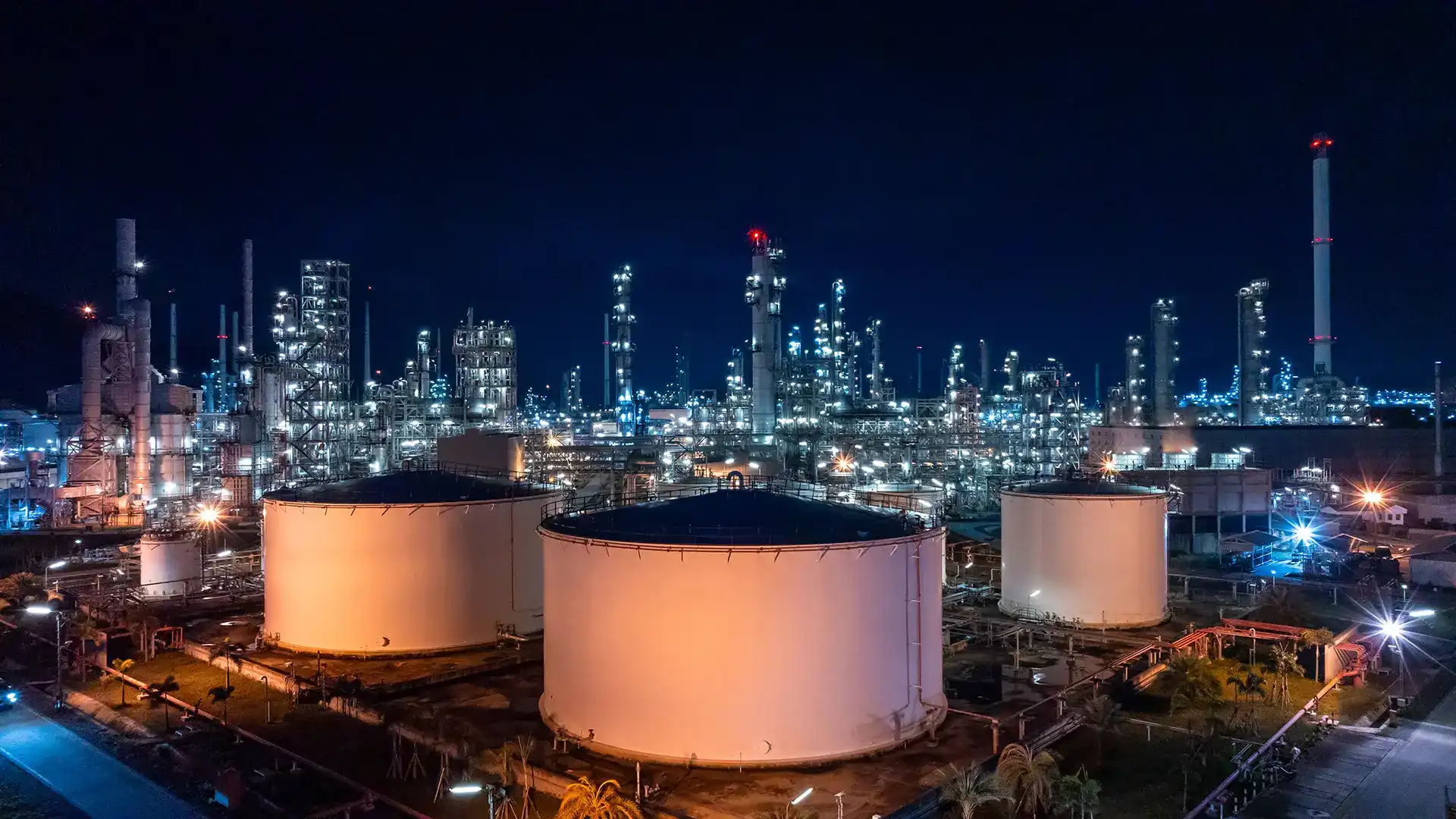
US crude oil futures flipped to a contango structure for the first time since February on Monday, with West Texas Intermediate for January delivery trading at a premium to the December contract in a sign that supply tightness is easing. Under a contango structure, traders are betting oil will fetch a stronger price in the future than current spot prices, justifying the cost of storage. The discount for front-month U.S. crude futures against the second-month contract widened to as much as 5 cents during the day. For crude oil storage operators — tank farm owners, independent storage companies, and facility lessors at Cushing — this structural shift represents their first material margin opportunity in nine months as the market rewards those who can warehouse physical crude.
Contango — where near-term prices trade below forward prices — inverts the normal market incentive structure. The WTI cash roll, which shows how much traders are paying to roll positions from one month to the next, was trading at a discount of 10 cents a barrel for November versus December on Monday, also in a contango structure. This pricing dynamic creates a storage arbitrage opportunity: buy crude at today's discounted price, store it, and sell it forward at a higher price, pocketing the spread minus storage costs. For operators controlling the 90-million-barrel storage infrastructure at Cushing, Oklahoma — the delivery point for WTI futures — this flip activates dormant revenue streams that have been absent since February.
On the buy side: Large integrated traders like Vitol and Glencore with existing tank leases at Cushing are evaluating storage plays that lock in the front-month to six-month spread. At current contango levels, a 100,000-barrel position stored for three months would capture approximately $5,000 before storage costs — thin but positive margins returning for the first time in nine months. However, "We probably need the contango to reach a threshold of 10-20 cents per barrel for traders to start kicking around the tires and taking the opportunity to store barrels for the future and capture the contango." At 5-10 cents, the arbitrage barely covers storage costs of approximately $0.45-0.50 per barrel per month.
On the sell side: Storage facility operators — companies like Plains All American Pipeline, Enterprise Products Partners, and independent tank farm operators — are seeing renewed demand for tank leases after months of subdued interest. Tank lease rates at Cushing, which had fallen to $0.35-0.40 per barrel per month during the prolonged backwardation, are firming toward $0.50-0.55 as traders evaluate storage positions. For operators with 1-2 million barrels of available capacity, this represents $500,000-1.1 million in monthly revenue — a material improvement from recent lows. The premium for immediate tank access is rising as available capacity tightens.
For traders and intermediaries: The contango flip creates a financing-intensive arbitrage where margin concentrates in two places — tank access and capital availability. Current Cushing storage: 20.9 million barrels. Storage levels at Cushing directly impact the WTI futures curve and can cause significant price movements when inventories approach capacity limits or draw down rapidly. With Cushing working capacity at approximately 76 million barrels, current utilization sits at roughly 28% — ample room for storage builds. However, the arbitrage requires financing crude purchases while waiting months for the spread to realize, making it capital-intensive and accessible primarily to well-funded operators.
A large integrated trader (Trafigura, a major bank's commodity arm, a national oil company's trading division) can execute this storage arbitrage through derivatives hedging. They buy physical crude at Cushing spot prices, store it in leased tanks, and simultaneously sell WTI futures contracts for delivery three to six months forward. The hedge locks in the contango spread regardless of absolute price movements. At 10 cents contango on a 500,000-barrel position, the gross capture is $50,000 before storage costs, financing costs, and hedging fees. The position requires $43-45 million in working capital at current WTI prices around $86-90 per barrel, making financing costs a critical component of the arbitrage calculation.
For a smaller regional operator — an independent oil trader, a regional fuel distributor, a cooperative buying group — without derivatives access, the storage play becomes a directional bet rather than a hedged arbitrage. They can buy physical crude and store it, betting that prices will rise sufficiently to cover storage costs and generate profit. Without futures market access, they cannot lock in the contango spread, exposing them to price risk. The minimum viable storage position typically starts around 25,000-50,000 barrels ($2.2-4.5 million), but success depends on crude prices rising, not just the contango structure holding.
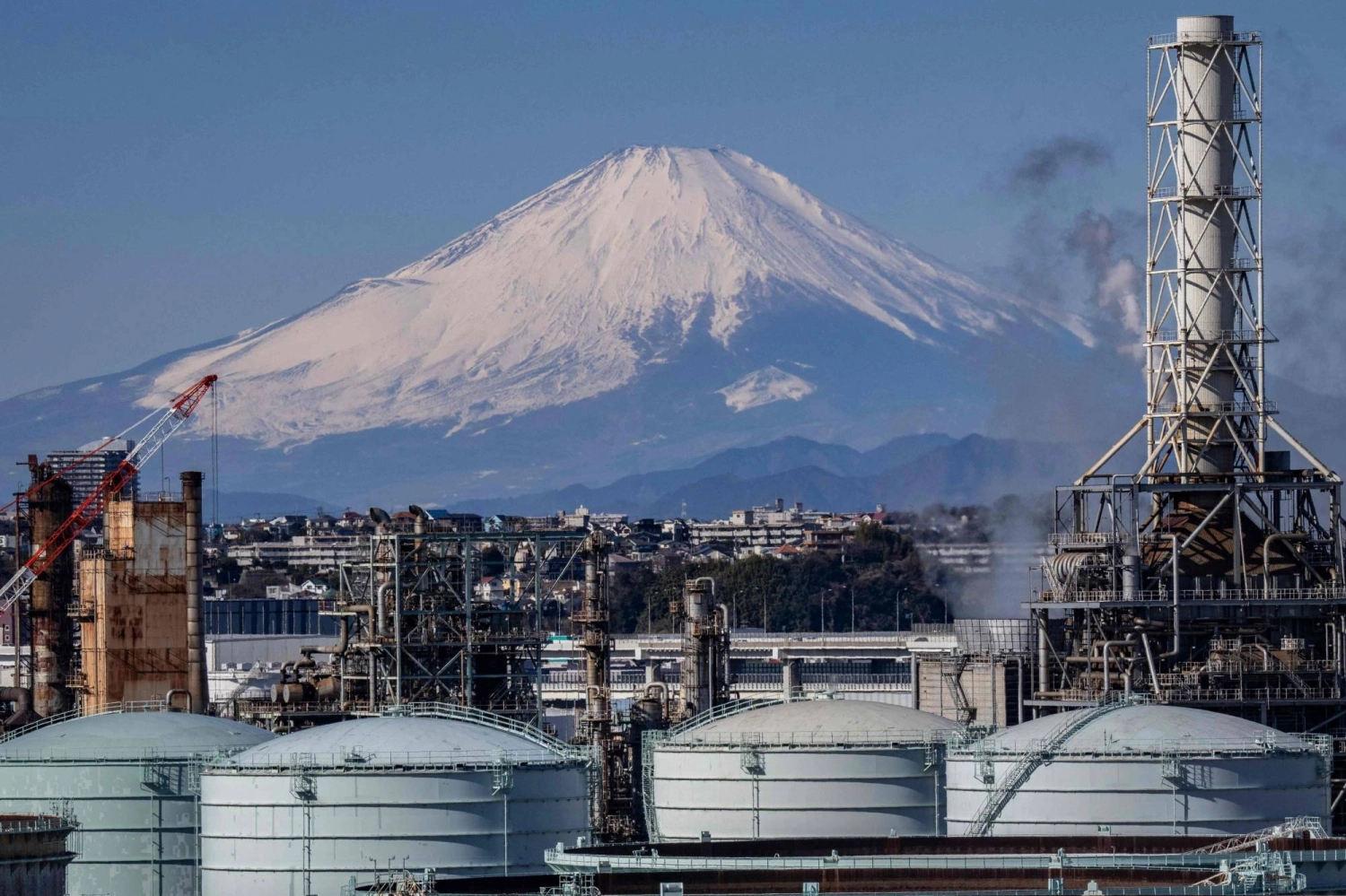
The fundamental driver behind this contango flip reflects evolving supply-demand dynamics at Cushing specifically. "We have seen an increase in crude inventories in Cushing, the delivery point of West Texas Intermediate, resulting in a less tight market," said Giovanni Staunovo, an analyst at UBS. Stocks at Cushing, Oklahoma, the delivery point for WTI futures, were at 25.2 million barrels at the end of last week, slightly down on the week but recovering from an 11-month low of 22.7 million barrels in mid-October. This inventory build at the critical delivery hub signals that physical supply is outpacing immediate demand, creating the localized oversupply that drives contango pricing.
Storage operations require specific infrastructure and operational expertise. Crude oil storage at Cushing involves floating-roof and fixed-roof tanks, each with different operational characteristics and costs. Floating-roof tanks, which adjust to product levels to minimize vapor space, cost approximately $0.40-0.45 per barrel per month to operate. Fixed-roof tanks cost slightly less at $0.35-0.40 per barrel per month but have greater vapor loss and fire risk. Tank cleaning, maintenance, and product quality monitoring add $0.05-0.10 per barrel per month. Insurance, regulatory compliance, and security contribute another $0.05 per barrel per month. The all-in storage cost at Cushing runs $0.50-0.65 per barrel per month for professional operators.
Macquarie analysts are forecasting the WTI forward curve to be in full contango by the second quarter of 2025, with Brent crude futures trading in the low $60s and WTI in the high $50s per barrel at the front of the curve. "This current flip in contango is probably temporary but it is on its way to being a more structural feature of the WTI and the Brent markets," said Vikas Dwivedi, global energy strategist at Macquarie, pointing to a bleak demand outlook for 2025 and ample global supply. If this forecast proves accurate, storage operators could see sustained demand for tank capacity through 2025, fundamentally changing the economics of Cushing storage infrastructure from a predominantly throughput-based business to a storage-and-carry model.
For observers tracking this development, monitor three specific indicators. First, the WTI December-March futures spread — if it widens beyond 20 cents per barrel, expect significant storage activity to commence. Second, Cushing inventory levels reported weekly by the Energy Information Administration every Wednesday at 10:30 AM ET — builds above 30 million barrels would signal sustained contango pressure. Third, tank lease rates at Cushing — if they firm above $0.60 per barrel per month, it indicates storage demand is tightening available capacity. The convergence of these signals by mid-December would suggest the contango structure is becoming structural rather than temporary, validating storage as a core profit center rather than a defensive strategy.


.jpg)
.jpg)
'%3e%3cg id='Final-Copy-2_2_' transform='translate(1275.000000, 200.000000)'%3e%3cpath class='st0' d='M7.4,12.8h6.8l3.1-11.6H7.4C4.2,1.2,1.6,3.8,1.6,7S4.2,12.8,7.4,12.8z'/%3e%3c/g%3e%3c/g%3e%3c/g%3e%3cg id='final---dec.11-2020'%3e%3cg id='_x30_208-our-toggle' transform='translate(-1275.000000, -200.000000)'%3e%3cg id='Final-Copy-2' transform='translate(1275.000000, 200.000000)'%3e%3cpath class='st1' d='M22.6,0H7.4c-3.9,0-7,3.1-7,7s3.1,7,7,7h15.2c3.9,0,7-3.1,7-7S26.4,0,22.6,0z M1.6,7c0-3.2,2.6-5.8,5.8-5.8 h9.9l-3.1,11.6H7.4C4.2,12.8,1.6,10.2,1.6,7z'/%3e%3cpath id='x' class='st2' d='M24.6,4c0.2,0.2,0.2,0.6,0,0.8l0,0L22.5,7l2.2,2.2c0.2,0.2,0.2,0.6,0,0.8c-0.2,0.2-0.6,0.2-0.8,0 l0,0l-2.2-2.2L19.5,10c-0.2,0.2-0.6,0.2-0.8,0c-0.2-0.2-0.2-0.6,0-0.8l0,0L20.8,7l-2.2-2.2c-0.2-0.2-0.2-0.6,0-0.8 c0.2-0.2,0.6-0.2,0.8,0l0,0l2.2,2.2L23.8,4C24,3.8,24.4,3.8,24.6,4z'/%3e%3cpath id='y' class='st3' d='M12.7,4.1c0.2,0.2,0.3,0.6,0.1,0.8l0,0L8.6,9.8C8.5,9.9,8.4,10,8.3,10c-0.2,0.1-0.5,0.1-0.7-0.1l0,0 L5.4,7.7c-0.2-0.2-0.2-0.6,0-0.8c0.2-0.2,0.6-0.2,0.8,0l0,0L8,8.6l3.8-4.5C12,3.9,12.4,3.9,12.7,4.1z'/%3e%3c/g%3e%3c/g%3e%3c/g%3e%3c/g%3e%3c/svg%3e) Privacy Choices
Privacy Choices