.avif)
Crude oil traders face a critical timing mismatch between President Trump's unverified claims of Iranian uranium surrender and actual crude flow restoration. Brent crude fluctuates around $95-$100 per barrel as markets weigh Trump's assertion that Iran agreed to hand over its enriched uranium stockpile. According to reports, Trump told reporters Iran has agreed to give the US "the nuclear dust," referring to the enriched uranium stockpile, yet Iran has not publicly confirmed agreeing to hand over enriched uranium or renounce nuclear weapons ambitions. For physical crude traders, this creates a dangerous optionality gap where policy announcements cannot materially change crude flows until sanctions are formally lifted through Treasury Department processes requiring Congressional notification periods.
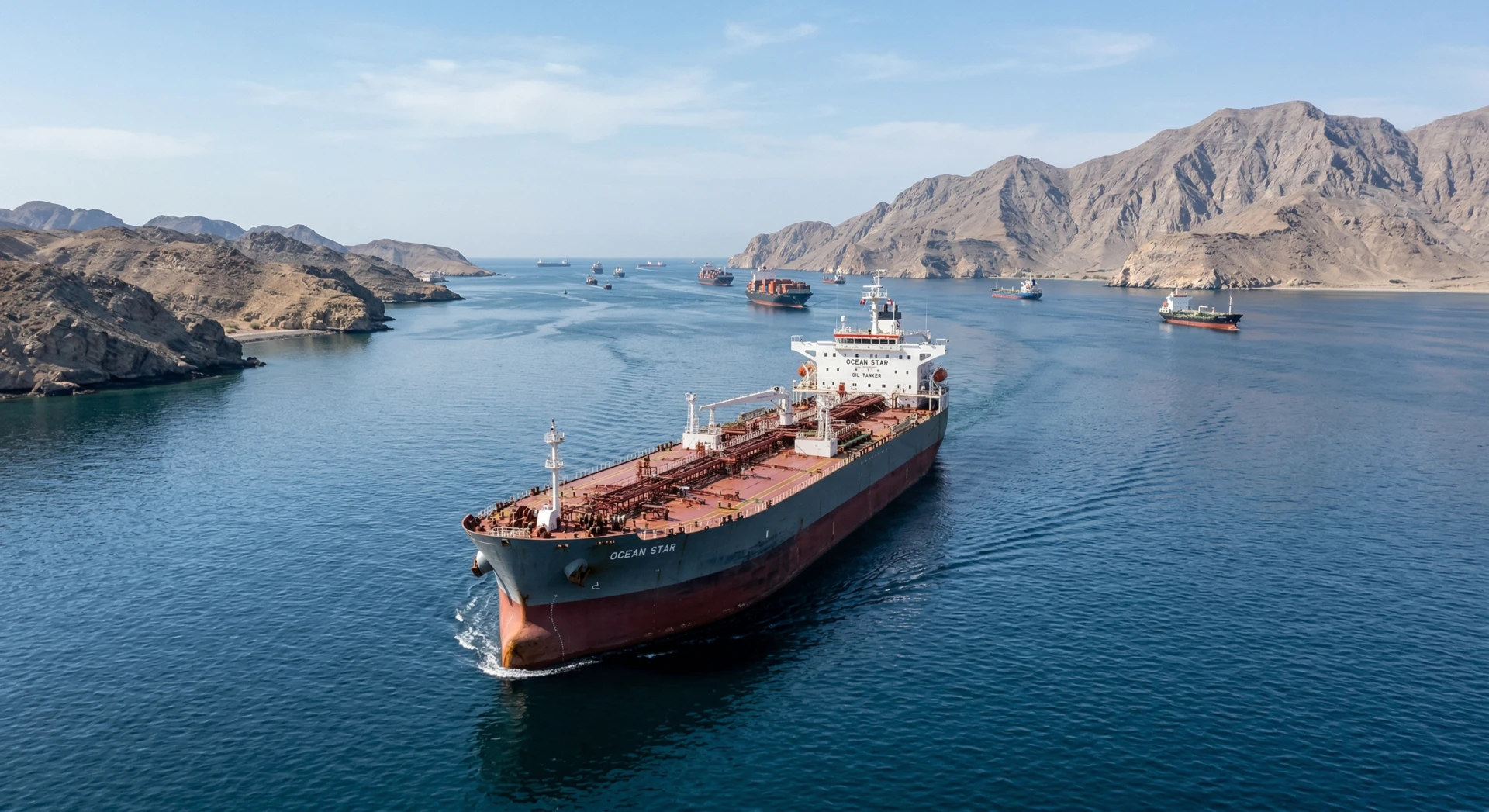
The Strait of Hormuz remains largely blocked since February 28, 2026, when the US and Israel launched attacks on Iran, while US Central Command claims to have "completely halted economic trade going into and out of Iran by sea". This dual blockade — Iranian control preventing most Western vessels from transiting, US naval interdiction targeting Iranian-linked ships — creates a physical bottleneck that Trump's political statements cannot immediately resolve. Iran has maintained oil exports of 1.84 million barrels per day in March, with prices above $90 per barrel, generating approximately $5 billion in revenue while controlling strait access. The arbitrage between political optimism and physical constraint concentrates entirely in the timing of actual sanctions relief.
Negotiations reportedly focus on a three-page plan where the US would release $20 billion in frozen Iranian funds in return for uranium handover, with talks expected this weekend in Islamabad. However, the margin anatomy reveals why Trump's claims cannot immediately change crude flows. Iranian crude trades at a $15-25/barrel discount to Brent when sanctions lift, creating massive arbitrage potential for buyers with access. But key US demands include Iran surrendering its 440 kilograms of highly enriched uranium and fully dismantling facilities at Natanz, Isfahan, and Fordow with intrusive IAEA inspections — verification processes requiring months, not days. The temporal gap between political announcement and compliance verification means crude flows remain constrained regardless of Trump's optimism.
On the first full day of the US blockade, only eight vessels transited the strait, most linked to Iran or sanctioned. This demonstrates the freight control mechanism that determines where margin concentrates. Iranian vessels maintain passage while Western-flagged carriers face interdiction, creating a two-tier freight market. If Iran charges $2 million per vessel transit toll, multiplied by 100 ships daily, that generates substantial hard currency — a revenue stream Trump's announcements cannot immediately eliminate. For large integrated traders with derivatives access, the play involves buying Iranian crude call options while shorting freight volatility on routes bypassing Hormuz. Smaller regional operators without derivatives exposure must secure bilateral supply agreements with alternative Middle Eastern producers at premium prices.
The Strait of Hormuz remains effectively closed, carrying about a fifth of global oil and natural gas supplies in peacetime. Supply chain analysis reveals why political announcements cannot restore flows immediately. A VLCC (Very Large Crude Carrier) carrying 2 million barrels from Iran requires 20-25 days to reach Asian refineries. Even if sanctions lifted tomorrow, vessel repositioning, cargo scheduling, and insurance coverage restoration would take weeks. War-risk insurance premiums increased from 0.125% to 0.4% of ship value per transit — for VLCCs, an additional quarter million dollars per voyage. These costs embed in delivered crude prices regardless of diplomatic progress.
China imported 1.4 million barrels of Iranian crude daily in 2025, representing 80% of Iran's oil exports. This buyer concentration creates specific margin implications for crude traders. If sanctions lift, Chinese refineries gain $15-25/barrel cost advantage versus alternative suppliers, but delivery timing remains constrained by Hormuz access. Iran and China developed railway freight lines through Central Asian countries as Hormuz alternative, but transporting hydrocarbons by rail involves considerable logistical challenges with no credible evidence of oil transport by rail from Iran to China. The physical supply chain cannot rapidly reconfigure based on political statements alone.
For sellers, Trump's announcements create tactical pressure without immediate relief. Saudi Arabia and UAE producers have captured pricing premiums as Iranian crude remained sanctioned, but Iran increased oil exports to three times normal rate before February conflict, with Saudi Arabia attempting similar moves. If Iranian sanctions lift, Gulf competitors lose premium pricing power as 1.8 million barrels per day of Iranian capacity returns to market. However, the timeline mismatch means this competitive pressure remains theoretical until actual sanctions relief occurs through formal Treasury processes.
Trump wrote on Truth Social that "no money will change hands," though he didn't refer specifically to unblocking Iranian funds, creating additional uncertainty about deal terms. The financing dimension reveals why traders cannot rely on political statements alone. Iranian crude sales require letters of credit (LC) — bank guarantees that payment will be made once shipping documents are presented. US sanctions target Iran's ability to generate revenue, with Treasury announcing measures against "covert shipping networks". Until Treasury formally removes sanctions and banking channels reopen, LC financing remains unavailable regardless of political progress.
Procurement professionals managing crude supply chains face specific operational constraints that Trump's statements cannot resolve immediately. Long-term supply contracts with alternative producers cannot be cancelled based on unverified political claims. US crude inventories fell 9.13 million barrels last week, with WTI rising 4% to above $95 per barrel. This inventory draw reflects physical supply tightness that persists until Hormuz flows actually resume. For large integrated oil companies with refining capacity, the optimal strategy involves maintaining Iranian crude purchase options while securing alternative supply agreements during the verification period.
The intelligence signal for observers is straightforward: monitor Treasury Department actions, not political statements, for actual sanctions relief timing. The two-week ceasefire between US and Iran expires April 21, with Trump agreeing to the truce in exchange for Iran opening the strait. If no formal Treasury announcement occurs by April 22, Trump's uranium surrender claims remain unverified political positioning. Pakistani, Egyptian and Turkish mediators hold meetings on diplomatic forum sidelines, with talks expected in Islamabad likely Sunday. The specific timebound signal: watch for Treasury sanctions relief announcements within 72 hours of any Islamabad agreement — political claims without Treasury action cannot restore Iranian crude flows to global markets.
.jpg)
.jpg)

'%3e%3cg id='Final-Copy-2_2_' transform='translate(1275.000000, 200.000000)'%3e%3cpath class='st0' d='M7.4,12.8h6.8l3.1-11.6H7.4C4.2,1.2,1.6,3.8,1.6,7S4.2,12.8,7.4,12.8z'/%3e%3c/g%3e%3c/g%3e%3c/g%3e%3cg id='final---dec.11-2020'%3e%3cg id='_x30_208-our-toggle' transform='translate(-1275.000000, -200.000000)'%3e%3cg id='Final-Copy-2' transform='translate(1275.000000, 200.000000)'%3e%3cpath class='st1' d='M22.6,0H7.4c-3.9,0-7,3.1-7,7s3.1,7,7,7h15.2c3.9,0,7-3.1,7-7S26.4,0,22.6,0z M1.6,7c0-3.2,2.6-5.8,5.8-5.8 h9.9l-3.1,11.6H7.4C4.2,12.8,1.6,10.2,1.6,7z'/%3e%3cpath id='x' class='st2' d='M24.6,4c0.2,0.2,0.2,0.6,0,0.8l0,0L22.5,7l2.2,2.2c0.2,0.2,0.2,0.6,0,0.8c-0.2,0.2-0.6,0.2-0.8,0 l0,0l-2.2-2.2L19.5,10c-0.2,0.2-0.6,0.2-0.8,0c-0.2-0.2-0.2-0.6,0-0.8l0,0L20.8,7l-2.2-2.2c-0.2-0.2-0.2-0.6,0-0.8 c0.2-0.2,0.6-0.2,0.8,0l0,0l2.2,2.2L23.8,4C24,3.8,24.4,3.8,24.6,4z'/%3e%3cpath id='y' class='st3' d='M12.7,4.1c0.2,0.2,0.3,0.6,0.1,0.8l0,0L8.6,9.8C8.5,9.9,8.4,10,8.3,10c-0.2,0.1-0.5,0.1-0.7-0.1l0,0 L5.4,7.7c-0.2-0.2-0.2-0.6,0-0.8c0.2-0.2,0.6-0.2,0.8,0l0,0L8,8.6l3.8-4.5C12,3.9,12.4,3.9,12.7,4.1z'/%3e%3c/g%3e%3c/g%3e%3c/g%3e%3c/g%3e%3c/svg%3e) Privacy Choices
Privacy Choices