.avif)

Lithium procurement teams face potential supply disruption from Bolivia, where battery grade lithium carbonate has already surged to $26,278/tonne this quarter while violent protests threaten future production from the world's largest lithium reserve. Mining groups clashed with police in La Paz on May 14th, with explosions heard as demonstrators threw what appeared to be dynamite sticks while demanding President Rodrigo Paz's resignation. Bolivia holds over 21 million tonnes of confirmed lithium reserves, primarily beneath the Salar de Uyuni salt flats, representing the largest deposit globally as of 2026. At least 70 road blockades have disrupted food and medical supply chains, with 50 marchers requiring medical treatment for exhaustion during protests that have lasted over 20 days.
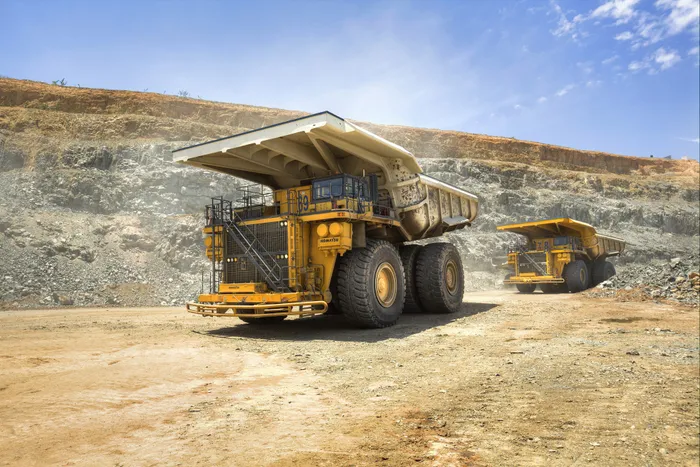
Lithium carbonate equivalent (LCE) the standard unit for measuring lithium content in different chemical compounds becomes critical when understanding Bolivia's strategic position in global supply chains. Bolivia previously exported natural gas but has become a net importer of fuel, creating an economic crisis that has now reached the mining sector where operators depend on imported diesel for equipment and explosives production. Consider a typical lithium mining operation: Local miners are demanding greater access to explosives and fuel, as well as revisions to contracts and implementation of mining regulations. A mid-sized cooperative running extraction pumps at Uyuni requires approximately 15,000 litres of diesel monthly for generators and transport at current import costs of $0.85/litre, that represents $12,750 monthly in fuel alone, before accounting for explosives needed for infrastructure development.
On the buy side: Large integrated battery manufacturers like CATL which has committed $9.9 billion to Bolivian lithium projects face project delays that could extend timelines beyond 2031. Even if contracts move forward this year, Bolivia would not begin large-scale lithium production until 2031, according to energy expert Sergio Hinojosa. CATL's total projected investment targets 50,000 metric tonnes of battery grade lithium annually at full buildout. For smaller regional battery suppliers electric vehicle manufacturers in Latin America, grid storage developers the disruption creates immediate pressure to secure alternative supply from Chile's Atacama or Argentina's lithium triangle, where delivered prices are currently $2,000-3,000/tonne higher than projected Bolivian costs. Bolivia has roughly double the lithium resources of neighbouring Chile, but they are not yet considered commercially viable by the US Geological Survey because of high magnesium content and costly logistics.
On the sell side: Established lithium producers in Chile and Australia benefit from supply tightening. In Chile, lithium carbonate prices rose 77.28% quarter over quarter, with average prices reaching $17,172.67/MT at San Antonio port. Australia leads global production with around 60,000 tonnes LCE annually, followed by Chile at 35,000 tonnes, while geographic concentration adds risk where environmental regulations, political tensions, or operational issues could tighten supply. For traders and intermediaries: The Bolivia risk premium has already materialised in futures markets, where CME lithium carbonate futures achieved record monthly trading volume in April 2026. Margin expansion occurs through volatility spot to forward spreads have widened to $3,500/tonne as procurement teams pay premiums for certain delivery.
For large integrated operators national oil companies, multinational battery manufacturers, grid storage developers the Bolivia disruption requires hedging through diversified supply agreements with Chilean, Australian, and Canadian producers, accepting 15-20% price premiums for supply certainty through 2028. For smaller regional operators Latin American EV manufacturers, energy storage installers, battery recyclers without derivatives access, the practical equivalent involves signing longer-term contracts with established producers, building strategic inventory during price dips, and developing recycling capacity to reduce virgin lithium dependence. For observers: Monitor the CME lithium carbonate continuous contract and the spread between spot CIF China and DDP Europe prices through June 2026 if the spread exceeds $4,000/tonne for more than 30 consecutive days, it signals that Bolivia risk has permanently altered global supply chain expectations rather than representing temporary disruption.



'%3e%3cg id='Final-Copy-2_2_' transform='translate(1275.000000, 200.000000)'%3e%3cpath class='st0' d='M7.4,12.8h6.8l3.1-11.6H7.4C4.2,1.2,1.6,3.8,1.6,7S4.2,12.8,7.4,12.8z'/%3e%3c/g%3e%3c/g%3e%3c/g%3e%3cg id='final---dec.11-2020'%3e%3cg id='_x30_208-our-toggle' transform='translate(-1275.000000, -200.000000)'%3e%3cg id='Final-Copy-2' transform='translate(1275.000000, 200.000000)'%3e%3cpath class='st1' d='M22.6,0H7.4c-3.9,0-7,3.1-7,7s3.1,7,7,7h15.2c3.9,0,7-3.1,7-7S26.4,0,22.6,0z M1.6,7c0-3.2,2.6-5.8,5.8-5.8 h9.9l-3.1,11.6H7.4C4.2,12.8,1.6,10.2,1.6,7z'/%3e%3cpath id='x' class='st2' d='M24.6,4c0.2,0.2,0.2,0.6,0,0.8l0,0L22.5,7l2.2,2.2c0.2,0.2,0.2,0.6,0,0.8c-0.2,0.2-0.6,0.2-0.8,0 l0,0l-2.2-2.2L19.5,10c-0.2,0.2-0.6,0.2-0.8,0c-0.2-0.2-0.2-0.6,0-0.8l0,0L20.8,7l-2.2-2.2c-0.2-0.2-0.2-0.6,0-0.8 c0.2-0.2,0.6-0.2,0.8,0l0,0l2.2,2.2L23.8,4C24,3.8,24.4,3.8,24.6,4z'/%3e%3cpath id='y' class='st3' d='M12.7,4.1c0.2,0.2,0.3,0.6,0.1,0.8l0,0L8.6,9.8C8.5,9.9,8.4,10,8.3,10c-0.2,0.1-0.5,0.1-0.7-0.1l0,0 L5.4,7.7c-0.2-0.2-0.2-0.6,0-0.8c0.2-0.2,0.6-0.2,0.8,0l0,0L8,8.6l3.8-4.5C12,3.9,12.4,3.9,12.7,4.1z'/%3e%3c/g%3e%3c/g%3e%3c/g%3e%3c/g%3e%3c/svg%3e) Privacy Choices
Privacy Choices