.avif)
.jpg)
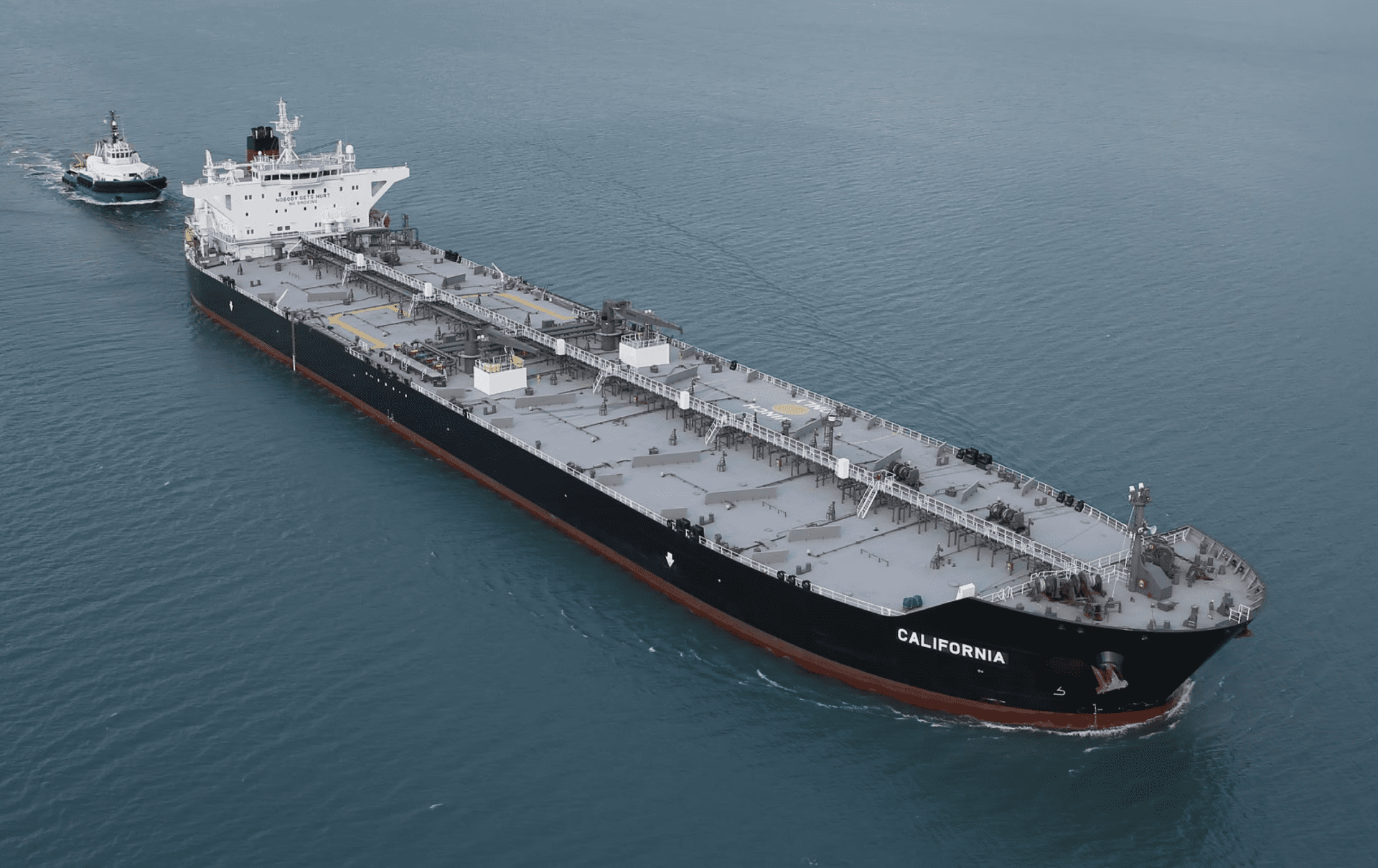
Container shipping lines face a stark binary: pay up to $4 million for emergency Panama Canal slots or risk vessel detention in Chinese ports lasting 1-4 days per incident. Following Panama's Supreme Court annulment of CK Hutchison's terminal concessions, China has retaliated with "targeted economic pressure" on Panamanian-flagged ships, with 55% of detained vessels in early April flying the Panamanian flag. Record auction premiums hit $4 million per transit in late April 2026 as geopolitical tensions disrupted normal slot allocation. The margin anatomy reveals this is not merely elevated freight it is a structural shift where flag state risk now determines route access and cost.
The dispute traces to Panama's Supreme Court invalidation of contracts that had allowed CK Hutchison's subsidiary to administer the Balboa and Cristóbal terminals after deeming the decades-old agreements unconstitutional. A letter of credit (LC) the bank guarantee that makes most international commodity trade possible cannot protect against sovereign detention risk. Panama-flagged vessel detentions jumped from 20-23 per month in January-February to 93 in March, remaining elevated with 18 ships held between April 1-7. Shipping industry sources report the holds typically last 1-4 days and involve additional fire safety, pollution prevention, and lifesaving equipment reviews. For a 14,000 TEU container vessel earning $25,000 daily on charter, four day detention costs $100,000 in lost revenue before considering cargo delay penalties.
Consider the margin compression facing a mid-sized container operator with 20% of its 50 vessel fleet flying Panama flags. Before the dispute, standard Panama Canal transit cost $300,000-400,000 per passage. Auction premiums climbed from pre-conflict averages of $135,000-$140,000 to around $385,000 in March-April. A 10 vessel monthly rotation through Chinese ports now faces 55% detention probability instead of the previous 5%. Each detention costs $100,000 in charter losses plus $50,000 in customer compensation. The arithmetic is unforgiving: Chinese route exposure now carries $82,500 expected monthly detention cost per vessel (55% × $150,000) versus $50,000 in previous normal operations (5% × $1 million). The $32,500 monthly premium per vessel erases the flag of convenience savings that made Panama registration attractive.
Panama operates the world's largest ship registry with roughly 8,600 vessels flying its flag approximately 17% of global deadweight tonnage. The Panama Canal handles roughly 40% of all U.S. container traffic each year. The canal handles about 40% of US container traffic and 5% of world trade. Container shipping lines now face counterparty concentration risk: Panama's sovereign disputes directly threaten both flag state access and canal transit capacity. The vulnerability compounds when considering that Panama-flagged ships carry a meaningful share of US containerised trade, creating potential supply chain disruption beyond individual vessel operations.
On the buy side, cargo owners importing from Asia now confront elevated freight surcharges as shipping lines price detention risk into contract rates. A major U.S. retailer importing $200 million annually from Chinese suppliers via Panama-flagged vessels faces 20-30% freight premium increases $40-60 million in additional costs. Importers with flexible sourcing can shift to suppliers in Vietnam or India to avoid Chinese port exposure, but this requires 6-12 month supply chain restructuring. Contract renegotiation becomes urgent: fixed-rate annual agreements signed before the dispute no longer reflect operational reality.
On the sell side, shipping lines split between those heavily exposed to Panama flags and those with diversified registries. CK Hutchison is separately pursuing international arbitration against Panama seeking more than $2 billion in damages, but this provides no operational relief. Lines with 30%+ Panama-flagged exposure including several major European operators face immediate re-flagging costs of $50,000-100,000 per vessel to Liberian or Marshall Islands registries. The re-flagging process takes 30-60 days, during which vessels remain vulnerable. Lines with minimal Panama exposure gain competitive advantage as they can bid aggressively for cargo requiring Chinese port calls.
For large integrated container shipping lines (MSC, Maersk, COSCO) with diversified flag portfolios, the solution involves accelerating planned re-flagging programs and adjusting vessel deployment. These operators can absorb $4 million Panama Canal premiums on critical cargo while gradually shifting Panama flagged vessels away from Chinese routes. They benefit from having multiple flag states and can hedge exposure through derivatives markets. Their scale allows negotiating detention insurance with specialized maritime underwriters.
For smaller regional container operators independent feeders, niche service providers, joint-venture lines without flag diversification, the choice becomes existential. They lack capital for rapid re-flagging and cannot absorb repeated $4 million canal tolls. Their practical response: immediately avoiding Chinese port exposure with Panama-flagged vessels, accepting cargo diversion to Singapore or other transshipment hubs, and negotiating detention liability caps with cargo owners. Some smaller operators face forced asset sales if re-flagging costs exceed available capital.
For observers tracking this escalating maritime sovereignty dispute, monitor Baltic Dry Index levels, currently around 2,666 points and the weekly panama flagged detention count reported by Tokyo MOU port state control authorities by May 15. Rising BDI combined with sustained high Panama detention rates signals structural freight cost inflation. Watch for CK Hutchison's arbitration timeline announcement and any shift in U.S. State Department rhetoric regarding Panama Canal "sovereignty" language changes here precede policy escalation. If detention rates remain above 40% of monthly Panama flagged inspections, expect accelerated industry re-flagging that fragments the world's largest ship registry within 12 months.


.jpg)



'%3e%3cg id='Final-Copy-2_2_' transform='translate(1275.000000, 200.000000)'%3e%3cpath class='st0' d='M7.4,12.8h6.8l3.1-11.6H7.4C4.2,1.2,1.6,3.8,1.6,7S4.2,12.8,7.4,12.8z'/%3e%3c/g%3e%3c/g%3e%3c/g%3e%3cg id='final---dec.11-2020'%3e%3cg id='_x30_208-our-toggle' transform='translate(-1275.000000, -200.000000)'%3e%3cg id='Final-Copy-2' transform='translate(1275.000000, 200.000000)'%3e%3cpath class='st1' d='M22.6,0H7.4c-3.9,0-7,3.1-7,7s3.1,7,7,7h15.2c3.9,0,7-3.1,7-7S26.4,0,22.6,0z M1.6,7c0-3.2,2.6-5.8,5.8-5.8 h9.9l-3.1,11.6H7.4C4.2,12.8,1.6,10.2,1.6,7z'/%3e%3cpath id='x' class='st2' d='M24.6,4c0.2,0.2,0.2,0.6,0,0.8l0,0L22.5,7l2.2,2.2c0.2,0.2,0.2,0.6,0,0.8c-0.2,0.2-0.6,0.2-0.8,0 l0,0l-2.2-2.2L19.5,10c-0.2,0.2-0.6,0.2-0.8,0c-0.2-0.2-0.2-0.6,0-0.8l0,0L20.8,7l-2.2-2.2c-0.2-0.2-0.2-0.6,0-0.8 c0.2-0.2,0.6-0.2,0.8,0l0,0l2.2,2.2L23.8,4C24,3.8,24.4,3.8,24.6,4z'/%3e%3cpath id='y' class='st3' d='M12.7,4.1c0.2,0.2,0.3,0.6,0.1,0.8l0,0L8.6,9.8C8.5,9.9,8.4,10,8.3,10c-0.2,0.1-0.5,0.1-0.7-0.1l0,0 L5.4,7.7c-0.2-0.2-0.2-0.6,0-0.8c0.2-0.2,0.6-0.2,0.8,0l0,0L8,8.6l3.8-4.5C12,3.9,12.4,3.9,12.7,4.1z'/%3e%3c/g%3e%3c/g%3e%3c/g%3e%3c/g%3e%3c/svg%3e) Privacy Choices
Privacy Choices