.avif)
%20(1)%20(1).jpg)
Gulf crude exporters operating under 17% capacity loss at Qatar's Ras Laffan LNG hub and Hormuz blockade disruption retain investment-grade credit ratings, with Fitch affirming Abu Dhabi at AA and S&P maintaining Qatar at AA/A-1+ despite force majeure declarations requiring up to five years for LNG repairs. The rating affirmations arrive as Brent crude trades near $108/barrel, down from recent peaks above $114, with agencies assuming Abu Dhabi's 1% economic contraction in 2026 and Qatar's 5% decline before recovery in 2027. A credit rating the probability assessment of a borrower defaulting on debt payments, graded from AAA (highest) to D (default) determines the interest rate governments pay when borrowing in international bond markets. An AA rating positions these Gulf states just two notches below the top AAA grade, indicating minimal default risk despite regional conflict.
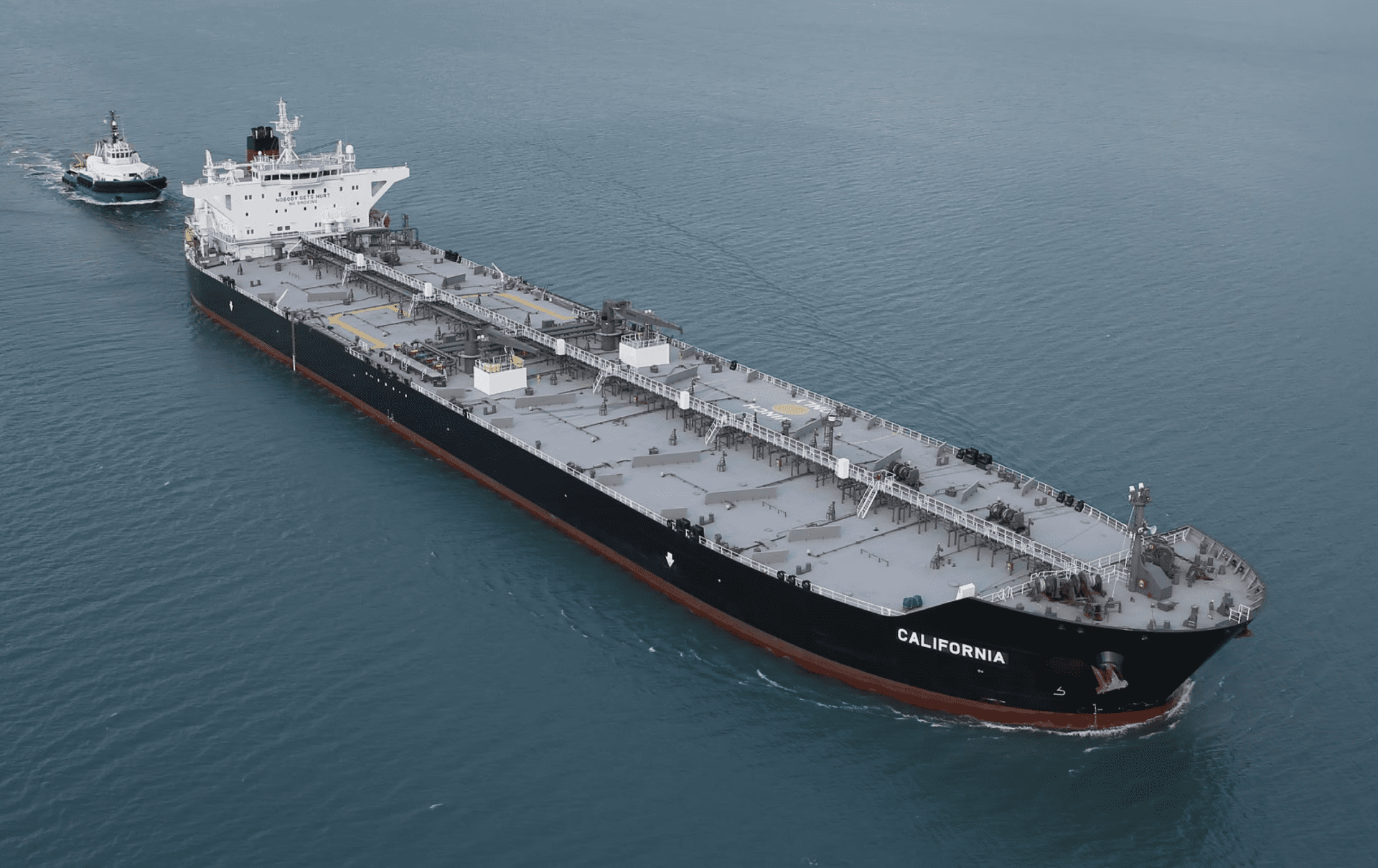
Fitch's stable outlook assumes the Strait of Hormuz the 21 mile wide chokepoint handling 20% of global oil before the war will gradually reopen, enabling alternative routes like Abu Dhabi's Fujairah pipeline to manage displaced flows. The UAE's Abu Dhabi Crude Oil Pipeline (ADCOP) maintains 1.5 million barrels per day (mb/d) operational capacity with 700 kb/d spare capacity, while combined Saudi-UAE alternative routes provide 3.5-5.5 mb/d total capacity far below the roughly 20 million barrels per day that typically flows through Hormuz. Consider a large integrated oil trader like Vitol managing Gulf crude flows: before the war, a single VLCC cargo of 2 million barrels from Abu Dhabi cleared Hormuz in 48 hours. Now, the same volume requires coordination across multiple smaller Suezmax vessels (1 million barrels each) via Fujairah, adding 3-4 days transit time and approximately $2-3 million in additional freight costs per equivalent cargo.
Qatar's force majeure at Ras Laffan the world's largest LNG export hub accounting for 20% of global supply has removed 17% of Qatar's LNG liquefaction capacity, causing an estimated $20 billion annual revenue loss. On the buy side, Asian LNG importers like Japan's JERA and Korea Gas Corporation face spot prices elevated 40-60% above pre-war levels, forcing demand rationing and increased reliance on coal-fired power generation. S&P noted Qatar's "sizeable accumulated fiscal and external assets" primarily the Qatar Investment Authority sovereign wealth fund with estimated $475 billion assets under management providing cushioning against the revenue shock. On the sell side, alternative LNG suppliers including Australia's Woodside and US exporters like Cheniere Energy are capturing premium pricing, with long-term contract negotiations now incorporating 15-25% higher baseline pricing than pre-2026 levels.
The rating agencies' assumptions overlook critical infrastructure constraints: Fujairah port has suffered multiple Iranian drone attacks since March, disrupting crude loading operations at the ADCOP pipeline terminus. For large integrated players national oil companies like Saudi Aramco or ADNOC derivatives markets provide hedging through crude oil futures and freight rate swaps, limiting exposure to route disruption volatility. Current ADCOP utilization sits at 71% (1.07 mb/d), leaving 440,000 barrels per day spare capacity, with temporary throughput increases possible to 1.8 mb/d. For smaller regional operators independent oil marketing companies, fuel distributors across South and Southeast Asia no hedging alternatives exist beyond diversifying supplier relationships and accepting higher procurement costs. The 36% capacity gap between stated alternative route capacity and actual Hormuz flows forces production cuts across Gulf producers when storage reaches capacity.
The credit agencies' H2 2026 Hormuz reopening assumption provides the key monitoring signal for operators: track the Brent-Dubai spread the price difference between North Sea and Middle East crude which currently trades at $3-4/barrel versus the historical $1-2 range. When this spread compresses below $2.50/barrel for five consecutive trading days, it signals resumed Gulf to Asia arbitrage flows and functional Hormuz reopening. Until then, watch Saudi East-West pipeline utilization rates: current 2 mb/d throughput against 5-7 mb/d claimed capacity indicates either operational constraints or strategic inventory management. For observers, monitor weekly US Energy Information Administration data on Middle East crude production versus storage builds sustained inventory accumulation beyond 50 million barrel increases will force additional production cuts, pressuring even AA-rated sovereign balance sheets.


.jpg)

'%3e%3cg id='Final-Copy-2_2_' transform='translate(1275.000000, 200.000000)'%3e%3cpath class='st0' d='M7.4,12.8h6.8l3.1-11.6H7.4C4.2,1.2,1.6,3.8,1.6,7S4.2,12.8,7.4,12.8z'/%3e%3c/g%3e%3c/g%3e%3c/g%3e%3cg id='final---dec.11-2020'%3e%3cg id='_x30_208-our-toggle' transform='translate(-1275.000000, -200.000000)'%3e%3cg id='Final-Copy-2' transform='translate(1275.000000, 200.000000)'%3e%3cpath class='st1' d='M22.6,0H7.4c-3.9,0-7,3.1-7,7s3.1,7,7,7h15.2c3.9,0,7-3.1,7-7S26.4,0,22.6,0z M1.6,7c0-3.2,2.6-5.8,5.8-5.8 h9.9l-3.1,11.6H7.4C4.2,12.8,1.6,10.2,1.6,7z'/%3e%3cpath id='x' class='st2' d='M24.6,4c0.2,0.2,0.2,0.6,0,0.8l0,0L22.5,7l2.2,2.2c0.2,0.2,0.2,0.6,0,0.8c-0.2,0.2-0.6,0.2-0.8,0 l0,0l-2.2-2.2L19.5,10c-0.2,0.2-0.6,0.2-0.8,0c-0.2-0.2-0.2-0.6,0-0.8l0,0L20.8,7l-2.2-2.2c-0.2-0.2-0.2-0.6,0-0.8 c0.2-0.2,0.6-0.2,0.8,0l0,0l2.2,2.2L23.8,4C24,3.8,24.4,3.8,24.6,4z'/%3e%3cpath id='y' class='st3' d='M12.7,4.1c0.2,0.2,0.3,0.6,0.1,0.8l0,0L8.6,9.8C8.5,9.9,8.4,10,8.3,10c-0.2,0.1-0.5,0.1-0.7-0.1l0,0 L5.4,7.7c-0.2-0.2-0.2-0.6,0-0.8c0.2-0.2,0.6-0.2,0.8,0l0,0L8,8.6l3.8-4.5C12,3.9,12.4,3.9,12.7,4.1z'/%3e%3c/g%3e%3c/g%3e%3c/g%3e%3c/g%3e%3c/svg%3e) Privacy Choices
Privacy Choices