.avif)
.avif)
The new gas pipeline investment could reach up to $1.5 billion, creating immediate commercial pressure for Bosnian gas buyers who must now balance existing Russian supply obligations with new LNG costs during the transition period. Bosnia currently imports practically all of its gas from Russia via pipelines running through neighboring Serbia and through Bulgaria along the TurkStream route. The Southern Interconnection pipeline a cross-border gas transmission system designed to physically connect national networks through shared infrastructure will link Bosnia with Croatia's gas network and the liquefied natural gas terminal on the Adriatic Sea island of Krk. Consider a mid-sized Bosnian utility buying 50,000 tonnes annually under a long-term Gazprom contract at roughly $500/tonne. Adding equivalent LNG supply through Croatia's Krk terminal at current JKM-linked prices of approximately $16.56/MMBTU (roughly $520/tonne delivered) creates dual supply costs until Russian contracts terminate in 2027.
The agreement was signed in Dubrovnik during the Three Seas Initiative Summit, following fast-tracked approvals earlier in the day by both governments. Croatia's government had adopted the decision to proceed at a telephone session, while Bosnia and Herzegovina's Presidency and Council of Ministers also gave urgent consent. Earlier this month, Bosnian lawmakers voted to name US-based AAFS Infrastructure and Energy as the investor and developer of the project. AAFS Infrastructure and Energy is headed by Jesse Binnall, a lawyer who previously worked for Trump and unsuccessfully sought to overturn his 2020 presidential election loss, and Joseph Flynn, the brother of Trump's former adviser Michael Flynn. The timing aligns with imports under long-term contracts will be outlawed from Jan. 1, 2027 under the EU's Russian gas import ban. A take-or-pay contract a commitment to purchase minimum volumes regardless of actual consumption typically locks buyers into paying for unused gas, meaning Bosnian utilities face potential dual obligations: Russian contract penalties plus new LNG purchases.
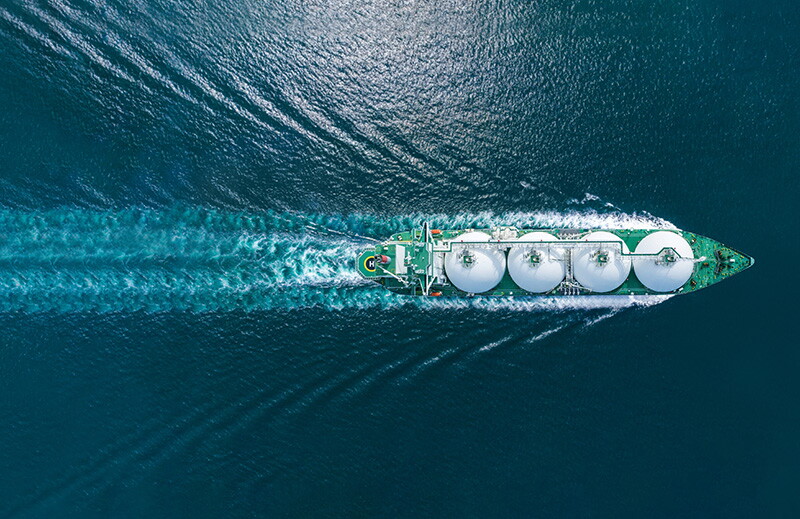
The Southern Interconnection will connect gas networks along a route from Split and Zagvozd in Croatia to Posušje, Tomislavgrad, Kupres, Bugojno and Travnik in Bosnia and Herzegovina. Additional branches will extend towards Mostar, Livno, Jajce, Čapljina and Tuzla. The physical infrastructure involves approximately 300 kilometres of new pipeline construction across mountainous terrain between the Croatian coast and central Bosnia. Croatia's role is central to the project, particularly due to the strategic importance of the LNG terminal on the island of Krk. With growing capacity for liquefied natural gas imports, Croatia is positioned as a key regional entry point for gas supply into Southeast Europe. The Krk terminal currently handles roughly 2.6 billion cubic metres annually, with expansion capacity to 6.1 bcm equivalent to approximately 4.5 million tonnes of LNG. Every additional tonne of regasified LNG generates terminal fees of $20-30/tonne for Croatian operators.
On the buy side: Bosnian industrial consumers steel producers, chemical manufacturers, power generators face supply security benefits but immediate cost pressures from dual sourcing during the 2025-2027 transition period. Current Russian gas costs roughly $14-15/MMBTU delivered via TurkStream, while TTF Gas fell to 44.31 EUR/MWh on April 28, 2026 (approximately $13.5/MMBTU), suggesting comparable pricing but with added LNG terminal and transport margins.
On the sell side: Croatian LNG terminal operators gain guaranteed incremental throughput from Bosnian demand, potentially adding 1-2 bcm annually in regasification volumes worth $25-40 million in terminal revenues. Russian gas suppliers via TurkStream face gradual volume erosion as Bosnia diversifies ahead of the 2027 ban. For traders and intermediaries: The arbitrage concentrates in LNG cargo optimization buying flexible U.S. Gulf Coast or Qatari LNG for delivery to Krk when JKM-TTF spreads justify the freight differential of approximately $0.50-0.80/MMBTU.
For large integrated traders with derivatives access: Hedge Bosnian demand exposure through TTF futures and JKM swaps, capturing basis differentials between pipeline and LNG pricing during the transition. The typical hedge structure involves buying TTF calls and selling JKM puts to protect against convergence failure.
For smaller regional LNG importers without derivatives access: Negotiate bilateral supply agreements with Croatian terminal capacity holders, securing regasification slots during peak demand periods (November-March) when storage injection competes with heating demand.
For observers: Monitor the TTF-JKM spread through summer 2026 persistent premiums above $1.50/MMBTU signal European storage filling pressure that could delay Bosnia's full transition timeline, while narrowing spreads below $1.00/MMBTU indicate sufficient LNG availability to support the diversification schedule without price penalties.



'%3e%3cg id='Final-Copy-2_2_' transform='translate(1275.000000, 200.000000)'%3e%3cpath class='st0' d='M7.4,12.8h6.8l3.1-11.6H7.4C4.2,1.2,1.6,3.8,1.6,7S4.2,12.8,7.4,12.8z'/%3e%3c/g%3e%3c/g%3e%3c/g%3e%3cg id='final---dec.11-2020'%3e%3cg id='_x30_208-our-toggle' transform='translate(-1275.000000, -200.000000)'%3e%3cg id='Final-Copy-2' transform='translate(1275.000000, 200.000000)'%3e%3cpath class='st1' d='M22.6,0H7.4c-3.9,0-7,3.1-7,7s3.1,7,7,7h15.2c3.9,0,7-3.1,7-7S26.4,0,22.6,0z M1.6,7c0-3.2,2.6-5.8,5.8-5.8 h9.9l-3.1,11.6H7.4C4.2,12.8,1.6,10.2,1.6,7z'/%3e%3cpath id='x' class='st2' d='M24.6,4c0.2,0.2,0.2,0.6,0,0.8l0,0L22.5,7l2.2,2.2c0.2,0.2,0.2,0.6,0,0.8c-0.2,0.2-0.6,0.2-0.8,0 l0,0l-2.2-2.2L19.5,10c-0.2,0.2-0.6,0.2-0.8,0c-0.2-0.2-0.2-0.6,0-0.8l0,0L20.8,7l-2.2-2.2c-0.2-0.2-0.2-0.6,0-0.8 c0.2-0.2,0.6-0.2,0.8,0l0,0l2.2,2.2L23.8,4C24,3.8,24.4,3.8,24.6,4z'/%3e%3cpath id='y' class='st3' d='M12.7,4.1c0.2,0.2,0.3,0.6,0.1,0.8l0,0L8.6,9.8C8.5,9.9,8.4,10,8.3,10c-0.2,0.1-0.5,0.1-0.7-0.1l0,0 L5.4,7.7c-0.2-0.2-0.2-0.6,0-0.8c0.2-0.2,0.6-0.2,0.8,0l0,0L8,8.6l3.8-4.5C12,3.9,12.4,3.9,12.7,4.1z'/%3e%3c/g%3e%3c/g%3e%3c/g%3e%3c/g%3e%3c/svg%3e) Privacy Choices
Privacy Choices