.avif)
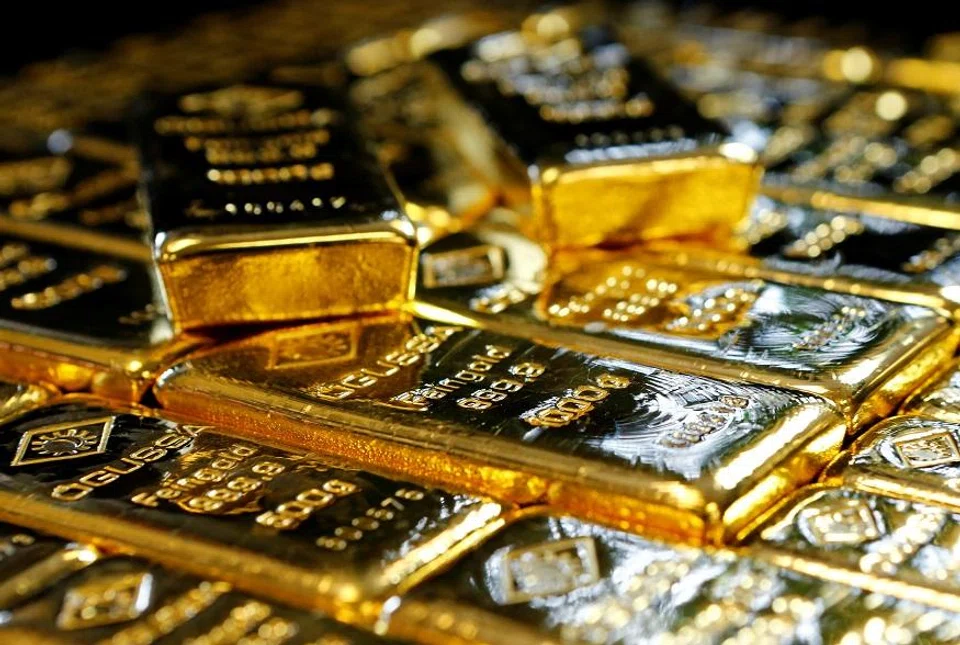
Gold surged 2% to $4,153/oz after President Trump canceled planned strikes against Iran on Thursday, delivering immediate relief to precious metals dealers who have watched the yellow metal trade inversely to its traditional safe-haven role throughout the current Middle East crisis. The rally came hours after Trump threatened to hit Iran "VERY HARD" and target the crucial Kharg Island oil export hub, before abruptly reversing course as Qatar mediated talks reportedly reached senior Iranian leadership levels. For dealers managing inventory risk during volatile geopolitical swings, this represents the first meaningful reprieve since conflict escalation began driving gold lower in late February.
The arithmetic of precious metals dealers' margin compression is stark. Gold has fallen 25% from its January 28 all-time high of $5,589 to current levels around $4,165, driven by an oil driven inflation shock that suppressed Federal Reserve rate-cut expectations. A typical mid-sized dealer carrying 500 ounces of inventory has seen paper losses of approximately $700,000 from the peak not including the operational pressure from reduced customer demand as higher real yields (the difference between Treasury yields and expected inflation) made non-yielding gold less attractive. CME FedWatch data shows December rate hike odds jumped from 45% to 72% in just one week following May's blowout jobs report, creating the monetary policy backdrop that turned geopolitical risk from gold positive to gold negative.
Backwardation where near-term delivery prices exceed forward prices has characterized the London physical gold market since March, signaling that buyers need metal immediately rather than later. This market structure typically indicates supply tightness, but central bank accumulation has continued at 244 tonnes in Q1 2026 alone, pressing against historical 400-500 tonne annual averages while Western investment demand has withered. The LBMA Gold Price the twice daily benchmark used for physical settlement globally reflects this bifurcated demand: Eastern central banks accumulating strategic reserves while Western financial investors rotate toward yielding assets.
On the buy side, industrial users and jewelry manufacturers have found some relief in lower gold prices, though the 25% decline from peaks has been offset by currency hedging costs for non-dollar buyers. European jewelry fabricators, for instance, face both lower gold input costs and a stronger dollar that increases their effective metal price when paying in euros. For large scale buyers like the Swiss refineries that process 60-70% of global gold supply, the current environment creates operational complexity managing price risk on massive throughput volumes while financing costs remain elevated.
On the sell side, mining companies operating with all-in sustaining costs above $1,800/oz (in 2019 terms, roughly $3,200-3,400/oz in current money) have seen margin compression despite gold prices well above historical averages. J.P. Morgan's forecast of $6,000/oz by Q4 2026 reflects the structural cost-push dynamics in the sector, but miners must navigate quarter to quarter earnings volatility that reflects paper price swings rather than underlying mine economics. South African producers, facing electricity constraints and labor cost inflation, particularly benefit when gold rallies reduce pressure on rand denominated operating expenses.
For large integrated trading houses (JPMorgan's commodities division, ICBC Standard Bank, major LBMA market makers), the current volatility creates margin opportunities through the bid-ask spread the difference between buying and selling prices. A 2% intraday move on 1,000 ounce transactions generates approximately $80,000 in gross revenue for market makers capturing the full range. However, these operators also face elevated hedging costs as options implied volatility the cost of insurance against price swings remains elevated following months of geopolitical uncertainty. Gold volatility has traded consistently above 20% since February, compared to the 15-18% range typical during calmer periods.
For smaller regional operators local coin dealers, independent precious metals retailers, jewelry wholesalers the environment requires more defensive positioning. Without access to derivatives markets for hedging, these dealers typically maintain lower inventory levels and pass hedging costs directly to customers through wider bid-ask spreads. A typical coin shop might increase spreads from $50-75/oz above spot to $100-150/oz during volatile periods, partially protecting margins but potentially reducing transaction volume. Regional dealers also benefit from customers seeking to hold physical metal during uncertain times, creating demand for higher-margin products like collectible coins with numismatic premiums.
The freight dimension reveals where operational margins concentrate during this crisis. Iran has effectively shut down the Strait of Hormuz, a narrow waterway through which about 20% of the world's energy supply travels. But gold's supply chain runs primarily through London vaults, Swiss refineries, and established air freight routes that bypass Middle East shipping entirely. The major impact on precious metals logistics comes through energy costs: higher jet fuel prices increase the cost of airfreighting gold from refineries to dealers, typically adding $2-5/oz to delivery costs. Large vaulting operators (Brink's, Loomis, major bank vaults) with fixed rate transportation contracts absorb these costs, while smaller dealers face variable pricing that compresses margins during energy spikes.
The path forward depends on whether Iran's foreign ministry confirmation that "no final decision on any deal" has been made proves accurate or if Trump's optimism about imminent agreement materializes. For precious metals dealers, the key monitoring point is the CME FedWatch tool tracking December 2026 rate hike probabilities currently at 62% following Thursday's strike cancellation, down from 69% before Trump's announcement. If odds drop below 50%, gold typically finds sustained support above $4,200/oz. If they rise above 75%, dealers should expect continued pressure toward the psychological $4,000 support level that hasn't been tested since late 2025.


.avif)

'%3e%3cg id='Final-Copy-2_2_' transform='translate(1275.000000, 200.000000)'%3e%3cpath class='st0' d='M7.4,12.8h6.8l3.1-11.6H7.4C4.2,1.2,1.6,3.8,1.6,7S4.2,12.8,7.4,12.8z'/%3e%3c/g%3e%3c/g%3e%3c/g%3e%3cg id='final---dec.11-2020'%3e%3cg id='_x30_208-our-toggle' transform='translate(-1275.000000, -200.000000)'%3e%3cg id='Final-Copy-2' transform='translate(1275.000000, 200.000000)'%3e%3cpath class='st1' d='M22.6,0H7.4c-3.9,0-7,3.1-7,7s3.1,7,7,7h15.2c3.9,0,7-3.1,7-7S26.4,0,22.6,0z M1.6,7c0-3.2,2.6-5.8,5.8-5.8 h9.9l-3.1,11.6H7.4C4.2,12.8,1.6,10.2,1.6,7z'/%3e%3cpath id='x' class='st2' d='M24.6,4c0.2,0.2,0.2,0.6,0,0.8l0,0L22.5,7l2.2,2.2c0.2,0.2,0.2,0.6,0,0.8c-0.2,0.2-0.6,0.2-0.8,0 l0,0l-2.2-2.2L19.5,10c-0.2,0.2-0.6,0.2-0.8,0c-0.2-0.2-0.2-0.6,0-0.8l0,0L20.8,7l-2.2-2.2c-0.2-0.2-0.2-0.6,0-0.8 c0.2-0.2,0.6-0.2,0.8,0l0,0l2.2,2.2L23.8,4C24,3.8,24.4,3.8,24.6,4z'/%3e%3cpath id='y' class='st3' d='M12.7,4.1c0.2,0.2,0.3,0.6,0.1,0.8l0,0L8.6,9.8C8.5,9.9,8.4,10,8.3,10c-0.2,0.1-0.5,0.1-0.7-0.1l0,0 L5.4,7.7c-0.2-0.2-0.2-0.6,0-0.8c0.2-0.2,0.6-0.2,0.8,0l0,0L8,8.6l3.8-4.5C12,3.9,12.4,3.9,12.7,4.1z'/%3e%3c/g%3e%3c/g%3e%3c/g%3e%3c/g%3e%3c/svg%3e) Privacy Choices
Privacy Choices