.avif)
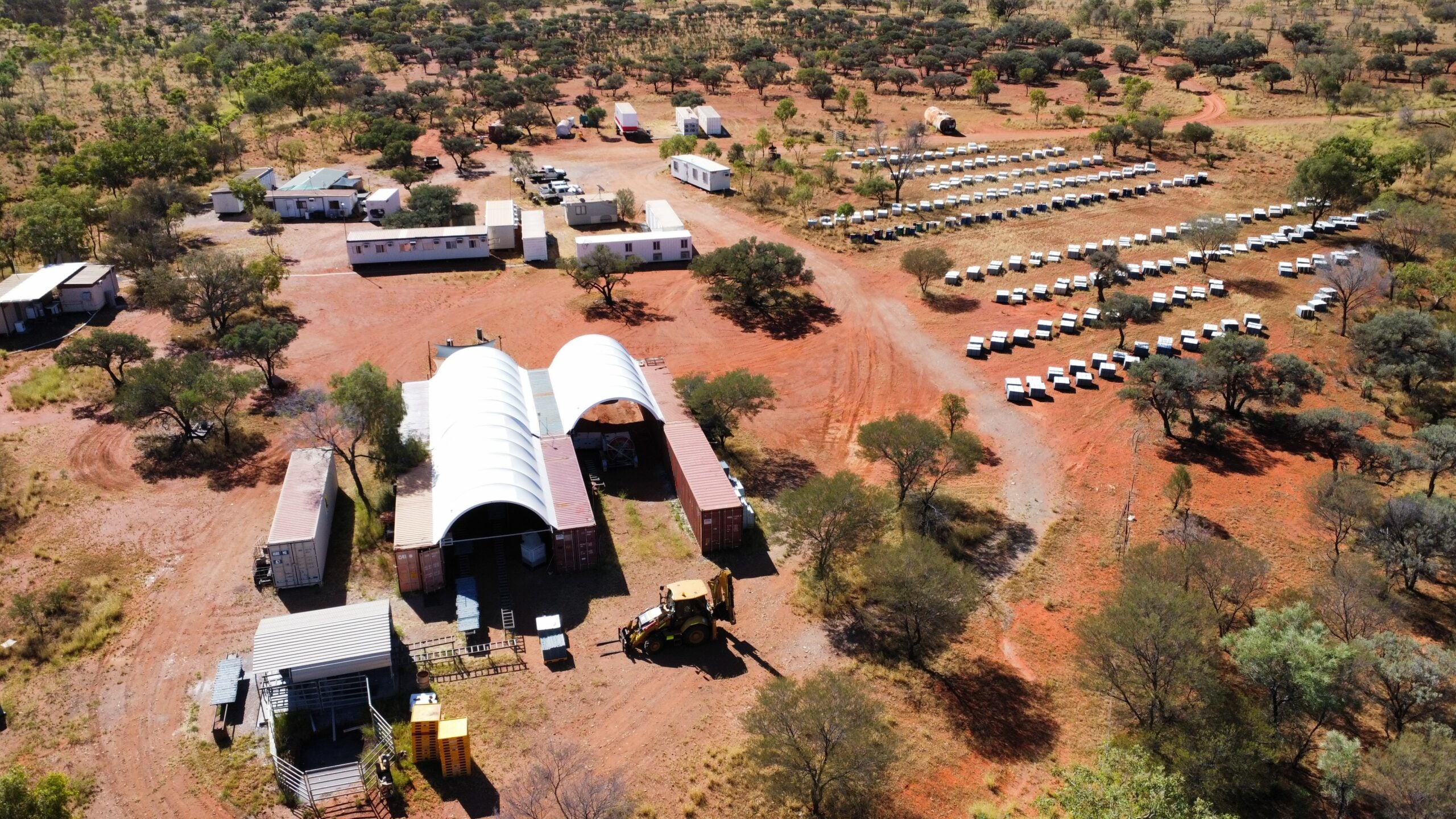
KGL Resources has structured a $600 million combined financing package $300 million in new equity and a US$300 million precious metals stream that will fully fund the Jervois Copper Project in Australia's Northern Territory into production, with the capital deployment timeline running through July 2026 and first production targeted beyond that. For mining-project financiers evaluating either the equity or the streaming component, the critical question is not whether the project is funded it is but what has been permanently surrendered to achieve that funding certainty.
The equity raise has two components. The first is a $120 million pro-rata entitlement offer a rights issue in which existing shareholders are offered new shares in proportion to their current holdings priced at $0.20 per share. The second is a $180 million conditional placement, meaning new shares sold directly to institutional investors subject to shareholder approval, at the same $0.20 price. Together, approximately 598 million new shares will be issued, with allotment scheduled for 29 July 2026. Major shareholder KMP Investments has pre-committed up to $113 million across both tranches, a move that could lift its stake to 36.2% depending on take-up by other shareholders. That pre-commitment anchors the raise and reduces underwriting risk materially but it also concentrates ownership in a way that smaller shareholders and non-participating foreign holders should note carefully. Shares traded at $0.27 at announcement, a 35% premium to the offer price, creating a small arbitrage window for eligible institutional participants: buy in the entitlement offer at $0.20, hold stock worth $0.27. The spread is real but narrow and subject to approval conditions.
The streaming deal with Wheaton Precious Metals is the structural load-bearing element of this package, and it deserves precise decomposition. A precious metals stream is a financial instrument in which a mining company sells the right to purchase a fixed percentage of future metal production here, gold and silver at a contracted price well below market, in exchange for upfront capital. Wheaton receives 52% of the payable gold and silver from Jervois for the life of the mine. KGL retains a 48% effective economic interest. The management framing of "debt-free" is technically accurate there is no loan to repay but it obscures the economic reality: Wheaton will buy gold and silver at stream rates (typically $400–500 per ounce for gold under standard Wheaton deal terms, versus a spot price currently above $3,300 per ounce) for the duration of the mine's life. The differential potentially $2,800 or more per ounce across years of production accrues entirely to Wheaton, not KGL shareholders. That is not debt. It is something less reversible.
The margin anatomy here requires a worked example. Assume Jervois produces 50,000 ounces of gold annually as a by-product alongside its copper output, a plausible estimate for a project of this scale. At a stream rate of $450/oz and spot gold at $3,300/oz, Wheaton's 52% entitlement (26,000 oz) generates an implicit margin uplift the difference between what Wheaton pays and what it could sell for on the open market of approximately $74 million per year on the gold component alone. Over a 15-year mine life, and ignoring silver entirely, that is over $1.1 billion in value transferred from Jervois production economics to Wheaton's balance sheet. KGL's copper economics must absorb this cost. At current copper prices (~$9,500/MT), Jervois may carry this burden comfortably. At $6,500/MT copper a level seen as recently as 2022 the absence of full by product credit becomes a material cost-floor problem.
For large integrated project financiers and streaming counterparties think Wheaton Precious Metals itself, Franco-Nevada, or a major institutional co-investor with derivatives capability the Jervois deal sits within a familiar risk-adjusted framework. The stream is secured at below-market rates, providing a natural hedge against gold price downside while capturing the upside. Equity participants of this scale can cross-hedge copper exposure through LME (London Metal Exchange) futures standardised contracts for future delivery of copper and model the by-product stream as a separate revenue line with its own discount rate. The entitlement offer's $0.20 entry point offers additional upside if copper development execution is strong. On the sell side, KGL's new CEO (appointed late 2025) is selling certainty: no debt covenants, no mandatory offtake obligations on copper, a $70 million liquidity buffer, and $20 million earmarked for exploration drilling. For a greenfield project in a remote jurisdiction, that pitch has genuine appeal.
For smaller mining finance participants a regional fund, a family office with project-finance exposure, or a mid-tier copper trader considering offtake pre-finance the risk calculus is different. The $70 million liquidity buffer sounds substantial but represents a slender margin against Northern Territory greenfield construction overruns. Historical precedent is sobering: major Australian remote greenfield projects have routinely run 20–40% over budget. On a project of this scale, a 25% cost overrun could consume the $70 million buffer entirely and then some, triggering the need for additional equity at potentially dilutive prices. Smaller participants without the ability to hedge copper forward or model stream dilution dynamically should focus on one practical discipline: model project economics at $6,500/MT copper and assume zero incremental by product revenue above the stream rate. If the project works at those numbers, the risk is manageable. If it does not, the "debt-free" framing offers no protection.
The specific time-bound signal for observers is the shareholder vote on the conditional placement, expected in late July 2026 alongside the allotment date of 29 July. If the placement receives approval and KMP Investments' stake rises toward 36.2%, the effective control structure of KGL shifts materially watch ASX announcements and the KGL registry for the final take-up number on the entitlement offer. A low take-up rate (below 60%) would signal retail and smaller institutional shareholders are unconvinced at $0.20 and would put more pressure on KMP Investments to absorb the shortfall, concentrating ownership further. Separately, monitor the LME copper three month forward price: a sustained move below $8,500/MT before first production would compress the Jervois project margin to the point where the absence of full gold and silver by-product credits becomes a headline risk rather than an accounting footnote. Both signals are live by end of July 2026.
'%3e%3cg id='Final-Copy-2_2_' transform='translate(1275.000000, 200.000000)'%3e%3cpath class='st0' d='M7.4,12.8h6.8l3.1-11.6H7.4C4.2,1.2,1.6,3.8,1.6,7S4.2,12.8,7.4,12.8z'/%3e%3c/g%3e%3c/g%3e%3c/g%3e%3cg id='final---dec.11-2020'%3e%3cg id='_x30_208-our-toggle' transform='translate(-1275.000000, -200.000000)'%3e%3cg id='Final-Copy-2' transform='translate(1275.000000, 200.000000)'%3e%3cpath class='st1' d='M22.6,0H7.4c-3.9,0-7,3.1-7,7s3.1,7,7,7h15.2c3.9,0,7-3.1,7-7S26.4,0,22.6,0z M1.6,7c0-3.2,2.6-5.8,5.8-5.8 h9.9l-3.1,11.6H7.4C4.2,12.8,1.6,10.2,1.6,7z'/%3e%3cpath id='x' class='st2' d='M24.6,4c0.2,0.2,0.2,0.6,0,0.8l0,0L22.5,7l2.2,2.2c0.2,0.2,0.2,0.6,0,0.8c-0.2,0.2-0.6,0.2-0.8,0 l0,0l-2.2-2.2L19.5,10c-0.2,0.2-0.6,0.2-0.8,0c-0.2-0.2-0.2-0.6,0-0.8l0,0L20.8,7l-2.2-2.2c-0.2-0.2-0.2-0.6,0-0.8 c0.2-0.2,0.6-0.2,0.8,0l0,0l2.2,2.2L23.8,4C24,3.8,24.4,3.8,24.6,4z'/%3e%3cpath id='y' class='st3' d='M12.7,4.1c0.2,0.2,0.3,0.6,0.1,0.8l0,0L8.6,9.8C8.5,9.9,8.4,10,8.3,10c-0.2,0.1-0.5,0.1-0.7-0.1l0,0 L5.4,7.7c-0.2-0.2-0.2-0.6,0-0.8c0.2-0.2,0.6-0.2,0.8,0l0,0L8,8.6l3.8-4.5C12,3.9,12.4,3.9,12.7,4.1z'/%3e%3c/g%3e%3c/g%3e%3c/g%3e%3c/g%3e%3c/svg%3e) Privacy Choices
Privacy Choices