.avif)

Graphite traders positioned to supply Japanese and South Korean battery and industrial manufacturers face a new competitive variable from 25 June 2026: International Graphite Limited (IG6), an Australian junior miner, has signed a non-binding Heads of Terms a preliminary framework agreement setting out the commercial intentions of both parties before binding contracts are drafted with Hong Kong based Wogen Pacific, securing exclusive Asia-Pacific distribution rights for a minimum of 3,000 tonnes per year of micronised graphite from IG6's Collie Micronising Facility in Western Australia. The deal also positions Wogen to source up to 10,000 tonnes per year of flake graphite concentrate the raw, processed form of natural graphite before it is ground into fine industrial grade powder as IG6 scales production. No binding pricing, no confirmed production timeline, and no disclosed financing commitment underpin the announcement. The 6.5% share price rise to AUD 0.049 on the day reflects market optionality the value of a possible future outcome not contracted revenue. For traders currently routing Australian graphite through Chinese intermediaries, this deal signals a potential structural bypass of that channel, contingent entirely on IG6 achieving commercial production.
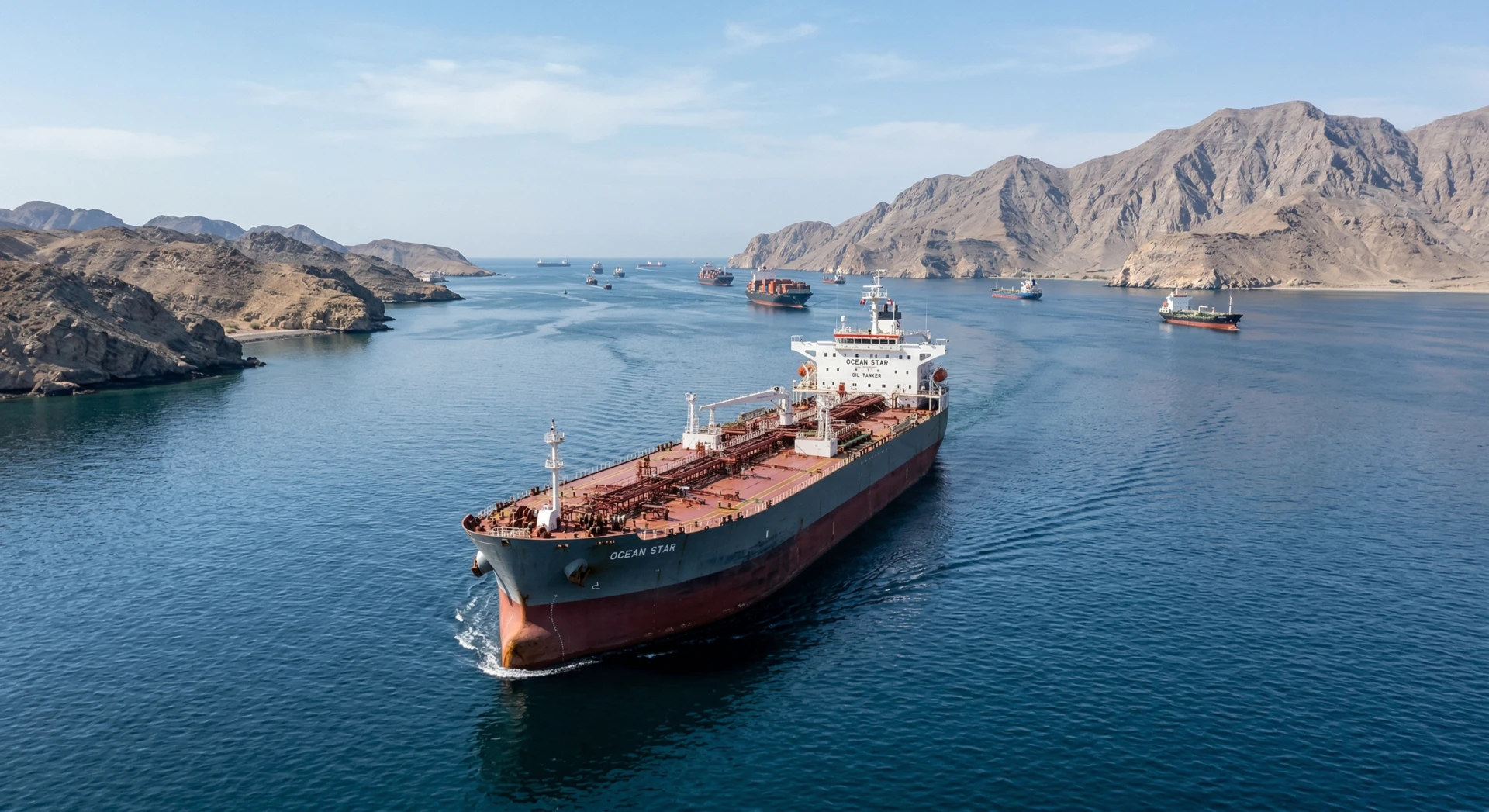
The physical supply chain logic of the Wogen deal is straightforward but fragile. Micronised graphite natural graphite milled to precise particle sizes, typically 10–150 microns, for use in lubricants, battery anodes, and refractory applications would be processed at IG6's Collie facility in southwest Western Australia, then exported through the Port of Bunbury, approximately 180 kilometres south of Perth. A standard bulk carrier of 25,000–35,000 deadweight tonnes (a vessel's maximum cargo-carrying capacity) on the Western Australia–Japan corridor takes roughly 12–16 days in transit, with freight currently running at approximately $18–22 per tonne for minor bulk cargoes on this lane. Delivered cost to a Japanese industrial buyer therefore adds $20–25 per tonne in freight to the FOB (Free On Board seller's responsibility ends when cargo crosses the ship's rail at origin) Bunbury price. Wogen's Hong Kong hub acts as the commercial intermediary, capturing the spread between that FOB price and the delivered Japan or South Korea price. The feedstock for Collie depends partly on IG6's Springdale Graphite Project in Western Australia, which the company describes only as a 'potential long-term source' a phrase that introduces a second layer of execution risk before a single tonne ships.
Consider the arithmetic of what Wogen has actually secured. The minimum 3,000 tonnes per year commitment, at indicative spot prices for mid-grade micronised graphite of approximately $800–1,100 per tonne CIF (Cost, Insurance and Freight seller pays to deliver goods to destination port) Northeast Asia, represents a notional annual contract value of $2.4–3.3 million. That is not large by commodity trading standards Wogen's larger graphite counterparties routinely handle volumes ten times this size but the exclusive Asia-Pacific distribution right on spot terms governed by Singapore law is the strategically valuable element, not the initial tonnage. If Chinese graphite export restrictions tighten further Beijing has progressively expanded export licensing requirements on graphite since October 2023 an exclusive non-China origin supply corridor into Japan and South Korea acquires a premium above its intrinsic production cost. The 10,000 tonne per year feedstock sourcing commitment by Wogen would, if fully activated at similar pricing, represent $8–11 million in annual trade flow. Both figures remain theoretical until IG6 produces at commercial scale.
On the buy side, Japanese and South Korean industrial manufacturers and battery-grade graphite processors are the end targets. These buyers including anode material producers supplying lithium-ion battery supply chains have been actively diversifying away from Chinese origin graphite since 2023, and an Australia-origin supply with Wogen's established market relationships offers traceability and supply chain security at a potential premium of $50–150 per tonne over Chinese spot equivalents, depending on specification and geopolitical conditions at the time of delivery. On the sell side, IG6 gains access to Wogen's supply chain finance solutions working capital facilities extended against receivables or inventory which matters enormously for a pre-commercial junior miner that cannot self-fund production ramp-up. For smaller regional graphite traders currently purchasing Australian micronised graphite through spot brokers or Chinese re-exporters, Wogen's exclusive position formally closes that direct route to Collie tonnes once binding contracts are in place, forcing them to either contract with Wogen as sub-distributor or seek alternative Australian sources. For a large integrated trader such as Mitsui or Marubeni with direct offtake relationships elsewhere in the Australian graphite sector, the deal is a signal to review whether competing offtake positions cover the same Japanese industrial buyer base.
The forward signal for observers is specific: watch whether IG6 announces confirmed project financing or a binding offtake a legally enforceable purchase agreement for the Collie facility within the next 90 days. The Heads of Terms carries a three-year sales term commencing from first commercial-scale production, but that trigger date is undisclosed and unfunded as of this announcement. IG6's share price, still approximately 2% below its year ago level despite the 6.5% pop, reflects a market that has seen pre-commercial milestones before. The binding contracts are to be governed by Singapore law a standard choice for cross-border commodity agreements in Asia and priced on a spot basis, meaning Wogen retains full pricing flexibility and IG6 carries volume risk if spot markets soften at the moment Collie first produces. Monitor the ASX announcements platform for IG6 binding offtake disclosure and any update on Springdale feasibility. A Collie production commencement announcement without confirmed feedstock from Springdale would be a structural amber flag for the deal's long-term volume credibility.

.jpg)


'%3e%3cg id='Final-Copy-2_2_' transform='translate(1275.000000, 200.000000)'%3e%3cpath class='st0' d='M7.4,12.8h6.8l3.1-11.6H7.4C4.2,1.2,1.6,3.8,1.6,7S4.2,12.8,7.4,12.8z'/%3e%3c/g%3e%3c/g%3e%3c/g%3e%3cg id='final---dec.11-2020'%3e%3cg id='_x30_208-our-toggle' transform='translate(-1275.000000, -200.000000)'%3e%3cg id='Final-Copy-2' transform='translate(1275.000000, 200.000000)'%3e%3cpath class='st1' d='M22.6,0H7.4c-3.9,0-7,3.1-7,7s3.1,7,7,7h15.2c3.9,0,7-3.1,7-7S26.4,0,22.6,0z M1.6,7c0-3.2,2.6-5.8,5.8-5.8 h9.9l-3.1,11.6H7.4C4.2,12.8,1.6,10.2,1.6,7z'/%3e%3cpath id='x' class='st2' d='M24.6,4c0.2,0.2,0.2,0.6,0,0.8l0,0L22.5,7l2.2,2.2c0.2,0.2,0.2,0.6,0,0.8c-0.2,0.2-0.6,0.2-0.8,0 l0,0l-2.2-2.2L19.5,10c-0.2,0.2-0.6,0.2-0.8,0c-0.2-0.2-0.2-0.6,0-0.8l0,0L20.8,7l-2.2-2.2c-0.2-0.2-0.2-0.6,0-0.8 c0.2-0.2,0.6-0.2,0.8,0l0,0l2.2,2.2L23.8,4C24,3.8,24.4,3.8,24.6,4z'/%3e%3cpath id='y' class='st3' d='M12.7,4.1c0.2,0.2,0.3,0.6,0.1,0.8l0,0L8.6,9.8C8.5,9.9,8.4,10,8.3,10c-0.2,0.1-0.5,0.1-0.7-0.1l0,0 L5.4,7.7c-0.2-0.2-0.2-0.6,0-0.8c0.2-0.2,0.6-0.2,0.8,0l0,0L8,8.6l3.8-4.5C12,3.9,12.4,3.9,12.7,4.1z'/%3e%3c/g%3e%3c/g%3e%3c/g%3e%3c/g%3e%3c/svg%3e) Privacy Choices
Privacy Choices