.avif)
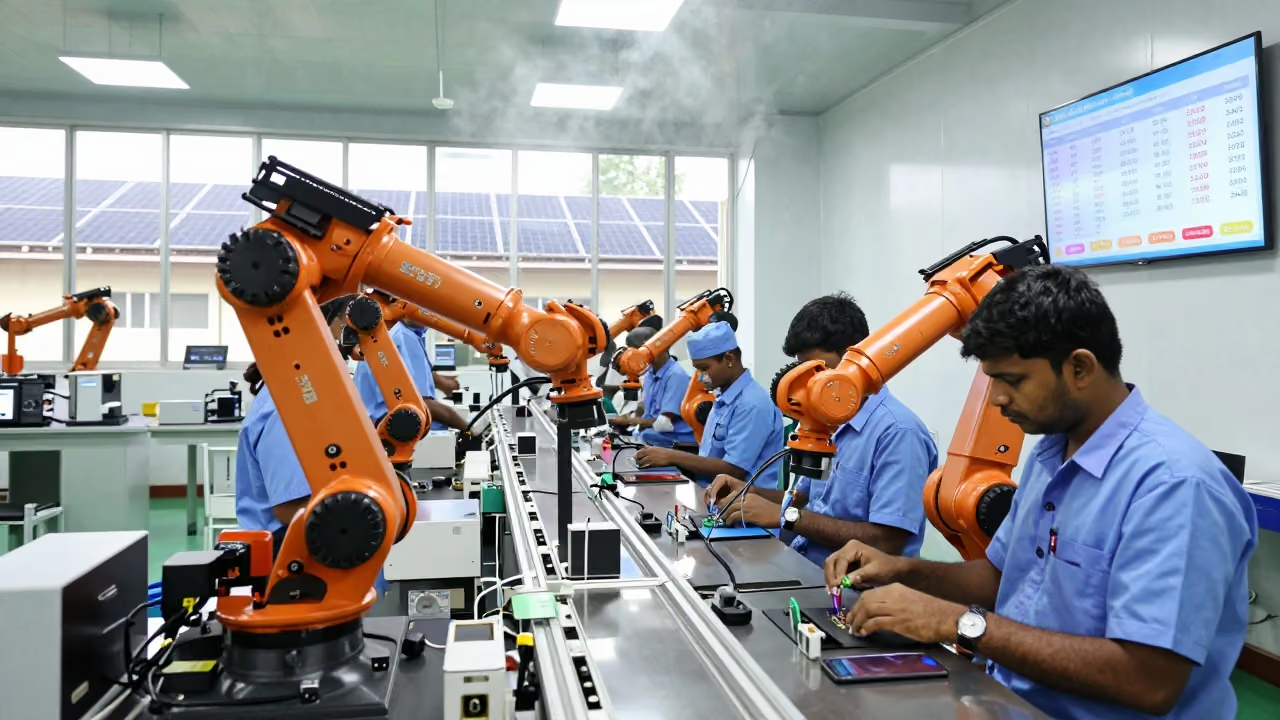
Indian electronics contract manufacturers are booking a materially better order book in mid-2026 than at any point in the sector's short export history: electronics exports hit $5.09 billion in May 2026, up 11.62% year on year, with the cumulative two-month FY27 figure reaching $10.27 billion a 24.4% increase over the same period last year. The immediate catalyst is supply-chain disruption linked to the US-Iran conflict, according to reports, which has rerouted US bound order flow away from Gulf re-export intermediaries and Chinese assembly hubs toward Indian facilities. Electronics minister Ashwini Vaishnaw, speaking at the inauguration of Jabil's new advanced manufacturing facility in Pune which will produce components for AI data centres, telecom, and railways infrastructure framed this as the beginning of a structural shift, not a cyclical windfall. The sector now ranks as India's third-largest export category behind petroleum products and chemicals, and officials have publicly declared a target of second place. That ambition is now a procurement and investment signal, not just political rhetoric.
The numbers beneath the headline reveal both the strength and the concentration risk of India's current electronics export position. April 2026 data the most granular available show India exported $5.17 billion in electronics, of which smartphones alone accounted for 73.8%, or $3.42 billion. Within that, the United States absorbed $2.93 billion, representing 57.5% of total electronics exports for the month. That level of buyer concentration is a double edged instrument: on the positive side, dealing with US-based large original equipment manufacturers (OEMs companies that design products and outsource assembly) on high-volume, stable programmes reduces counterparty fragmentation risk and creates leverage for better payment terms, shorter letter of credit (LC) cycles, and more predictable scheduling. On the negative side, any US trade policy shift tariff escalation, rules of origin tightening, or bilateral friction would hit the majority of India's electronics export revenue in a single move. The diversification away from UAE re-export channels, while structurally healthy, has replaced one concentration with another.
To understand where margin actually sits in this supply chain, consider a mid-sized Indian electronics contract manufacturer say, a 2,000 person facility in Pune or Chennai assembling smartphones for a US OEM at a volume of 500,000 units per month. At an average export value of roughly $350 per smartphone, that is approximately $175 million per month in shipment value. The contract manufacturer's assembly margin in this segment typically runs 4–7% of export value, or $7–12 million per month, before input costs. The critical variable is the bill of materials (BOM) the itemised list of components and materials required to build each unit. For a mid-range smartphone, the BOM includes printed circuit boards (PCBs), display modules, semiconductor chips, and a range of specialty chemicals used in the manufacturing process: photoresists (light-sensitive coatings used to pattern circuits), copper interconnect substrates, and chemical mechanical planarisation (CMP) slurries used to smooth semiconductor surfaces. The majority of these inputs are still imported from Japan, South Korea, and Taiwan. At current import pricing, specialty chemical inputs alone can represent $8–15 per device meaning a $20 swing in input costs can eliminate half the assembly margin without any change in the headline export figure.
This is the structural constraint that the export growth narrative does not resolve on its own. India's semiconductor fabs fabrication plants where semiconductor chips are made from raw silicon wafers using dozens of chemical process steps are beginning commercial production, with two plants now operational and additional capacity expected at Sanand and Assam, including a Tata linked facility slated for December 2026 commissioning, according to sources. But even a fully operational domestic fab does not immediately domesticate the specialty chemical supply chain. Photoresists used in advanced node fabrication (circuits below 28 nanometres) are manufactured by a small number of Japanese and South Korean chemical companies JSR, Shin-Etsu Chemical, and Merck KGaA among them and carry certification lead times of 12–18 months for new supply relationships. Ultra high purity industrial gases (nitrogen, hydrogen, argon used in fab environments) require on-site generation infrastructure that takes 18–24 months to qualify. The gap between assembly scale electronics exports and genuine fabrication level domestic production is measured in input supply chains, not in factory headcount.
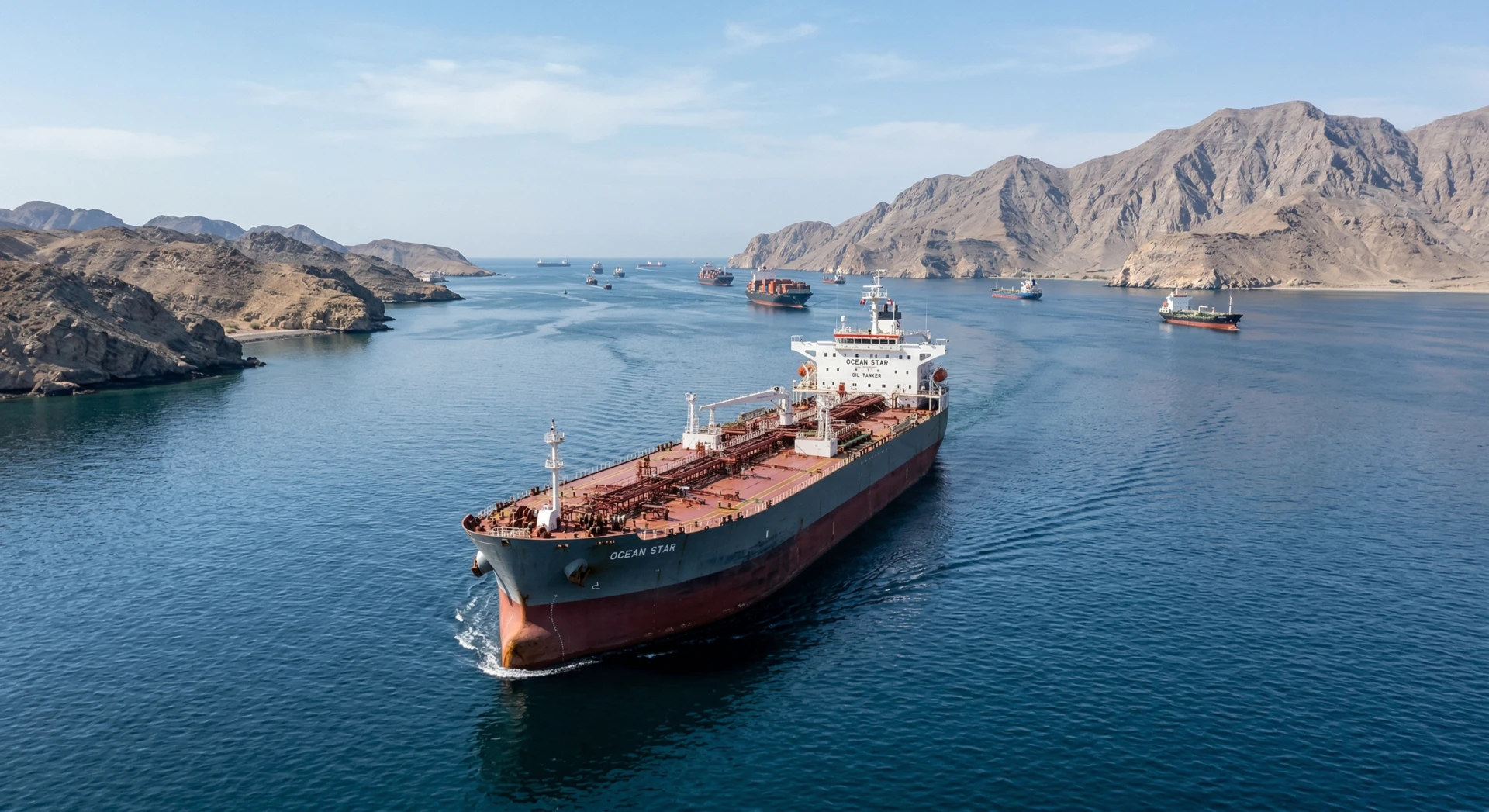
On the buy side, US electronics OEMs and procurement teams at large technology companies are the primary beneficiaries of India's current export momentum. Sourcing from India rather than routing through Gulf intermediaries reduces transit time a direct container shipment from Nhava Sheva (Mumbai's main container port) or Mundra to US West Coast ports runs approximately 22–26 days, versus 30–38 days on a China-UAE-US re-export route and removes one layer of documentary handling and associated financing costs. For a large integrated technology company managing a $500 million annual sourcing programme from India, reducing transit by even eight days frees roughly $11 million in working capital at a 10% cost of capital. On the sell side, Indian contract manufacturers and their Tier 1 suppliers are experiencing the rare combination of volume growth and counterparty quality improvement simultaneously. The risk is that they negotiate long-term pricing now, while input costs remain elevated, locking in margins that erode if specialty chemical import costs do not fall as domestic substitution comes online.
For large integrated electronics contract manufacturers Jabil, Foxconn's India operations, Tata Electronics with access to forward procurement instruments and established banking relationships, the immediate priority is to lock specialty chemical supply agreements with Japanese and Korean chemical majors at fixed or capped pricing for 12–24 months, timed against the ramp up of domestic semiconductor fabs. Currency hedging on the USD/INR cross the exchange rate between the US dollar and Indian rupee is a simultaneous necessity, as 57.5% US buyer concentration means rupee appreciation directly compresses export revenue in local currency terms. For smaller regional contract manufacturers a 500 person facility in Hosur or Noida without derivatives desk access or direct relationships with Tier 1 chemical suppliers the practical equivalent is to negotiate BOM price escalation clauses directly into OEM supply agreements, so that input cost increases above a defined threshold are passed through rather than absorbed. Diversifying the customer base toward European and Japanese OEMs, even at lower initial volumes, reduces the single-buyer concentration risk that currently defines India's export portfolio.
The specific signal to watch is the commissioning timeline of the Tata linked semiconductor plant at Sanand, currently scheduled for December 2026. If that facility comes online on schedule and begins producing chips that qualify for integration into Indian assembled smartphones displacing even 10–15% of current chip import value it will be the first concrete evidence that India's electronics export margin can widen structurally rather than just improve cyclically. Observers should monitor the India Semiconductor Mission's quarterly production certification announcements, and track the Nhava Sheva to Los Angeles container freight rate on the Freightos Baltic Index (FBX) India-US corridor: a sustained freight rate above $3,500/FEU (forty foot equivalent unit, the standard large shipping container) would begin to compress the landed cost advantage that is currently pulling US OEM orders toward India. Both signals will be visible by Q1 FY28 and their combination will determine whether the $10.27 billion two month export figure is a platform or a peak.

.jpg)
.jpg)

'%3e%3cg id='Final-Copy-2_2_' transform='translate(1275.000000, 200.000000)'%3e%3cpath class='st0' d='M7.4,12.8h6.8l3.1-11.6H7.4C4.2,1.2,1.6,3.8,1.6,7S4.2,12.8,7.4,12.8z'/%3e%3c/g%3e%3c/g%3e%3c/g%3e%3cg id='final---dec.11-2020'%3e%3cg id='_x30_208-our-toggle' transform='translate(-1275.000000, -200.000000)'%3e%3cg id='Final-Copy-2' transform='translate(1275.000000, 200.000000)'%3e%3cpath class='st1' d='M22.6,0H7.4c-3.9,0-7,3.1-7,7s3.1,7,7,7h15.2c3.9,0,7-3.1,7-7S26.4,0,22.6,0z M1.6,7c0-3.2,2.6-5.8,5.8-5.8 h9.9l-3.1,11.6H7.4C4.2,12.8,1.6,10.2,1.6,7z'/%3e%3cpath id='x' class='st2' d='M24.6,4c0.2,0.2,0.2,0.6,0,0.8l0,0L22.5,7l2.2,2.2c0.2,0.2,0.2,0.6,0,0.8c-0.2,0.2-0.6,0.2-0.8,0 l0,0l-2.2-2.2L19.5,10c-0.2,0.2-0.6,0.2-0.8,0c-0.2-0.2-0.2-0.6,0-0.8l0,0L20.8,7l-2.2-2.2c-0.2-0.2-0.2-0.6,0-0.8 c0.2-0.2,0.6-0.2,0.8,0l0,0l2.2,2.2L23.8,4C24,3.8,24.4,3.8,24.6,4z'/%3e%3cpath id='y' class='st3' d='M12.7,4.1c0.2,0.2,0.3,0.6,0.1,0.8l0,0L8.6,9.8C8.5,9.9,8.4,10,8.3,10c-0.2,0.1-0.5,0.1-0.7-0.1l0,0 L5.4,7.7c-0.2-0.2-0.2-0.6,0-0.8c0.2-0.2,0.6-0.2,0.8,0l0,0L8,8.6l3.8-4.5C12,3.9,12.4,3.9,12.7,4.1z'/%3e%3c/g%3e%3c/g%3e%3c/g%3e%3c/g%3e%3c/svg%3e) Privacy Choices
Privacy Choices