.avif)

Agricultural commodity traders face immediate cost savings of approximately 15–25% on operational expenses starting late 2026 as India's Securities and Exchange Board (SEBI) proposes allowing select agricultural derivatives to launch as cash settled contracts. These contracts would migrate to compulsory physical settlement upon crossing predefined thresholds for average daily traded volume or open interest, or after two years from launch, whichever is earlier. Cash or financially settled contracts mean they are settled by paying the actual cash difference in the price of the contract and the market price, instead of actual physical delivery of the underlying asset. A futures and options (F&O) contract a standardized agreement to buy or sell a commodity at a predetermined price on a future date becomes the trading instrument that either requires physical delivery of the actual commodity or can be settled purely through cash payments.
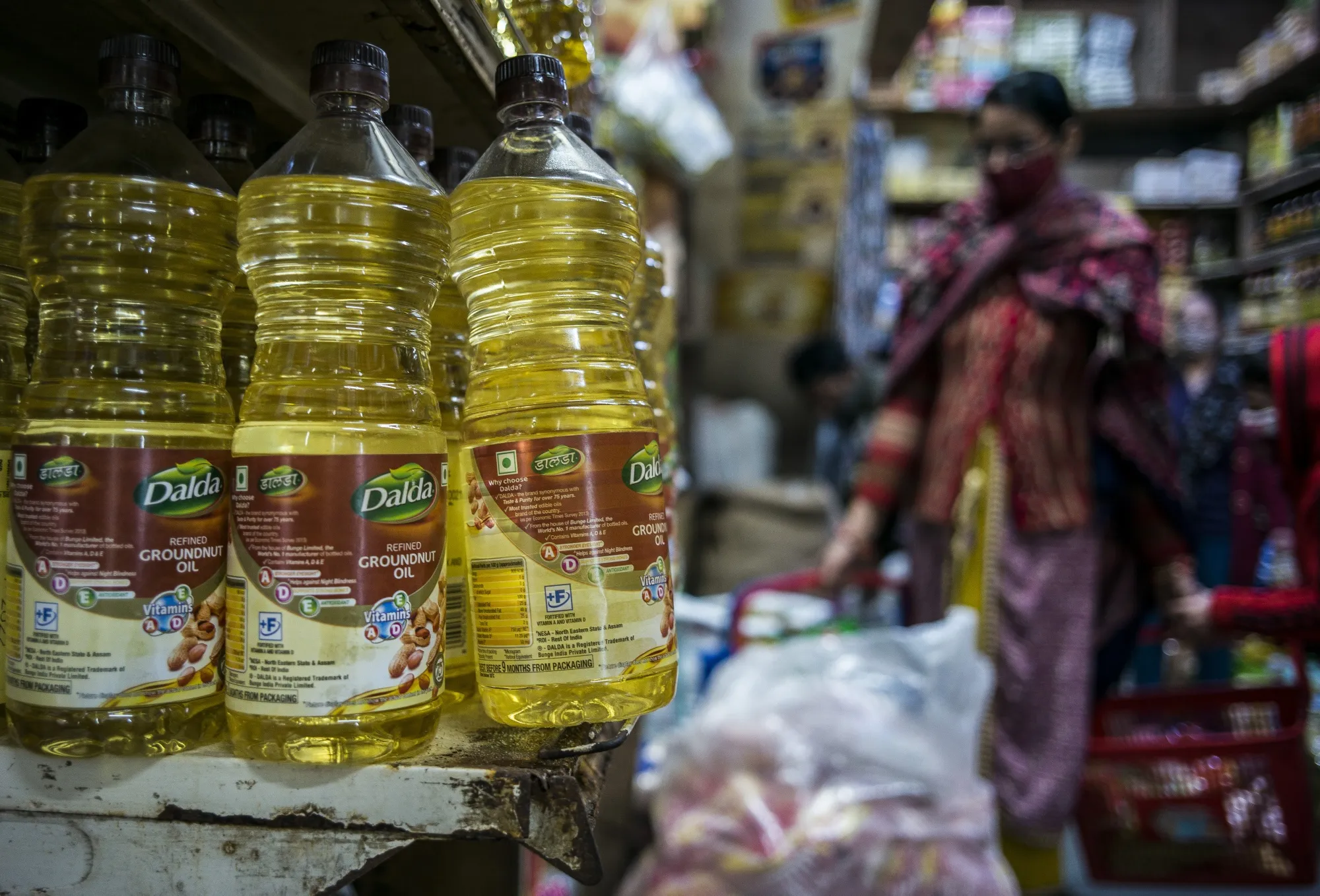
SEBI said the framework could initially be implemented on a pilot basis for a limited set of commodities such as maize, groundnut, and chilli. Consider a mid-sized agricultural trading firm operating a 1,000 tonne maize contract on India's commodity exchanges. At current CBOT maize prices of $4.67 per bushel (approximately ₹1,950 per quintal), a 1,000 tonne position represents roughly ₹19.5 million in notional value. Under the existing mandatory physical delivery system, the trader must maintain warehousing capacity, quality certifications, and logistics infrastructure even for speculative positions operational costs that can add ₹50–80 per quintal to trading expenses. The new framework allows cash settlement during the liquidity formation phase, eliminating warehouse and assaying requirements that traditionally restricted participation to operationally capable market participants, potentially slowing liquidity formation and weakening price discovery in early contract stages.
On the buy side, large integrated agricultural processors and food manufacturers gain access to hedging instruments without infrastructure requirements during the cash settled phase. A major rice processor hedging against maize feed costs can now participate in futures markets purely for price discovery and risk management, settling positions in cash rather than taking physical delivery. SEBI also proposed doubling client level position limits for agricultural commodity derivatives, with higher limits expected to improve liquidity, deepen markets, and aid price discovery. For a broad commodity like wheat, the individual position limit increases from 1% to 2% of deliverable supply for a commodity with 50 million tonnes of annual deliverable supply, this expands maximum individual exposure from 500,000 tonnes to 1 million tonnes. On the sell side, smaller regional agricultural cooperatives and farmer producer organizations benefit from reduced barrier to entry. Previously excluded from derivatives markets due to warehousing and quality certification costs, these entities can now access price hedging through cash settlement during the initial liquidity development phase.
For large integrated traders with derivatives expertise commodity trading arms of multinational agribusinesses, domestic conglomerates, or specialized agricultural trading houses the phased approach offers early-stage arbitrage opportunities as contracts transition between settlement methods. These operators can capture basis differentials between cash settled futures and physical spot markets during the transition period. The proposal could benefit commodity exchanges like MCX and NCDEX through higher trading activity, brokerage firms through increased participation, and agri trading companies through better hedging opportunities. For smaller regional operators mid-tier agricultural cooperatives, independent commodity dealers, or farm to fork supply chains without derivatives infrastructure cash settlement provides initial market access without requiring immediate warehouse investment. However, SEBI acknowledged that despite improvements in warehousing infrastructure, utilization remains limited for several commodities, suggesting infrastructure challenges persist beyond the initial liquidity phase.
For observers monitoring this development, watch the publication of SEBI's detailed consultation paper by June 2026, which will specify exact thresholds for transitioning from cash to physical settlement. Public comments are invited until June 2, 2026, with implementation likely beginning in the second half of 2026 for pilot commodities. The transition triggers will be governed by objective and transparent criteria to ensure the flexibility remains time bound. The key metric to monitor is average daily trading volume (ADTV) on newly launched contracts sustained volumes above predetermined thresholds will trigger automatic migration to physical settlement, testing whether artificial liquidity can translate into genuine market depth. This represents a structural shift from India's historically strict physical settlement regime, potentially reviving dormant agricultural derivatives markets that have struggled with low participation and frequent contract discontinuations since the implementation of mandatory delivery requirements.

.jpg)
'%3e%3cg id='Final-Copy-2_2_' transform='translate(1275.000000, 200.000000)'%3e%3cpath class='st0' d='M7.4,12.8h6.8l3.1-11.6H7.4C4.2,1.2,1.6,3.8,1.6,7S4.2,12.8,7.4,12.8z'/%3e%3c/g%3e%3c/g%3e%3c/g%3e%3cg id='final---dec.11-2020'%3e%3cg id='_x30_208-our-toggle' transform='translate(-1275.000000, -200.000000)'%3e%3cg id='Final-Copy-2' transform='translate(1275.000000, 200.000000)'%3e%3cpath class='st1' d='M22.6,0H7.4c-3.9,0-7,3.1-7,7s3.1,7,7,7h15.2c3.9,0,7-3.1,7-7S26.4,0,22.6,0z M1.6,7c0-3.2,2.6-5.8,5.8-5.8 h9.9l-3.1,11.6H7.4C4.2,12.8,1.6,10.2,1.6,7z'/%3e%3cpath id='x' class='st2' d='M24.6,4c0.2,0.2,0.2,0.6,0,0.8l0,0L22.5,7l2.2,2.2c0.2,0.2,0.2,0.6,0,0.8c-0.2,0.2-0.6,0.2-0.8,0 l0,0l-2.2-2.2L19.5,10c-0.2,0.2-0.6,0.2-0.8,0c-0.2-0.2-0.2-0.6,0-0.8l0,0L20.8,7l-2.2-2.2c-0.2-0.2-0.2-0.6,0-0.8 c0.2-0.2,0.6-0.2,0.8,0l0,0l2.2,2.2L23.8,4C24,3.8,24.4,3.8,24.6,4z'/%3e%3cpath id='y' class='st3' d='M12.7,4.1c0.2,0.2,0.3,0.6,0.1,0.8l0,0L8.6,9.8C8.5,9.9,8.4,10,8.3,10c-0.2,0.1-0.5,0.1-0.7-0.1l0,0 L5.4,7.7c-0.2-0.2-0.2-0.6,0-0.8c0.2-0.2,0.6-0.2,0.8,0l0,0L8,8.6l3.8-4.5C12,3.9,12.4,3.9,12.7,4.1z'/%3e%3c/g%3e%3c/g%3e%3c/g%3e%3c/g%3e%3c/svg%3e) Privacy Choices
Privacy Choices