.avif)
.jpg)
Venezuelan crude exports jumped 14% to 1.23 million barrels per day in April 2026, the highest level since 2018, delivering immediate margin compression for West African heavy crude marketers while opening 400,000+ bpd arbitrage flows for established trading houses. Trading houses including Vitol and Trafigura received cargoes from PDVSA for sales to refiners in the U.S., Europe and Asia as U.S. licenses eased sanctions restrictions. The recovery follows the U.S. capture of Nicolas Maduro in January and a flagship supply pact between the Trump and interim Rodriguez governments. For refiners processing 200,000 bpd heavy crude slates, Venezuelan barrels now price approximately $4-6/barrel below Brent versus West African alternatives at $2-3 discounts a $400,000-600,000 daily margin shift favouring Venezuelan supply.
A letter of credit (LC) a bank guarantee that payment will be made once shipping documents are presented now flows through established banking channels for Venezuelan crude after months of sanctions-era workarounds. Trading firms carried about 56% of total exports or 691,000 bpd, while U.S. company Chevron was responsible for 25% or 308,000 bpd. Consider a mid-sized European refiner importing 50,000 tonnes monthly: pre-sanctions Venezuelan heavy crude cost $8-10/barrel less than equivalent West African grades due to processing complexity. Current sanctions relief narrows that gap to $4-6/barrel, but transportation advantages 18-day transit versus 25 day West Africa routes preserve Venezuelan competitiveness. The net delivered cost advantage runs approximately $150,000-250,000 per cargo.
On the buy side, U.S. refiners received 445,000 bpd directly exported, above March's 363,000 bpd, while Indian imports rose to 374,000 bpd from 342,000 bpd. Gulf Coast heavy crude refineries designed specifically for Venezuelan-grade barrels achieve 15-20% higher yields on diesel and distillates versus light sweet alternatives. A 300,000 bpd refiner switching 30% of its crude slate to Venezuelan heavy crude gains approximately $2-3 million monthly in margin optimization through improved product yields and reduced processing costs. Indian refiners like Reliance benefit similarly: Reliance Industries received a large crude cargo directly from PDVSA and bought several from the traders last month.
On the sell side, West African crude marketers face displacement pressure as Venezuelan volumes compete directly for refinery access. Nigerian Bonny Light and Angolan Cabinda traditional heavy crude alternatives commanded $2-3/barrel premiums to Venezuelan grades during sanctions. Those premiums now compress toward $1-2/barrel as Venezuelan supply normalizes. A mid-sized West African crude marketer handling 200,000 bpd faces potential margin erosion of $200,000-400,000 daily if Venezuelan competition intensifies. PDVSA joint venture partners gain most: established relationships enable immediate access to 66 loading slots monthly versus competitive bidding for alternative supply.
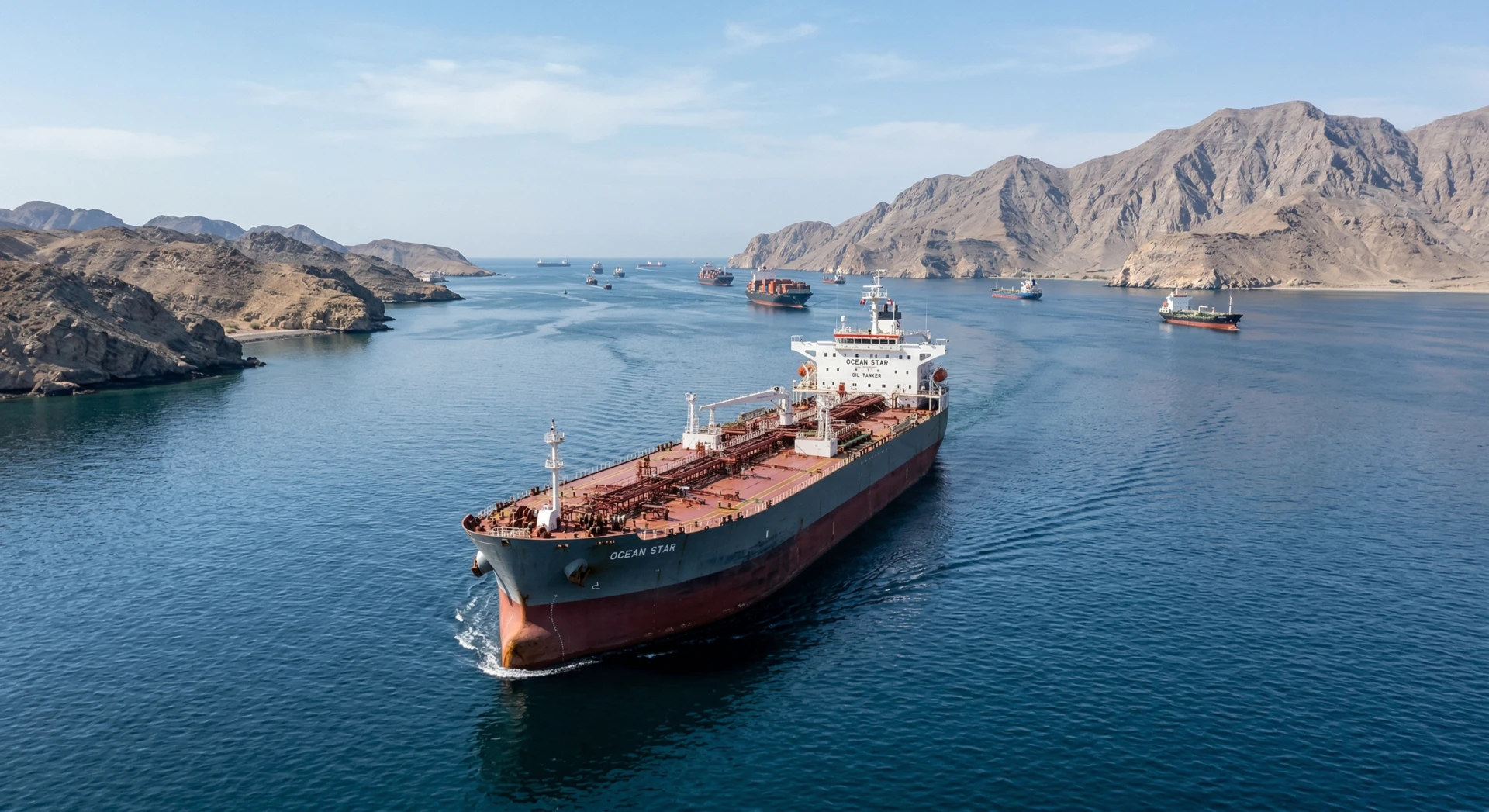
Very Large Crude Carriers (VLCCs) supertankers capable of carrying 2 million barrels now command $18-22/MT on Caribbean-to-Asia routes versus $12-15/MT six months ago. In April, 66 vessels departed from Venezuelan waters, compared with 61 ships that carried 1.08 million bpd in March. The additional 5 vessels monthly represent approximately $25-30 million in incremental freight revenue for tanker operators. Aframax vessels (750,000 barrels) on shorter Caribbean-to-USGC routes earn $14-16/MT currently, up from $8-10/MT pre-recovery. Venezuelan crude's heavy consistency requires specialized handling heated storage tanks, diluent blending capabilities limiting vessel eligibility but improving day rates for qualified tonnage.
For large integrated traders with derivatives access, Venezuelan crude offers basis arbitrage opportunities through Brent-Maya spreads and WTI-Venezuelan differential plays. The Maya-Brent spread has tightened from $8-10/barrel to $5-7/barrel as Venezuelan supply increases, while WTI-Venezuelan differentials compress similarly. A major trading house managing 500,000 bpd crude flows can capture $1-2 million monthly through strategic positioning across these spreads. Currency hedging becomes critical: Venezuelan contracts price in USD but operational costs often denominate in Bolivars, creating FX exposure that requires active management.
For smaller regional operators without derivatives access, Venezuelan crude access depends entirely on trading house intermediation. Mid-sized Caribbean refiners and independent fuel distributors must negotiate tolling arrangements or spot purchase agreements with Vitol, Trafigura, or Chevron rather than direct PDVSA access. A 50,000 bpd Caribbean refiner pays approximately $0.50-1.00/barrel margin to trading houses for Venezuelan crude supply versus $0.25-0.50/barrel for traditional spot markets doubling intermediation costs but gaining access to preferred feedstock. Inventory management becomes crucial: Venezuelan crude requires heated storage and regular circulation to prevent settling, adding $200,000-400,000 monthly to tank farm operating costs.
The structural challenge remains infrastructure decay after years of underinvestment. Existing oil fields and pipelines that can be rehabilitated with $10-20 billion investment could generate additional output within a couple of years, adding around 500,000 barrels a day. Current exports drain existing inventories rather than reflecting sustained production increases. One million barrels should generate roughly 750,000 barrels of exports at current prices, implying export revenue of just under $15 billion annually, while each additional 500,000 barrels in exports generates just under $10 billion annually. Quality degradation complicates the recovery: Venezuelan crude API gravity has declined 2-3 degrees over recent years due to production from marginal wells, requiring additional refining investment.
For observers monitoring Venezuela's sustainable export capacity, watch PDVSA production data versus inventory drawdowns through Q3 2026. The result is rapid drawdown of inventories alongside gradual recovery in output, with barrels coming from inventory and incremental output gains. Current export rates cannot be sustained without production investment: storage tank levels at Venezuelan terminals indicate 60-90 days of inventory coverage at current export rates. Monitor Platts Maya crude assessments versus Brent: spreads wider than $6/barrel signal supply constraints returning, while compression below $4/barrel confirms sustainable Venezuelan production recovery.


.jpg)
.jpg)


'%3e%3cg id='Final-Copy-2_2_' transform='translate(1275.000000, 200.000000)'%3e%3cpath class='st0' d='M7.4,12.8h6.8l3.1-11.6H7.4C4.2,1.2,1.6,3.8,1.6,7S4.2,12.8,7.4,12.8z'/%3e%3c/g%3e%3c/g%3e%3c/g%3e%3cg id='final---dec.11-2020'%3e%3cg id='_x30_208-our-toggle' transform='translate(-1275.000000, -200.000000)'%3e%3cg id='Final-Copy-2' transform='translate(1275.000000, 200.000000)'%3e%3cpath class='st1' d='M22.6,0H7.4c-3.9,0-7,3.1-7,7s3.1,7,7,7h15.2c3.9,0,7-3.1,7-7S26.4,0,22.6,0z M1.6,7c0-3.2,2.6-5.8,5.8-5.8 h9.9l-3.1,11.6H7.4C4.2,12.8,1.6,10.2,1.6,7z'/%3e%3cpath id='x' class='st2' d='M24.6,4c0.2,0.2,0.2,0.6,0,0.8l0,0L22.5,7l2.2,2.2c0.2,0.2,0.2,0.6,0,0.8c-0.2,0.2-0.6,0.2-0.8,0 l0,0l-2.2-2.2L19.5,10c-0.2,0.2-0.6,0.2-0.8,0c-0.2-0.2-0.2-0.6,0-0.8l0,0L20.8,7l-2.2-2.2c-0.2-0.2-0.2-0.6,0-0.8 c0.2-0.2,0.6-0.2,0.8,0l0,0l2.2,2.2L23.8,4C24,3.8,24.4,3.8,24.6,4z'/%3e%3cpath id='y' class='st3' d='M12.7,4.1c0.2,0.2,0.3,0.6,0.1,0.8l0,0L8.6,9.8C8.5,9.9,8.4,10,8.3,10c-0.2,0.1-0.5,0.1-0.7-0.1l0,0 L5.4,7.7c-0.2-0.2-0.2-0.6,0-0.8c0.2-0.2,0.6-0.2,0.8,0l0,0L8,8.6l3.8-4.5C12,3.9,12.4,3.9,12.7,4.1z'/%3e%3c/g%3e%3c/g%3e%3c/g%3e%3c/g%3e%3c/svg%3e) Privacy Choices
Privacy Choices