.avif)

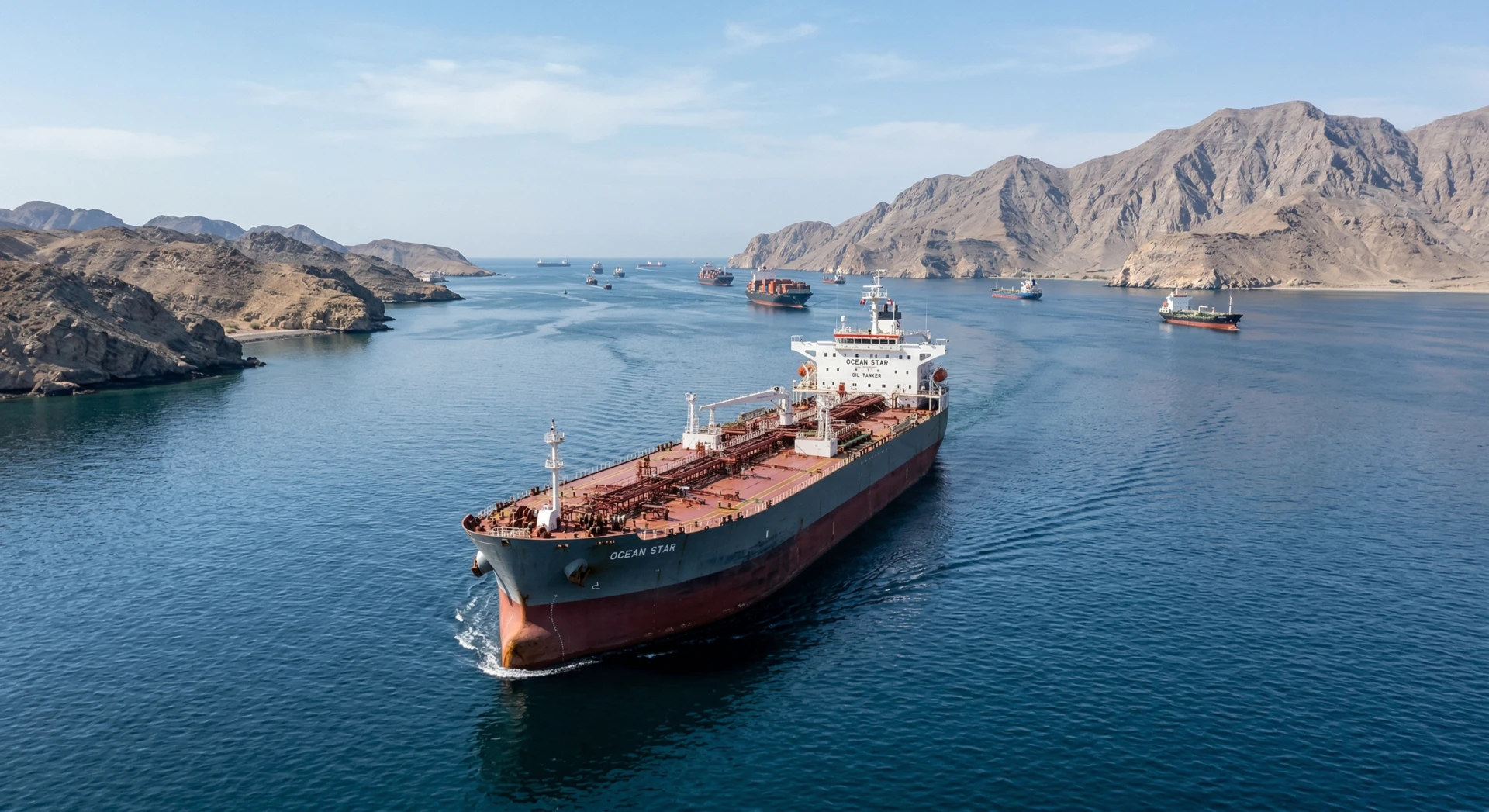
Shadow fleet operators earned a $150 million daily reprieve as sanctioned tankers Rich Starry and Elpis successfully transited the Strait of Hormuz within hours of the US blockade taking effect. The blockade targets only vessels entering or leaving Iranian ports, allowing "freedom of navigation" to non-Iranian destinations. For operators managing Iranian crude flows, this destination exemption transforms what appeared to be a comprehensive chokepoint closure into a manageable rerouting exercise through regional transshipment hubs.
The enforcement architecture reveals fundamental gaps that shadow fleet operators — vessels and management companies facilitating sanctioned Iranian petroleum exports through deceptive practices — exploit systematically. Rich Starry, carrying 250,000 barrels of methanol loaded at UAE's Hamriyah port, demonstrates how Iranian-linked cargoes reach global markets through destination-exempt routes. Consider the margin anatomy: direct Iran-to-China crude shipments face interdiction risk and potential $10–15/barrel war premium. The same crude routed through UAE hubs — loaded, blended, or transferred at facilities like Hamriyah — trades at a $2–5/barrel transshipment discount while avoiding blockade enforcement entirely.
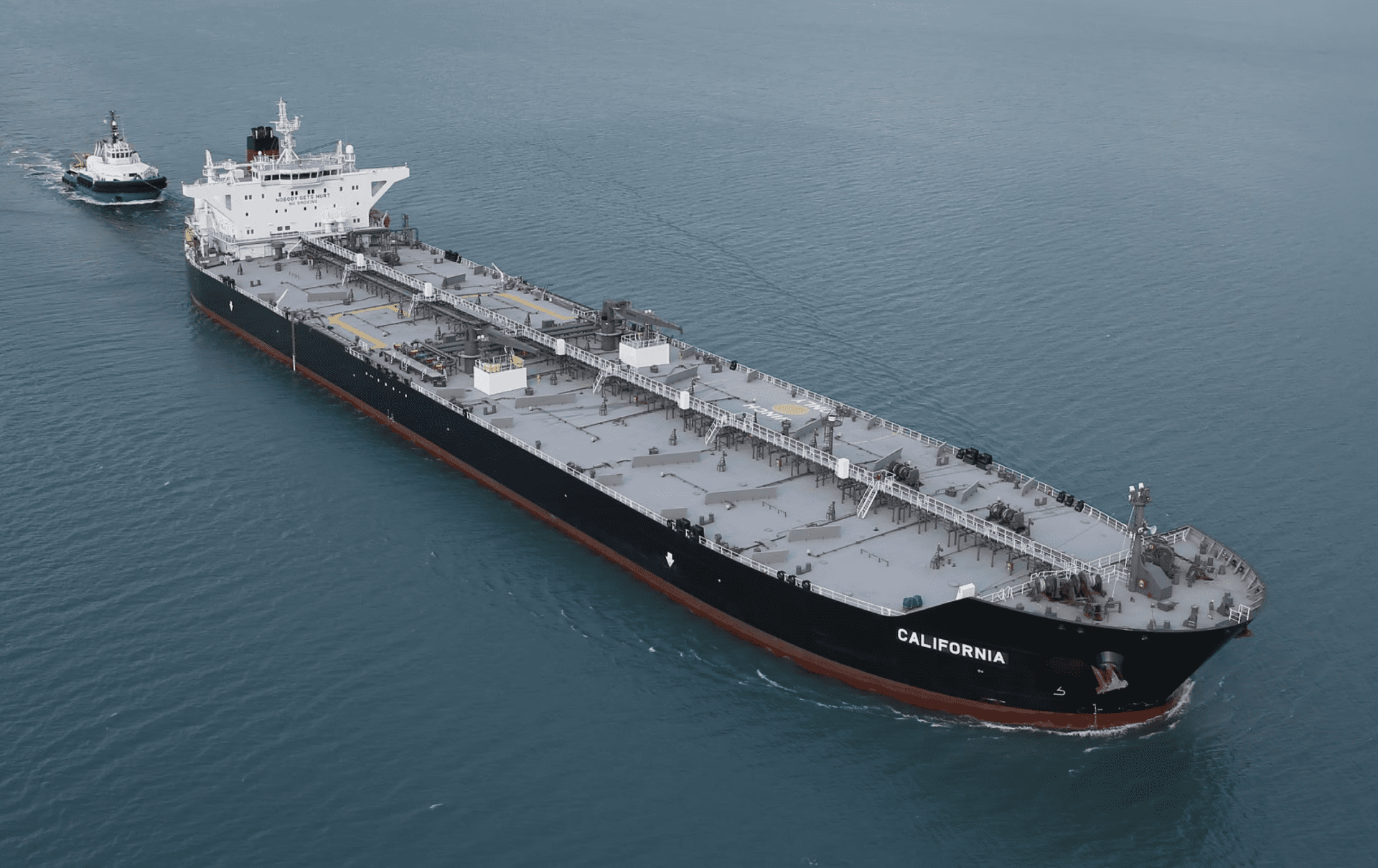
Freight dynamics concentrate margin with vessel controllers rather than cargo owners. Rich Starry operates under false Malawi flag registration, rendering it "essentially stateless," and spoofed its tracking systems between April 3-14 — standard shadow fleet practices that mask operational control. At current Middle East-Asia freight rates of approximately $18–22/MT for product tankers, a 35,000 DWT vessel like Rich Starry earns roughly $630,000–770,000 per voyage. Vessel operators capture this freight margin entirely; cargo owners pay the rate but cannot control routing decisions once the charter begins. Shadow fleet operators holding both vessel control and cargo interests — the "owner-operator" model — therefore concentrate both freight earnings and cargo arbitrage in single entities.
Financing structures determine trade execution more than price signals. Rich Starry is owned by Full Star Shipping Ltd, linked to Shanghai Xuanrun Shipping Co Ltd, and sanctioned since 2023. Traditional trade finance — letters of credit from major banks, marine insurance from Western providers, vessel registration under established flags — remains unavailable to sanctioned entities. Shadow fleet operators therefore develop alternative financing: direct commodity-backed lending from Chinese or Middle Eastern banks, self-insurance through captive facilities, and service payments in yuan or alternative currencies. The financing constraint, not sanctions enforcement, limits operational scale.
On the buy side: Regional buyers such as those receiving Iranian naphtha at non-Iranian Middle East ports for Asian export benefit from destination-exempt status while accessing Iranian supply at discounts. Chinese refineries importing through UAE transshipment pay approximately $2–3/barrel less than Brent equivalent but avoid direct sanctions exposure. Indian private refiners — excluded from government-to-government oil arrangements — source Iranian crude through similar UAE facilities, capturing 4–6% cost advantages versus Saudi or Iraqi alternatives.
On the sell side: Iranian National Oil Company and affiliated marketing arms lose direct buyer access but retain volume throughput via intermediary hubs. Iran's military increasingly relies on crude oil revenue to supplement budgets and finance force rebuilding, making volume preservation more critical than margin optimization. Tehran accepts $3–5/barrel discounts to international benchmarks in exchange for reliable settlement and volume guarantees through UAE-based intermediaries.
For large integrated traders — entities like Trafigura, Gunvor, or Chinese national oil companies with derivatives access — the blockade creates pure arbitrage between enforcement-affected and exempt flows. These operators can simultaneously: hedge physical exposure through ICE Brent or Shanghai crude futures; finance inventory through commodity trade finance facilities; and capture spread opportunities between direct Iranian flows (discounted for enforcement risk) and transshipped volumes (discounted only for intermediation costs). Position size limited primarily by counterparty credit lines, not sanctions compliance.
For smaller regional operators — independent fuel distributors, shipping cooperatives, or mid-sized refinery groups — without derivatives access, the equivalent strategy involves: bilateral supply agreements with UAE-based Iranian crude aggregators; inventory management through floating storage or strategic reserve draws; and operational hedging via supplier diversification between Iranian-exempt, Saudi, and Iraqi crudes. Vessels like Peace Gulf heading to Hamriyah port demonstrate this approach, where smaller operators access Iranian supply through regionally based intermediaries while maintaining sanctions compliance through destination-based exemptions.
The blockade's structural weakness lies in its jurisdictional scope. US Central Command explicitly states vessels transiting "to and from non-Iranian ports" remain unrestricted. UAE ports — Hamriyah, Fujairah, Dubai — therefore become critical chokepoint alternatives where Iranian crude legally transforms into non-Iranian origin through blending, storage, or documentation. Ship-to-ship transfers in UAE territorial waters face no US interdiction provided destination manifests indicate non-Iranian final ports. This creates systematic enforcement arbitrage: the same crude, transferred 50 nautical miles from Iranian ports to UAE facilities, trades exempt from blockade restrictions.
Operational intelligence reveals the enforcement model's practical limitations. The blockade began Monday at 1500 UTC with a "grace period" for neutral vessels departing Iranian ports before 1400 UTC. According to US Central Command, no ships successfully challenged the blockade in the first 24 hours, though vessels were observed changing destination signals from Iranian ports to generic "PG Ports". This pattern — destination signal changes rather than route alterations — indicates operators adapting documentation rather than physical movements. The enforcement gap widens when manifest destinations obscure actual port calls or transshipment activities.
For observers monitoring shadow fleet adaptation, approximately 430 tankers currently engage in Iranian trade, with 62% falsely flagged and 87% under sanctions. The key signal: track vessel clustering around UAE ports versus Iranian terminals within 7–14 days. Rising UAE port congestion, particularly at product handling facilities, indicates increased Iranian transshipment activity. Secondary indicator: Brent-WTI spread compression below $1–2/barrel suggests enforcement premiums moderating as alternative routing proves viable. Monitor Dubai crude premium to Brent — narrowing spreads signal Middle East supply normalization through exempt routing channels.

.jpg)

'%3e%3cg id='Final-Copy-2_2_' transform='translate(1275.000000, 200.000000)'%3e%3cpath class='st0' d='M7.4,12.8h6.8l3.1-11.6H7.4C4.2,1.2,1.6,3.8,1.6,7S4.2,12.8,7.4,12.8z'/%3e%3c/g%3e%3c/g%3e%3c/g%3e%3cg id='final---dec.11-2020'%3e%3cg id='_x30_208-our-toggle' transform='translate(-1275.000000, -200.000000)'%3e%3cg id='Final-Copy-2' transform='translate(1275.000000, 200.000000)'%3e%3cpath class='st1' d='M22.6,0H7.4c-3.9,0-7,3.1-7,7s3.1,7,7,7h15.2c3.9,0,7-3.1,7-7S26.4,0,22.6,0z M1.6,7c0-3.2,2.6-5.8,5.8-5.8 h9.9l-3.1,11.6H7.4C4.2,12.8,1.6,10.2,1.6,7z'/%3e%3cpath id='x' class='st2' d='M24.6,4c0.2,0.2,0.2,0.6,0,0.8l0,0L22.5,7l2.2,2.2c0.2,0.2,0.2,0.6,0,0.8c-0.2,0.2-0.6,0.2-0.8,0 l0,0l-2.2-2.2L19.5,10c-0.2,0.2-0.6,0.2-0.8,0c-0.2-0.2-0.2-0.6,0-0.8l0,0L20.8,7l-2.2-2.2c-0.2-0.2-0.2-0.6,0-0.8 c0.2-0.2,0.6-0.2,0.8,0l0,0l2.2,2.2L23.8,4C24,3.8,24.4,3.8,24.6,4z'/%3e%3cpath id='y' class='st3' d='M12.7,4.1c0.2,0.2,0.3,0.6,0.1,0.8l0,0L8.6,9.8C8.5,9.9,8.4,10,8.3,10c-0.2,0.1-0.5,0.1-0.7-0.1l0,0 L5.4,7.7c-0.2-0.2-0.2-0.6,0-0.8c0.2-0.2,0.6-0.2,0.8,0l0,0L8,8.6l3.8-4.5C12,3.9,12.4,3.9,12.7,4.1z'/%3e%3c/g%3e%3c/g%3e%3c/g%3e%3c/g%3e%3c/svg%3e) Privacy Choices
Privacy Choices