.avif)
.jpg)
US manufacturers are absorbing a $28 per metric ton margin hit as the ISM prices index surged to 84.6% in April the highest reading since April 2022 driven by Iran conflict disruptions to oil, aluminum, and helium supply chains. The surge stems from three converging forces: steel and aluminum price increases throughout the value chain, tariffs on imported goods, and petroleum-based product cost spikes from the Middle East conflict. This is not a simple pass-through story. Many US manufacturers locked into 6-12 month fixed-price contracts with customers cannot immediately raise prices and are absorbing the full margin compression now, with brutal contract renegotiation battles ahead.
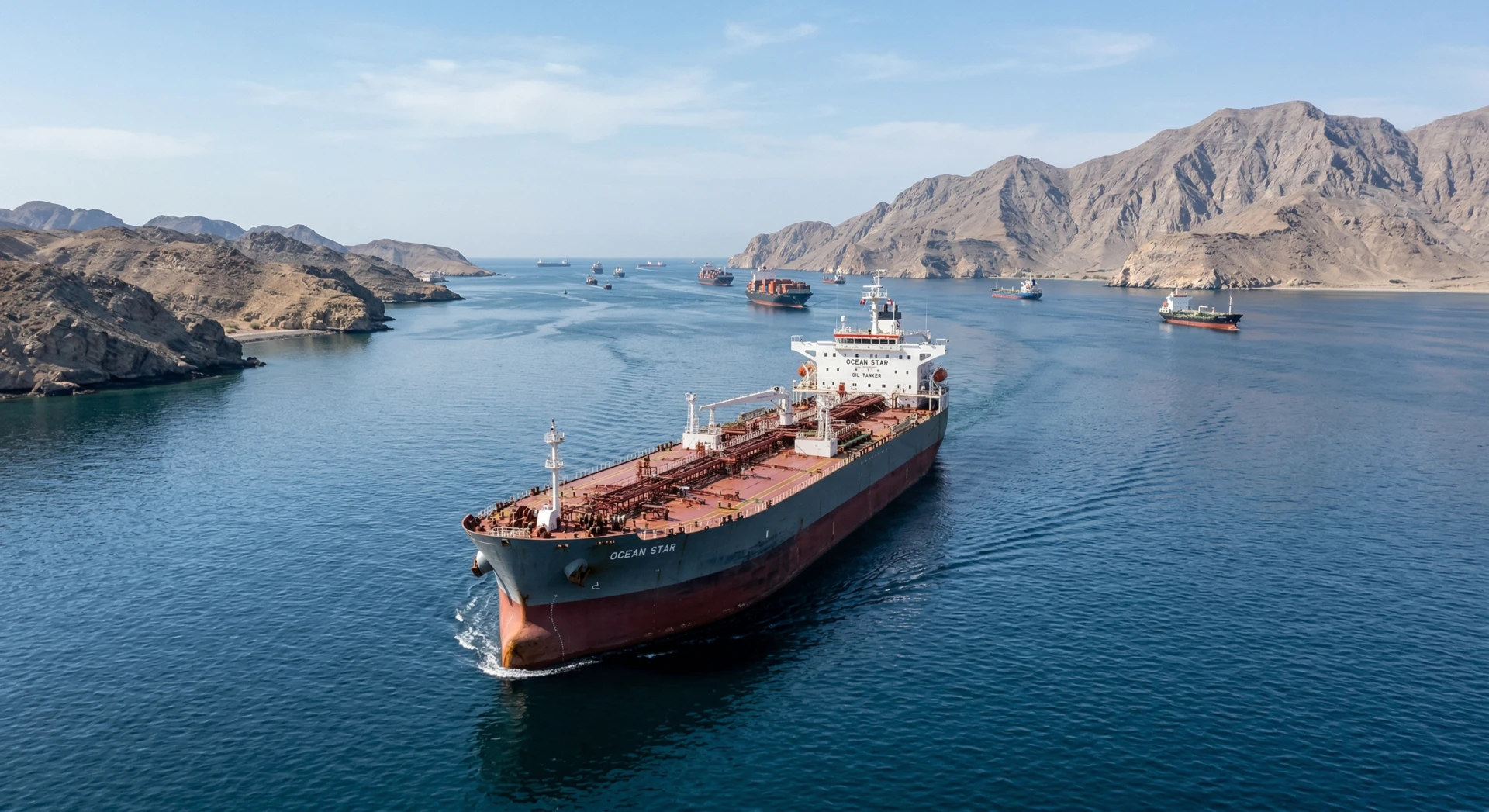
The Strait of Hormuz a 33-kilometre chokepoint carrying 20% of global oil flows has been effectively shut by US and Iranian blockades, cutting off a major share of global oil flows and driving what the International Energy Agency calls an unprecedented supply shock. Consider a mid-sized automotive parts manufacturer in Michigan supplying the Big Three automakers. Before the Iran conflict, aluminum sheet cost approximately $2,800 per metric ton. With LME aluminum futures hitting $3,492 per tonne in March a four-year high that same manufacturer now faces $3,492 per metric ton, a 25% increase. For a typical 50,000-tonne annual aluminum requirement, this adds $34.6 million in unbudgeted input costs costs that cannot be recovered from Ford or GM under existing supply agreements.
A letter of credit (LC) a bank guarantee that payment will be made once shipping documents are presented traditionally protected manufacturers from supplier payment risk, but now reveals the timing mismatch destroying margins. According to ISM survey respondents, "customers were ordering to get ahead of" potential price increases from the war and additional tariffs. This front-loading of orders creates a false demand signal while manufacturers face escalating input costs on every subsequent shipment. The arbitrage window has closed not narrowed, but closed entirely. At current cost trajectories, no operational efficiency recovers the 15-20% input cost gap manufacturers are absorbing.
All six largest manufacturing industries Chemical Products; Petroleum & Coal Products; Machinery; Food, Beverage & Tobacco Products; Computer & Electronic Products; and Transportation Equipment reported price increases in April. On the buy side, large integrated manufacturers with derivatives access can hedge aluminum exposure through LME futures contracts, but this protection costs approximately $185 per metric ton for six-month coverage at current volatility levels adding $9.25 million annually for that same 50,000-tonne requirement. Smaller regional operators without derivatives access face continuing uncertainty around tariffs imposed under various authorities, compounding their input cost exposure without hedging alternatives. These operators must rely on supplier diversification switching from Gulf aluminum to higher-cost North American sources and inventory adjustments that tie up working capital.
On the sell side, commodity input suppliers are capturing windfall margins as supply disruption premiums flow directly to their bottom line. Alba (Aluminium Bahrain), the world's largest single-site smelter, cut output by 19% and declared force majeure before Iran struck both Alba and Emirates Global Aluminium directly, causing "significant damage" to EGA's 1.6 million tonne annual capacity Al Taweelah smelter. For aluminum traders and intermediaries, the margin concentrates in the spread between long-term supply contracts priced at pre-war levels and spot sales at current elevated pricing. A trader holding 10,000 tonnes of pre-positioned aluminum inventory purchased at $2,800 per tonne and selling at $3,400 realizes $6 million in pure margin an 21% return on committed capital.
The New Orders Index expanded to 54.1% in April, but the Production Index fell 1.7 percentage points to 53.4%, while the Supplier Deliveries Index worsened to 60.6% indicating that suppliers are taking longer to deliver materials. Meanwhile, the Employment Index contracted to 46.4%, the lowest print of 2026, as manufacturers reduce staffing costs to offset input cost pressure. Freight costs compound the margin compression. A standard 20-foot container shipment from Houston to Detroit now costs approximately $3,200, up from $2,100 in February, as diesel fuel costs surge. US crude exports have surged to record levels as global buyers turn to American producers to offset disrupted Middle Eastern supply, but this export boom paradoxically raises domestic energy costs for US manufacturers.
For large integrated operators multinational manufacturers with global supply chains and derivatives access the solution involves commodity price hedging through futures markets, diversifying supplier geography away from Gulf chokepoints, and inventory builds to insulate against short-term supply shocks. A manufacturer with $500 million annual aluminum exposure can hedge 80% of near-term requirements for approximately $37 million in premium costs expensive but manageable. For smaller regional manufacturers companies with $10-50 million revenues lacking derivatives access the practical equivalent involves bilateral supply agreements with North American suppliers, accepting higher base costs in exchange for supply security, and adjusting working capital management to carry 60-90 days additional inventory rather than just-in-time delivery.
For observers monitoring this crisis, watch the ISM Supplier Deliveries Index monthly. A reading above 65% indicates severe supply chain stress requiring immediate procurement action. If this metric stays above 60% for three consecutive months, expect widespread contract renegotiations and force majeure declarations across US manufacturing. The signal to watch: aluminum forward curve backwardation where near-term prices exceed forward prices indicating physical shortage premium. When current oil pricing shows Brent at $116 per barrel and WTI at $102, compared to pre-conflict levels around $62, the energy cost transmission mechanism to all manufacturing inputs remains structurally elevated. Manufacturing input cost inflation becomes self-reinforcing until either the Strait of Hormuz fully reopens to commercial traffic or strategic petroleum reserves are deployed at scale to break the energy price spiral.




'%3e%3cg id='Final-Copy-2_2_' transform='translate(1275.000000, 200.000000)'%3e%3cpath class='st0' d='M7.4,12.8h6.8l3.1-11.6H7.4C4.2,1.2,1.6,3.8,1.6,7S4.2,12.8,7.4,12.8z'/%3e%3c/g%3e%3c/g%3e%3c/g%3e%3cg id='final---dec.11-2020'%3e%3cg id='_x30_208-our-toggle' transform='translate(-1275.000000, -200.000000)'%3e%3cg id='Final-Copy-2' transform='translate(1275.000000, 200.000000)'%3e%3cpath class='st1' d='M22.6,0H7.4c-3.9,0-7,3.1-7,7s3.1,7,7,7h15.2c3.9,0,7-3.1,7-7S26.4,0,22.6,0z M1.6,7c0-3.2,2.6-5.8,5.8-5.8 h9.9l-3.1,11.6H7.4C4.2,12.8,1.6,10.2,1.6,7z'/%3e%3cpath id='x' class='st2' d='M24.6,4c0.2,0.2,0.2,0.6,0,0.8l0,0L22.5,7l2.2,2.2c0.2,0.2,0.2,0.6,0,0.8c-0.2,0.2-0.6,0.2-0.8,0 l0,0l-2.2-2.2L19.5,10c-0.2,0.2-0.6,0.2-0.8,0c-0.2-0.2-0.2-0.6,0-0.8l0,0L20.8,7l-2.2-2.2c-0.2-0.2-0.2-0.6,0-0.8 c0.2-0.2,0.6-0.2,0.8,0l0,0l2.2,2.2L23.8,4C24,3.8,24.4,3.8,24.6,4z'/%3e%3cpath id='y' class='st3' d='M12.7,4.1c0.2,0.2,0.3,0.6,0.1,0.8l0,0L8.6,9.8C8.5,9.9,8.4,10,8.3,10c-0.2,0.1-0.5,0.1-0.7-0.1l0,0 L5.4,7.7c-0.2-0.2-0.2-0.6,0-0.8c0.2-0.2,0.6-0.2,0.8,0l0,0L8,8.6l3.8-4.5C12,3.9,12.4,3.9,12.7,4.1z'/%3e%3c/g%3e%3c/g%3e%3c/g%3e%3c/g%3e%3c/svg%3e) Privacy Choices
Privacy Choices