.avif)
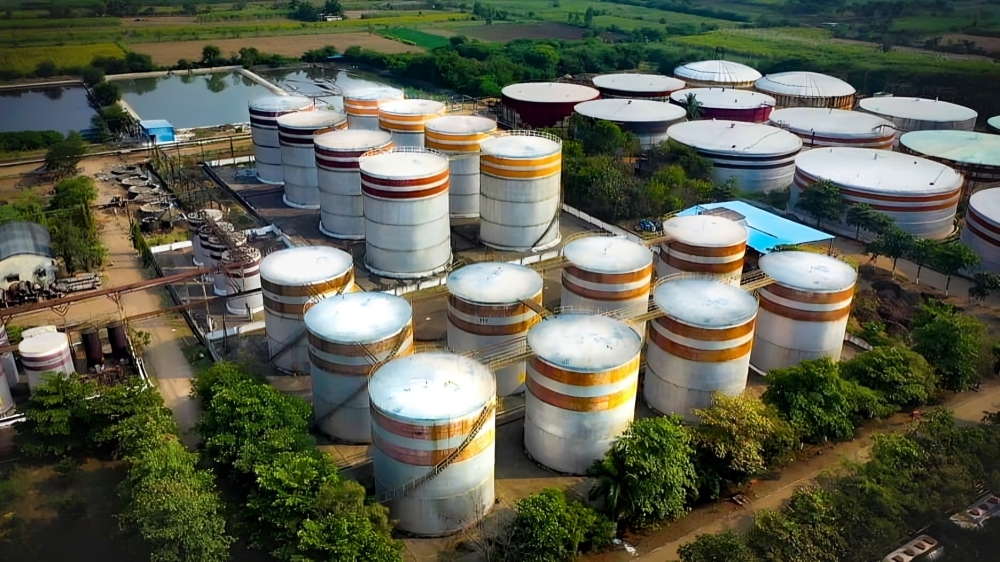
Indian ethanol producers face margin compression of Rs 10.18-10.28 per litre at current feedstock costs, while a public dispute over water usage intensifies regulatory scrutiny ahead of new E85/E100 fuel standards. The Indian Sugar & BioEnergy Manufacturers Association (ISMA) has strongly refuted claims that ethanol production requires 10,000 litres of water per litre, arguing the figure misleadingly combines lifecycle water footprint including rainfall during crop cultivation with industrial process water use. The Grain Ethanol Manufacturers Association (GEMA) counters that modern plants use only 3-5 litres of process water per litre of ethanol. The water footprint (the total amount of water required throughout the entire production cycle, from growing feedstock crops to final processing) matters commercially because producing one litre of ethanol can require up to 10,000 litres of water, while India's total ethanol production capacity has reached 1,822 crore litres.
Feedstock selection drives the water efficiency differential that determines regional production viability. Food Secretary Sanjeev Chopra quantified that producing 1 litre of ethanol from rice uses about 10,790 litres of water (including irrigation during cultivation), compared with about 4,670 litres for maize and about 3,630 litres for sugarcane. Currently, the purchase price of ethanol produced from maize is around Rs 72 per litre while that from damaged foodgrains is about Rs 64 per litre. Consider a typical 100,000 litre per day grain ethanol plant: at current maize procurement costs of approximately Rs 2,500 per quintal (versus Rs 2,200 three months ago), the additional Rs 300 per quintal translates to roughly Rs 8-10 higher raw material cost per litre of ethanol produced. At current maize prices, dedicated ethanol plants make a loss of around Rs 10.28 per litre, while damaged foodgrains generate losses of around Rs 10.18 per litre. Rice-based ethanol despite using food distribution system allocations faces the highest water intensity scrutiny.
The timing amplifies commercial pressure as India transitions beyond the achieved E20 blending target toward higher ethanol concentrations. The Ministry of Road Transport and Highways has issued a draft notification proposing amendments to the Central Motor Vehicles Rules to formally incorporate E85 and E100 fuels. E85 (a blend containing 85% ethanol and 15% petrol) and E100 (nearly pure ethanol) represent the next expansion phase requiring substantial ethanol supply increases. For the 2025-2026 period, the target for rice allocation to ethanol production is 90 lakh tonnes, up from 52 lakh tonnes the previous year, while the government has planned to reduce the share of broken rice distributed through the public distribution system from 25 to 10 percent. If trials proceed as planned, initial testing could begin as early as December 2026. The regulatory expansion occurs as Maharashtra's drought-prone regions major ethanol production centres face intensified water stress warnings from authorities.
On the buy side: Large fuel marketing companies (Indian Oil Corporation, BPCL, HPCL) benefit from diversified ethanol sourcing but face infrastructure costs estimated at Rs 2-3 lakh per station for E85/E100 pump retrofits. BPCL and HPCL, both tied to 131 distilleries via 15 year off-take agreements, are jointly investing ₹5,000 crore in blending terminals and corrosion-resistant pipelines. Oil Marketing Companies (OMCs) have allocated around 837 crore litres of ethanol against 970 crore litres of offers submitted by manufacturers across the country for ESY 2024-25. On the sell side: Sugarcane-based ethanol producers hold water-efficiency positioning advantages, with ISMA/ICAR reporting that sugarcane based ethanol uses 2,469 litres of water to make 1 litre of ethanol, versus 4,569 litres for maize. Rice based ethanol plants concentrated in water-stressed regions face regulatory pressure and margin erosion from both feedstock cost inflation and environmental scrutiny. A ₹40,000 crore investment by the grain ethanol sector could be saved from becoming non-performing assets through pricing reforms.
For observers: Monitor NITI Aayog water stress assessments by June 2026, particularly regarding Maharashtra and Uttar Pradesh groundwater depletion data. Public comments close May 15, with final rules expected in Q3 2026 and E85 pumps at fuel stations targeted by 2027. OMCs should immediately increase their purchase price of ethanol produced from grains by at least Rs 4-5 per litre from current levels to restore operational viability. Track rice allocation announcements for 2026-27 any reduction from the planned 90 lakh tonnes signals policy recalibration toward water-efficient feedstocks. The commercial resolution hinges on whether procurement price adjustments can offset feedstock inflation faster than environmental regulations can restrict rice-based production in water-stressed regions.
'%3e%3cg id='Final-Copy-2_2_' transform='translate(1275.000000, 200.000000)'%3e%3cpath class='st0' d='M7.4,12.8h6.8l3.1-11.6H7.4C4.2,1.2,1.6,3.8,1.6,7S4.2,12.8,7.4,12.8z'/%3e%3c/g%3e%3c/g%3e%3c/g%3e%3cg id='final---dec.11-2020'%3e%3cg id='_x30_208-our-toggle' transform='translate(-1275.000000, -200.000000)'%3e%3cg id='Final-Copy-2' transform='translate(1275.000000, 200.000000)'%3e%3cpath class='st1' d='M22.6,0H7.4c-3.9,0-7,3.1-7,7s3.1,7,7,7h15.2c3.9,0,7-3.1,7-7S26.4,0,22.6,0z M1.6,7c0-3.2,2.6-5.8,5.8-5.8 h9.9l-3.1,11.6H7.4C4.2,12.8,1.6,10.2,1.6,7z'/%3e%3cpath id='x' class='st2' d='M24.6,4c0.2,0.2,0.2,0.6,0,0.8l0,0L22.5,7l2.2,2.2c0.2,0.2,0.2,0.6,0,0.8c-0.2,0.2-0.6,0.2-0.8,0 l0,0l-2.2-2.2L19.5,10c-0.2,0.2-0.6,0.2-0.8,0c-0.2-0.2-0.2-0.6,0-0.8l0,0L20.8,7l-2.2-2.2c-0.2-0.2-0.2-0.6,0-0.8 c0.2-0.2,0.6-0.2,0.8,0l0,0l2.2,2.2L23.8,4C24,3.8,24.4,3.8,24.6,4z'/%3e%3cpath id='y' class='st3' d='M12.7,4.1c0.2,0.2,0.3,0.6,0.1,0.8l0,0L8.6,9.8C8.5,9.9,8.4,10,8.3,10c-0.2,0.1-0.5,0.1-0.7-0.1l0,0 L5.4,7.7c-0.2-0.2-0.2-0.6,0-0.8c0.2-0.2,0.6-0.2,0.8,0l0,0L8,8.6l3.8-4.5C12,3.9,12.4,3.9,12.7,4.1z'/%3e%3c/g%3e%3c/g%3e%3c/g%3e%3c/g%3e%3c/svg%3e) Privacy Choices
Privacy Choices